Bohus Fortress
Bohus Fortress (also known as Baahus or Bagahus; Norwegian: Bahus festning; Swedish: Bohus Fästning) is a historic fortress located on a 40-meter high reef on Bagaholmen Island in the city of Kungälv, Sweden. It stands northeast of Hisingen, where the Göta river splits into two branches, approximately 20 kilometers north of Gothenburg. This strategic location provided control over river traffic and defense against invasions, making Bohus a key military stronghold in the region for centuries.
The origins of the fortress are closely tied to the medieval city of Konghelle, which appears in Icelandic sagas and was visited by the famous medieval historian Snorri Sturluson. Konghelle was an important settlement by the 9th century, benefiting from fertile agricultural land along the river. In the early 12th century, Norwegian King Sigurd I Magnusson (Sigurd the Crusader) favored Konghelle, using it as a capital and a major power base during his reign from 1103 to 1130.
The construction of Bohus Fortress began in 1308 under the direction of King Haakon V Magnuson of Norway (reigned 1299–1319). The fortress was initially built of wood but was soon reconstructed in stone and brick to withstand the frequent military conflicts in the border region between Norway and Sweden. The fortress was designed to be one of the strongest in Scandinavia, with thick walls and multiple defensive towers.
Historical context and early development
During the early 14th century, the region experienced intense power struggles. King Birger Magnusson of Sweden and his brothers, Dukes Erik and Valdemar, contested control over western Sweden. Duke Erik was married to Ingeborg, daughter of King Haakon V of Norway, which strengthened his ties to the Norwegian crown. The castle of Ragnhild Holmen, built in the 13th century on an island near Kungahälla (modern-day Gothenburg), was a key stronghold in this conflict.
Following disputes over control of the castle, King Haakon V urged the construction of Bohus Fortress to secure communication routes and assert Norwegian dominance. The fortress's location on the high bluff where the Göta river splits allowed it to control river traffic and served as a bulwark against Swedish advances.
Architecture and fortifications
Bohus Fortress was originally constructed as a wooden fortification but was soon rebuilt in stone and brick, becoming a formidable late-medieval fortress. By around 1450, it featured a continuous surrounding wall approximately 3 meters thick at the base, with heights ranging from 8.5 to 13.5 meters, adapting to the terrain. The fortress was roughly rectangular, with four rectangular corner towers providing strong defensive positions.
The eastern end housed a prominent brick tower, while the western side featured a gatehouse with a drawbridge controlling access. Inside the walls were essential buildings, including the king's hall, the residence of the castle commander, a chapel, guardrooms, barracks, and kitchens. Many of these structures were vaulted and partially cut into the rock, enhancing their defensive capabilities.
The fortress covered a relatively small area of about 250 by 150 meters, which allowed a modest garrison to defend it effectively. The natural terrain and man-made defenses made the approaches difficult for attackers.
Early modern upgrades and bastion fortifications
Following damage sustained during the Northern Seven Years' War (1563–1570), including a notable 1566 siege where Swedish forces briefly captured the northeastern tower, the fortress underwent significant reconstruction. A volunteer famously blew up the ammunition stores beneath the captured tower, killing the attackers and repelling the assault. His family was rewarded with land that remains in their possession.
The post-war rebuilding was led by Hans Paaske from the Netherlands, who reinforced the fortress with stone and brick. Between 1593 and 1604, Bohus was upgraded to a bastion fortress, similar to contemporary works at Akershus Fortress in Oslo. This included the construction of new outer fortifications designed to withstand artillery attacks.
Hans van Steenwinckel, also from the Netherlands and later renowned for his Dutch Renaissance style architecture in Denmark, contributed to these enhancements. Further improvements continued into the mid-17th century under the direction of Dutch engineer Isaac van Geelkerck, who added corner towers and a new ring wall around the arsenal building.
Military significance and sieges
Bohus Fortress played a crucial role as Norway's strongest fortress for several centuries. It was besieged multiple times but was never permanently captured. The fortress was a key defensive position during the frequent conflicts between Norway and Sweden, including the seven-year Northern War and later the Danish-Swedish wars.
Its strategic importance diminished after the Treaty of Roskilde in 1658, when Denmark-Norway ceded Bohuslän and other territories to Sweden. Following this, the fortress was no longer on the border and thus lost much of its military value. Sweden focused on other fortifications such as Älvsborg Fortress and Carlsten Fortress.
During the Danish-Swedish war of 1675–1679, Bohus was besieged again by a Norwegian army but was saved by the timely arrival of Swedish forces under Gustav Otto Stenbock. The fortress was heavily damaged but rebuilt according to plans by engineer Eric Dahlberg, becoming the residence of the governor of Bohuslän until 1700.
Later use and preservation
After losing its military relevance, Bohus Fortress was repurposed primarily as a prison in the 18th century. Its most famous prisoner was the radical pietist Thomas Leopold, who spent 42 years incarcerated, 32 of those at Bohus, for alleged heresies. Visitors today can see his stone cell at the fortress museum.
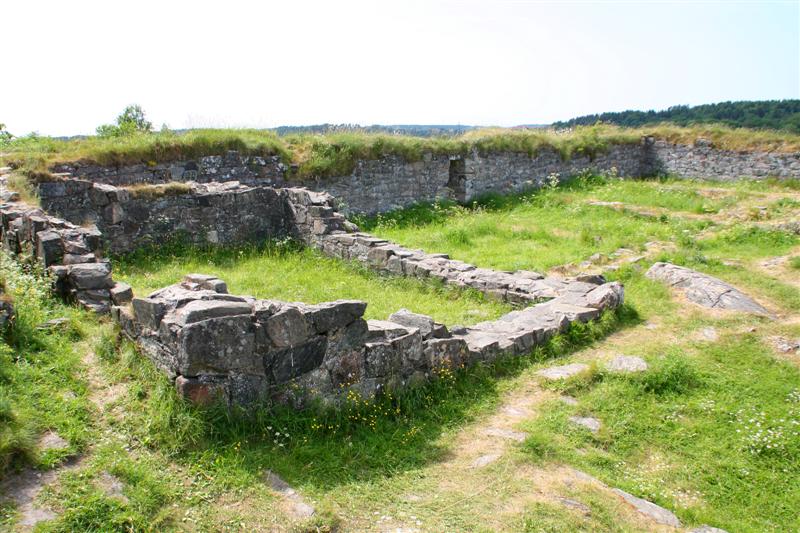
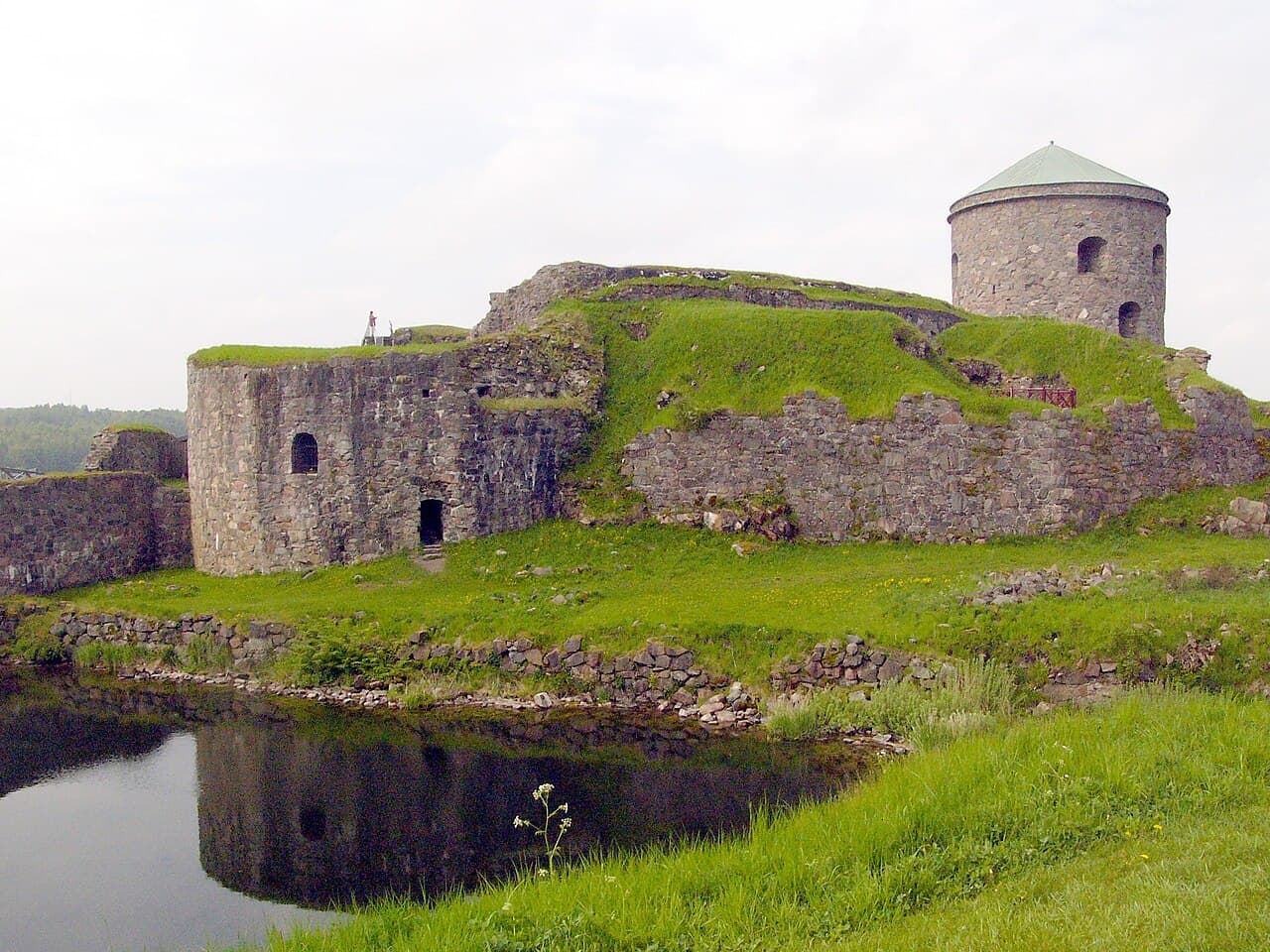
Plans to demolish the fortress at the end of the 18th century were only partially carried out due to lack of funds. Local residents used stones from the fortress for building houses in Kungälv. Despite this, much of the fortress remains intact, including the large northern tower known as Fars Hatt.
Archaeological excavations and conservation efforts began in the late 19th and early 20th centuries, with major restoration work starting in 1934. The main gate was restored and adorned with the monogram of King Gustav V. Today, Bohus Fortress is a well-preserved historical site and museum, open to visitors during the summer months.
Cultural and architectural legacy
Bohus Fortress stands as a testament to medieval and early modern military architecture in Scandinavia. Its evolution from a wooden fort to a bastion fortress reflects the changing nature of warfare and fortification design over several centuries. The fortress's combination of natural defensive advantages and sophisticated masonry work exemplifies the strategic military thinking of the late medieval and renaissance periods.
The involvement of Dutch architects and engineers like Hans Paaske, Hans van Steenwinckel, and Isaac van Geelkerck highlights the cross-cultural influences in Scandinavian fortification design. Their contributions brought advanced bastion fortification techniques to Bohus, ensuring its role as a formidable stronghold well into the early modern era.
Today, Bohus Fortress not only attracts history enthusiasts and tourists but also serves as an important cultural landmark preserving the complex history of the Swedish-Norwegian borderlands.
Frequently asked questions (FAQ)
- When was Bohus Fortress built and by whom?
- Bohus Fortress was constructed beginning in 1308 under King Haakon V Magnuson of Norway, designed to defend the Norwegian-Swedish border.
- What architectural styles are represented in Bohus Fortress?
- The fortress features a mix of late medieval stone construction and early modern bastion fortifications influenced by Dutch Renaissance architects.
- Is Bohus Fortress open to visitors year-round?
- Bohus Fortress is open to the public primarily during the summer season, typically from 10:00 to 17:00 daily.
- What is the significance of the volunteer who blew up the ammunition store in 1566?
- During a 1566 siege, a volunteer detonated the ammunition stores beneath the captured tower, killing attacking Swedish soldiers and repelling the assault. His family was rewarded with land that remains in their possession.
- Can visitors see the prison cell of Thomas Leopold at Bohus Fortress?
- Yes, the stone cell of Thomas Leopold, a famous prisoner who spent 32 years at Bohus Fortress, is preserved and accessible to visitors.
- What remains of Bohus Fortress today?
- Much of the fortress remains intact, including the large northern tower known as Fars Hatt, the main gate, and several defensive walls and towers.
- How did the Treaty of Roskilde affect Bohus Fortress?
- The 1658 Treaty of Roskilde ceded Bohuslän and the fortress to Sweden, reducing its strategic importance as it was no longer on the border.
- Are there guided tours available at Bohus Fortress?
- Yes, guided tours are available during the open season, providing historical insights and access to key parts of the fortress.
Photo gallery

Information
Opening hours
Summer season, daily 10:00-17:00
Ticket prices
€8 adult, €4 child
Current owner
Municipality
Website
Visit websiteSources & official resources
Verify the information above using these authoritative references.
Loading map...
Visitor reviews
No reviews yet. Been here? Write the first review and help other travelers!
Write the first reviewVisited this castle? Share your experience
Your review helps other travelers and adds first-hand knowledge to our encyclopedia.