Maretsch Castle
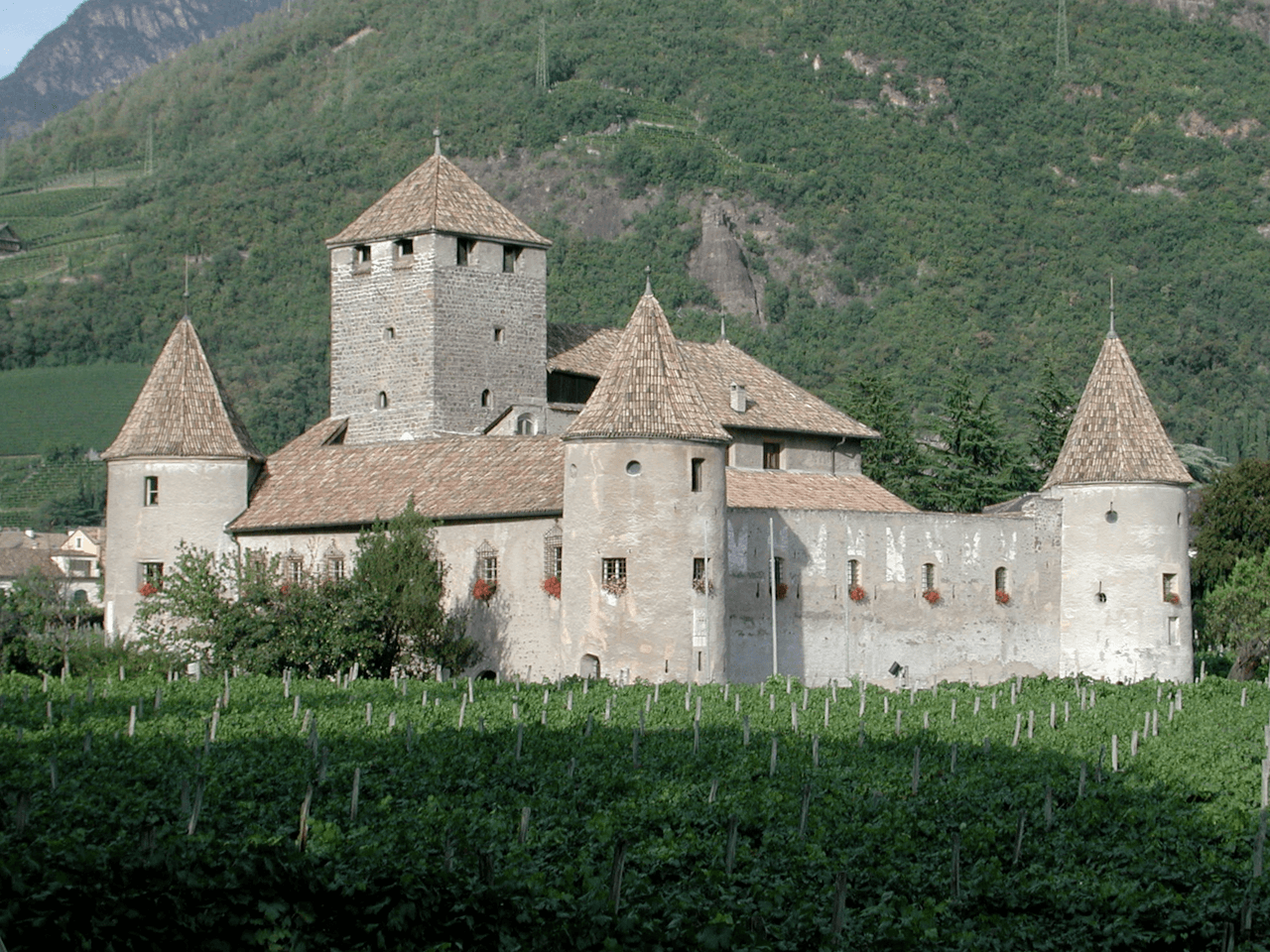
Maretsch Castle, also known as Castel Mareccio or Schloss Maretsch, is a historic hill castle located in the heart of Bolzano, the capital of the South Tyrol province in the Trentino-Alto Adige region of northern Italy. This castle stands out as a remarkable example of architectural evolution from its High Medieval origins into a refined Renaissance residence. Its strategic position atop a small hill amidst vineyards offers both a commanding view of the surrounding landscape and a scenic setting that enhances its historic charm.
Medieval origins and early construction
The earliest part of Maretsch Castle is the keep (donjon), constructed around 1194 by Berthold von Bozen, who served as a commissary for the Lords of Tyrol and a legal authority in Bolzano. This massive tower remains a dominant feature of the castle complex, embodying the defensive needs of the time. The castle was first documented in 1237 as the property of Dietmut von Maretsch. During the latter half of the 13th century, Dietmut's son Heinrich von Maretsch and knights Dietrich and Autlin von Maretsch undertook significant alterations, expanding the castle's fortifications and living quarters.
Renaissance transformation under the römer family
In 1477, the castle was acquired by Sigmund Römer zu Rubein. The Römer family played a pivotal role in the castle's transformation from a medieval fortress into a Renaissance residence. By the mid-16th century, the Römer brothers—Hans Jakob, Lukas, Christoph, and Kaspar—undertook extensive renovations between 1560 and 1570. They redesigned the castle into a rectangular complex characterized by four round corner towers and the original square keep integrated into the northwestern wall. The interior was lavishly decorated with a series of frescoes depicting Biblical scenes, allegorical figures, and fantastic motifs, which remain remarkably well-preserved and are a highlight of guided tours today.
Architectural features and interior decoration
The Renaissance remodeling introduced elegant architectural features that emphasized comfort and aesthetic appeal rather than purely military function. The castle's open courtyard serves as a central organizing space, surrounded by residential and service buildings. The defensive corridor and crenellations dating from the 13th and 14th centuries were preserved, blending medieval defensive elements with Renaissance elegance.
The frescoes commissioned during the Römer renovations include representations of contemporary philosophers and richly detailed biblical narratives, showcasing the cultural interests and artistic patronage of the family. These artworks provide valuable insight into the Renaissance mindset and artistic trends in South Tyrol during this period.
Later ownership and modifications
In 1580, ownership passed to Maximilian Hendl, who added a chapel within the southern corner tower around 1600, further enhancing the castle's residential and ceremonial functions. From 1658, the castle belonged to the Counts of Thun for nearly two centuries, before being sold in 1851 to Countess Anna Sarnthein. Subsequently, it passed by inheritance to the Counts of Toggenburg.
20th-century restoration and current use
During the 20th century, under Italian administration, Maretsch Castle served as the State Archives until it was acquired by the city of Bolzano in 1974. Following a careful restoration in the 1980s, the castle was repurposed as a venue for conferences, cultural events, concerts, and weddings. It is no longer inhabited but remains an important cultural asset and historic landmark in Bolzano.
Visitors can explore the castle through guided tours that highlight its Renaissance frescoes, architectural evolution, and its role in the region's history. Its location within walking distance from Bolzano's old town makes it an accessible destination for those interested in medieval and Renaissance architecture.
Architectural significance and cultural heritage
Maretsch Castle exemplifies the transition from a medieval fortress to a Renaissance noble residence, reflecting broader social and cultural changes in South Tyrol during the 13th to 16th centuries. The castle's blend of medieval defensive structures with Renaissance artistic embellishments illustrates the evolving priorities of castle architecture, shifting from military defense to residential comfort and display of status.
The preservation of the castle's frescoes and structural elements offers valuable insights into the artistic and architectural developments of the period. As a venue for public events, Maretsch Castle continues to contribute to the cultural life of Bolzano, connecting contemporary audiences with the region's rich historical legacy.
Frequently asked questions (FAQ)
- How do I visit Maretsch Castle in Bolzano?
- Maretsch Castle can be visited by booking a guided tour in advance. It is located within walking distance from Bolzano's old town, making it easily accessible to visitors.
- What architectural styles are represented in Maretsch Castle?
- The castle showcases a blend of High Medieval defensive architecture and Renaissance residential design, including four round corner towers and richly frescoed interiors.
- When was Maretsch Castle built and who were its original builders?
- The oldest part of Maretsch Castle, the keep, was built around 1194 by Berthold von Bozen, a legal official and commissary of the Lords of Tyrol.
- Can I see the frescoes inside Maretsch Castle?
- Yes, the castle's Renaissance frescoes depicting biblical and allegorical scenes are well-preserved and can be viewed during guided tours.
- Is Maretsch Castle still used as a residence?
- No, Maretsch Castle is no longer inhabited. It is currently used as a venue for conferences, cultural events, and private functions.
- What is the best time to visit Maretsch Castle?
- The castle is open for tours and events throughout the year, but booking in advance is recommended to ensure availability.
- Are there any nearby attractions to visit after Maretsch Castle?
- After visiting Maretsch Castle, you can explore Bolzano's historic old town, including its museums, churches, and the South Tyrol Museum of Archaeology, home to Ötzi the Iceman.

Information
Address
Via Claudia De' Medici 12, Italy
Loading map...
Visitor reviews
No reviews yet. Been here? Write the first review and help other travelers!
Write the first reviewVisited this castle? Share your experience
Your review helps other travelers and adds first-hand knowledge to our encyclopedia.