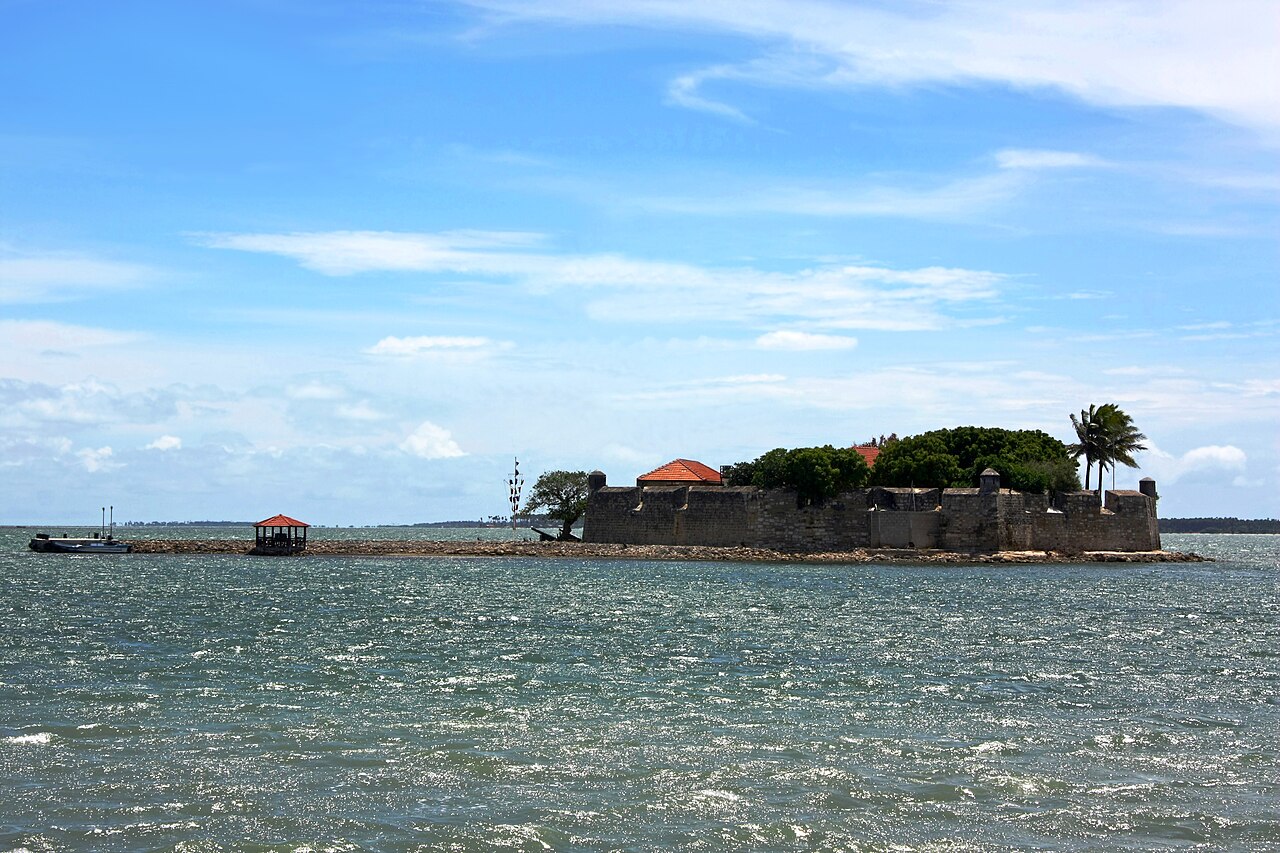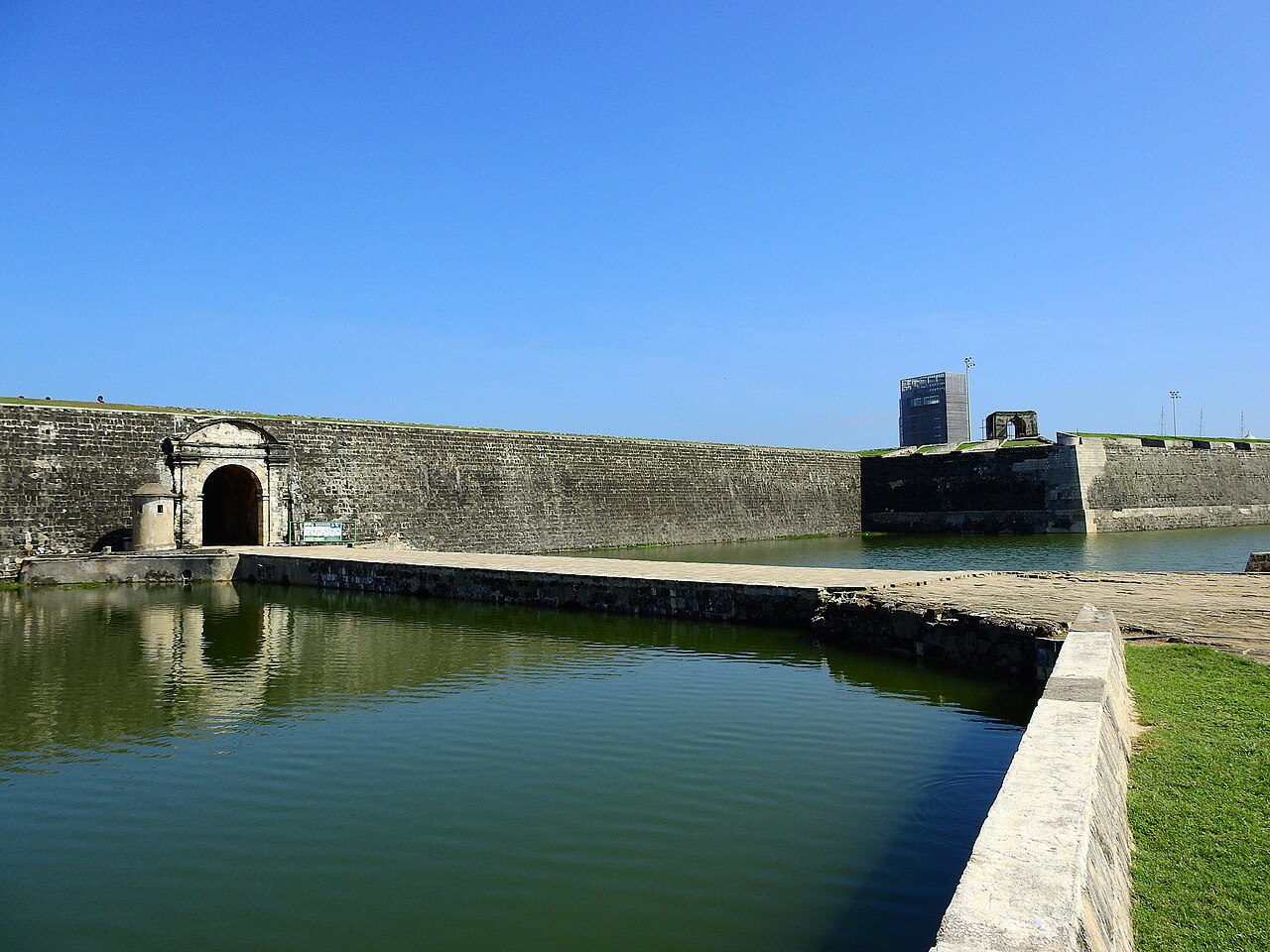
Kayts Island Fort (Tamil: ஊர்காவற்றுறைக் கோட்டை, romanized: Ūrkāvaṟṟuṟaik Kōṭṭai; Sinhala: කයිට්ස් දූපත් බලකොටුව Kayits Dupath Balakotuwa) is a 17th-century bastioned fortress built by the Portuguese in 1629 on Kayts Island, Sri Lanka. It served as a strategic military installation to protect the Jaffna Peninsula and its vital commercial ports during the period of European colonial expansion in South Asia. The fort's design and history reflect the Portuguese Renaissance period military architecture adapted to tropical island conditions.
The fort was constructed in a distinctive horseshoe shape with four circular bastions positioned to provide overlapping fields of fire, a typical feature of bastioned fortresses designed to withstand artillery sieges. This layout allowed defenders to cover all approaches, especially guarding the adjoining port known as "Urundai," a crucial commercial hub for the region. The Tamil word "Urundai" means "sphere" or "round-shape," which likely influenced the fort's local name, Urundai Fort.
Historical context and colonial transitions
The fort was built by the Portuguese during their efforts to consolidate control over the Jaffna Peninsula and its maritime trade routes. Its establishment in 1629 came at a time when Portuguese influence in Sri Lanka was challenged by emerging Dutch ambitions. The fort was abandoned by the Portuguese in 1651 following military setbacks and shifting colonial power dynamics.
Subsequently, the Dutch East India Company took control of Kayts Island in the late 17th century. Unlike other Portuguese forts in the region, the Dutch did not undertake significant restoration or modification of Kayts Island Fort, leaving much of its original structure intact but also contributing to its decline. The fort's military importance diminished as control over the region changed and new defensive priorities emerged.
Architectural features and military significance
Fort layout and bastions
The horseshoe-shaped fort is notable for its four circular bastions, which were positioned to optimize defense against naval and land assaults. The bastions allowed defenders to cover the fort's walls with cannon and musket fire, minimizing blind spots. This design reflects the Renaissance military architectural principles that emphasized angled bastions to counteract the increasing power of artillery.
Materials and construction techniques
The fort was constructed using local materials, including coral stone and lime mortar, common in coastal fortifications of the period. The walls were thick and robust, built to absorb cannon fire and resist siege tactics. The use of coral stone provided both durability and some resistance to the humid maritime climate.
Strategic location
Located on Kayts Island, the fort controlled access to the Jaffna Peninsula and the surrounding waters. Its position near the port of Urundai allowed the Portuguese to monitor and protect maritime trade routes, which were essential for their colonial economy and military logistics.
Decline and current condition
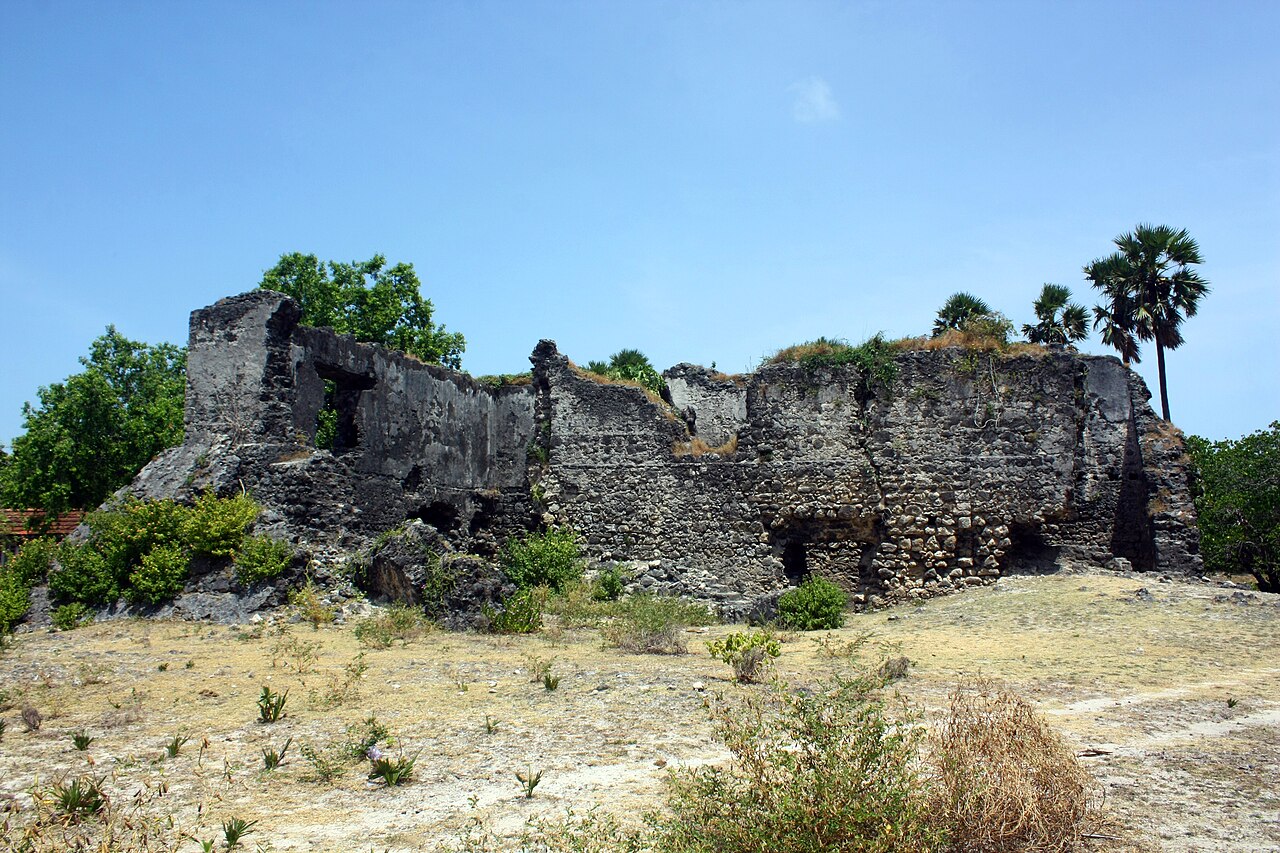
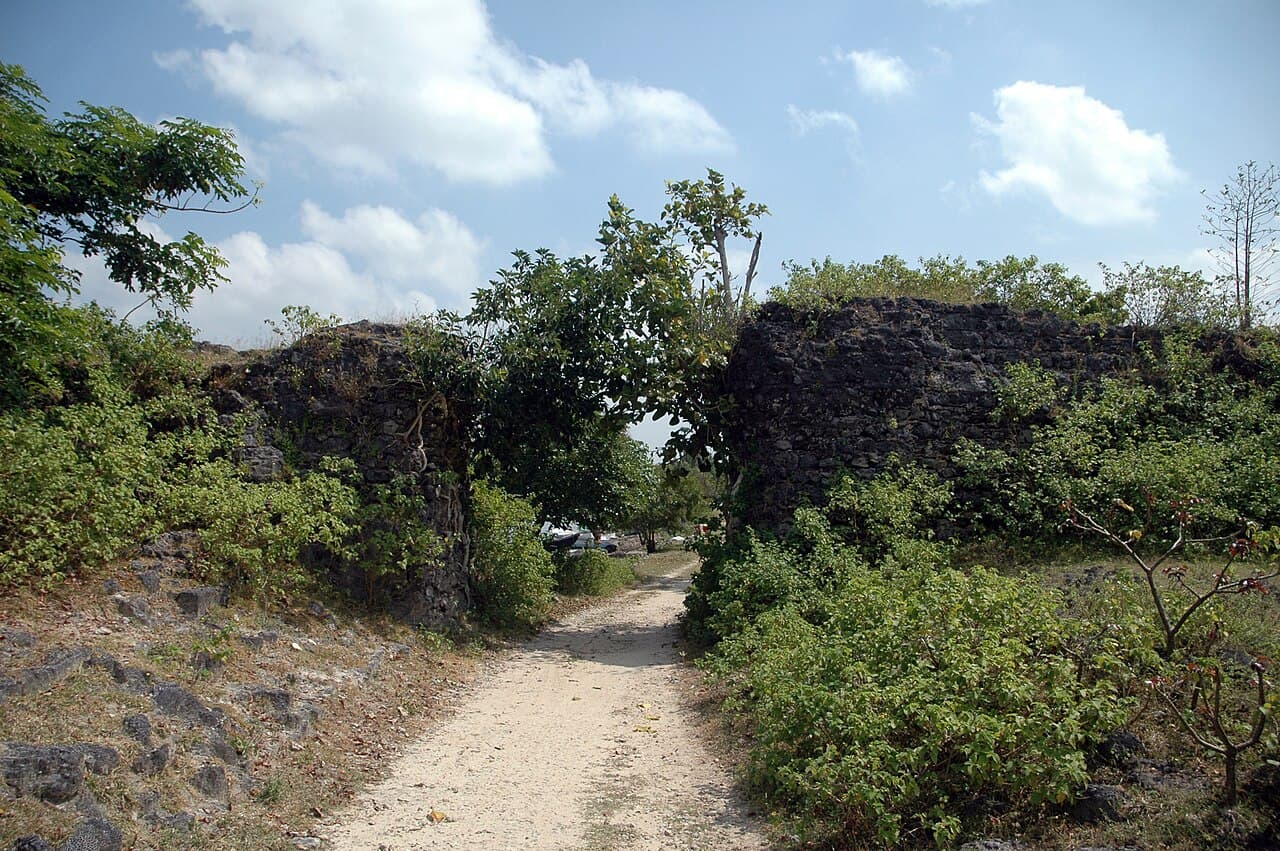
After abandonment by the Portuguese and limited use by the Dutch, the fort gradually fell into disrepair. The lack of restoration during Dutch rule and subsequent neglect led to deterioration of the walls and bastions. Today, Kayts Island Fort remains a partially preserved ruin, with some structural elements still visible but many sections damaged or eroded.
Despite its ruined state, the fort is an important cultural and historical site, representing the Portuguese colonial military architecture in Sri Lanka and the broader history of European competition for control over the Indian Ocean trade routes.
Legacy and cultural significance
Kayts Island Fort stands as a testament to the Portuguese efforts to establish fortifications in Sri Lanka during the early 17th century. It illustrates the adaptation of European Renaissance bastioned fortress design to the tropical island environment and the strategic importance of maritime control in colonial conflicts.
The fort's connection to the nearby commercial port of Urundai highlights the intertwined nature of military and economic objectives in colonial fortifications. Today, it attracts historians, archaeologists, and visitors interested in the military history of Sri Lanka and the architectural heritage of European colonial powers in Asia.
Frequently asked questions (FAQ)
- What is the historical significance of Kayts Island Fort?
- Kayts Island Fort was built by the Portuguese in 1629 to protect the Jaffna Peninsula and its commercial ports during the Renaissance period. It reflects European colonial military architecture adapted to Sri Lanka's coastal environment.
- Can visitors explore Kayts Island Fort today?
- The fort is partially preserved and accessible to visitors, but much of it remains in ruins. Visitors should be prepared for limited facilities and should respect the site's historical importance.
- Why did the Dutch not restore Kayts Island Fort?
- After taking control of Kayts Island in the late 1600s, the Dutch did not prioritize restoration of this fort, likely due to shifting strategic interests and the availability of other fortified positions in the region.
- What are the key architectural features of Kayts Island Fort?
- The fort features a horseshoe-shaped layout with four circular bastions designed to provide comprehensive defense against artillery and naval attacks, typical of Renaissance bastioned fortresses.
- Where is Kayts Island Fort located?
- Kayts Island Fort is located on Kayts Island, off the coast of the Jaffna Peninsula in northern Sri Lanka, near the historical port of Urundai.
Photo gallery

Information
Loading map...
Visitor reviews
No reviews yet. Been here? Write the first review and help other travelers!
Write the first reviewVisited this castle? Share your experience
Your review helps other travelers and adds first-hand knowledge to our encyclopedia.