Fort Gorazda
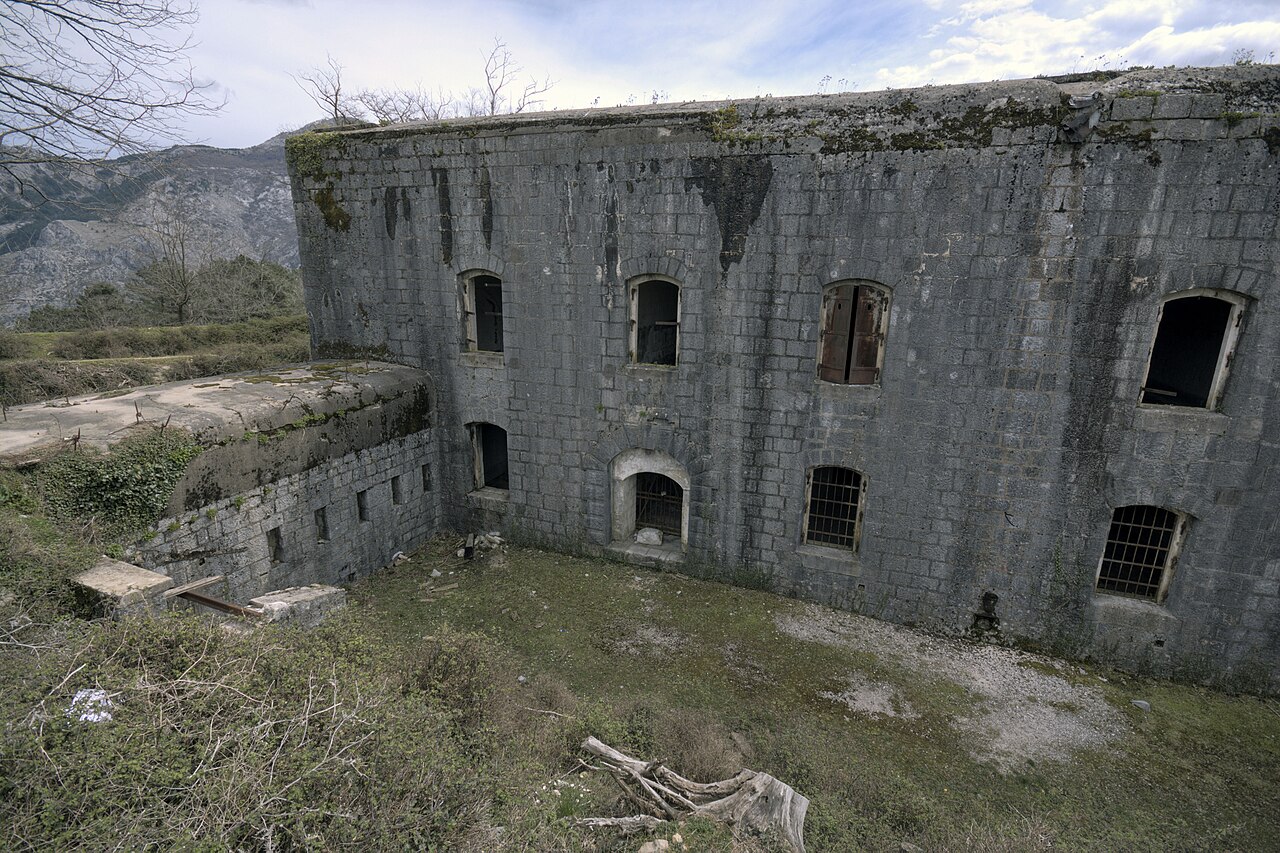
Fort Gorazda is a significant Austro-Hungarian fortress located near the historic town of Kotor in Montenegro. Constructed between 1884 and 1886, it replaced an earlier fortification that existed prior to the 1869 uprising. This modern fortification was part of a broader Austro-Hungarian defensive system designed to protect the strategically vital Bay of Kotor and control access to the Adriatic Sea. Its position near Kotor allowed it to command the surrounding area and serve as a formidable obstacle to any advancing forces.
Architectural design and features
The fort is renowned for its 100-ton Gruson rotating turret, which remains the last surviving example of this type of heavy artillery installation. This turret was mounted on the roof of the fort, providing a powerful and protected platform for its gun, capable of rotating to cover a wide firing arc. The fort’s construction utilized robust materials and engineering techniques typical of late 19th-century military architecture, emphasizing durability and defense against artillery fire.
The layout of Fort Gorazda reflects the Austro-Hungarian military engineering principles of the time, with thick stone walls, reinforced concrete, and strategically placed gun emplacements. The fort included barracks, ammunition storage, and defensive features such as moats and trenches to withstand sieges. Its elevated position also enhanced its defensive capabilities by offering commanding views of the surrounding terrain and sea approaches.
Historical context and military role
Fort Gorazda played a crucial role during the First World War, particularly in the artillery duels between Austro-Hungarian forces and Montenegrin batteries stationed on Mount Lovćen. Despite repeated attempts, Montenegrin forces were unable to destroy the fort, underscoring its robust construction and strategic importance. In 1916, an Austrian offensive successfully pushed Montenegrin forces beyond the fort's range, securing Austro-Hungarian control over the area.
Following the offensive, the fort sustained some damage but was promptly repaired by the Austrians. However, as the war progressed, the fort’s heavy guns were removed to support the Austro-Hungarian field army, reflecting a shift in military priorities and tactics. After the war, the fort continued to serve military purposes under the Yugoslav Army, primarily as a depot, until the early 1990s.
Later use and current status
After its military use ceased in the 1990s, Fort Gorazda was abandoned but remains accessible to the public. It stands as a testament to Austro-Hungarian military engineering and the turbulent history of the Bay of Kotor region. Today, visitors can explore the fort’s impressive structures, including the rare Gruson turret, gaining insight into late 19th and early 20th-century fortress design and the strategic importance of this area during times of conflict.
The fort’s preservation state allows for educational visits and historical research, contributing to the cultural heritage of Montenegro. Its location near Kotor, a UNESCO World Heritage site, adds to its appeal for tourists interested in military history and architecture.
Frequently asked questions (FAQ)
- How do I get to Fort Gorazda?
- Fort Gorazda is located near Kotor, Montenegro, and can be accessed by a short hike from the city center. Visitors can also take a local taxi or join a guided tour that includes transportation.
- What is the historical significance of Fort Gorazda?
- Fort Gorazda was built in the late 19th century as part of the Austro-Hungarian fortifications in the Kotor region. It played a crucial role in the defense of the Bay of Kotor and showcases the military architecture of that era.
- When was Fort Gorazda constructed?
- Construction of Fort Gorazda began in 1860 and was completed in 1869. It was built to strengthen the strategic defenses of the area during a time of military tensions in the region.
- Can I visit Fort Gorazda year-round?
- Yes, Fort Gorazda is open to visitors throughout the year, though accessibility may vary during the winter months due to weather conditions. It's advisable to check local guidelines before planning your visit.
- Why is Fort Gorazda a popular tourist attraction?
- Fort Gorazda is popular due to its stunning panoramic views of the Bay of Kotor and its rich historical background. Additionally, many visitors appreciate the opportunity to explore its well-preserved architecture and learn about the region's military history.
- Is it possible to explore inside Fort Gorazda?
- Yes, visitors can explore the interior of Fort Gorazda, where they can see various military structures and remnants. Guided tours are often available to provide insights into the fort's history and significance.
- What are the opening hours for Fort Gorazda?
- Fort Gorazda typically opens at 9 AM and closes at 5 PM, but hours may vary depending on the season. It is best to check ahead for any changes in operating hours before your visit.
- Are there any nearby attractions to visit after Fort Gorazda?
- Yes, after visiting Fort Gorazda, you can explore the charming old town of Kotor, which is a UNESCO World Heritage Site. Other nearby attractions include the San Giovanni Fortress and the scenic Kotor Bay.
- What are the ticket prices for visiting Fort Gorazda?
- The ticket prices for Fort Gorazda are quite affordable, typically ranging from €2 to €5 per person. Discounts may be available for students and groups, so it's a good idea to inquire at the entrance.
Information
Loading map...
Visitor reviews
No reviews yet. Been here? Write the first review and help other travelers!
Write the first reviewVisited this castle? Share your experience
Your review helps other travelers and adds first-hand knowledge to our encyclopedia.