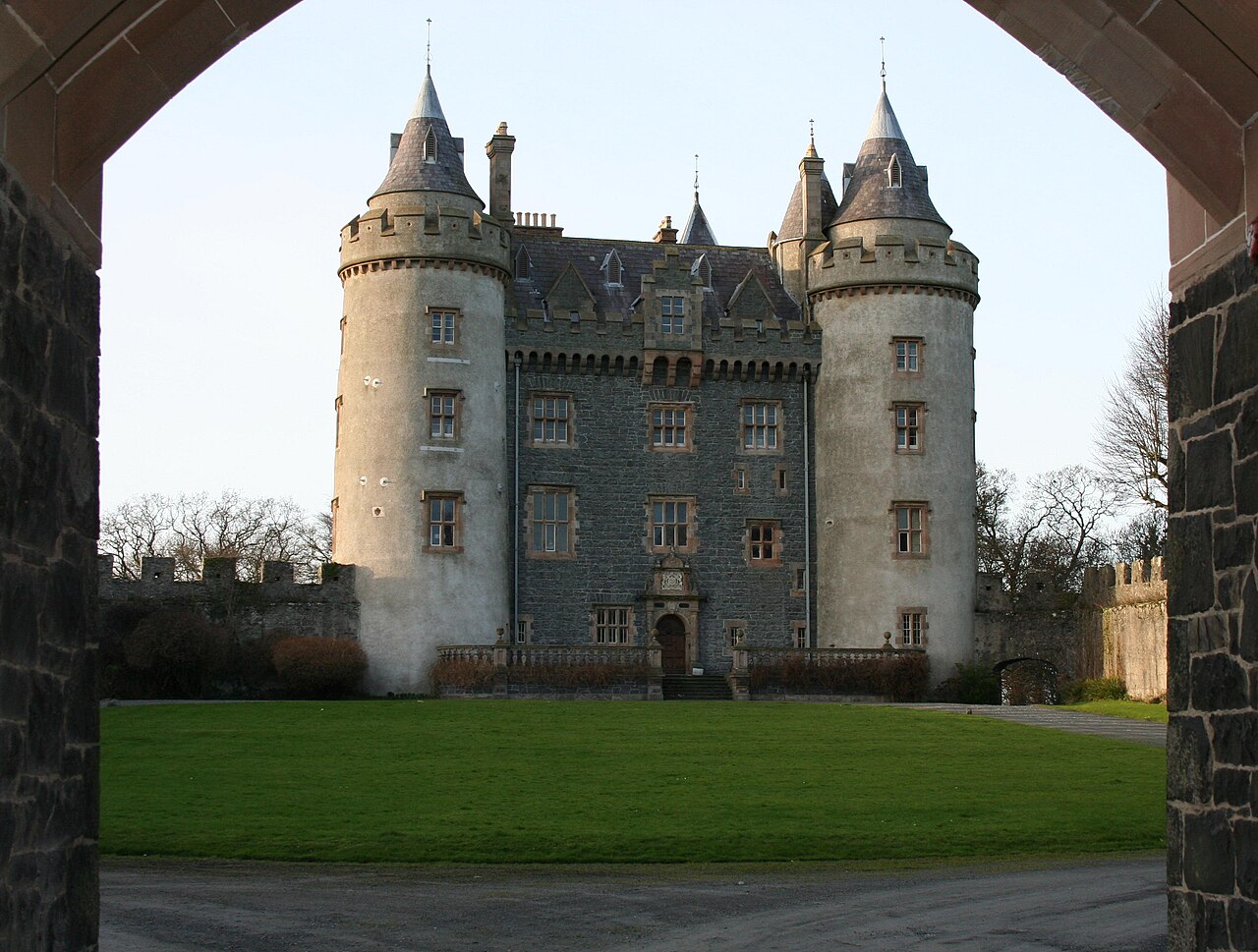
Mahee Castle
Mahee Castle stands as a remarkable example of a 16th-century fortified tower house located on Mahee Island near Comber, Northern Ireland. Built in 1570 by Captain Thomas Browne, an English settler and soldier, the castle was strategically positioned to control access to the island via a causeway and to oversee a volatile border region between the Gaelic lordships of Clandeboye and Dufferin. This placement underscores its importance in the political and military landscape of late Renaissance-period Ireland.
The castle's construction reflects the typical architectural features of a Renaissance-era tower house, a common form of fortified residence in Ireland during the 16th century. Mahee Castle's rectangular footprint measures approximately 12.2 meters by 6.7 meters, with thick stone walls up to 1.8 meters wide, designed to withstand attacks and harsh weather. Originally rising to three stories, today only the lower portions remain, standing nearly 7.6 meters high. Its location atop a glacial drumlin provided natural elevation and defense advantages.
Historical context and strategic significance
During the late 16th century, the area surrounding Mahee Island was a contested frontier between the Gaelic lordships of Clandeboye to the north and Dufferin to the south. Both regions were frequently engaged in territorial disputes and skirmishes, making the control of key access points like the causeway to Mahee Island militarily vital. The castle's establishment by Captain Thomas Browne, with the permission of the Bishop of Down, was part of a broader English effort to consolidate influence and secure strategic positions in Ireland during a period of political unrest.
Mahee Castle likely changed hands multiple times amid the conflicts that characterized this borderland. Its abandonment by the early 17th century reflects the shifting political and military realities as English control expanded and the need for such isolated strongholds diminished. The reuse of stone from the castle by locals to repair nearby structures and the causeway illustrates the castle's decline and the practical adaptation of its materials.
Architectural features and layout
Tower house structure
The core of Mahee Castle is its tower house, a rectangular stone building with robust defensive characteristics. The walls, measuring 1.5 meters thick on most sides and 1.8 meters on the southeast, were built to resist siege and weathering. The ground floor contains two vaulted chambers: a larger room with a semicircular vault supported by a central wooden beam, and a smaller room with a pointed vault formed on reed mats, likely used for storage. These vaulted ceilings demonstrate skilled masonry techniques of the period.
Defensive elements
The entrance, located in the northwest wall, is approximately 1.1 meters wide and features a murder-hole above the doorway, a defensive opening through which defenders could attack assailants attempting to breach the entrance. Adjacent to the doorway, a staircase provided access to the upper floors, which would have included living quarters and defensive positions.
Surrounding fortifications
Archaeological evidence reveals that Mahee Castle was surrounded by a walled enclosure or bawn to the southwest, serving as a courtyard for protection and possibly for livestock. Additionally, the castle complex included a boat bay along the lakeshore, highlighting its role in controlling local waterways and facilitating transport or defense by water.
Preservation and archaeological investigations
By the early 1600s, Mahee Castle had fallen into disuse and disrepair. Local inhabitants repurposed stones from its walls for other constructions, accelerating its ruin. Recognizing the cultural and historical value of the site, conservation efforts began in the late 19th century, culminating in a significant restoration in 1923 led by H.C. Lawlor and the Belfast Natural History and Philosophical Society. These works included the removal of invasive vegetation such as ivy, filling cracks with cement to prevent water infiltration, and applying a waterproof layer to the roof. A buttress wall was also constructed about four meters from the southwestern edge of the tower to stabilize the terrace and prevent erosion.
Further archaeological excavations from 2001 to 2002, directed by Ruaíri Ó Baoill and Philip Macdonald, uncovered a range of artifacts including animal bones, pottery shards from various periods, flint tools, knives, shells, and fragments of modern glass. These findings suggest continuous or intermittent occupation and activity on the site over several centuries. The excavations also indicated that earlier fortifications may have existed before the 1570 tower house was constructed, providing valuable insight into the site's long-term strategic importance.
Architectural significance and cultural heritage
Mahee Castle exemplifies the Renaissance tower house typology common in Ireland, combining residential and defensive functions in a compact stone structure. Its strategic location on an artificial terrace atop a drumlin, overlooking a causeway and waterways, illustrates the integration of natural landscape features into defensive planning. The castle's surviving architectural elements, such as the vaulted chambers and murder-hole, are characteristic of the period's military architecture.
Today, Mahee Castle remains a partially preserved ruin that offers valuable insights into the turbulent history of late medieval and early modern Ireland. It stands as a testament to the English colonial presence in Ulster during the late 16th century and the complex interactions between Gaelic and English powers. The site continues to attract interest from historians, archaeologists, and visitors intrigued by its historical context and architectural features.
Visiting mahee castle
Located near the village of Comber in Northern Ireland, Mahee Castle is accessible to visitors interested in exploring historic sites. While the castle is a ruin, the conservation efforts have stabilized the structure enough to allow safe viewing of the tower and its surroundings. Visitors can appreciate the castle’s strategic position and learn about its history through interpretive signage available on site. The nearby Nendrum Monastery adds to the area's rich heritage, making Mahee Island a compelling destination for those interested in medieval and Renaissance history.
Visitor tips
- Wear sturdy footwear as the terrain around the castle includes uneven ground and a drumlin hill.
- Check local access conditions, especially during wet weather, as the causeway can be slippery.
- Combine a visit to Mahee Castle with nearby historical sites such as Nendrum Monastery for a fuller experience.
- Photography enthusiasts will find the ruins and surrounding landscape particularly picturesque.
Frequently asked questions (FAQ)
- How do I get to Mahee Castle?
- Mahee Castle is located in Comber, Northern Ireland, and is easily accessible by car or public transport. If you are driving, there is parking available nearby, and if you prefer public transport, several bus routes connect Comber to Belfast and surrounding areas.
- What is the historical significance of Mahee Castle?
- Mahee Castle dates back to the 15th century and was built by the McGoverns, who were prominent figures in the area. The castle has a rich history tied to local power struggles and has witnessed significant events throughout its existence.
- When was Mahee Castle built?
- Mahee Castle was constructed in the late 15th century, around the 1400s. Its architecture reflects the style of the period, showcasing the defensive structures typical of medieval castles in Ireland.
- Can I visit Mahee Castle?
- Yes, Mahee Castle is open to visitors, but please check for specific visiting hours or any seasonal restrictions before planning your trip. Guided tours may also be available, providing deeper insights into the castle's history and architecture.
- Why is Mahee Castle a popular tourist attraction?
- Mahee Castle attracts visitors due to its historical significance, picturesque setting on the shores of Strangford Lough, and its intriguing architecture. The surrounding landscape also offers beautiful scenic views, making it a perfect spot for photography and leisurely walks.
- Is it possible to host events at Mahee Castle?
- Yes, Mahee Castle can be rented for private events, such as weddings and corporate gatherings. It is advisable to contact the castle's management for more information on availability and facilities.
- What are the opening hours for Mahee Castle?
- Mahee Castle's opening hours may vary throughout the year, so it is best to check their official website or contact them directly for the most current information. Generally, the castle is open during daylight hours, allowing visitors to explore the grounds and enjoy the views.
- What are the ticket prices for visiting Mahee Castle?
- Ticket prices for Mahee Castle are typically affordable, with discounts available for children and seniors. It's a good idea to verify current pricing on the official website or at the entrance before your visit.
- What nearby attractions can I visit while at Mahee Castle?
- While visiting Mahee Castle, you can also explore the stunning Strangford Lough and the nearby town of Comber, which offers charming shops and cafes. Additionally, the beautiful gardens and parks in the area provide excellent opportunities for outdoor activities and relaxation.
Information
Website
Visit websiteSources & official resources
Verify the information above using these authoritative references.
Loading map...
Visitor reviews
No reviews yet. Been here? Write the first review and help other travelers!
Write the first reviewVisited this castle? Share your experience
Your review helps other travelers and adds first-hand knowledge to our encyclopedia.