Magaña Castle

Magaña Castle: a 15th-century hill castle in Soria, Spain
Near SO-630, Spain
Late Medieval (14th–15th c.)

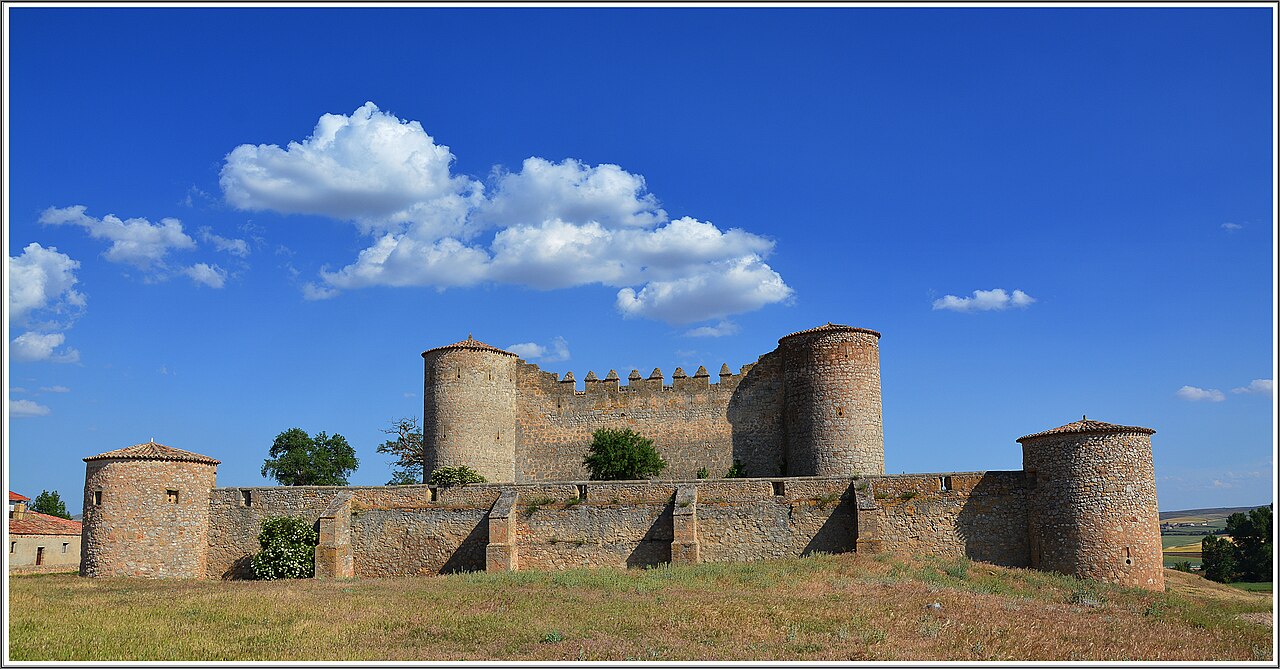
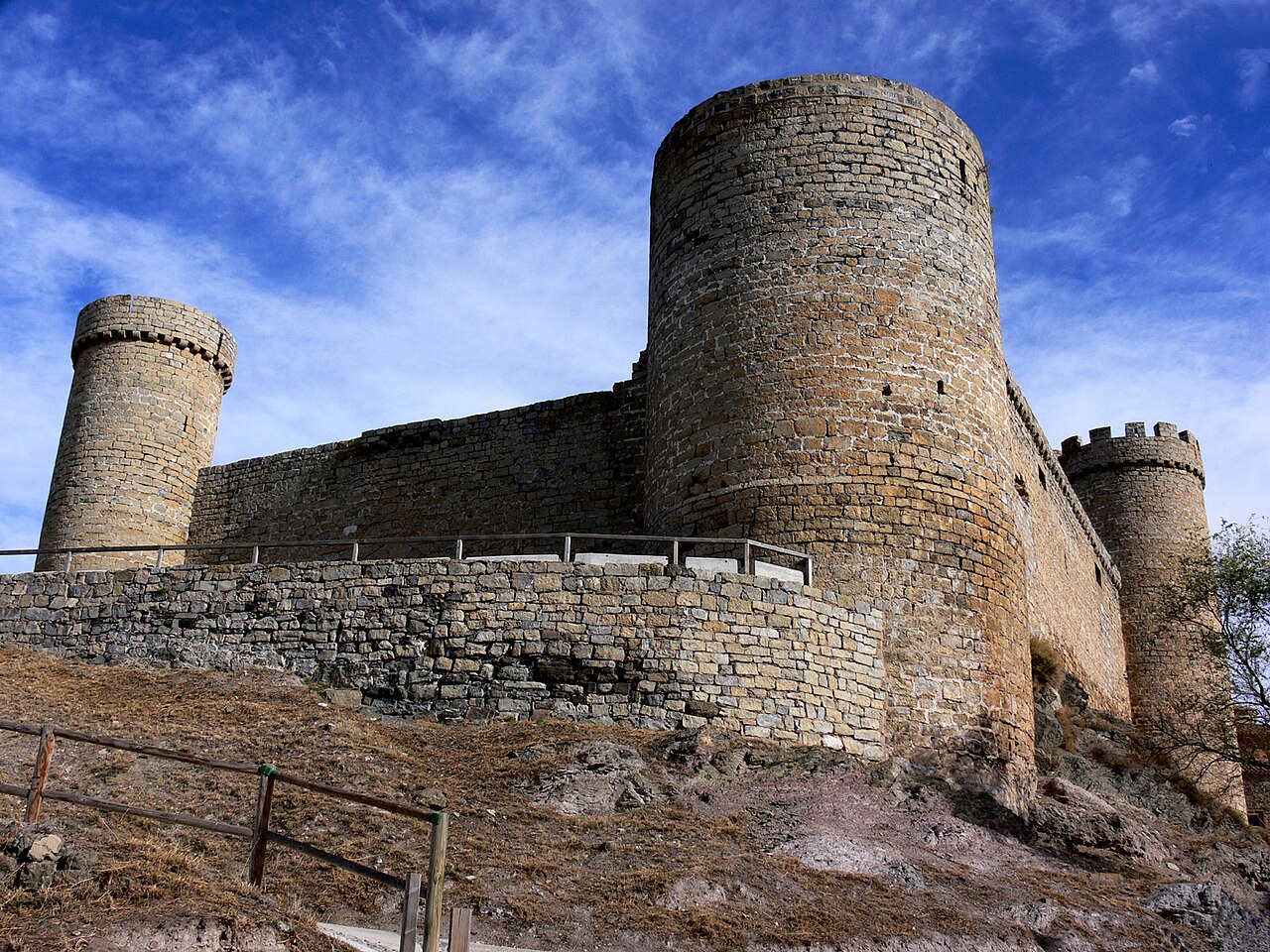
Magaña Castle is a remarkable example of a 15th-century hill castle located near the village of Magaña in the province of Soria, Spain. Perched on a prominent steep hill, this castle commands panoramic views over the surrounding Alhama River valley and the rustic landscape of northeastern Soria. Its strategic position allowed it to dominate the nearby village and the vital medieval bridge crossing the river, underscoring its historical military importance.

The castle's origins are deeply rooted in a complex historical layering, beginning with a Berber tower or keep dating from between the 9th and 11th centuries. This original structure forms the core of the castle and is part of a group of similar Berber towers scattered throughout the valley of the Rituerto River, including those at Masegoso, Trévago, Noviercas, Castellanos, La Pica, and Aldealpozo. The Berber keep at Magaña is notable for retaining original battlement hexes and ashlar stone-framed windows, providing a rare glimpse into early medieval military architecture in the region.

Architectural layout and features

The castle is distinguished by its double enclosure design, a defensive feature that reflects the evolution of military architecture during the late medieval period. The inner enclosure is rectangular with a quadrangular floor plan, surrounded by tall stone walls that have withstood the test of time. At one corner stands the imposing keep or tower of homage, which served as the last line of defense and the residence of the lord. The keep still preserves remnants of its battlements, which would have provided defensive positions for archers and lookouts.

Two other corners of the inner enclosure are fortified with round towers known as cubos, which enhanced the castle's defensive capabilities by providing flanking fire along the walls and improved surveillance of the surrounding terrain. These towers, along with the keep, create a formidable defensive perimeter.

Surrounding the inner enclosure is a smaller, outer enclosure that lies at a lower elevation on the hillside. This outer wall is irregularly polygonal in shape, conforming to the natural topography of the hill. It is reinforced by seven round towers spaced along its length. These towers feature openings or embrasures designed to accommodate artillery pieces, reflecting the adaptation of the castle's defenses to the advent of gunpowder weaponry in the 15th century.

Materials and construction techniques

The castle is primarily constructed from local stone masonry, which has contributed to its durability despite centuries of exposure to the elements. The use of ashlar stonework in window frames and battlements demonstrates a high level of craftsmanship. The robust construction techniques allowed Magaña Castle to maintain its imposing silhouette and defensive integrity even as it fell into partial ruin over time.

Historical significance and phases of construction

The history of Magaña Castle is a testament to the region's turbulent past and the confluence of cultural influences. Its earliest phase as a Berber tower indicates the presence and influence of Muslim forces in the Iberian Peninsula during the early Middle Ages. The castle's later expansion during the 15th century coincides with the period of the Reconquista and the consolidation of Christian kingdoms in northern Spain.

The castle's construction during the 15th century appears to have occurred in two main stages. The initial phase established the inner enclosure around the ancient keep, creating a stronghold suited to the feudal nobility of the time. The second phase, likely influenced by Rodrigo Alonso Pimentel or other noble patrons, involved the addition of the outer enclosure with artillery-adapted towers, signaling a response to evolving military technologies and the increasing use of firearms.

Magaña Castle functioned as a noble residence and military fortress within the Valladolid architectural tradition, which shaped many castles across the Castilian region. Its layered construction reflects both continuity and change in defensive strategies, blending early medieval elements with late medieval innovations.

Restoration and current condition

Today, Magaña Castle stands as a consolidated ruin, preserved better than many other fortifications in the Soria province. Restoration efforts in the 21st century have focused on stabilizing the structure, clearing overgrowth, and uncovering archaeological remains that shed light on the castle's earlier phases. Excavations revealed the original main gate of the outer enclosure and helped reinforce vulnerable sections, especially at the corners.

The castle is freely accessible to visitors and continues to attract interest for its historical and architectural significance. Its majestic silhouette, visible from roads leading to Fuentes de Magaña and from the town itself, remains a striking feature of the landscape. The contrast between the ochre tones of the natural surroundings and the stone walls covered partially by vegetation creates a picturesque scene that highlights the castle's enduring presence.

Nearby historical features

On the hillside close to the castle stands a small chapel with a rectangular apse, which some scholars suggest may be of pre-Romanesque origin. This adds to the historical depth of the site, indicating religious activity in the area predating the castle's medieval expansions.

Visitor information and cultural heritage status

Magaña Castle is protected under Spanish cultural heritage laws since 1949, recognizing its importance as a monument of historical and architectural value. Visitors can explore the ruins freely, experiencing the layered history embodied in its walls and towers. The site offers an evocative glimpse into the military architecture of northern Spain and the cultural interactions that shaped it over centuries.

For those interested in medieval fortifications, Magaña Castle provides a compelling case study of a hill castle that evolved from early medieval origins into a late medieval fortress adapted to the challenges of gunpowder warfare. Its preservation and ongoing restoration efforts ensure that this heritage site remains a significant landmark in the Soria region.

Frequently asked questions (FAQ)

What is the historical significance of Magaña Castle?
Magaña Castle is a remarkable example of medieval architecture, reflecting the strategic importance of the region during the Reconquista. Built in the 12th century, it served as a defensive stronghold and a royal residence, providing insight into the feudal system of the time.
When was Magaña Castle built?
Magaña Castle was constructed in the 12th century, likely around the year 1150. Its origins are tied to the historical conflicts of the period, marking it as a significant structure in the defense against invasions.
What are the opening hours for Magaña Castle?
Magaña Castle is open to visitors from 10 AM to 6 PM, Tuesday through Sunday. It is advisable to check for seasonal changes in hours or any special closures that may occur.
Can I visit Magaña Castle year-round?
Yes, Magaña Castle is open to visitors throughout the year, though access may be limited during certain holidays or events. It’s best to check the official website for any updates on accessibility during your planned visit.
Is it possible to access all areas of Magaña Castle?
While many areas of Magaña Castle are accessible to visitors, some sections may be restricted due to preservation efforts. Guided tours are available, which provide insights while ensuring the protection of the castle's historical features.
What is the best time to visit Magaña Castle?
The best time to visit Magaña Castle is during the spring and fall when the weather is mild, making for a comfortable exploration of the grounds. Additionally, these seasons attract fewer tourists, allowing for a more intimate experience with the castle's history.
Are there any nearby attractions to visit along with Magaña Castle?
Yes, nearby attractions include the picturesque village of Magaña and the beautiful natural landscapes of the surrounding region. Visitors can also explore other historical sites and local cuisine to enrich their experience.
What are the ticket prices for Magaña Castle?
Ticket prices for Magaña Castle are reasonably priced, generally around €5 for adults and discounted rates for students and seniors. Group rates and family packages may also be available, providing a cost-effective way to explore the site.

Information

Hill Castle

Sources & official resources

Verify the information above using these authoritative references.

Loading map...

Visitor reviews

No reviews yet. Been here? Write the first review and help other travelers!

Write the first review

Visited this castle? Share your experience

Your review helps other travelers and adds first-hand knowledge to our encyclopedia.
Write a review

(5/5)

0/2000 characters

Your review will be visible after admin approval

Nearby castles

19.2 km
Castle of Cornago — Spain castle

Castle of Cornago

Cornago, Spain

The Castle of Cornago stands as a remarkable example of medieval military architecture in northern Spain. Perched atop the highest hill overlooking the village of Cornago, this hill castle embodies centuries of history dating back to the 9th century, when an earlier fortification occupied the site. The current structure was primarily built during the late 13th century by Christian forces engaged in the Reconquista, a period marked by the Christian kingdoms' efforts to reclaim Iberian territories from Muslim rule. Strategically located near the historic borders of the kingdoms of Navarre, Castile, and Aragon, the castle played a pivotal role in the shifting alliances and conflicts of the late medieval period. Its position allowed it to serve both as a defensive stronghold and a symbol of power during the turbulent border disputes that characterized the region. The castle's involvement in the civil war between King Pedro the Cruel and Enrique of Castile highlights its importance in the political struggles of 14th-century Spain. Historical significance and ownership Throughout its history, the Castle of Cornago was closely associated with the noble Luna family, who held the fortress from the 14th century until the 17th century. The castle was granted to the family by King John II of Castile as part of the marriage arrangements for Álvaro de Luna, the influential Constable of Castile. Under their stewardship, the castle not only served military purposes but also became a noble residence and administrative center. However, the Luna family's fortunes waned over time, leading to financial difficulties that forced them to pledge parts of their estates. Despite these challenges, the castle remained under their control until it was eventually abandoned during the 1600s. Later, the castle grounds were repurposed as a cemetery from 1813 to 1971, a use that significantly altered the site's condition and historical fabric. Architectural features and layout The castle's design reflects typical medieval defensive architecture, with a large rectangular or nearly square layout that maximizes the hilltop's natural defensibility. Its walls combine finely cut ashlar stone and brickwork, creating a formidable barrier against attackers. The fortress is defined by four corner towers: three are round towers of varying sizes, while the northeast tower is uniquely square and features a rectangular opening near its upper section. Of particular note is the southern tower, which retains its original battlements with crenellations, allowing defenders to observe and repel assaults while remaining protected. The castle's main entrance is heavily fortified, flanked by towers and protected by a machicolation gallery, an overhanging parapet with openings through which defenders could drop projectiles on enemies at the gate. Surrounding the main fortress is an outer wall enclosing a courtyard that includes a church. This enclosed space likely served as an albacar, a fortified refuge for villagers during times of conflict. Access to this area was controlled by the Arco de la Campanilla gate, emphasizing the layered defensive strategy of the complex. Interior structures and facilities Inside the castle, architectural evidence reveals a variety of functional spaces essential for sustaining life during sieges. There are remains of a kitchen, several bedrooms, and a well providing a vital water supply. A notable feature is the large grain storage silo, known as a fogón, housed within a semicircular chamber and reaching a depth of approximately seven meters. This silo underscores the castle's role as a self-sufficient stronghold capable of withstanding prolonged isolation. Additional facilities include a cellar or cistern used for storing provisions or collecting rainwater, further supporting the castle's defensive resilience. The thick, solid walls and spacious courtyard allowed for both military defense and the sheltering of local inhabitants during turbulent periods. Preservation and restoration efforts After centuries of decline and abandonment, the Castle of Cornago underwent a significant change in function when its grounds were used as a cemetery between 1813 and 1971. This period altered much of the site's original character and contributed to its deterioration. Beginning in the 1980s, restoration initiatives aimed to clear the fortress of later additions and stabilize its remaining structures. These efforts have focused on preserving the castle's defining architectural features, such as the towers, walls, battlements, and the courtyard with its church. Archaeological work has helped uncover the layered history embedded in the stonework, revealing insights into medieval construction techniques and the castle's strategic importance. Today, the castle stands as a well-preserved testament to the region's medieval heritage and continues to attract visitors interested in Spain's rich historical tapestry. The castle's role in regional heritage The Castle of Cornago is not only an architectural landmark but also a cultural symbol reflecting the complex history of northern Spain. Its location at the crossroads of historic kingdoms and its involvement in significant medieval conflicts highlight its importance beyond mere military function. The castle's preservation contributes to understanding the social, political, and military dynamics of the late medieval period in the Iberian Peninsula. Visitors to the castle can explore its imposing walls, towers, and inner courtyard, gaining insight into the lives of medieval nobility and soldiers. The site also offers panoramic views of the surrounding landscape, emphasizing its strategic hilltop position. As a heritage site, the Castle of Cornago plays a vital role in educating the public about Spain's medieval past and the enduring legacy of its fortified architecture.

Late Medieval (14th–15th c.)
Details
20.8 km
Arab Arch (Ágreda) — Spain castle

Arab Arch (Ágreda)

Ágreda, Spain

The Arab arch (Spanish: Puerta Árabe) is a prominent architectural monument located in Ágreda, Spain. This historic structure is a remarkable example of Islamic architectural influence in the Iberian Peninsula, dating back to the 10th century, during the early medieval period. It is distinguished by its characteristic horseshoe arch design, a signature element of Moorish architecture that was prevalent in the region during the time of Muslim rule. Historical context and cultural significance The Arab arch was constructed in the 10th century when much of the Iberian Peninsula was under the control of various Muslim dynasties. Ágreda itself was a strategic location, and the arch likely served as a fortified gateway, part of the town's defensive system. This aligns with the classification of the site as a bastioned fortress, indicating its role in military defense. Declared a Bien de Interés Cultural in 1931, the arch is recognized for its cultural and historical importance. This designation protects the structure as a cultural heritage site of Spain, highlighting its value as a tangible link to the region's Islamic past and medieval fortifications. Architectural features and design The most striking feature of the Arab arch is its horseshoe arch, a form that curves beyond a semicircle and narrows at the base, creating an elegant and distinctive shape. This type of arch is emblematic of Moorish architecture and was widely used in gates, windows, and arcades throughout Muslim Spain. The arch would have originally been part of a larger fortified structure, possibly integrated into defensive walls with bastions or towers flanking the gateway. The bastioned fortress classification suggests the presence of such military architectural elements designed to enhance defense and control access. While the arch itself remains the most visible and intact element, it likely served as a key point of entry, combining both functional military architecture and aesthetic design. The masonry and stonework reflect the construction techniques of the early medieval Islamic period in Spain, emphasizing durability and stylistic detail. Preservation and current condition Today, the Arab arch stands as a well-preserved example of early medieval Islamic architecture in Ágreda. Its designation as a Bien de Interés Cultural has helped ensure its protection and maintenance. Conservation efforts have focused on preserving the arch's structural integrity and the distinctive horseshoe shape that defines its architectural identity. The arch remains accessible to visitors and serves as a cultural landmark that connects the modern town with its historical roots. It is an important site for those interested in the history of Muslim Spain, medieval fortifications, and the architectural heritage of the region. Visiting the Arab arch Visitors to Ágreda can view the Arab arch as part of the town's historical attractions. While specific visiting hours or ticket requirements are not typically applicable to this open-air monument, visitors are encouraged to respect the site and its preservation status. The arch is situated within the town, making it easily accessible for those exploring Ágreda's rich historical environment. Nearby attractions include other medieval structures and the natural landscapes surrounding the town, offering a broader context for understanding the arch's strategic and cultural significance.

Early Medieval (5th–10th c.)
Details
24.6 km
Almenar Castle — Spain castle

Almenar Castle

Almenar de Soria, Spain

Almenar castle stands as a remarkable example of late medieval military architecture nestled in the town of Almenar de Soria, Spain. Constructed primarily in the 15th century atop the remains of an earlier fortification, the castle offers a tangible narrative of centuries of strategic, residential, and cultural evolution. Its layered history is etched into its robust walls, towers, and courtyards, making it a significant monument in the province of Soria. The castle’s origins trace back to a 10th-century Muslim tower around which a small settlement developed. This early fortification laid the groundwork for the castle’s later expansion during the 13th and 14th centuries, with substantial enhancements occurring in the 15th and 16th centuries. The site’s strategic position on a narrow ridge provided commanding views of the surrounding landscape, an essential feature for defense and control. Architectural evolution and defensive features The castle’s design reflects the military needs and residential functions of its time. The double-wall enclosure is a defining characteristic, with an inner bailey housing the keep and a weapon courtyard, while the outer defensive walls encompass a moat and a drawbridge. These features exemplify the typical defensive strategies of hill castles in the late medieval period. The inner bailey is fortified with crenellated walls and punctuated by circular towers, which provided defenders with multiple vantage points and angles of fire. The tower of homage, dating from the earliest phase of construction, stands as a testament to the castle’s military origins, commanding the ridge with its imposing presence. In the 16th century, remodeling of the towers altered their form and appearance, reflecting evolving defensive techniques and architectural tastes. The addition of galleries and staircases within the inner courtyard indicates a shift towards accommodating social and residential functions alongside military use. Historical significance and noble ownership The castle originally belonged to prominent noble families such as the Bravo de Laguna, Saravias, and Ríos, whose coats of arms remain visible on the castle walls. These families played key roles in the region’s history, and their association with the castle underscores its importance as a noble residence and military stronghold. Throughout its history, Almenar castle served as a royal residence during the reigns of Carlos II and Felipe V, highlighting its stature within the Spanish monarchy’s network of estates. The castle’s strategic and residential value made it a significant site for governance and control in the area. Cultural connections and literary heritage Beyond its military and noble functions, the castle holds a special place in Spanish cultural history. It was the birthplace of Leonor Izquierdo on June 12, 1894, the wife and muse of the famed poet Antonio Machado. This personal connection is commemorated by a plaque at the castle entrance, linking the site to Spain’s literary heritage. The castle also inspired the Romantic writer Gustavo Adolfo Bécquer, who set two of his famous leyendas (legends) within its walls. This association with Romantic literature enhances the castle’s cultural significance and attracts literary enthusiasts to the site. Preservation and modern use Today, Almenar castle is recognized as one of the best-preserved fortifications in the Soria province. Its durable construction and ongoing maintenance have allowed many original features to survive, providing valuable insights into medieval military architecture and noble residences. In the 20th century, the castle served as barracks for the Guardia Civil, maintaining its military function until around 1940. It was declared a protected cultural monument (Bien de Interés Cultural) in 1949, and later included in Spain’s national list of historical heritage sites in 1986. More recently, the castle has been used as a filming location for the television series El Cid, demonstrating its continuing relevance as a cultural and historical landmark. Visitors today can explore its well-preserved walls, towers, and courtyards, experiencing a site that embodies centuries of Spanish history and architectural evolution. Exploring almenar castle Visitors to Almenar castle can appreciate its strategic hilltop location, which offers panoramic views of the surrounding landscape. The double defensive walls and moat with drawbridge remain key features that illustrate medieval fortification techniques. The inner bailey invites exploration of the castle’s residential and military spaces, including the keep and weapon courtyard. The presence of noble coats of arms and commemorative plaques enriches the visitor experience by connecting the architecture to the families and individuals who shaped its history. While some areas have undergone remodeling, the castle’s overall layout and many original features are intact, making it a valuable destination for those interested in medieval architecture, Spanish history, and literary heritage.

Late Medieval (14th–15th c.)
Details