Castle of Cornago
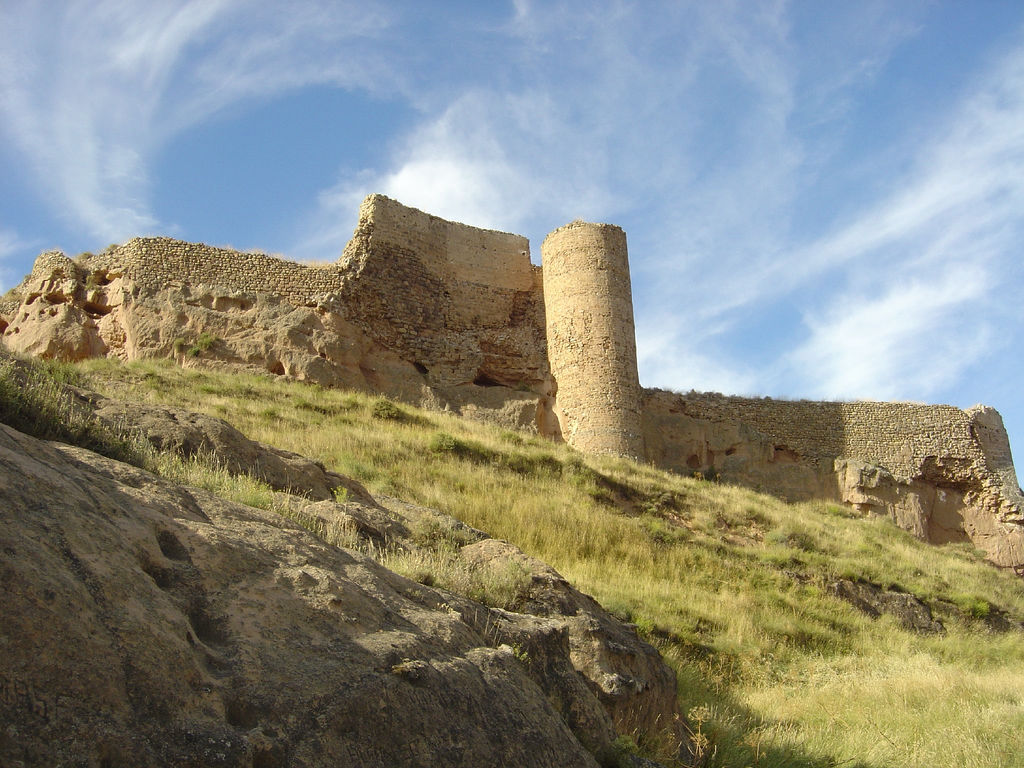
The Castle of Cornago stands as a remarkable example of medieval military architecture in northern Spain. Perched atop the highest hill overlooking the village of Cornago, this hill castle embodies centuries of history dating back to the 9th century, when an earlier fortification occupied the site. The current structure was primarily built during the late 13th century by Christian forces engaged in the Reconquista, a period marked by the Christian kingdoms' efforts to reclaim Iberian territories from Muslim rule.
Strategically located near the historic borders of the kingdoms of Navarre, Castile, and Aragon, the castle played a pivotal role in the shifting alliances and conflicts of the late medieval period. Its position allowed it to serve both as a defensive stronghold and a symbol of power during the turbulent border disputes that characterized the region. The castle's involvement in the civil war between King Pedro the Cruel and Enrique of Castile highlights its importance in the political struggles of 14th-century Spain.
Historical significance and ownership
Throughout its history, the Castle of Cornago was closely associated with the noble Luna family, who held the fortress from the 14th century until the 17th century. The castle was granted to the family by King John II of Castile as part of the marriage arrangements for Álvaro de Luna, the influential Constable of Castile. Under their stewardship, the castle not only served military purposes but also became a noble residence and administrative center.
However, the Luna family's fortunes waned over time, leading to financial difficulties that forced them to pledge parts of their estates. Despite these challenges, the castle remained under their control until it was eventually abandoned during the 1600s. Later, the castle grounds were repurposed as a cemetery from 1813 to 1971, a use that significantly altered the site's condition and historical fabric.
Architectural features and layout
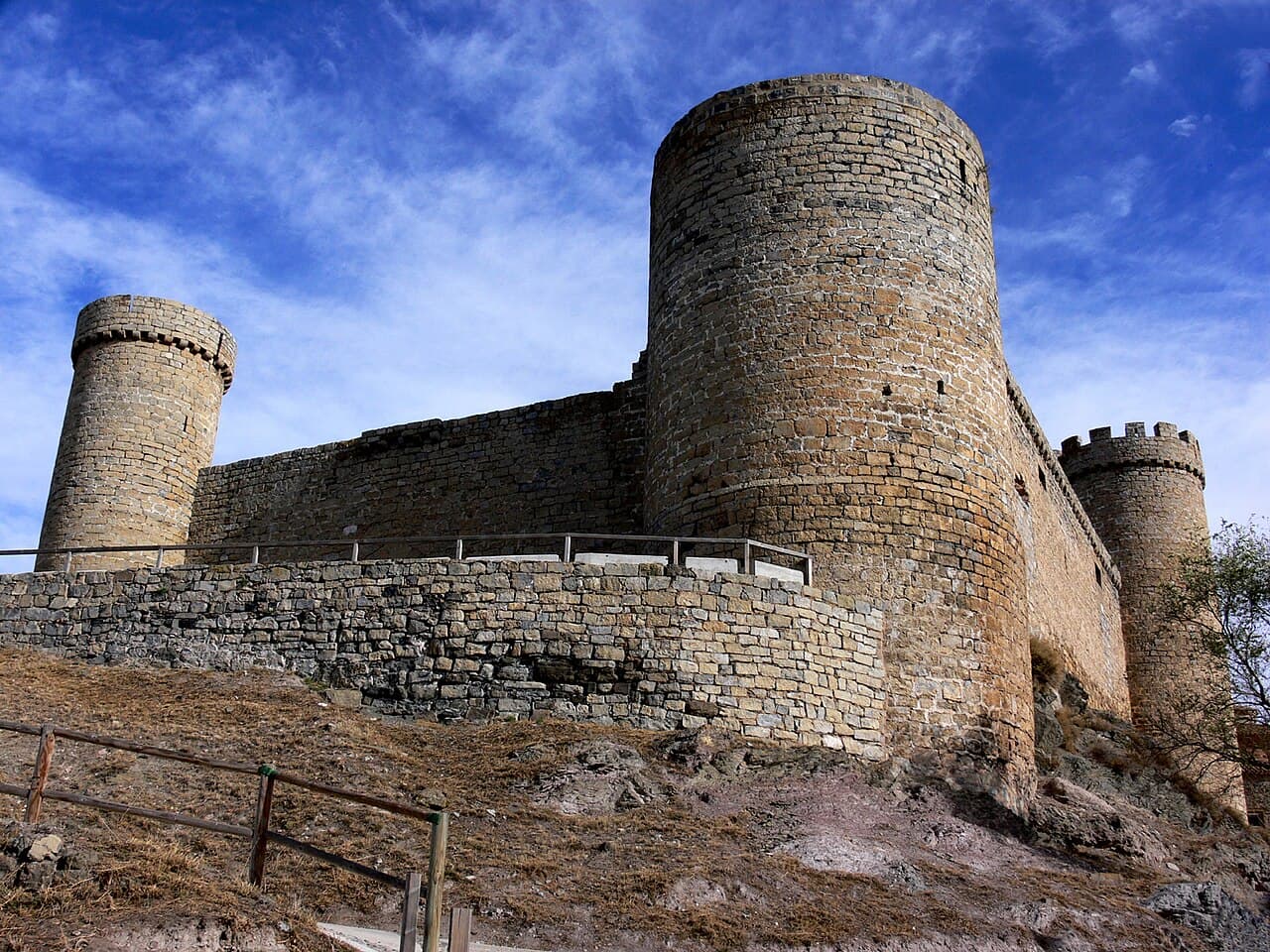
The castle's design reflects typical medieval defensive architecture, with a large rectangular or nearly square layout that maximizes the hilltop's natural defensibility. Its walls combine finely cut ashlar stone and brickwork, creating a formidable barrier against attackers. The fortress is defined by four corner towers: three are round towers of varying sizes, while the northeast tower is uniquely square and features a rectangular opening near its upper section.
Of particular note is the southern tower, which retains its original battlements with crenellations, allowing defenders to observe and repel assaults while remaining protected. The castle's main entrance is heavily fortified, flanked by towers and protected by a machicolation gallery, an overhanging parapet with openings through which defenders could drop projectiles on enemies at the gate.
Surrounding the main fortress is an outer wall enclosing a courtyard that includes a church. This enclosed space likely served as an albacar, a fortified refuge for villagers during times of conflict. Access to this area was controlled by the Arco de la Campanilla gate, emphasizing the layered defensive strategy of the complex.
Interior structures and facilities
Inside the castle, architectural evidence reveals a variety of functional spaces essential for sustaining life during sieges. There are remains of a kitchen, several bedrooms, and a well providing a vital water supply. A notable feature is the large grain storage silo, known as a fogón, housed within a semicircular chamber and reaching a depth of approximately seven meters. This silo underscores the castle's role as a self-sufficient stronghold capable of withstanding prolonged isolation.
Additional facilities include a cellar or cistern used for storing provisions or collecting rainwater, further supporting the castle's defensive resilience. The thick, solid walls and spacious courtyard allowed for both military defense and the sheltering of local inhabitants during turbulent periods.
Preservation and restoration efforts
After centuries of decline and abandonment, the Castle of Cornago underwent a significant change in function when its grounds were used as a cemetery between 1813 and 1971. This period altered much of the site's original character and contributed to its deterioration. Beginning in the 1980s, restoration initiatives aimed to clear the fortress of later additions and stabilize its remaining structures.
These efforts have focused on preserving the castle's defining architectural features, such as the towers, walls, battlements, and the courtyard with its church. Archaeological work has helped uncover the layered history embedded in the stonework, revealing insights into medieval construction techniques and the castle's strategic importance. Today, the castle stands as a well-preserved testament to the region's medieval heritage and continues to attract visitors interested in Spain's rich historical tapestry.
The castle's role in regional heritage
The Castle of Cornago is not only an architectural landmark but also a cultural symbol reflecting the complex history of northern Spain. Its location at the crossroads of historic kingdoms and its involvement in significant medieval conflicts highlight its importance beyond mere military function. The castle's preservation contributes to understanding the social, political, and military dynamics of the late medieval period in the Iberian Peninsula.
Visitors to the castle can explore its imposing walls, towers, and inner courtyard, gaining insight into the lives of medieval nobility and soldiers. The site also offers panoramic views of the surrounding landscape, emphasizing its strategic hilltop position. As a heritage site, the Castle of Cornago plays a vital role in educating the public about Spain's medieval past and the enduring legacy of its fortified architecture.
Frequently asked questions (FAQ)
- How do I get to the Castle of Cornago?
- The Castle of Cornago is located in the town of Cornago in La Rioja, Spain. It is accessible by local roads and is a short walk from the village center, making it easy to visit by car or public transport.
- What is the best time to visit the Castle of Cornago?
- The best time to visit the Castle of Cornago is during the spring and autumn months when the weather is mild and the landscape is particularly beautiful. Summer can be hot, so visiting early in the day is recommended.
- Is the castle suitable for visitors with mobility issues?
- The castle is situated on a hill and involves uneven terrain and steps, which may pose challenges for visitors with mobility issues. It is advisable to wear sturdy footwear and be prepared for some walking.
- What are the opening hours and ticket prices for the Castle of Cornago?
- Opening hours and ticket prices for the Castle of Cornago can vary seasonally. It is recommended to check the local tourism office or official website for the most current information before planning your visit.
- Can I explore the interior of the castle?
- Visitors can explore the castle's exterior walls, towers, and courtyard. Some interior areas are accessible, but parts of the castle may be restricted due to preservation efforts. Guided tours may be available to provide deeper historical context.
Photo gallery

Information
Website
Visit websiteSources & official resources
Verify the information above using these authoritative references.
Loading map...
Visitor reviews
No reviews yet. Been here? Write the first review and help other travelers!
Write the first reviewVisited this castle? Share your experience
Your review helps other travelers and adds first-hand knowledge to our encyclopedia.