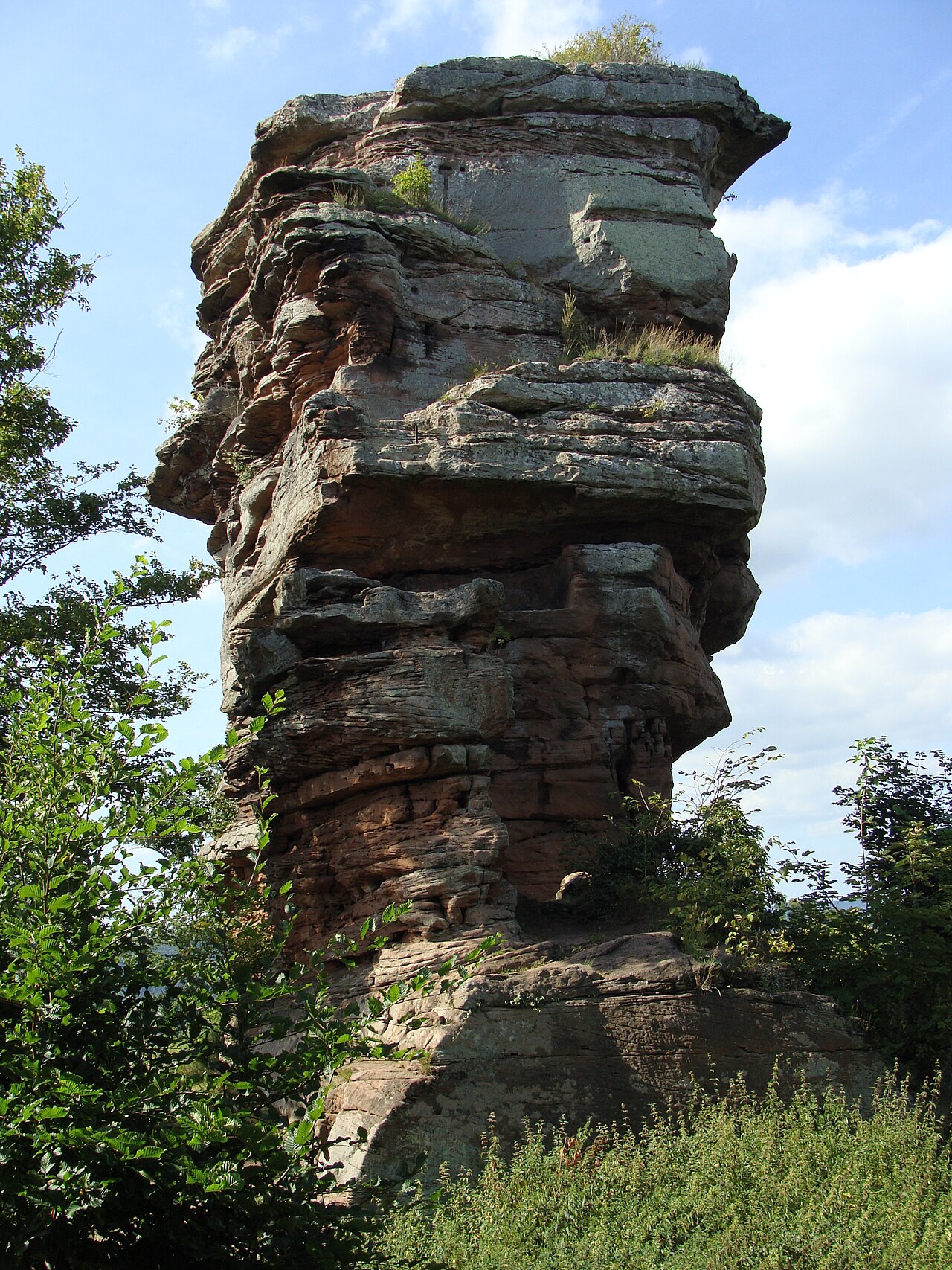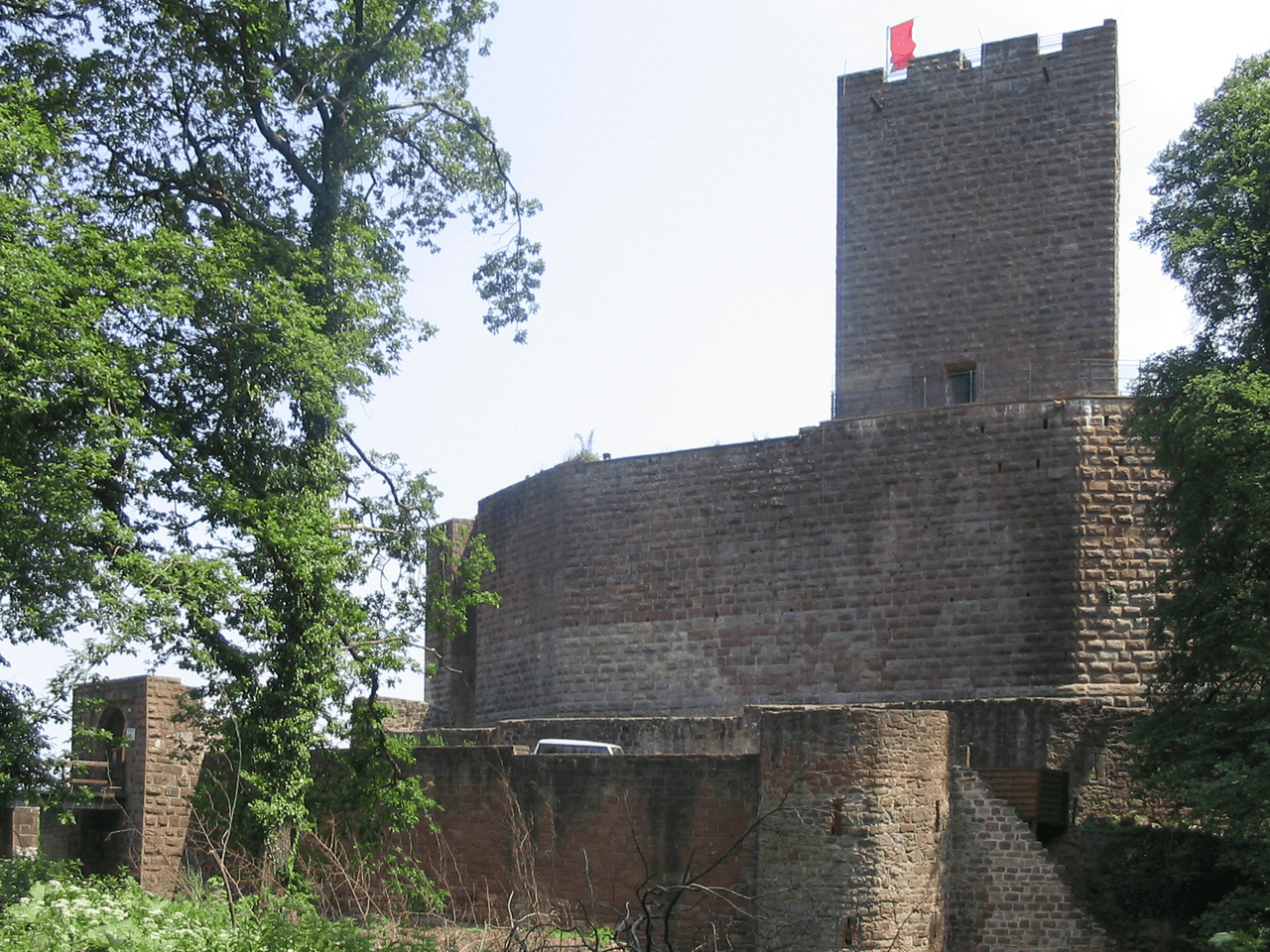
Landeck Castle — Germany castle

Landeck Castle

Landeck Castle: medieval hill castle ruins near Klingenmünster, Germany
Klingenmünster, Germany
High Medieval (11th–13th c.)
Ruins

Landeck Castle (German: Burg Landeck) stands as a significant high medieval hill castle ruin located southwest of Landau, near the town of Klingenmünster in the county of Südliche Weinstraße, within the German state of Rhineland-Palatinate. Constructed around the year 1200, this castle was strategically positioned to serve as a protective fortress for the nearby Klingenmünster monastery, reflecting the common medieval practice of securing ecclesiastical sites with military architecture.

Historical background and ownership

The first documented mention of Landeck Castle dates back to 1237, confirming its existence and importance during the high medieval period. Throughout its history, the castle experienced a complex succession of ownership and administrative control. Around the late 15th century, the castle was managed by administrators representing influential regional powers, including the Kurpfalz (Electoral Palatinate), the Bishop of Speyer, and the Counts of Zweibrücken. This shared stewardship highlights the castle's strategic and political significance in the region during the late medieval period.

Significant construction and renovation work took place at Landeck Castle towards the end of the 15th century, indicating ongoing investment in its defensive and residential capacities. However, the castle sustained damage during the Peasants’ War of 1525, a widespread uprising that affected many castles and noble estates across Germany. Despite this, the castle was rapidly repaired, demonstrating its continued military and administrative importance.

Ownership changed again in 1570, when the castle's shares shifted following the extinction of the Zweibrücken-Bitsch lineage. Their portion was absorbed by the Kurpfalz, which gradually consolidated control over the entire castle. It was not until 1709 that the Electors of the Palatinate succeeded in acquiring full ownership, following the exchange of remaining rights held by the Bishopric of Speyer. The Kurpfalz maintained sole ownership until the upheavals of the French Revolution, which marked the end of many feudal holdings in the region.

Architectural features and castle layout

Landeck Castle exemplifies the typical characteristics of a hill castle built during the high medieval period. Its location on elevated terrain provided natural defensive advantages, supplemented by man-made fortifications. Though now in a state of ruins, archaeological investigations and restoration efforts have revealed key elements of its original structure.

The castle complex likely included a keep or donjon, serving as the main fortified residence and last line of defense. Surrounding the keep would have been a series of defensive walls with battlements and possibly a gatehouse controlling access to the inner precincts. The presence of a courtyard within the walls would have accommodated various ancillary buildings such as stables, workshops, and storage facilities.

Extensive renovation work recorded at the end of the 15th century suggests enhancements to the castle’s defensive capabilities, possibly including the reinforcement of walls and towers to withstand artillery advances of the period. The castle’s design would have balanced military functionality with residential needs, reflecting its role as both a fortress and administrative center.

Damage, restoration, and current condition

The Peasants’ War of 1525 inflicted notable damage on Landeck Castle. This conflict involved widespread revolts against feudal authorities, and many castles were targeted or besieged. The castle’s quick repairs after the war indicate its importance to regional rulers and its resilience as a defensive structure.

Despite surviving several centuries, the castle eventually fell into decline, particularly after the French Revolution when feudal structures were dismantled. By the 20th century, it had become a ruin, reflecting the fate of many medieval castles in the Rhineland-Palatinate region.

In the 1960s, extensive restoration efforts were undertaken to preserve what remained of the castle ruins. These efforts focused on stabilizing the existing structures and preventing further deterioration, allowing visitors today to explore the site and appreciate its historical significance and architectural remnants.

Visitor information and cultural significance

Today, Landeck Castle is recognized as an important archaeological site and cultural landmark within the Rhineland-Palatinate. Its ruins offer insight into medieval fortification techniques and regional history. Visitors can explore the remains and gain an understanding of the castle’s role in protecting ecclesiastical properties and serving as a seat of local power.

The castle’s location near Klingenmünster makes it accessible for those interested in medieval architecture and history. Interpretive signage and guided tours may be available to provide context about the castle’s construction, historical events, and ownership lineage.

Architectural style and influences

The castle’s construction around 1200 places it within the high medieval period, a time characterized by the widespread use of Romanesque and early Gothic architectural elements in castle building. While specific stylistic details of Landeck Castle are limited due to its ruined state, it likely featured robust stone masonry typical of the era, with rounded arches and thick walls for defense.

Later renovations in the late 15th century may have introduced elements reflecting the transition to Gothic military architecture, including pointed archways and improved tower designs to accommodate evolving warfare technologies.

Frequently asked questions (FAQ)

How do I get to Landeck Castle?
Landeck Castle is located in Klingenmünster, Germany, and is accessible by car or public transport. If you're driving, you can find parking nearby. For those using public transportation, the nearest train station is a short bus ride away.
What are the opening hours for Landeck Castle?
Landeck Castle is open to visitors from 10 AM to 6 PM during the peak season from April to October. In the off-season, the hours may vary, so it's advisable to check the castle's official website before planning your visit.
Can I take guided tours at Landeck Castle?
Yes, guided tours are available at Landeck Castle, providing an in-depth look at its fascinating history and architecture. These tours are typically held several times a day and offer visitors the chance to learn more about the castle's significance.
What is the historical significance of Landeck Castle?
Landeck Castle dates back to the 12th century and played a vital role in the region's defense and governance throughout the Middle Ages. It has witnessed numerous historical events and changes in ownership, reflecting the turbulent history of the area.
Is it possible to access all areas of Landeck Castle?
While many areas of Landeck Castle are accessible to visitors, some parts may have restricted access due to preservation efforts. Always check with the on-site staff for the latest information regarding accessibility.
When is the best time to visit Landeck Castle?
The best time to visit Landeck Castle is during the spring and summer months when the weather is pleasant and the surrounding gardens are in full bloom. Additionally, visiting during weekdays can help you avoid larger crowds.
What are the ticket prices for Landeck Castle?
Ticket prices for Landeck Castle are generally affordable, with discounts available for children, students, and seniors. It's best to check the official website for current prices and any special deals before your visit.
Are there nearby attractions to visit along with Landeck Castle?
Yes, there are several attractions near Landeck Castle, including the picturesque town of Klingenmünster and the scenic hiking trails in the surrounding area. Visitors can also explore other historical sites and enjoy local cuisine in nearby restaurants.

Photo gallery

Landeck Castle
Click to view

Photo by Fusslkopp•CC BY-SA 3.0

1 photo • Click any image to view in full screen

Information

Archaeological Site / Ruins

Loading map...

Visitor reviews

No reviews yet. Been here? Write the first review and help other travelers!

Write the first review

Visited this castle? Share your experience

Your review helps other travelers and adds first-hand knowledge to our encyclopedia.

Write a review

(5/5)

0/2000 characters

Your review will be visible after admin approval

Nearby castles

3 km

Madenburg Castle

Eschbach, Germany

Madenburg Castle is one of the largest and oldest castle complexes in the German state of Rhineland-Palatinate. Situated on a steep cliff at the edge of the Palatinate Forest, it commands sweeping views over the Rhine rift valley. The castle’s strategic location highlights its historical military importance, controlling key routes and serving as a formidable defensive site during the High Medieval period. Early history and origins The first documented mention of Madenburg Castle dates back to 1076, placing its origins firmly in the 11th century. It was initially established by the counts of Madenburg, though detailed records of these early owners remain scarce. The castle’s early role was likely as a feudal stronghold, overseeing the surrounding territory and asserting the counts’ regional power. Throughout its early history, the castle’s ownership shifted. At times it belonged directly to the Holy Roman Empire and later to the Hochstift of Speyer, a significant ecclesiastical principality. These changes reflect the complex political landscape of medieval Germany, where secular and ecclesiastical powers often contested control over strategic fortifications. Architecture and fortifications Madenburg Castle was constructed as a hill castle, utilizing the natural topography of the cliff for defense. The extensive ruins reveal a complex layout with multiple curtain walls, towers, and gatehouses. The castle’s design evolved over centuries, adapting to advances in military technology and changing ownership. The castle’s defensive features included thick stone walls, battlements, and a series of inner courtyards. The elevated position provided both a vantage point for surveillance and a natural barrier against attackers. Remnants of residential quarters and service buildings indicate the castle was a self-sustaining fortress capable of housing a significant garrison. Damage and reconstruction phases In 1470, Count Palatine Friedrich I and his forces conquered the castle, marking a significant event in its history. Later, during the Peasants’ War of 1525, Madenburg Castle suffered serious damage. This widespread uprising led to the destruction of many feudal properties across the region. Despite this, the castle was rebuilt and renovated multiple times, reflecting its continued strategic and symbolic importance. The final destruction came around 1689 when French troops demolished the castle during the wars associated with the Nine Years' War. This left Madenburg in ruins, a state in which it remains today, offering a glimpse into medieval fortification architecture and the turbulent history of the region. Cultural and historical significance Madenburg Castle stands as a significant monument to the medieval history of the Palatinate region. Its ruins attract historians, archaeologists, and visitors interested in the military and feudal history of Germany. The castle’s remains provide valuable insights into High Medieval castle construction and the shifting power dynamics between noble families, the empire, and ecclesiastical authorities. Today, the site is accessible to the public and serves as a cultural heritage landmark. The dramatic setting and extensive ruins make it a popular destination for hiking and historical tourism, contributing to the preservation of regional history and identity. Visiting madenburg castle Visitors to Madenburg Castle can explore the extensive ruins and enjoy panoramic views of the Palatinate Forest and the Rhine valley. The site offers walking trails that lead through the remains of the castle walls, towers, and courtyards. Informational plaques provide context about the castle’s history and architecture. Due to its ruinous condition, some areas may be restricted for safety reasons, but the castle remains a fascinating site for those interested in medieval fortifications and German history. The surrounding natural landscape also enhances the visitor experience, combining cultural heritage with outdoor recreation.

High Medieval (11th–13th c.)
Details
5.6 km

Scharfenberg Castle Ruins

Annweiler, Germany

Scharfenberg Castle, also known locally as Münz, stands as a significant medieval rock castle ruin perched above the South Palatine town of Annweiler in Germany. This castle is part of the renowned Trifels Group, which includes its sister castles, Trifels and Anebos. Together, they form a historic symbol of the region, dominating the valley meadows of the River Queich below. Nearby, the remnants of two other castles, Fensterfels and Has, contribute to the area's rich medieval heritage. Historical background and significance Scharfenberg Castle was constructed in the first half of the 12th century during the High Medieval period, under the reign of the Hohenstaufen king Conrad III, who ruled until his death in 1152. The castle likely served an important administrative and military function, initially used as a state gaol. Its strategic location on a rocky outcrop provided natural defenses and control over the surrounding territory. Ownership of the castle passed to a ministeriales family who took the name Scharfenberg. In the early 13th century, the castle became the seat of the most prominent family member, Bishop Conrad III of Scharfenberg, who also served as the Chancellor of the Holy Roman Empire. This association highlights the castle's political and ecclesiastical importance during the High Medieval era. The castle's decline began with its destruction during the Peasants' War of 1525, after which it was left in ruins. Since then, it has remained a partially preserved ruin, offering valuable insights into medieval castle architecture and feudal history in the region. Architectural features and layout The most prominent surviving feature of Scharfenberg Castle is its imposing 20-metre-high bergfried, a tall tower typical of medieval German castles used for defense and as a status symbol. The bergfried's walls are constructed from rusticated ashlars, characteristic of the Hohenstaufen architectural style, which emphasizes robust and textured stonework for both aesthetic and defensive purposes. In addition to the bergfried, visitors can observe remnants of the well tower and parts of the enceinte—the castle's defensive outer wall. The enceinte would have enclosed the inner courtyard and living quarters, providing protection against attackers. The castle's rock castle classification reflects its integration with the natural rocky terrain, using the landscape as a defensive advantage. Defensive elements and strategic location Scharfenberg Castle's elevated position on a rocky hilltop allowed for extensive views over the surrounding valley and the River Queich, enabling early detection of approaching enemies. The bergfried served as a final refuge during sieges and a lookout point. The castle's walls and towers were designed to withstand assaults, with thick masonry and narrow apertures for archers. The proximity to other castles in the Trifels Group created a network of fortifications that could support one another militarily and administratively. This cluster of castles was significant for controlling trade routes and asserting the power of the Hohenstaufen dynasty in the region. Legacy and current status Today, Scharfenberg Castle ruins are a cultural landmark in the Palatinate region, attracting visitors interested in medieval history and architecture. The ruins provide a tangible connection to the High Medieval period and the legacy of the Hohenstaufen dynasty. Preservation efforts focus on maintaining the structural remains, especially the bergfried and enceinte sections, to ensure their endurance for future generations. While the castle is not fully intact, the visible ruins evoke the castle's former prominence and offer educational opportunities about medieval fortification techniques and feudal society. Its role alongside the nearby Trifels and Anebos castles underscores its importance in the historical landscape of southwestern Germany. Visiting Scharfenberg Castle Visitors to Annweiler can explore the ruins of Scharfenberg Castle, enjoying panoramic views of the surrounding countryside. The site is accessible via hiking trails that connect the Trifels Group castles, making it a popular destination for history enthusiasts and outdoor adventurers alike.

High Medieval (11th–13th c.)
Details
6 km
Anebos Castle Ruins — Germany castle

Anebos Castle Ruins

Annweiler, Germany

Anebos Castle is a medieval ruin located in the Palatinate Forest south of Annweiler in Rhineland-Palatinate, Germany. Perched atop a 300-metre high rocky low hill ridge, it is part of a notable cluster of hilltop castles alongside Trifels Castle and Scharfenberg Castle. This strategic position offered commanding views of the surrounding forested landscape and served defensive purposes during the High Medieval period. The castle's name likely derives from the German word "Amboss", meaning anvil, possibly reflecting the shape of the hill or a symbolic reference. Today, only a few remnants of the castle's structure survive, including portions of the stone walls and a cistern that was long mistaken for a cellar until recent archaeological excavations clarified its function. Additionally, traces of stonemasonry can be observed carved directly into the rock, indicative of the castle's integration with its natural rocky foundation. Historical background and significance Constructed in the early 12th century, Anebos Castle served as the ancestral seat of the lords of Anebos. These lords were ministeriales, a class of unfree knights or officials who held administrative and military responsibilities directly under the Holy Roman Emperor. The Anebos family held a prominent position, managing the feudal tenure system of the castle and its surrounding lands. Historical documentation of the lords of Anebos dates from the late 12th century through the mid-13th century. Notably, in 1194, the castle's marshal, Eberhard of Anebos, accompanied Emperor Henry VI on his military campaign in Italy. Eberhard was succeeded by his brother Henry in 1196. Records also mention Eliza of Anebos, a widow of a marshal, in the years 1234, 1250, and 1252. By the middle of the 13th century, the House of Anebos appears to have become extinct, as no further records of the family exist. It is believed that the castle's feudal tenure passed to the family of Philip I of Falkenstein, a seneschal, whose wife Isengard returned the castle to King Conrad IV of Germany. This transfer indicates the expiry of tenure due to the lack of a male heir, a common feudal practice requiring castles to revert to the crown. The last written record mentioning Anebos Castle dates to 1266. However, archaeological excavations since 2000 have revealed that the castle was inhabited until the 14th century. The evidence suggests the castle was abandoned peacefully, as no signs of military destruction or siege were found. Architectural features and layout Anebos Castle was built to take advantage of its natural rocky hilltop, integrating the castle structures with the terrain. The surviving remains include portions of the defensive walls and a cistern carved into the rock, which was essential for water storage during sieges or dry periods. The rock-cut features and masonry traces indicate skilled stonemasonry adapted to the rugged environment. The castle's layout likely included a keep or main tower, residential buildings, and defensive fortifications typical of High Medieval hill castles. Its position alongside other nearby castles like Trifels suggests it formed part of a defensive network controlling the region. The rocky ridge offered natural protection, reducing the need for extensive outer walls. The cistern and rock-cut masonry The cistern is one of the most significant surviving features of Anebos Castle. Initially misidentified as a cellar, recent archaeological work has clarified its function as a water reservoir, a vital feature for sustaining the castle's inhabitants. The cistern is hewn directly out of the rock, demonstrating the adaptation of the castle builders to the natural environment and their technical skill in stonework. Additional traces of stonemasonry on the rock surfaces indicate that the castle builders modified the rocky outcrop to create foundations and defensive structures, blending natural and man-made elements seamlessly. Historical context and feudal role The lords of Anebos were ministeriales, a class of unfree knights serving the emperor with administrative and military duties. Their role included managing the feudal tenure system of the castle, which involved overseeing vassals and lands granted by the emperor. This status placed Anebos Castle within the imperial domain rather than under local noble control. The castle's strategic location and the prominence of its owners reflect the political and military importance of the site during the High Medieval period. The involvement of Eberhard of Anebos in Emperor Henry VI's Italian campaign highlights the family's integration into imperial affairs. Transition of ownership and decline Following the extinction of the Anebos family line in the mid-13th century, the castle's tenure passed to the family of Philip I of Falkenstein. The subsequent return of the castle to King Conrad IV signifies the legal process of tenure expiry due to lack of male heirs. After this period, the castle's importance diminished, and it was eventually abandoned in the 14th century without evidence of violent conflict. Archaeological investigations and preservation Since 2000, archaeological excavations at Anebos Castle have provided new insights into its history and structure. These investigations clarified the function of the cistern and uncovered evidence of continued habitation into the 14th century. The absence of destruction layers suggests a peaceful decline rather than siege or battle damage. Today, Anebos Castle remains a ruin and an archaeological site. Its preservation allows visitors to explore the remnants of a High Medieval hill castle and appreciate the craftsmanship of its builders. The site offers a tangible connection to the feudal history of the region and the role of ministeriales in the Holy Roman Empire. Visitor experience and significance Visitors to Anebos Castle can observe the rock-cut cistern, fragments of stone walls, and the natural rocky ridge that formed the castle's foundation. The castle's location in the Palatinate Forest provides scenic views and a sense of the strategic considerations behind its placement. Although only ruins remain, the site tells a story of medieval feudal power and architectural adaptation to the landscape. The castle's connection with other nearby fortresses like Trifels and Scharfenberg enriches its historical context, illustrating a network of imperial strongholds in the region. This makes Anebos an important point of interest for those studying medieval German castles and feudal administration.

High Medieval (11th–13th c.)
Details