Machu Picchu
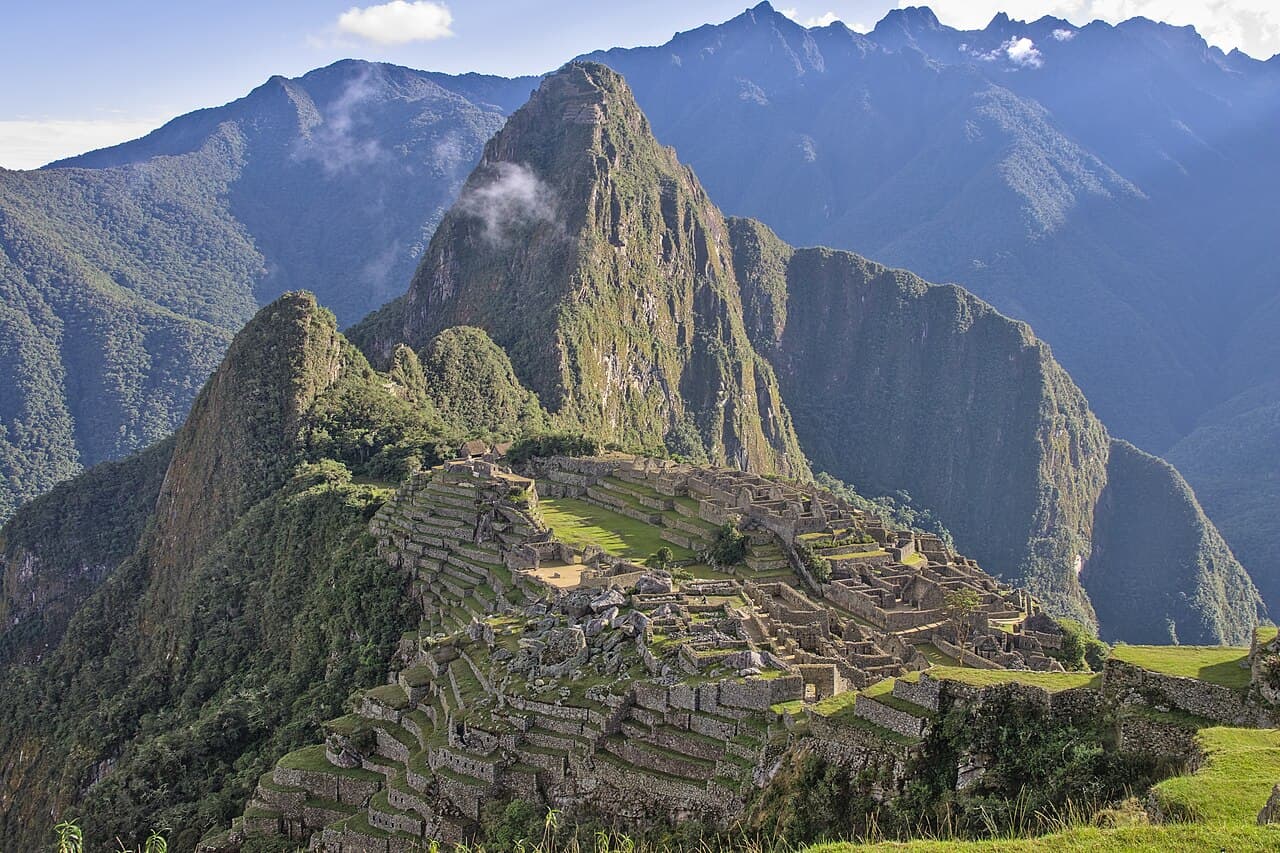
Machu Picchu is a remarkable 15th-century Inca citadel located high in the Eastern Cordillera of southern Peru, perched on a mountain ridge at an elevation of 2,430 meters (7,970 feet). It lies within the Machupicchu District of the Urubamba Province, approximately 80 kilometers (50 miles) northwest of Cusco, above the Sacred Valley along the Urubamba River. This river carves a deep canyon beneath the site, contributing to the area's unique subtropical mountain climate.
Often called the "Lost City of the Incas", Machu Picchu is one of the most important and well-preserved archaeological sites of the Inca civilization in the Americas. Its construction is generally dated to around 1450, during the reign of the Inca emperor Pachacuti, who is believed to have commissioned the site as a royal estate or religious retreat. Although there are no surviving contemporary written records from the Incas to confirm this, radiocarbon dating and archaeological evidence place the site's occupation between approximately 1420 and 1530.
The citadel was abandoned about a century later, likely as a consequence of the Spanish conquest of the Inca Empire. Despite this, the site remained largely intact due to its remote location and was known locally before gaining international recognition. It was brought to worldwide attention in 1911 by American historian and explorer Hiram Bingham III, although Peruvian explorer Agustín Lizárraga had reached it earlier.
Architectural features and layout
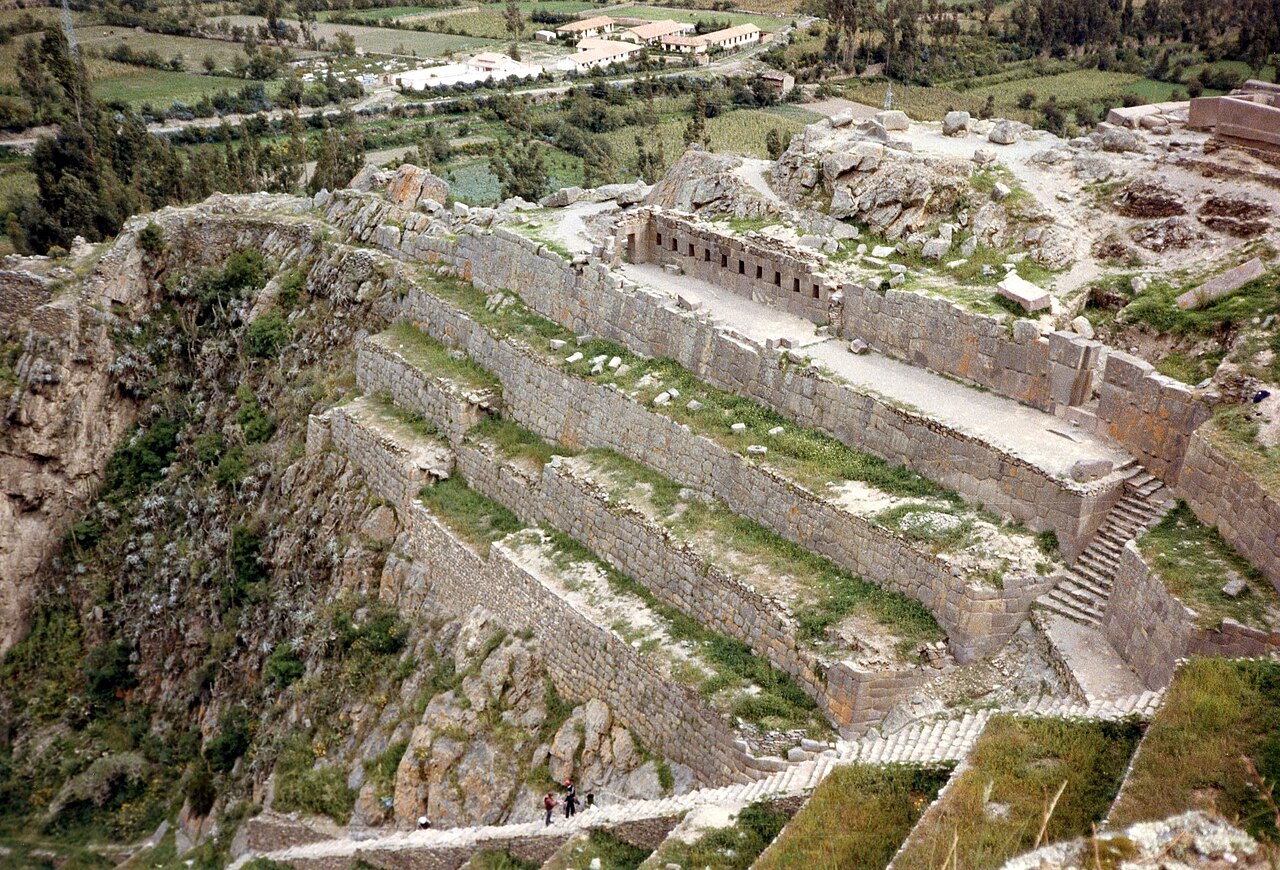
Machu Picchu exemplifies the classical Inca architectural style, renowned for its precise dry-stone masonry where stones are cut to fit together without mortar. This technique allowed the structures to withstand earthquakes common in the region. The site is divided into two main areas: the agricultural sector, with terraced fields used for farming, and the urban sector, containing temples, plazas, and residential buildings.
Notable structures
- Temple of the Sun: A semicircular tower built around a large rock, believed to have been used for astronomical observations and religious ceremonies connected to the sun god Inti.
- Temple of the Three Windows: Known for its three large trapezoidal windows that frame views of the surrounding mountains, symbolizing the Inca cosmology.
- Intihuatana stone: A carved ritual stone thought to function as a solar clock or calendar, aligning with the sun during solstices for ceremonial purposes.
Engineering and construction techniques
The Incas expertly adapted the natural terrain, integrating the site's steep slopes into their design. Extensive terracing stabilized the hillside and maximized arable land. The drainage systems were sophisticated, preventing erosion and managing rainwater efficiently. The stonework was so precise that even today, no mortar is needed to keep the walls intact.
Historical significance and cultural context
Machu Picchu holds immense cultural and historical importance as a symbol of the Inca Empire's architectural and engineering prowess. It reflects the Incas' spiritual beliefs, social organization, and mastery over challenging mountainous environments. The site likely served multiple purposes, including a royal estate, religious center, and possibly a strategic military outpost, although its exact functions remain debated among scholars.
The abandonment of Machu Picchu coincided with the Spanish conquest, yet the site was never discovered by the conquistadors, which helped preserve its structures. It remained hidden from most of the outside world until the early 20th century.
Modern recognition and preservation efforts
Declared a National Historic Sanctuary of Peru in 1981, Machu Picchu was inscribed as a UNESCO World Heritage Site in 1983. It has become one of the most visited archaeological sites globally, attracting over 1.5 million tourists annually as of 2025. Its designation as one of the New Seven Wonders of the World in 2007 further cemented its status as a cultural icon.
Preservation efforts focus on managing tourism impact, preventing erosion, and protecting the site's fragile structures. Strict regulations control visitor numbers and access routes to maintain the site's integrity. Ongoing archaeological research continues to uncover new insights into Inca life and construction methods.
Access and visitor experience
Visitors typically reach Machu Picchu via train from Cusco or the Sacred Valley, followed by a bus ride up the mountain or a multi-day trek along the famous Inca Trail. The site offers extensive walking paths through the ruins, with guided tours available to explain its history and architectural features.
The best times to visit are during the dry season, from May to September, when weather conditions are more favorable for exploring the extensive ruins and surrounding landscapes.
Frequently asked questions (FAQ)
- How do I get to Machu Picchu from Cusco?
- The most common way to reach Machu Picchu from Cusco is by taking a train to either Aguas Calientes or Ollantaytambo, followed by a bus ride or hike up to the site. Trains run regularly and offer scenic views along the Sacred Valley.
- What is the best time of year to visit Machu Picchu?
- The best time to visit Machu Picchu is during the dry season from May to September, when the weather is clearer and trails are safer for hiking. Avoid the rainy season from November to March to reduce the risk of landslides and trail closures.
- Can I hike the Inca Trail to Machu Picchu?
- Yes, the Inca Trail is a popular multi-day trek that leads directly to Machu Picchu. Permits are required and should be booked well in advance due to limited availability. The trail offers spectacular views of Andean landscapes and Inca ruins.
- Why is Machu Picchu called the Lost City of the Incas?
- Machu Picchu is called the Lost City of the Incas because it remained largely unknown to the outside world until its discovery by Hiram Bingham in 1911. Its remote location and abandonment during the Spanish conquest contributed to its preservation and obscurity.
- Is Machu Picchu accessible for visitors with mobility issues?
- Due to its mountainous terrain and uneven stone paths, Machu Picchu presents challenges for visitors with mobility impairments. Some areas may be difficult to access, but there are efforts to improve accessibility where possible.
Photo gallery

Information
Opening hours
06:00-17:30, daily
Ticket prices
Variable by season and age, typically around $50 USD for adults
Current owner
Peruvian government
Loading map...
Visitor reviews
No reviews yet. Been here? Write the first review and help other travelers!
Write the first reviewVisited this castle? Share your experience
Your review helps other travelers and adds first-hand knowledge to our encyclopedia.