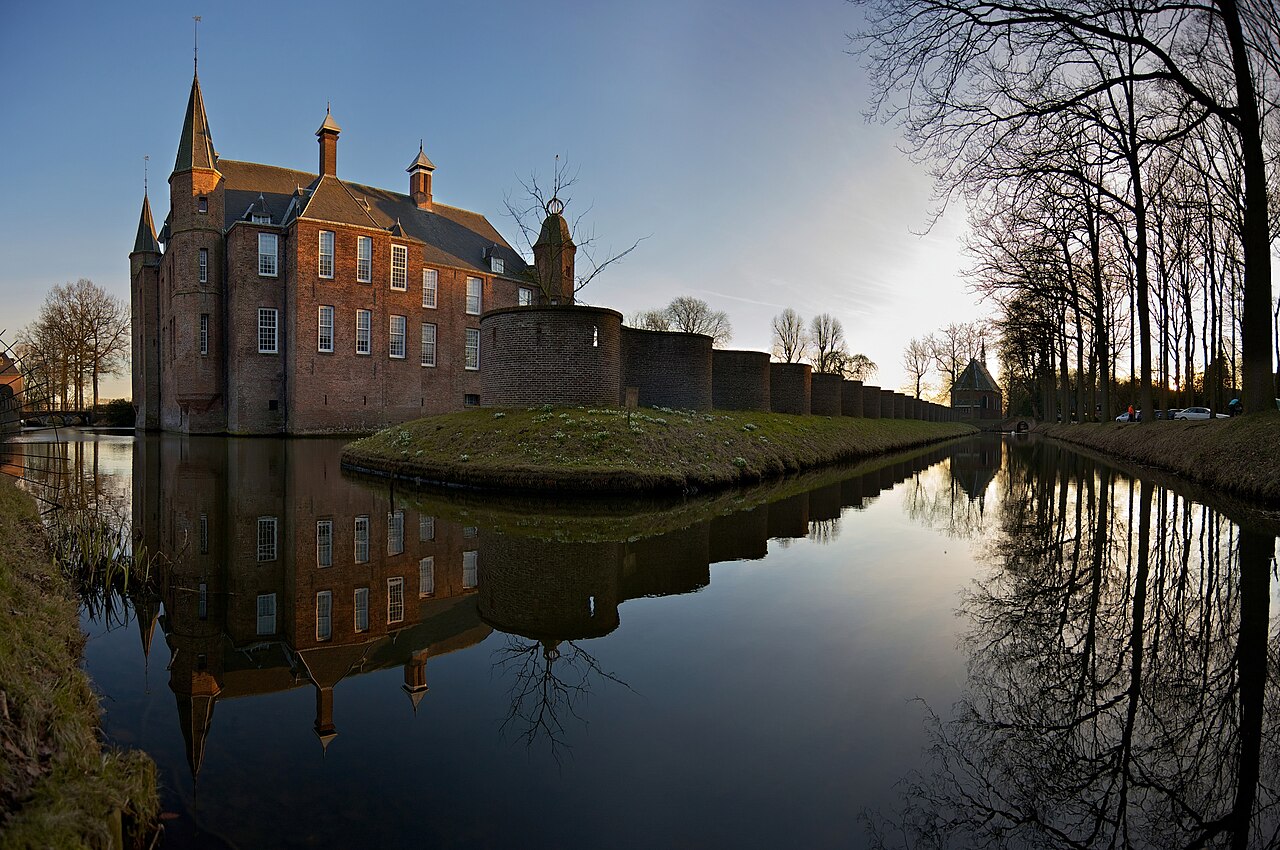
Maarssen Castle
Maarssen Castle was a significant fortified residence located in the town of Maarssen, within the province of Utrecht, Netherlands. Although no physical remains exist today, its history traces back to the late 11th century, marking it as a notable medieval stronghold that evolved through centuries of ownership, conflict, and architectural transformation.
Early origins and medieval development
The origins of Maarssen Castle date to around 1083, when a fortified residence was likely established by Emeritus van der Meer. The castle was first documented in 1394 under the name "Huys ter Meer," reflecting its association with the Van der Meer family who held it for several generations. This early castle would have featured typical medieval defensive elements such as thick stone walls and a moat, serving both as a noble residence and a defensive stronghold in the region.
In 1457, the castle passed into the hands of Jacob van Amerongen, marking the beginning of a new chapter. The Van Amerongen family maintained the property until 1525, when it was sold to the Teutonic Order. This transfer introduced new influences and led to significant modifications under the stewardship of the bailiff Steven van Zuylen van Nijevelt. He undertook considerable enlargement, strengthening, and embellishment of the castle, reflecting Renaissance-era architectural sensibilities.
Renaissance transformations and name change
Under Steven van Zuylen van Nijevelt, the castle was renamed Zuylenburg Castle, although it remained commonly known as Maarssen Castle. The enhancements included fortified walls, improved living quarters, and decorative elements consistent with the Renaissance style that was spreading through Europe during the 16th century. In 1536, the castle was granted the status of a knightly manor, elevating its prestige and solidifying its role as a noble residence with administrative functions.
Ownership by the van meertens van esschenstein family
From 1546 until 1788, the castle was owned by the Van Meertens van Esschenstein family and their descendants. This period saw the castle functioning primarily as a manor house, with its defensive role diminishing as the political and military climate in the Netherlands changed. However, the castle's fortunes declined sharply during the Franco-Dutch War in 1672, when French troops plundered and set fire to the castle, leaving it in ruins.
Destruction, rebuilding, and eventual disappearance
The medieval castle remained a ruin until the early 18th century, when the remains were cleared to make way for a new mansion built on the site. This mansion reflected the architectural trends of the post-Renaissance period, focusing more on residential comfort than fortification. However, by 1903, the mansion had fallen into disrepair and was demolished. Subsequently, the grounds were subdivided and developed into a residential neighborhood, erasing all visible traces of the original castle.
Legacy and cultural significance
Today, no physical structures of Maarssen Castle survive. Its site is fully occupied by modern housing, and the castle exists primarily through historical records and local heritage accounts. Maarssen Castle's story illustrates the common fate of many medieval castles in the Netherlands, where changing military technology, warfare, and urban development led to the loss of many such fortifications. It remains an important part of Utrecht's historical landscape and Dutch medieval history.
Historical timeline summary
- 1083: Probable original construction by Emeritus van der Meer.
- 1394: First documented mention as "Huys ter Meer."
- 1457: Ownership transferred to Jacob van Amerongen.
- 1525: Sold to the Teutonic Order; major renovations by Steven van Zuylen van Nijevelt.
- 1536: Granted knightly manor status.
- 1546-1788: Owned by Van Meertens van Esschenstein family.
- 1672: Castle plundered and burned during the Franco-Dutch War.
- Early 18th century: Ruins cleared; new mansion built.
- 1903: Mansion demolished; site redeveloped for housing.
Frequently asked questions (FAQ)
- What is the historical significance of Maarssen Castle?
- Maarssen Castle, dating back to the 13th century, is a key landmark in the history of the Netherlands. It served as a fortified residence and played a role in the region's defense strategies during the Middle Ages. Today, it stands as a symbol of the area's rich heritage.
- When was Maarssen Castle built?
- Maarssen Castle was originally constructed in the late 1200s, with significant renovations occurring in the 16th century. Its architecture reflects the styles and fortifications typical of that era, showcasing its evolution over the centuries. The castle has undergone various restorations to preserve its historical integrity.
- What are the opening hours for Maarssen Castle?
- Maarssen Castle is open to visitors from Tuesday to Sunday, 10 AM to 5 PM. It is advisable to check the official website for any seasonal changes or special events that may affect opening hours. Guided tours are available during these times for a more in-depth experience.
- Can I visit Maarssen Castle with a wheelchair?
- Yes, Maarssen Castle is accessible to visitors with disabilities. The main areas of the castle are equipped with ramps and have facilities to ensure a comfortable visit for everyone. However, it is recommended to contact the castle administration in advance to confirm specific accessibility options.
- What are the ticket prices for Maarssen Castle?
- Ticket prices for Maarssen Castle are typically around €10 for adults, while children under 12 can enter for free. Discounts may be available for students and seniors, so it's worth checking for any special promotions. Tickets can be purchased at the entrance or online for convenience.
- When is the best time to visit Maarssen Castle?
- The best time to visit Maarssen Castle is during the spring and early autumn when the weather is pleasant and the gardens are in full bloom. This allows for a more enjoyable experience exploring the grounds and taking part in outdoor activities. Additionally, visiting during weekdays can help avoid larger crowds.
- What nearby attractions should I explore while visiting Maarssen Castle?
- While visiting Maarssen Castle, consider exploring the beautiful surrounding area, including the scenic Vecht River and charming local villages. The nearby city of Utrecht offers a wealth of cultural attractions, including museums, shops, and cafes. Combining these sites can enhance your overall experience in the region.
Information
Address
Julianaweg, Maarssen, Netherlands
Loading map...
Visitor reviews
No reviews yet. Been here? Write the first review and help other travelers!
Write the first reviewVisited this castle? Share your experience
Your review helps other travelers and adds first-hand knowledge to our encyclopedia.