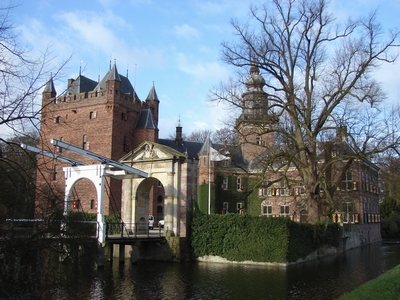
Gunterstein Castle
Gunterstein Castle stands on the banks of the river Vecht in Breukelen, Netherlands, embodying a significant chapter in Dutch Renaissance architecture and history. The castle visible today was constructed in 1681 by the renowned architect Adriaan Dortsman, who is also noted for designing Amsterdam's Lutheran church. This elegant estate was commissioned by the wealthy widow Magdalena Poulle (1626–1699), who acquired the property and its noble title following the destruction of the previous castle during the rampjaar (disaster year) of 1672, when French forces burned down many estates including the former Gunterstein and nearby Castle Nijenrode.
The site of Gunterstein has a layered history dating back to the 14th century. The original castle was named after Gysbrecht Gunter and was destroyed in 1511. It was rebuilt by his descendants but eventually changed ownership multiple times. Notably, it was once owned by Johan van Oldenbarnevelt, a key Dutch statesman who was executed in 1619. The castle that stood before the current one was lost to fire during the French invasion in 1672.
Architectural design and features
The current Renaissance-style castle reflects the architectural trends of the late 17th century, with symmetrical facades, classical proportions, and detailed stonework characteristic of the period. Adriaan Dortsman designed the castle on the foundations of the medieval predecessor, blending historical continuity with modern elegance. The building features a prominent central block with balanced wings, large sash windows, and decorative elements including the Poulle family coat of arms prominently displayed above the windows.
Interior and artistic heritage
Inside, the castle retains a number of original features and artworks. A notable piece is the portrait of Magdalena Poulle alongside her nephew Pieter, painted by David van der Plas, who was both a prominent Amsterdam portrait artist and Dortsman’s son-in-law. This portrait, dating from 1683, hangs above the main mantelpiece, symbolizing the family legacy and the castle's rebirth under Magdalena’s stewardship.
Magdalena Poulle and the gardens of Gunterstein
Magdalena Poulle was not only a patron of architecture but also an enthusiastic gardener. She commissioned a notable collection of etchings titled Veues de Gunterstein, dedicated to her and the estate at Thienhoven. This book includes one of the earliest known depictions of a Dutch orangerie complete with hothouses, reflecting the 17th-century fascination with exotic plants and botanical experimentation. Her work influenced other prominent figures such as Agnes Block and George Clifford III, who also cultivated rare plants and documented them in albums.
The gardens surrounding Gunterstein castle were designed with both aesthetic beauty and horticultural innovation in mind. The estate’s park remains open to the public today and is protected as a rijksmonument, along with the castle and its ancillary structures, preserving the cultural heritage of the site.
Historical significance and legacy
Gunterstein Castle exemplifies the resilience and transformation of Dutch noble estates through turbulent times. From medieval stronghold to Renaissance mansion, it reflects changes in ownership, architectural style, and social function. Its association with figures like Johan van Oldenbarnevelt and Magdalena Poulle links it closely to Dutch political and cultural history of the 16th and 17th centuries.
Today, Gunterstein remains a private residence of Poulle’s descendants, maintaining a living connection to its past. The preservation of the castle and its grounds, including the historically significant gardens, offers insight into Dutch aristocratic life and the evolution of estate design during the Renaissance period.
Visiting Gunterstein and its surroundings
The castle grounds are accessible to the public, allowing visitors to explore the historic park and appreciate the legacy of Dutch Renaissance landscaping. While the castle itself is a private home and not generally open for tours, the surrounding area offers scenic views along the Vecht river and nearby historic sites such as Castle Nijenrode.
Visitors interested in Dutch history, Renaissance architecture, and garden design will find Gunterstein a noteworthy destination for understanding the interplay of art, nature, and nobility in the Netherlands.
Frequently asked questions (FAQ)
- What is the historical significance of Gunterstein Castle?
- Gunterstein Castle, dating back to the 14th century, is a remarkable example of medieval architecture in the Netherlands. It played a crucial role in regional defense during its time and has been a witness to significant historical events in Breukelen.
- When was Gunterstein Castle built?
- Gunterstein Castle was constructed in the late 14th century, around the year 1390. This makes it one of the oldest surviving castles in the region, showcasing the architectural styles of that era.
- Can I visit Gunterstein Castle?
- Yes, Gunterstein Castle is open to visitors, but it is advisable to check the official website for specific visiting hours and any special events. Guided tours are often available, providing insights into the castle's history and architecture.
- What are the opening hours for Gunterstein Castle?
- Gunterstein Castle typically opens its doors to visitors from Wednesday to Sunday, with hours varying by season. It is recommended to confirm current opening times before planning your visit.
- Is Gunterstein Castle accessible for individuals with disabilities?
- The castle provides some accessibility features, but due to its historical nature, certain areas may be challenging to navigate. It is best to contact the castle management directly for detailed information regarding accessibility options.
- What is the best time to visit Gunterstein Castle?
- The best time to visit Gunterstein Castle is during the spring and early autumn when the weather is pleasant and the surrounding gardens are in bloom. Additionally, visiting during weekdays can help avoid larger crowds.
- Are there any nearby attractions to visit along with Gunterstein Castle?
- Yes, there are several attractions near Gunterstein Castle, including the picturesque village of Breukelen and other historical sites in the area. Visitors can also enjoy the natural beauty of the surrounding parks and waterways.
- How much are the ticket prices for Gunterstein Castle?
- Ticket prices for Gunterstein Castle vary, often depending on the type of tour or event being offered. It is advisable to check the castle's official website for the most accurate and up-to-date ticket information.
Information
Loading map...
Visitor reviews
No reviews yet. Been here? Write the first review and help other travelers!
Write the first reviewVisited this castle? Share your experience
Your review helps other travelers and adds first-hand knowledge to our encyclopedia.