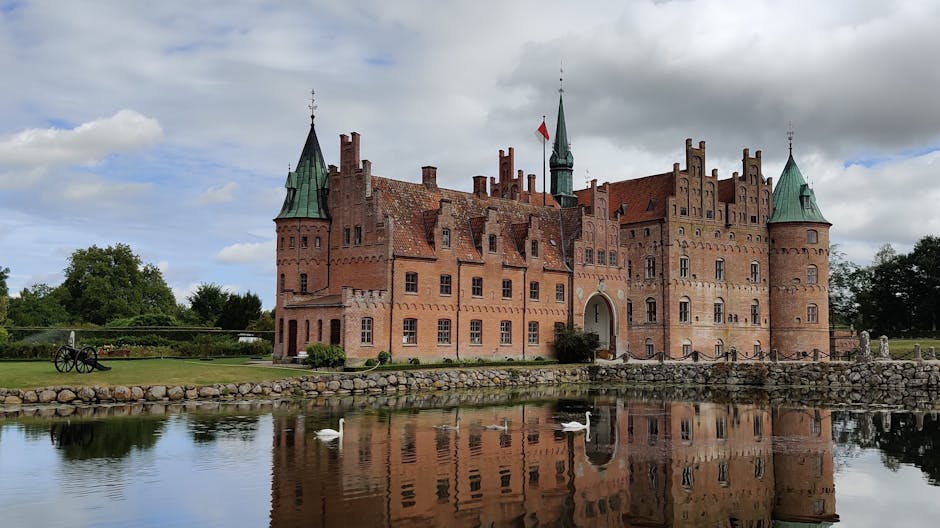
Lykkesholm Castle
Lykkesholm Castle is a historic manor located in Ørbæk, Denmark, with origins tracing back to the 14th century. Originally known as Magelund Castle, it was built on the remains of an earlier medieval fortification dating from around 1300. The castle's early history is closely tied to the political and social upheavals of medieval Denmark, including a brief ownership by Queen Margaret I in 1391, a significant figure who ruled Denmark, Norway, and Sweden and was instrumental in the formation of the Kalmar Union.
The medieval origins and relocation
The original castle stood on a strategic site but was later moved in the 17th century to its current location on the shores of a lake. This relocation was partly motivated by practical considerations, including the damming of the lake to harness water power. The water was used to operate two mills, reflecting the manor's role not only as a noble residence but also as a center of local economic activity. The relocation also led to the absorption of the nearby village of Ammendrup, which was razed and its lands incorporated into the manor's estate.
Architectural features and estate layout
While much of the original medieval structure no longer survives, the present manor reflects architectural developments from the late medieval period onward, with renovations and expansions occurring over the centuries. The lakeside setting contributes to the castle's scenic and defensive qualities, with water features historically serving both practical and protective functions. The estate includes the main manor house, water mills, and agricultural lands that were historically managed as part of the manor's operations.
Historical significance and royal connections
The castle's brief ownership by Queen Margaret I is notable; she held the castle for only nine days due to political tensions with the nobility opposed to her reforms. To safeguard the property, she transferred it to a loyal esquire who relocated it to its present site. This episode highlights the castle's role in the broader political struggles of late medieval Denmark and its connection to one of the country's most important monarchs.
H.C. Andersen's association with Lykkesholm
Hans Christian Andersen, the world-renowned Danish storyteller, frequently spent his summers at Lykkesholm Castle. The manor provided a peaceful retreat from the bustle of Copenhagen and served as inspiration for some of his fairy tales. Andersen is believed to have written several stories during his stays, including the famous "The Little Mermaid". His connection to Lykkesholm adds a cultural and literary dimension to the castle's historical significance.
Preservation and current status
Today, Lykkesholm Castle remains a well-preserved example of a late medieval manor that has evolved through centuries of Danish history. Its combination of historical architecture, scenic lakeside location, and cultural associations makes it a site of interest for visitors and scholars alike. The estate reflects the layered history of Danish noble residences, from medieval fortifications to Renaissance manors and beyond.
Surrounding landscape and estate changes
The transformation of the surrounding landscape, including the damming of the lake and the disappearance of the village of Ammendrup, illustrates the changing relationship between the manor and its environment. These changes were typical of Danish manorial estates, which often expanded their agricultural holdings at the expense of smaller settlements. The estate's adaptation to economic and technological developments, such as the use of water power, demonstrates its dynamic history.
Frequently asked questions (FAQ)
- How do I get to Lykkesholm Castle?
- Lykkesholm Castle is located in Ørbæk, Denmark, and is accessible by car or public transportation. If you're driving, there are parking facilities available nearby. For public transport, check local bus schedules that connect to Ørbæk.
- What is the historical significance of Lykkesholm Castle?
- Lykkesholm Castle dates back to the 18th century and is an excellent example of Danish Baroque architecture. It has a rich history, having served various noble families throughout the centuries. The castle’s architecture and grounds reflect the cultural heritage of the region.
- When was Lykkesholm Castle built?
- Lykkesholm Castle was constructed in the early 1700s, with its foundation laid in 1722. It served as a residence for Danish nobility and has been preserved to maintain its historical character. The castle has undergone several renovations to maintain its structural integrity and aesthetic appeal.
- Can I visit the interior of Lykkesholm Castle?
- Yes, visitors can tour the interior of Lykkesholm Castle during designated opening hours. Guided tours are available, providing insights into the castle's history and architecture. It's advisable to check in advance for any special events or private bookings that may affect accessibility.
- Why is the architecture of Lykkesholm Castle unique?
- The architecture of Lykkesholm Castle showcases the Baroque style, characterized by its grandeur and ornate details. Unique features include its symmetrical layout, decorative facades, and beautifully landscaped gardens. The design reflects the cultural influences of the period and the aspirations of the noble families who lived there.
- Is it possible to host events at Lykkesholm Castle?
- Yes, Lykkesholm Castle offers facilities for hosting various events, including weddings and corporate gatherings. The picturesque setting and historic ambiance provide a memorable backdrop for any occasion. Interested parties should contact the castle's management for availability and booking details.
- What are the opening hours for Lykkesholm Castle?
- Lykkesholm Castle typically opens to the public from April to October, with varying hours depending on the season. It's recommended to check the official website for the most current opening times and any special holiday hours. Advance booking for tours may also be advisable during peak season.
- What are the ticket prices for visiting Lykkesholm Castle?
- Ticket prices for Lykkesholm Castle vary based on age and group size, with discounts available for children and seniors. Tickets can usually be purchased at the entrance or online in advance. Keep an eye out for special events or promotional offers that might provide additional savings.
- What are some nearby attractions to Lykkesholm Castle?
- Nearby attractions include the beautiful Ørbæk Beach and several nature trails perfect for hiking and cycling. Visitors can also explore local museums and cultural sites that highlight the history of the area. The charming town of Ørbæk offers shops and cafes for a delightful day out after your visit to the castle.
Information
Website
Visit websiteSources & official resources
Verify the information above using these authoritative references.
Loading map...
Visitor reviews
No reviews yet. Been here? Write the first review and help other travelers!
Write the first reviewVisited this castle? Share your experience
Your review helps other travelers and adds first-hand knowledge to our encyclopedia.