Holckenhavn Castle

Holckenhavn Castle: Renaissance heritage in Nyborg, Denmark
Nyborg, Denmark
Renaissance (15th–17th c.)
Well Preserved

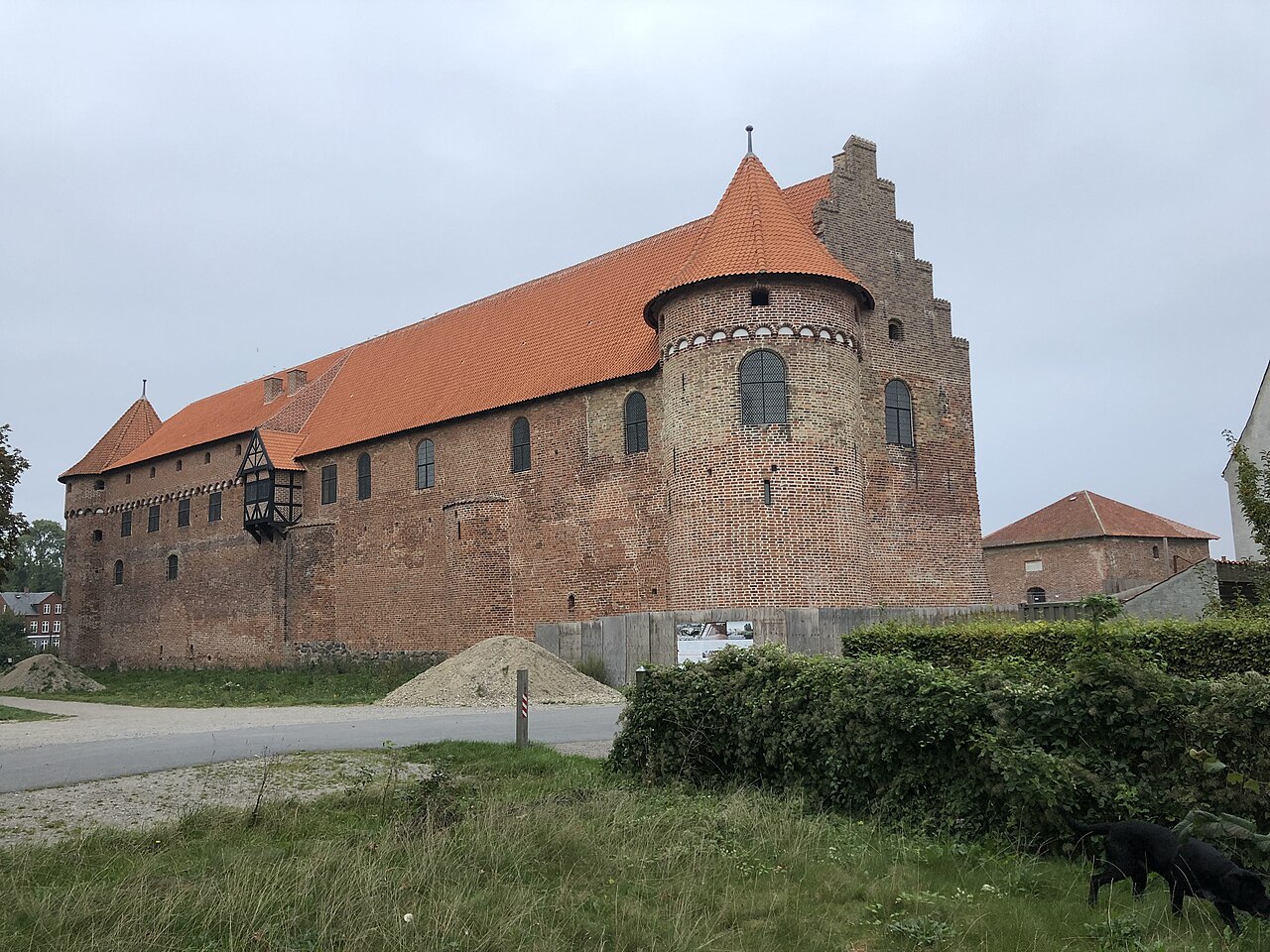
Holckenhavn Castle is a distinguished example of a Renaissance castle located in Nyborg, Denmark. Constructed between 1580 and 1634, it represents the architectural and historical evolution of Danish noble estates through several centuries. Initially known as Ulfeldtsholm and later Ellensborg, the castle acquired its present name in 1672 when it was purchased by Eiler Holck, who established the Barony of Holckenhavn. The estate has remained in the Holck family lineage ever since, preserving its legacy as a significant cultural landmark.

Early history and origins

The estate originally bore the name Kogsbølle and dates back to the late 14th century, when it was owned by Anders Jacobsen Ulfeldt. The Ulfeldt family maintained possession of the property for over two centuries, a testament to their influence in the region. The original manor house was situated further inland, but around 1580, it was relocated closer to a small arm of the Great Belt, a strategic waterway, and renamed Ulfeldtsholm. This move likely reflected both defensive considerations and the desire for a more prestigious waterfront location.

Architectural development and expansions

Initial construction phases

The castle's core structure was built in the late 16th century and early 17th century by three successive owners, resulting in a four-winged complex arranged on an almost quadratic castle bank. The north and east wings, along with the gate wing, were completed by 1585. A prominent bell tower was added shortly thereafter, enhancing the castle's silhouette and serving as a symbol of status. The master builder responsible for these early phases was probably Domenicus Badiaz, whose influence is evident in the castle's harmonious proportions and Renaissance detailing.

Contributions of Ellen Marsvin

In 1616, the estate was sold to Ellen Marsvin, a formidable landowner and widow who expanded the castle significantly. She added the west wing in 1631 and a low south-facing gate wing in 1634. Marsvin also commissioned a richly decorated chapel in 1637, featuring intricate wood carvings by the renowned artisan Hans Dreier. Additionally, she enhanced the castle's interior with an ornate knights' hall, reflecting the grandeur and prestige of the estate during her tenure.

Historical significance and ownership

The castle's history is intertwined with notable Danish figures and turbulent events. Ellen Marsvin was the mother of Kirsten Munk, who was married to King Christian IV until their relationship ended due to her infidelity. Upon Kirsten's death in 1658, the castle passed to her daughter Leonora Christina. Leonora's husband, Corfitz Ulfeldt, a former Steward of the Realm, committed treason by allying with Sweden during its invasion of Denmark. As a result, the couple was imprisoned at Hammershus fortress on Bornholm island. After their release in 1661, they briefly resided at Ellensborg before leaving Denmark in 1662, leading to the confiscation of the estate.

Following nearly a decade of vacancy, the property was granted to Eiler Holck in 1672, who renamed it Holckenhavn and founded the Barony of Holckenhavn, which lasted until its dissolution in 1921. Holck was the commandant at Kronborg Castle, underscoring the estate's continued connection to prominent Danish nobility and military leadership.

Architectural features and artistic elements

Holckenhavn Castle is built in the Renaissance style, characterized by its symmetrical layout and classical proportions. The four wings enclose a central courtyard, typical of Danish Renaissance manors. The large bell tower is a distinctive feature, contributing both to the castle's defensive capabilities and its visual prominence.

The chapel installed by Ellen Marsvin is noted for its elaborate wood carvings by Hans Dreier, a master craftsman whose work adds significant artistic value to the estate. The knights' hall is another highlight, showcasing the opulence and social functions of the castle during the 17th century.

Additional structures on the estate include a barn dating from 1629, which is the sole surviving building from a farm that was destroyed by fire in 1912. This barn provides insight into the agricultural operations that supported the estate historically.

Later modifications and current condition

The main building underwent alterations in the 18th and 19th centuries, reflecting changing tastes and functional needs over time. A thorough refurbishment was carried out between 1904 and 1910, which helped preserve the castle's Renaissance character while updating its facilities.

Today, Holckenhavn Castle remains a well-preserved example of Renaissance architecture in Denmark. Its continuous ownership by the Holck family has contributed to the careful maintenance of its historical and architectural integrity, making it a valuable cultural heritage site.

Location and strategic importance

Situated next to a small arm of the Great Belt, Holckenhavn Castle occupies a strategic position that historically allowed control over maritime routes between the Danish islands. Its location on a nearly quadratic castle bank provided natural defensive advantages, complemented by its architectural fortifications.

Visiting Holckenhavn Castle

While Holckenhavn Castle is privately owned, it occasionally opens to the public for tours and cultural events. Visitors can appreciate the castle's Renaissance architecture, the richly decorated interiors including the chapel and knights' hall, and the surrounding estate grounds that reflect centuries of Danish noble life.

Frequently asked questions (FAQ)

How do I get to Holckenhavn Castle?
Holckenhavn Castle is located in Nyborg, Denmark, and can be easily reached by car or public transportation. If you are traveling by train, the nearest station is Nyborg, from which you can take a short taxi ride or walk to the castle.
What is the historical significance of Holckenhavn Castle?
Holckenhavn Castle dates back to the late 16th century and is an important example of Renaissance architecture in Denmark. It has served various purposes over the years, including as a royal residence and a military stronghold, reflecting the rich history of the region.
When was Holckenhavn Castle built?
Holckenhavn Castle was built in 1586 by the noble family of Holckenhavn. The castle has undergone several renovations since its construction, preserving its historical elements while adapting to modern needs.
Can I visit Holckenhavn Castle?
Yes, Holckenhavn Castle is open to visitors, offering guided tours that provide insight into its history and architecture. Visitors can explore the beautifully maintained grounds and learn about the castle's significance in Danish history.
Is it possible to host events at Holckenhavn Castle?
Yes, Holckenhavn Castle can be rented for special events such as weddings, corporate gatherings, and private parties. The picturesque setting and historical ambiance make it a unique venue for any occasion.
What are the opening hours for Holckenhavn Castle?
Holckenhavn Castle is typically open to visitors from April to October, with specific hours varying by season. It is recommended to check the official website for the most current opening hours before planning your visit.
What are the ticket prices for entering Holckenhavn Castle?
Ticket prices for Holckenhavn Castle are generally reasonable, with discounts available for children, students, and seniors. It is advisable to purchase tickets in advance during peak tourist season to ensure availability.
What is the best time to visit Holckenhavn Castle?
The best time to visit Holckenhavn Castle is during the spring and summer months when the weather is pleasant and the gardens are in full bloom. Additionally, visiting during weekdays can help you avoid larger crowds.
Are there nearby attractions to visit alongside Holckenhavn Castle?
Yes, Nyborg is home to several attractions, including the Nyborg Castle and the charming Nyborg Harbor. Exploring the local area can enhance your visit and provide a deeper understanding of the region's history.

Information

Hill Castle

Sources & official resources

Verify the information above using these authoritative references.

Loading map...

Visitor reviews

No reviews yet. Been here? Write the first review and help other travelers!

Write the first review

Visited this castle? Share your experience

Your review helps other travelers and adds first-hand knowledge to our encyclopedia.
Write a review

(5/5)

0/2000 characters

Your review will be visible after admin approval

Nearby castles

2.3 km
Nyborg Castle — Denmark castle

Nyborg Castle

Nyborg, Denmark

Nyborg Castle stands as one of Denmark's most historically significant medieval fortresses, located in the town of Nyborg on the island of Funen. Founded in the late 12th century, it is recognized as the country's oldest preserved royal residence. The castle's strategic position by the Great Belt strait was crucial for controlling maritime and land routes, which contributed to its role as a political and military center throughout Danish history. First mentioned in 1193, the castle was established around 1170 by Knud Prislavsen, a nephew of King Valdemar the Great. Archaeological evidence confirms the castle’s initial construction as a hill castle with a square layout, surrounded by a moat and fortified with high stone walls and towers at each corner. Early defenses included a large central fortress tower and a dry moat, later enhanced with water from the nearby Vindinge Å stream, which was channeled through a sophisticated system of canals and sluices to fill the moat, creating a formidable wet barrier. The medieval political hub and the Danehof Nyborg Castle's prominence rose as the permanent meeting place of the Danehof, Denmark's medieval parliament, from the 12th to the 15th centuries. This assembly convened in the castle's royal wing, known as the Kongefløjen, specifically on the second floor of the palace building constructed in the mid-13th century. This palace, built of brick and rising to three stories by the late 14th century, included a grand hall where kings and nobles gathered to discuss matters of state. Several pivotal events in Danish history took place within Nyborg Castle’s walls. In 1276, King Erik Klipping secured recognition of his son Erik Menved as heir. In 1282, Erik Klipping issued the Håndfæstning, Denmark’s first coronation charter and constitution, marking a foundational moment in Danish governance. The castle was also the site of the sentencing of Erik Klipping’s murderers in 1287, underscoring its judicial and political importance. Queen Margrete I and the Kalmar Union In 1377, Queen Margrete I convened at Nyborg to secure her son Oluf's election as king, an act that paved the way for the Kalmar Union, uniting Denmark, Norway, and Sweden under one crown. Margrete's reign also saw the construction of Nyborg Vor Frue Church as a symbol of her gratitude for military victories, further emphasizing the castle’s role as a royal and religious center. Renaissance transformations and royal residence From the late 15th century, Nyborg Castle increasingly functioned as a royal residence. King Hans and Queen Christine made it their permanent home starting in 1481, and their son Christian II was born there in 1483. The castle underwent significant renovations during the reigns of Frederik I and Christian III in the 16th century, reflecting Renaissance architectural styles. These modifications included the enlargement of windows to bring more light into the interiors, the addition of decorative wall paintings with geometric patterns, and the construction of a grand knights’ hall. The castle's defenses were also improved, and the surrounding town was fortified during the Reformation period, turning Nyborg into a princely residence with both ceremonial and military functions. Architectural features and expansions The castle’s layout originally included two main stone residential buildings and a palatium added along the western ring wall in the early 13th century. Later expansions added a northern wing, now lost, and a large eastern tower known as Knud's Tower, dating from the 14th century. In 1607, King Christian IV commissioned the Italian architect Domenicus Badiaz to add a spire to the main tower, enhancing its silhouette and linking it stylistically to Copenhagen’s Blåtårn (Blue Tower). Military role and decline During the 17th century, Nyborg was one of Denmark’s three major fortified towns, alongside Fredericia and Copenhagen. Its position by the Great Belt made it strategically important during the Swedish wars (1657–1659). The castle was captured by Swedish forces in 1659 but was soon relieved by a Dutch fleet under Admiral Michiel de Ruyter, Denmark’s ally at the time. The wars caused severe damage to the castle, ending its role as a royal residence. Subsequently, it functioned primarily as a military garrison and fortress for approximately 250 years. Its fortifications were adapted to the Italian bastion style, characterized by thick earthworks and angled walls designed to withstand artillery attacks. Much of the castle was dismantled starting in the late 17th century to provide building materials for local projects, including Odense Palace. The northern wing was demolished by the late 19th century. The military garrison was disbanded in 1913, after which efforts to preserve and restore the castle increased. Archaeological discoveries and modern restoration Extensive archaeological excavations between 2009 and 2018 have revealed new insights into the castle’s original layout and construction phases. Findings confirmed the presence of the lost northern wing and uncovered a 14th-century temporary kitchen and an advanced 16th-century sewer system, which was larger and older than similar systems found in Copenhagen’s Christiansborg Palace. Restoration efforts have focused on preserving the medieval and Renaissance elements, including plans to raise the watchtower by 12 meters to restore historic views of the Great Belt. The castle grounds include well-preserved earthwork fortifications from the post-medieval period, featuring broad embankments and stone-arched poternes built using stone salvaged from the dismantled walls. The castle’s central courtyard, or borggård, remains enclosed by a partially reconstructed ring wall atop medieval foundations. The site is part of the historic urban area known as Slotsholmen, which has strict heritage protections. Recent removal of 19th-century military buildings has allowed for new construction aligned with restoration goals. Present-day museum and cultural significance Today, Nyborg Castle operates as a museum under the administration of Østfyns Museer. Its interiors are furnished with period-appropriate pieces sourced from historic manor houses, recreating the atmosphere of its various historical phases. Visitors can explore three banquet halls representing key moments: the Danehof Room commemorates its parliamentary heritage; Margrete’s Hall honors Queen Margrete I’s legacy; and Christian III’s Hall reflects Renaissance elegance and the Reformation era. The castle also hosts the annual Nyborg Voldspil, Denmark’s oldest outdoor theater, performed on the surviving ramparts. Efforts to have Nyborg Castle and its surroundings designated as a UNESCO World Heritage site have highlighted its role in Danish constitutional history, royal life, and military defense, although challenges remain regarding modern restoration interventions. Nyborg Castle remains a key monument illustrating the evolution of Danish medieval and Renaissance architecture, governance, and military strategy, offering visitors a tangible connection to Denmark’s formative historical periods.

High Medieval (11th–13th c.)
Details
11.6 km

Lykkesholm Castle

Ørbæk, Denmark

Lykkesholm Castle is a historic manor located in Ørbæk, Denmark, with origins tracing back to the 14th century. Originally known as Magelund Castle, it was built on the remains of an earlier medieval fortification dating from around 1300. The castle's early history is closely tied to the political and social upheavals of medieval Denmark, including a brief ownership by Queen Margaret I in 1391, a significant figure who ruled Denmark, Norway, and Sweden and was instrumental in the formation of the Kalmar Union. The medieval origins and relocation The original castle stood on a strategic site but was later moved in the 17th century to its current location on the shores of a lake. This relocation was partly motivated by practical considerations, including the damming of the lake to harness water power. The water was used to operate two mills, reflecting the manor's role not only as a noble residence but also as a center of local economic activity. The relocation also led to the absorption of the nearby village of Ammendrup, which was razed and its lands incorporated into the manor's estate. Architectural features and estate layout While much of the original medieval structure no longer survives, the present manor reflects architectural developments from the late medieval period onward, with renovations and expansions occurring over the centuries. The lakeside setting contributes to the castle's scenic and defensive qualities, with water features historically serving both practical and protective functions. The estate includes the main manor house, water mills, and agricultural lands that were historically managed as part of the manor's operations. Historical significance and royal connections The castle's brief ownership by Queen Margaret I is notable; she held the castle for only nine days due to political tensions with the nobility opposed to her reforms. To safeguard the property, she transferred it to a loyal esquire who relocated it to its present site. This episode highlights the castle's role in the broader political struggles of late medieval Denmark and its connection to one of the country's most important monarchs. H.C. Andersen's association with Lykkesholm Hans Christian Andersen, the world-renowned Danish storyteller, frequently spent his summers at Lykkesholm Castle. The manor provided a peaceful retreat from the bustle of Copenhagen and served as inspiration for some of his fairy tales. Andersen is believed to have written several stories during his stays, including the famous "The Little Mermaid". His connection to Lykkesholm adds a cultural and literary dimension to the castle's historical significance. Preservation and current status Today, Lykkesholm Castle remains a well-preserved example of a late medieval manor that has evolved through centuries of Danish history. Its combination of historical architecture, scenic lakeside location, and cultural associations makes it a site of interest for visitors and scholars alike. The estate reflects the layered history of Danish noble residences, from medieval fortifications to Renaissance manors and beyond. Surrounding landscape and estate changes The transformation of the surrounding landscape, including the damming of the lake and the disappearance of the village of Ammendrup, illustrates the changing relationship between the manor and its environment. These changes were typical of Danish manorial estates, which often expanded their agricultural holdings at the expense of smaller settlements. The estate's adaptation to economic and technological developments, such as the use of water power, demonstrates its dynamic history.

Late Medieval (14th–15th c.)
Details
14.4 km

Skovsbo Castle

Ullerslev, Denmark

Skovsbo Castle is a notable example of Renaissance architecture in Denmark, located in the village of Ullerslev on the island of Funen. Its history stretches back to the 14th century, though the present manor house was constructed between 1572 and 1579 for Erik Hardenberg (1534–1604), a prominent privy councillor. This period marked a transition in Danish architecture, blending medieval defensive elements with the more refined and decorative features of the Renaissance.Architectural design and featuresThe castle is built in the Renaissance style, characterized by its distinctive Dutch gables that adorn the roofline, a common feature in Northern European Renaissance buildings. The manor consists of two floors above a vaulted basement, which provided both storage and protection. A striking element of Skovsbo is its octagonal staircase tower located on the western side, capped with a spire that adds vertical emphasis and elegance to the structure.Skovsbo's layout includes an original appendix in the south-eastern corner housing a secondary staircase, which is part of the initial construction phase. In 1891, another appendix was added to the north-eastern corner following a similar design, created by the architect August Klein (1839–1902), who was known for his work in historicist styles, ensuring harmony with the original Renaissance elements.Historical context and ownershipThe estate originally belonged to the Hardenberg family, with Erik Hardenberg commissioning the current manor house. The Hardenbergs were influential in Danish noble circles, and the castle served as a residence and administrative center for the estate. Covering approximately 183 hectares, the land surrounding Skovsbo has traditionally been used for agriculture and forestry, typical of Danish manor estates.Skovsbo remains privately owned, maintaining its status as a private residence rather than a public museum or tourist attraction. This private ownership has helped preserve the castle's architectural integrity and historical ambiance.Religious heritage and roadside crucifixAcross the road from Skovsbo Castle stands a roadside crucifix, installed around 1600 by Anna Rønnow, the Catholic wife of Erik Hardenberg. This crucifix is significant as it is the second oldest roadside crucifix in Denmark, surpassed in age only by the Crucifix of Holy Anders near Slagelse. The presence of this religious monument highlights the complex religious landscape of Denmark during the Reformation era, reflecting the differing faiths within the Hardenberg household.Preservation and current statusSkovsbo Castle is well preserved, retaining much of its original Renaissance character. The combination of original 16th-century construction and sympathetic 19th-century additions by August Klein has allowed the manor to maintain its historical appearance while adapting to modern needs. Its vaulted basements, distinctive gables, and the octagonal tower remain key features admired by architectural historians and enthusiasts.The castle's location in Ullerslev places it within the rich cultural landscape of Funen, an island known for its historic manors and castles. While not generally open to the public, Skovsbo's architectural and historical significance contributes to Denmark's heritage of Renaissance noble residences.

Renaissance (15th–17th c.)
Details

