Luna Castle, located in the coastal town of Rota, Spain, stands as a remarkable example of medieval fortification infused with cultural and architectural influences from both the Christian and Muslim worlds. Dating primarily from the 13th century, this hill castle occupies a strategic position approximately 17 meters above sea level, overseeing the southwestern coast of Spain. Its enduring presence symbolizes the complex history of the Iberian Peninsula during the period of the Reconquista and the subsequent centuries of noble rule and civic use.
The site originally hosted a fortified Muslim convent or ribat in the 11th century, known as Rábita Ruta. This early structure underscored the location's importance as a religious and military retreat during Muslim occupation. The name "Rábita Ruta" possibly derives from the Latin term "Speculum Rotae," reflecting the site's strategic maritime significance. Following the Christian reconquest, King Fernando III of Castile captured Rota in 1251, marking a pivotal shift in control. However, it was the aftermath of the 1264 Mudéjar revolt that solidified Christian dominance under King Alfonso X, who reestablished authority over the town.
Historical context and noble lineage
The castle's development is closely linked to the noble family of Guzmán el Bueno, who were granted lordship over the region, including Rota, in the late 13th century. Although traditional accounts attribute the construction of Castillo de Luna to Guzmán el Bueno, architectural evidence suggests that the main construction phase occurred later, incorporating styles that emerged in the late medieval period. In 1309, Rota was separated from Sanlúcar through marriage alliances when Isabel de Guzmán married Fernán Ponce de León. Fernán founded the House of Arcos, which governed Rota for centuries and left a lasting imprint on the castle's architecture and heraldry.
Under the Ponce de León family, Luna Castle served multiple functions: it was the residence of the town's governors and also operated as the town hall until the mid-18th century. The castle's coat of arms and heraldic emblems prominently displayed throughout the fortress reflect this long-standing noble governance. The Catholic Monarchs are also known to have visited and stayed at the castle, underscoring its importance as a seat of power and administration.
Architectural features and style
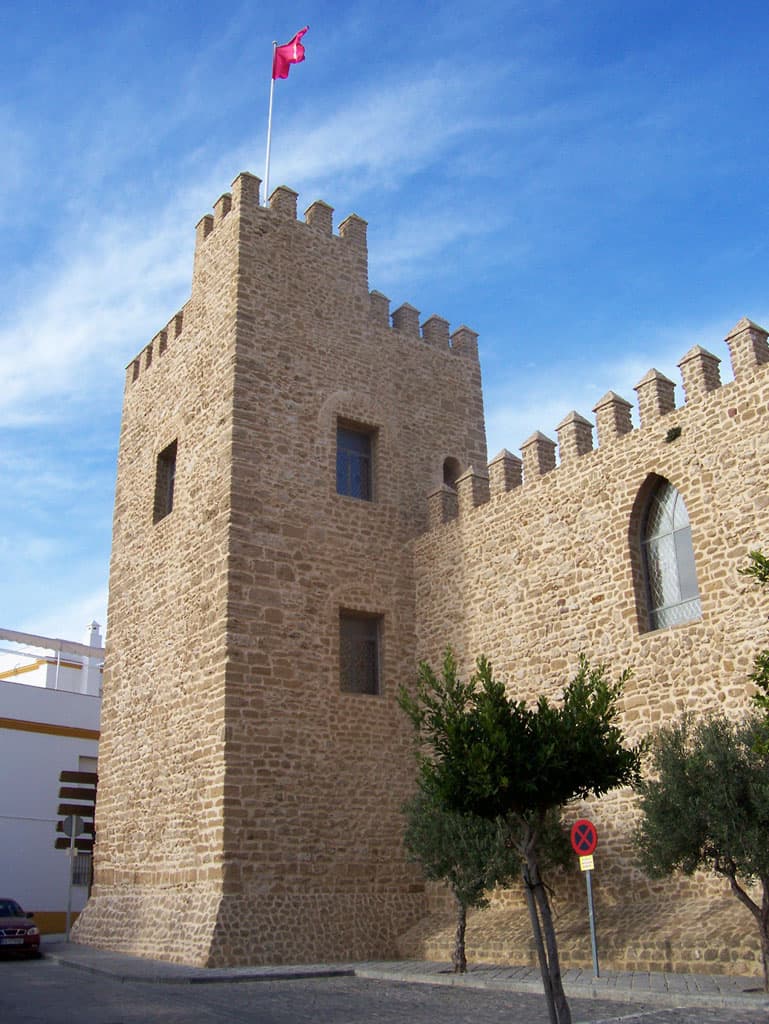
Luna Castle exhibits a rectangular plan organized around a central courtyard, a typical layout for medieval fortifications intended to combine defense with administrative and residential functions. The courtyard features painted zócalos decorated with Mudéjar motifs, highlighting the cultural synthesis between Islamic art and Christian architectural styles that characterizes much of Andalusian heritage.
The fortress is fortified by five crenelated towers arranged along its perimeter, designed to provide comprehensive defensive coverage. These towers, combined with the curtain walls, embody construction techniques of the Gothic period with significant Mudéjar influences. The castle's robust walls and battlements attest to its military purpose, while the decorative elements reveal the aesthetic preferences of its noble occupants.
Mudéjar influence and decorative elements
The Mudéjar style, a distinctive blend of Christian and Islamic artistic traditions, is evident in the castle's interior decoration and structural details. The painted zócalos in the courtyard feature intricate geometric and vegetal patterns typical of Mudéjar art, which was prevalent in Andalusia during the late medieval period. This style not only enhanced the castle's visual appeal but also symbolized the coexistence and cultural exchange between different religious communities in the region.
Later history and adaptive reuse
In the 19th and 20th centuries, Luna Castle underwent significant transformations reflecting changing ownership and functions. In 1909, the Marquis of San Marcial acquired the castle and adapted it into a summer residence, undertaking renovations to accommodate this new role. Later, in 1943, José León de Carranza purchased the property and repurposed it to house the Colegio de San Ramón and the Hospital de San José, run by the Salesian Daughters of Mary Help of Christians.
After a period of abandonment starting in 1982, the castle underwent extensive restoration from 1987 to 1999. These efforts revitalized the fortress and preserved its architectural integrity, allowing it to serve a new civic function as the City Hall of Rota. This adaptive reuse underscores the castle's ongoing significance as a symbol of local identity and heritage.
Location and cultural significance
Situated near the coast in the province of Cadiz, Luna Castle commands views over the sea and the surrounding urban landscape of Rota. Its presence on the town's coat of arms highlights its emblematic status for the citizens. The castle has also housed various community institutions, including a hospital and a school, reflecting its integration into the social fabric of Rota.
Today, Luna Castle stands as a well-preserved monument that encapsulates the layered history of Andalusia, from its Muslim origins through Christian reconquest to modern civic use. Its blend of Gothic and Mudéjar architectural styles, its noble heritage, and its role in local governance make it a key site for understanding the region's complex past.
Visitor experience and accessibility
Visitors to Luna Castle can explore its imposing towers, walk through the central courtyard adorned with Mudéjar decorations, and appreciate the heraldic symbols of the Ponce de León family. The castle's function as Rota's town hall means it remains an active part of the community, offering a unique glimpse into the continuity of historical architecture serving contemporary purposes.
Frequently asked questions (FAQ)
- How do I get to Luna Castle?
- Luna Castle is located in Rota, Spain, and is easily accessible by car or public transportation. If you're traveling by car, there are parking facilities nearby. Public buses also connect Rota with major cities, making it convenient for visitors.
- What is the historical significance of Luna Castle?
- Luna Castle, originally built in the 13th century, served as a fortress during the Reconquista. It has witnessed numerous historical events and changes in ownership, reflecting the rich cultural heritage of the region. Today, it stands as a symbol of Rota's history and a testament to medieval architecture.
- When was Luna Castle constructed?
- Luna Castle was constructed in the late 13th century, specifically around 1294, under the rule of the Kingdom of Castile. It was strategically built to protect the coastline and the surrounding area from invasions. Its long history has contributed to its well-preserved structure and cultural importance.
- Can I take guided tours of Luna Castle?
- Yes, guided tours are available for visitors who wish to learn more about the castle's history and architecture. These tours typically provide in-depth information and allow you to explore areas of the castle that might not be accessible otherwise. It's recommended to check the official website for tour schedules and availability.
- Why is Luna Castle considered an architectural gem?
- Luna Castle is considered an architectural gem due to its impressive blend of Gothic and Mudejar architectural styles, which reflects the cultural influences of its time. Its well-preserved towers, walls, and courtyards showcase the craftsmanship of the era. The castle's design also highlights its strategic military function, making it a fascinating site for architecture enthusiasts.
- Is it possible to visit Luna Castle year-round?
- Yes, Luna Castle is open to visitors year-round, though specific opening hours may vary depending on the season. It's advisable to check the castle's official website for the most current visiting hours and any seasonal closures. Whether you're visiting in summer or winter, the castle offers a unique glimpse into the past.
- What are the ticket prices for Luna Castle?
- Ticket prices for Luna Castle are generally affordable, making it accessible for all visitors. Discounts may be available for children, seniors, and groups. It's best to check the official website for the latest pricing and any special offers that may be in effect.
- What is the best time to visit Luna Castle?
- The best time to visit Luna Castle is during the spring and fall months when the weather is mild and pleasant. This allows for a comfortable exploration of the castle and its grounds. Additionally, visiting during these seasons often means fewer crowds, enhancing your experience.
- Are there nearby attractions to visit after Luna Castle?
- Yes, there are several nearby attractions to explore after visiting Luna Castle, including the beautiful beaches of Rota and the charming old town filled with local shops and restaurants. The nearby Sanlucar de Barrameda offers a chance to taste local wines and enjoy picturesque views along the Guadalquivir River. These attractions complement your visit to the castle and provide a full day of exploration.
Photo gallery

Photo by Antonio M. Romero Dorado•Public domain
Information
Website
Visit websiteSources & official resources
Verify the information above using these authoritative references.
Loading map...
Visitor reviews
No reviews yet. Been here? Write the first review and help other travelers!
Write the first reviewVisited this castle? Share your experience
Your review helps other travelers and adds first-hand knowledge to our encyclopedia.