Castillo de Santa Catalina
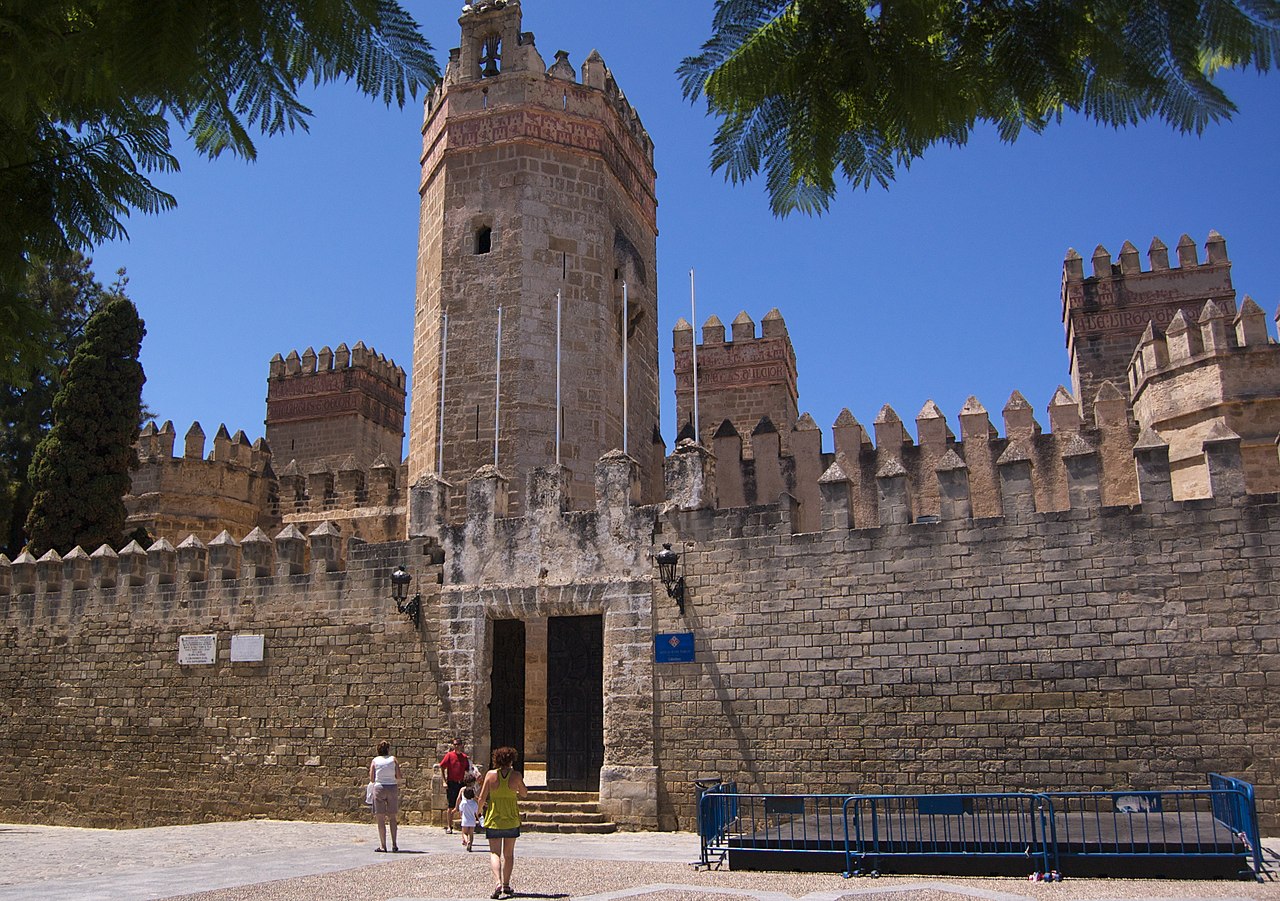
The Castillo de Santa Catalina stands as a significant historic fortress in El Puerto de Santa María, Spain, embodying centuries of coastal defense evolution along the strategic Bay of Cádiz. Constructed initially in the 16th century, this hill castle was part of a broader network of fortifications designed to protect one of Spain's vital maritime gateways during an era marked by naval conflicts and territorial threats.
The origins of the castle trace back to an order from Emperor Charles V in 1540, who commanded the erection of a tower dedicated to Santa Catalina, named after a nearby hermitage. Although this directive preceded actual construction, building activities likely commenced around 1585, coinciding with the development of the nearby Castillo de Puntales. The strategic importance of the site was underscored in 1586, when the city of Cádiz petitioned King Philip II to incorporate the tower into the region’s coastal defense system. The fortress was tasked with overseeing and controlling access to the bay, thereby safeguarding the port town of El Puerto de Santa María from maritime incursions.
Architectural design and early construction
The initial structure was a truncated cone-shaped tower featuring two vaulted chambers designed to mount multiple artillery pieces. These chambers provided protected spaces for gunners and storage of munitions, reflecting advanced military architectural concepts of the late Renaissance period. Positioned directly opposite the San Felipe bastion, the tower formed part of a defensive line guarding the entrance to the bay. However, the considerable distance between these two fortifications limited their combined effectiveness during attacks in 1587 and 1596.
Expansion into a modern fortification
Over time, the original tower was incorporated into a larger fortification complex known as the Castillo de Santa Catalina. This expansion marked one of the earliest examples of modern fortifications beyond the main island defenses of Cádiz. Prior to the 1625 attack, the castle was strengthened to facilitate the safe transfer of supplies to Cádiz during sieges. Further enlargements likely brought the fortress to its near-final form before the significant military events of 1702.
The 1702 siege and reconstruction
In 1702, the castle fell to an allied landing force, followed by a sack and deliberate demolition via explosion. The subsequent reconstruction introduced a new design featuring a sea-facing front with an almost semicircular shape, enhancing its defensive capabilities against naval assaults. The land-facing front was fortified with a hornwork, a projecting defensive structure accompanied by a moat and a covered walkway leading to the parade ground. This design aimed to delay and expose attackers while protecting the defenders within.
Later modifications and military use
During the mid-18th century, the architect Sala contributed to further expansions, adapting the castle to evolving military technologies and threats. The fortress was again destroyed in 1810 during the Napoleonic Wars to prevent its capture by French forces. It was rebuilt and occupied in 1824 by the troops known as the "Cien Mil Hijos de San Luis", underscoring its continued military relevance.
In the 20th century, the Castillo de Santa Catalina served within the Spanish military defenses during World War II. After the war, the castle was abandoned, leading to the collapse of much of its sea-facing structures and historic tower. However, the land front and moat remain largely intact, preserving key elements of its defensive architecture.
Architectural features and materials
The castle’s construction showcases the use of cyclopean masonry, characterized by large, irregular stone blocks tightly fitted together, a technique that provided strength and durability. These walls were then covered with ashlar blocks of ostionera stone, a local shell limestone valued for its resilience and regional significance. This combination of materials reflects both practical and aesthetic considerations in fortification construction during the Renaissance and later periods.
The original truncated conical tower, central to the fortress, contained two vaulted chambers that housed artillery and garrison facilities. Though the tower has partially collapsed and leans toward the sea today, its foundations and lower sections remain visible within the parade ground, offering insight into the castle’s original defensive layout.
The semicircular sea-facing front and the hornwork with moat on the land side illustrate the castle’s adaptation to contemporary military engineering principles. The hornwork, designed to protect the main entrance, combined with the covered walkway, created a layered defense system that slowed enemy advances and provided strategic firing positions.
Historical significance and legacy
The Castillo de Santa Catalina is a testament to the evolving nature of coastal defense in Spain from the 16th century through the 20th century. Its repeated destruction and reconstruction reflect the turbulent military history of the Bay of Cádiz region, including conflicts such as the Anglo-Spanish wars, the Napoleonic Wars, and World War II.
Today, the castle’s remains provide valuable archaeological and architectural insights into the design and construction of Renaissance and post-Renaissance fortifications. The site stands as a cultural heritage landmark, illustrating how military architecture adapted to changing technologies and geopolitical threats over several centuries.
Visitors to El Puerto de Santa María can explore the castle’s surviving land front and moat, gaining an understanding of its strategic importance and architectural evolution. Despite the loss of much of its sea-facing structures, the castle’s enduring presence continues to symbolize the historical significance of Spain’s coastal defenses.
Frequently asked questions (FAQ)
- How do I get to Castillo de Santa Catalina?
- Castillo de Santa Catalina is located in El Puerto de Santa María, Spain, and is easily accessible by car or public transport. If you are traveling by train, the nearest station is El Puerto de Santa María, from which you can take a taxi or a local bus to the castle.
- What is the historical significance of Castillo de Santa Catalina?
- Castillo de Santa Catalina was built in the late 17th century as a defensive fortress to protect the port of El Puerto de Santa María. It played a crucial role during various military conflicts, including the War of Spanish Succession, and is now a prominent symbol of the town's rich maritime history.
- When was Castillo de Santa Catalina constructed?
- Construction of Castillo de Santa Catalina began in 1637 and was completed in 1706. The castle was designed to serve both military and naval purposes, reflecting the architectural styles of the time, particularly Baroque influences.
- Can I visit Castillo de Santa Catalina year-round?
- Yes, Castillo de Santa Catalina is open to visitors throughout the year, although it is advisable to check specific opening hours before your visit. The castle occasionally hosts events or maintenance days, which may affect public access.
- Why is Castillo de Santa Catalina a popular tourist attraction?
- Castillo de Santa Catalina attracts visitors for its stunning views of the Bay of Cádiz and its historical architecture. The castle's picturesque setting and surrounding gardens also make it a perfect spot for photography and leisurely walks.
- Is it possible to arrange guided tours at Castillo de Santa Catalina?
- Yes, guided tours are available at Castillo de Santa Catalina, offering deeper insights into its history and architecture. It's recommended to book in advance, especially during peak tourist seasons, to secure your spot.
- What are the ticket prices for entering Castillo de Santa Catalina?
- Ticket prices for Castillo de Santa Catalina are typically very affordable, with discounts available for students and seniors. Admission fees may vary slightly depending on special exhibitions or events, so it's best to check the official website for the most current pricing.
- What are the opening hours for Castillo de Santa Catalina?
- Castillo de Santa Catalina usually opens its doors to visitors from 10 AM to 8 PM during the summer months and has reduced hours in the winter. Be sure to verify the specific hours before your visit, as they may change due to holidays or special events.
- Are there any nearby attractions to visit after Castillo de Santa Catalina?
- Yes, after visiting Castillo de Santa Catalina, you can explore nearby attractions such as the beautiful beaches of El Puerto de Santa María and the charming historic center. Additionally, the famous Osborne Bull monument and local wineries are just a short distance away, making for a delightful day of exploration.
Photo gallery

Information
Loading map...
Visitor reviews
No reviews yet. Been here? Write the first review and help other travelers!
Write the first reviewVisited this castle? Share your experience
Your review helps other travelers and adds first-hand knowledge to our encyclopedia.