Lulworth Castle
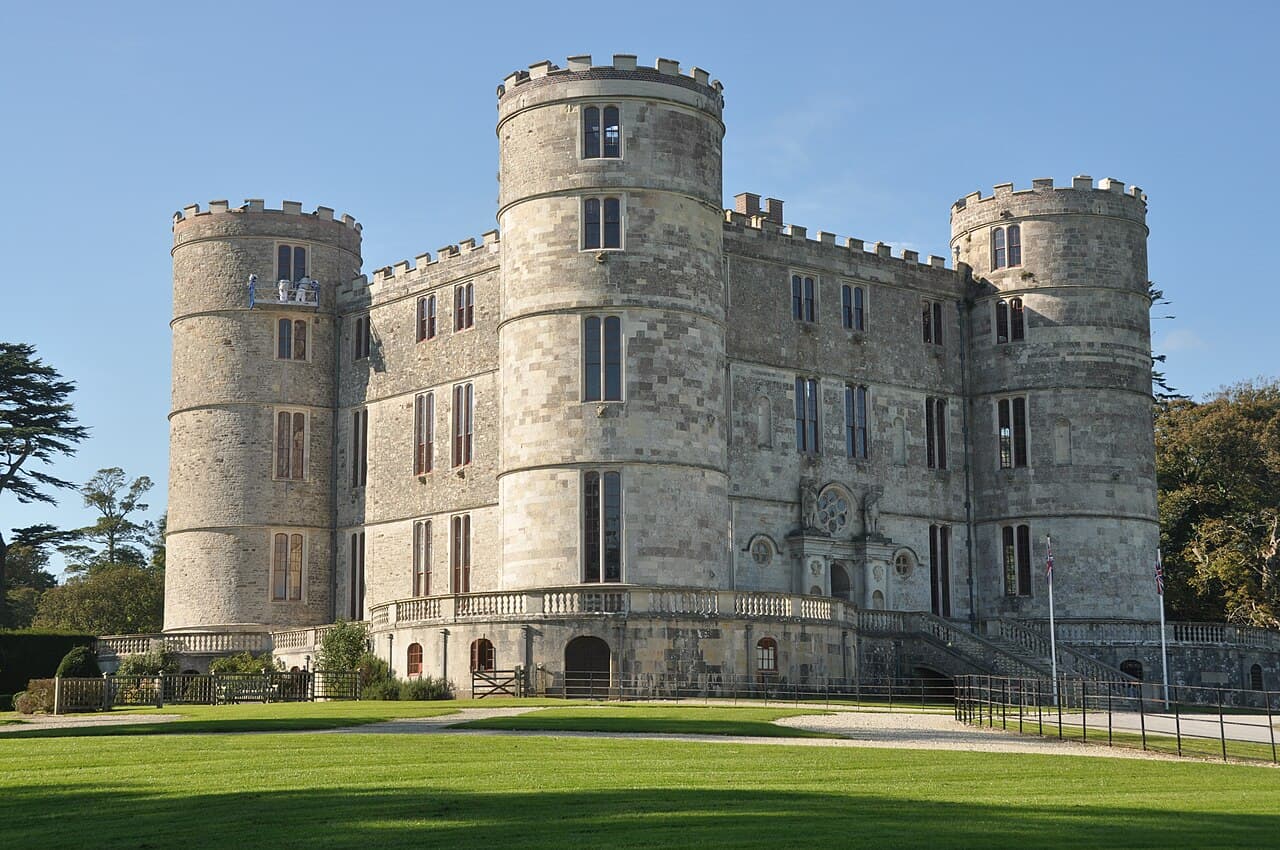
Lulworth Castle stands as a remarkable example of an early 17th-century Jacobean mock castle located in East Lulworth, Dorset, England. Built between 1588 and 1609, it was originally commissioned as a hunting lodge by Thomas Howard, 3rd Viscount Howard of Bindon, a grandson of the 3rd Duke of Norfolk. The castle's design reflects the aristocratic taste of the period, embracing the romantic revival of medieval fortified castles, rather than serving any true military function. The possible involvement of the renowned architect Inigo Jones in its design underlines its architectural significance.
Unlike traditional medieval castles built for defense, Lulworth Castle was conceived as a statement of status and style, featuring characteristic elements such as battlements and towers that evoke the appearance of a fortress. Its construction in stone and the incorporation of Renaissance architectural motifs mark it as one of only five surviving Elizabethan or Jacobean buildings of this type in England, highlighting its rarity and cultural importance.
Historical development and ownership
Following its initial construction, the castle underwent remodeling between 1609 and 1611 for Thomas, Lord Suffolk. In 1641, the estate was acquired by Humphrey Weld, marking the beginning of the Weld family's long-standing ownership. During the English Civil War, the castle was seized by Parliamentarian forces (Roundheads) and used as a garrison, reflecting its strategic albeit symbolic role in the conflict.
The Weld family maintained possession of the castle through the centuries despite financial difficulties, aided by strategic marriages, including alliances with the Simeons family. In the early 18th century, the castle saw further modifications by the Bastard brothers for Edward Weld. Later in the 1780s, Thomas Weld commissioned the Catholic architect John Tasker to redesign parts of the castle and to construct a Roman Catholic chapel on the grounds, a significant religious and architectural addition.
The roman catholic chapel
Completed in 1786, the chapel dedicated to St. Mary was the first Roman Catholic chapel built in England since the Protestant Reformation. Designed in the form of a Greek mausoleum, it cost £2,380 to build and stands as a Grade I listed structure in its own right. The chapel's organ, originally constructed in 1780 by Seede, was restored in 1986 by the organ builder William Drake from Baltimore, drawing international attention. This chapel symbolizes the religious tolerance and revival of Catholicism in England during that period.
Architectural features and style
Lulworth Castle is a stone building constructed in the style of a fortified Renaissance castle, embodying the Jacobean architectural style with its mock defensive features. The castle's layout emphasizes aesthetic display and aristocratic grandeur over military practicality. Key architectural elements include battlemented walls, towers, and a grand entrance, all designed to impress visitors and reflect the status of its owners.
The interiors were lavishly decorated in the Adam style, a neoclassical design popular in the 18th century, particularly under Thomas Weld's patronage. This style is characterized by elegant plasterwork, classical motifs, and refined proportions. The castle's library was also expanded during this time, enhancing its cultural significance.
Impact of the 1929 fire and restoration
In 1929, a devastating fire gutted Lulworth Castle, leaving it a roofless ruin and destroying many of its interiors, including the Adam style decorations. Restoration efforts began in the 1970s with support from English Heritage and were completed in 1998. The restoration focused on rebuilding the roof and preserving the surviving walls, but the destroyed upper floors and internal walls were not reconstructed. This approach maintained the castle's historic character while acknowledging the loss of some original fabric.
Cultural significance and modern use
Today, Lulworth Castle remains under the ownership of the Weld family and serves as a museum open to the public. It hosts a variety of medieval-themed events that celebrate its heritage and attract visitors interested in history and architecture. The castle is a Grade I listed building and a scheduled monument, underscoring its national importance.
The castle grounds, part of the larger Lulworth Estate, include the chapel and extensive parkland, which holds a Grade II listing. The estate is multifunctional, with parts used as a Ministry of Defence firing range and a wildlife conservation area. Since 2017, the grounds have also hosted cultural events such as the Bestival music festival, blending heritage with contemporary cultural life.
Historical connections and notable visitors
Lulworth Castle has played host to significant historical figures, including King George III, who was entertained by Thomas Weld during the late 18th century. Following the French Revolution, the castle served as a refuge for exiled members of the French royal family, notably Charles X after the 1830 July Revolution. These connections highlight the castle's role not only as a private residence but also as a site of international historical importance.
Overall, Lulworth Castle is a unique blend of architectural innovation, aristocratic ambition, and historical resilience. Its preservation as a museum and cultural venue allows visitors to explore the rich tapestry of English history, architecture, and heritage embodied in this distinctive Jacobean mock castle.
Frequently asked questions (FAQ)
- When was Lulworth Castle originally built and by whom?
- Lulworth Castle was built between 1588 and 1609 by Thomas Howard, 3rd Viscount Howard of Bindon, as a hunting lodge.
- What architectural style characterizes Lulworth Castle?
- Lulworth Castle is designed in a Jacobean mock castle style with Renaissance influences and interiors decorated in the Adam neoclassical style.
- Is Lulworth Castle open to the public and what can visitors expect?
- Yes, Lulworth Castle is open as a museum with restored interiors and hosts medieval-themed events and cultural festivals on its grounds.
- What happened to Lulworth Castle in 1929?
- A fire in 1929 gutted the castle, destroying the roof and interiors; restoration was completed in 1998 focusing on the roof and surviving walls.
- What is the significance of the Roman Catholic chapel on the Lulworth estate?
- The chapel, built in 1786 by John Tasker, was the first Roman Catholic chapel constructed in England since the Reformation and is Grade I listed.
- Are there any notable historical figures associated with Lulworth Castle?
- Yes, King George III visited the castle, and it provided refuge to exiled French royalty including Charles X after the 1830 July Revolution.
Photo gallery

Information
Sources & official resources
Verify the information above using these authoritative references.
Loading map...
Visitor reviews
No reviews yet. Been here? Write the first review and help other travelers!
Write the first reviewVisited this castle? Share your experience
Your review helps other travelers and adds first-hand knowledge to our encyclopedia.