Brownsea Castle
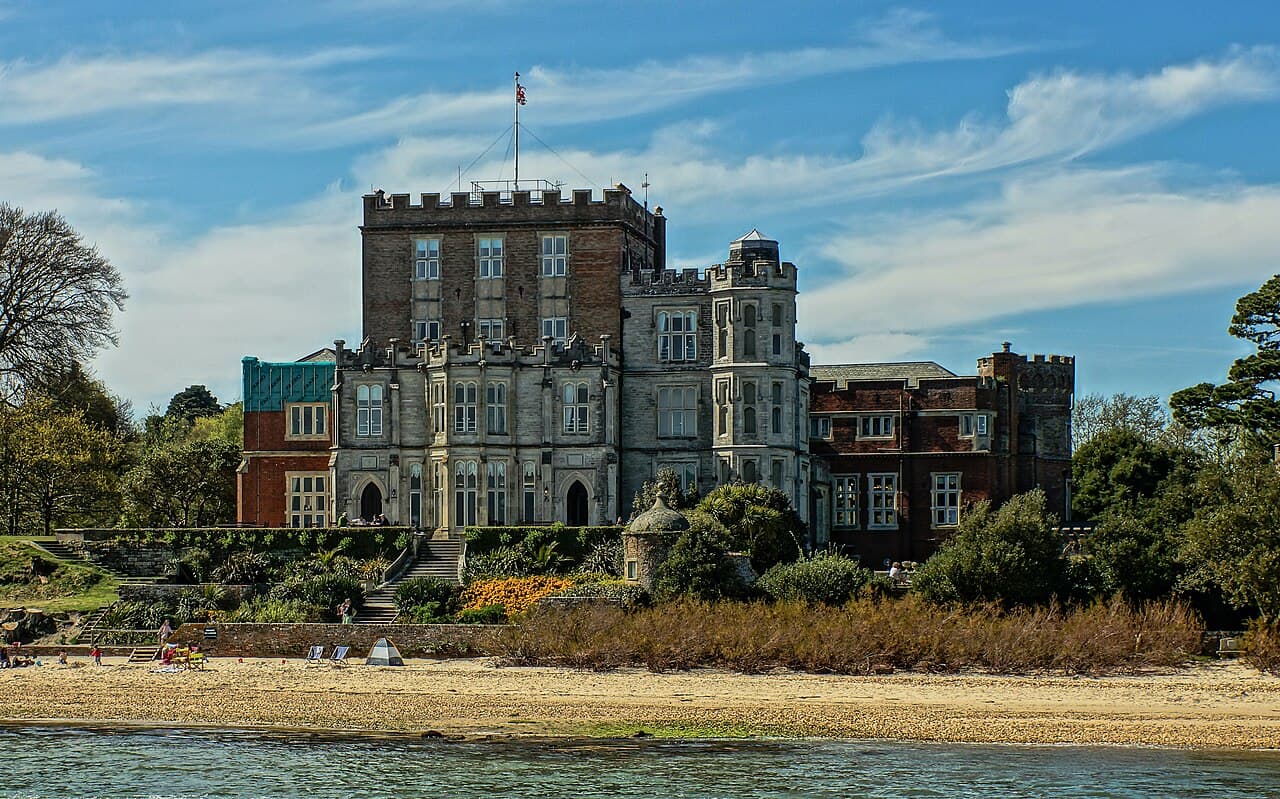
Brownsea Castle stands prominently on Brownsea Island, located in Poole Harbour on the southern coast of England. This historic fortress was originally constructed in the mid-16th century as part of King Henry VIII's coastal defense system, known as the Device Forts, designed to protect England from invasion threats posed by France and the Holy Roman Empire. Over the centuries, Brownsea Castle has undergone significant transformations, evolving from a robust military fortification into an elegant Palladian-style residence, reflecting the changing social and political landscape of England.
Construction of the castle began between 1545 and 1547 following the Dissolution of the Monasteries, which transferred ownership of Brownsea Island from Cerne Abbey to the Crown. The castle was strategically positioned to guard the entrance to Poole Harbour, a vital maritime gateway. Its original design featured a sturdy, square stone blockhouse with massive walls capable of supporting heavy artillery on the rooftop. The structure included a distinctive hexagonal gun platform facing the sea, providing a wide field of fire to deter enemy ships. Surrounded by a moat on three sides and accessed via a drawbridge, the castle embodied Tudor military architecture's emphasis on artillery defense.
Tudor origins and military significance
Brownsea Castle was part of a broader network of coastal fortifications commissioned by Henry VIII during a period of heightened international tension. The castle's initial garrison was modest, comprising six men from nearby Poole and armed with eight cannons. Its primary role was to secure the harbour entrance against potential French naval incursions. In 1585, the castle's defenses were reinforced with additional stone walls, reflecting ongoing concerns about coastal security.
During the English Civil War in the 1640s, Brownsea Castle retained military importance. Parliamentary forces controlled the site by 1646, maintaining a garrison of approximately twenty soldiers. However, following the war and the Restoration period, the castle's strategic value diminished. By the late 17th century, local authorities in Poole declined to maintain a garrison, signaling the castle's gradual transition away from a military role.
Transformation into a stately home
The 18th century marked a significant change in Brownsea Castle's function and appearance. In 1726, William Benson, an amateur architect and owner of the island, purchased the castle and initiated its conversion into a private residence. This transformation involved the demolition of many of the castle's original military features, including parts of the external defenses. Benson controversially added a Great Hall, despite opposition from Poole's officials concerned about losing the castle's defensive capacity.
Later in the century, Sir Humphrey Sturt further expanded the castle, raising it to a four-storey Palladian-style tower. He added battlements and constructed three wings extending from the original blockhouse, significantly increasing the living space. Sturt also developed extensive landscaped gardens and ornamental lakes, shaping the island's aesthetic and emphasizing its new role as a country estate rather than a fortress.
18th-century architectural features
- The castle's original Tudor blockhouse forms the core of the Palladian tower.
- Three wings were added to create additional residential quarters.
- Landscaped gardens with ornamental lakes and walled courtyards were established.
- Hot houses were built to cultivate delicate plants, reflecting 18th-century horticultural trends.
19th-century enhancements and challenges
In the 19th century, Brownsea Castle saw further modifications under the ownership of Colonel William Waugh. He introduced Jacobethan-style architectural elements, blending Elizabethan and Jacobean features. Notable additions included a crenellated gatehouse at the courtyard entrance, a clocktower, and a family pier providing access from the sea. Waugh also attempted to establish a pottery industry on the island, which ultimately failed.
The castle suffered a significant setback in 1896 when a fire gutted much of its interior. Major Kenneth Robert Balfour commissioned architect Philip Brown to oversee restoration efforts. The reconstruction simplified many Victorian design elements but preserved surviving features such as wood paneling, decorative ceilings, and intricately carved stone fireplaces imported from Venice. These elements highlight the castle's layered architectural history, combining Tudor, Palladian, Jacobethan, and Victorian influences.
20th-century ownership and preservation
In the early 20th century, the castle was owned by stockbroker Charles van Raalte, who maintained an extensive collection of antique musical instruments. After his death, Mary Bonham-Christie acquired the property in 1927 but preferred to live elsewhere on the island, leading to a period of neglect for the castle.
Following Bonham-Christie's death in 1961, the castle was in poor condition, suffering from structural damage and overgrowth. The National Trust took ownership of Brownsea Island and the castle in 1962. The John Lewis Partnership leased the castle and undertook extensive restoration, converting it into a corporate hotel for employees and retirees. Today, Brownsea Castle is a Grade II listed building, recognized for its historical and architectural significance.
Architectural features and remains
The original Tudor castle was a robust, square stone blockhouse approximately 44 feet (13 meters) across, designed as a one-storey structure with three internal rooms. The thick stone walls supported heavy artillery on the roof, including a hexagonal gun platform facing the sea. The castle was protected by a moat on three sides, with access via a 24-foot-long drawbridge on the southwest side. Although initially planned as a two-storey building, only the lower story was completed.
Subsequent centuries brought numerous architectural changes. The 18th-century Palladian expansions incorporated the Tudor blockhouse as the central core, surrounded by three wings. The 19th-century Jacobethan additions added decorative ranges, a crenellated gatehouse, and a clocktower, enhancing the castle's residential character. Surviving military artifacts include four cannons dating from the 17th or early 18th century, serving as tangible reminders of the castle's defensive origins.
The 1896 fire destroyed much of the interior, but restoration preserved some Victorian features such as wood paneling and Venetian stone fireplaces. By the mid-20th century, the castle had suffered roof collapse and overgrowth, including a tree growing through parts of the structure. Restoration efforts by the National Trust and John Lewis Partnership have stabilized and preserved the castle, maintaining its unique blend of military and residential architecture.
Landscape and surroundings
Brownsea Island's landscape reflects centuries of human intervention, from Tudor defensive works to 18th-century ornamental gardens and 19th-century architectural embellishments. The island features groves of fir trees, ornamental lakes, and walled courtyards with hot houses. The family pier added in the 19th century remains a key feature, linking the castle to the surrounding waters of Poole Harbour.
Today, the castle and its grounds are carefully maintained, offering visitors a glimpse into the layered history of this unique site. The combination of Tudor military architecture and later Palladian and Jacobethan residential modifications makes Brownsea Castle a fascinating example of England's evolving castle heritage.
Frequently asked questions (FAQ)
- How do I get to Brownsea Castle?
- Brownsea Castle is located on Brownsea Island in Poole Harbour, accessible by ferry from Poole Quay. Regular ferry services operate during the tourist season, providing easy access to the castle and island.
- What is the historical significance of Brownsea Castle?
- Brownsea Castle is a key example of Tudor Device Forts built under King Henry VIII to defend England's coast against invasion. Its later transformation into a Palladian residence illustrates the changing role of castles from military to domestic use.
- When was Brownsea Castle built?
- Construction of Brownsea Castle began between 1545 and 1547 during the reign of King Henry VIII as part of a coastal defense strategy.
- Can I visit Brownsea Castle year-round?
- The castle is open daily from 10:00 to 16:00, but ferry services to Brownsea Island operate mainly during the warmer months. It's best to check ferry schedules before planning your visit.
- Is Brownsea Castle suitable for families?
- Yes, Brownsea Castle and the surrounding island offer family-friendly walking trails, picnic areas, and opportunities to explore nature and history, making it an enjoyable visit for all ages.
Photo gallery

Information
Opening hours
10:00-16:00, daily
Ticket prices
Free
Current owner
National Trust
Website
Visit websiteSources & official resources
Verify the information above using these authoritative references.
Loading map...
Visitor reviews
No reviews yet. Been here? Write the first review and help other travelers!
Write the first reviewVisited this castle? Share your experience
Your review helps other travelers and adds first-hand knowledge to our encyclopedia.