Ludlow Castle, Delhi
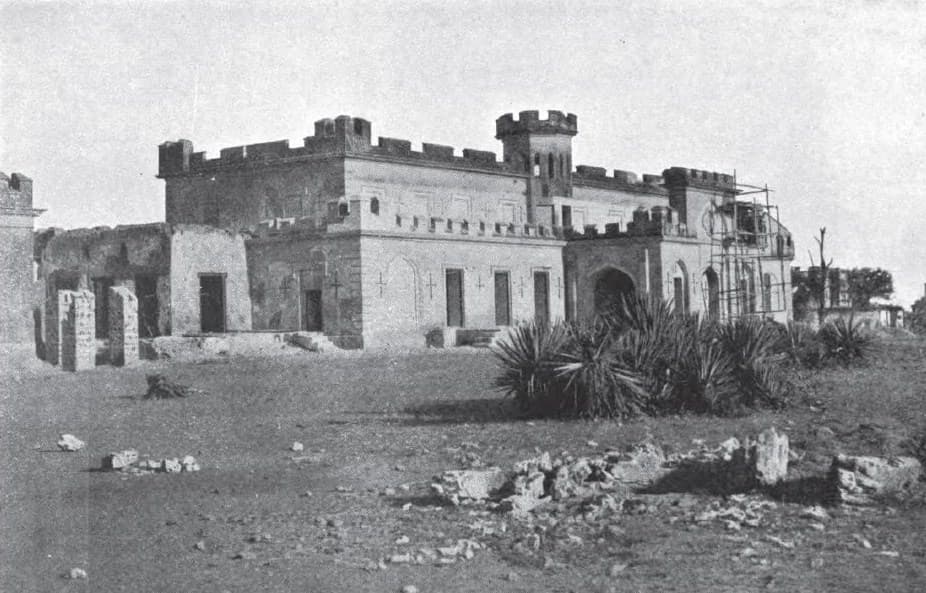
Ludlow Castle, Delhi was a notable building located in the Civil Lines area of Delhi, India. It played a significant role during the British East India Company rule in the early 19th century, serving as the Residency of the British political agent to the Mughal Court. Later, it became the headquarters of the Commissioner of the Delhi Territory within the North-Western Provinces. This building was an important administrative and military center during a turbulent period in Indian history.
The early history and function of Ludlow Castle
Until 1831, Ludlow Castle was the residence of Samuel Ludlow, the Residency Surgeon. After this period, the building was designated as the Residency, housing the British political agent responsible for relations with the Mughal emperor and court. The Residency was an important symbol of British influence and control in Delhi during the early 19th century. It functioned as both a diplomatic and administrative hub, reflecting the complex political landscape of the time.
Role during the Indian rebellion of 1857
During the Indian Rebellion of 1857, Ludlow Castle was a strategic military site. British troops used a battery stationed at the building to successfully breach the Kashmiri Gate bastion, a key fortification of Delhi's city walls. This breach was a decisive moment in the British retaking of Delhi from rebel forces. The building's military significance during this conflict highlights its strategic location and robust construction.
Post-rebellion period and British Raj administration
After the suppression of the rebellion, Ludlow Castle continued to serve as the residence of the Chief Commissioner of the Delhi Territory. By this time, Delhi had been incorporated into the Punjab Province. The building hosted many distinguished guests, including the former US President Ulysses S. Grant, who visited during the British Raj era. Ludlow Castle thus remained a center of political and social activity well into the late 19th and early 20th centuries.
Later uses and demolition
In the late 19th century and much of the first half of the 20th century, Ludlow Castle housed the Delhi Club, a social club for British officials and elites. Notably, the wedding party of Jawaharlal Nehru stayed at the club in 1916. Following India's independence in 1947, the building was repurposed as a high school. However, in the 1960s, the original Ludlow Castle structure was demolished to allow for the expansion of the school, now known as the Government Model Senior Secondary School. Despite the building's demolition, the surrounding neighborhood and a transit stop in Delhi still bear the name "Ludlow Castle," preserving its historical legacy.
Architectural and historical significance
Although the original Ludlow Castle building no longer exists, its historical importance remains significant. The structure was not a traditional medieval castle but rather a colonial-era residence and administrative complex. It reflected the British architectural and urban planning styles of the early 19th century, adapted to the Indian context. Its strategic location in Civil Lines, Delhi, made it a focal point during critical events such as the 1857 rebellion and the British administration of Delhi Territory.
Legacy and present-day context
Today, Ludlow Castle's name lives on in the local area, serving as a reminder of Delhi's colonial past. The site where the building once stood is now part of an educational institution, linking the location's historical significance with contemporary community use. The story of Ludlow Castle offers insight into the complex layers of Delhi's history, from Mughal rule through British colonialism to independent India.
Frequently asked questions (FAQ)
- What was Ludlow Castle used for during British rule?
- Ludlow Castle served as the Residency of the British political agent to the Mughal Court and later as the headquarters of the Commissioner of the Delhi Territory.
- What role did Ludlow Castle play in the Indian Rebellion of 1857?
- British troops used a battery at Ludlow Castle to breach the Kashmiri Gate bastion, a key event in retaking Delhi during the rebellion.
- Is Ludlow Castle still standing today?
- No, the original Ludlow Castle building was demolished in the 1960s to expand a school now known as the Government Model Senior Secondary School.
- Who were some notable guests at Ludlow Castle?
- Notable guests included former US President Ulysses S. Grant and the wedding party of Jawaharlal Nehru.
- What is the current use of the Ludlow Castle site?
- The site is now part of a high school, the Government Model Senior Secondary School, continuing the location's community role.
Photo gallery

Photo by Attributed in preface of book to George Ricketts, 1857•Public domain
Information
Loading map...
Visitor reviews
No reviews yet. Been here? Write the first review and help other travelers!
Write the first reviewVisited this castle? Share your experience
Your review helps other travelers and adds first-hand knowledge to our encyclopedia.