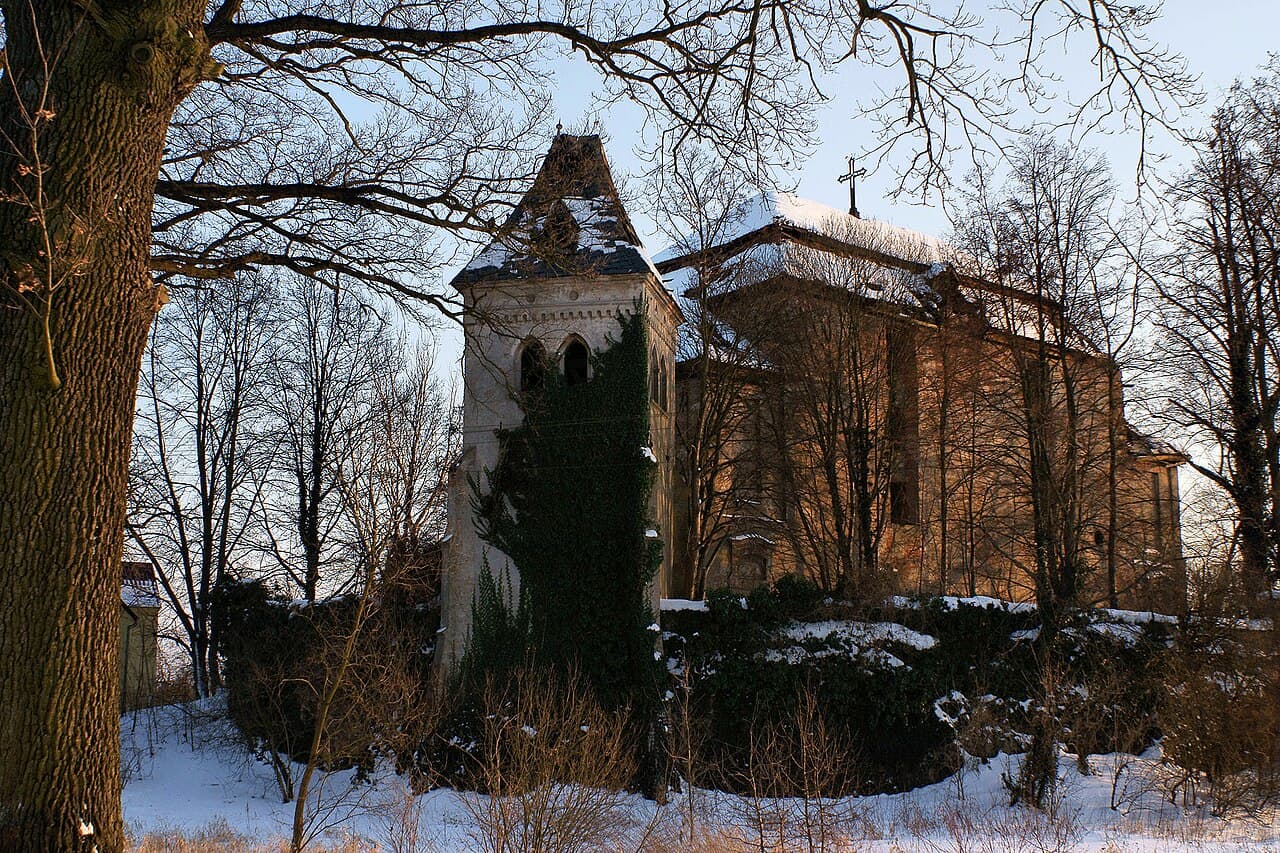
Jędrzychów Castle — Poland castle

Jędrzychów Castle

Jędrzychów Castle: medieval ruins in Poland
High Medieval (11th–13th c.)
Ruins

Jędrzychów Castle is a notable example of a high medieval fortress located in Poland, dating back to the 13th century. Though today it stands as archaeological ruins, the site preserves important remnants that illustrate the defensive architecture of the period. The castle was originally constructed as a fortified stronghold during a time when the region was marked by frequent conflicts and territorial disputes.

Historical background and significance

The castle's origins trace back to the high medieval period, a time characterized by the expansion of feudal domains and the construction of numerous stone fortifications across Europe. Jędrzychów Castle was built to serve both as a military bastion and a noble residence, reflecting the dual role of castles in medieval society. Its strategic location in Poland provided control over surrounding lands and trade routes, contributing to regional security and influence.

Throughout its active centuries, Jędrzychów Castle witnessed various historical events, including local skirmishes and power struggles among regional lords. Though detailed records of its occupants and specific events are limited, the castle's architectural remains offer valuable insights into medieval fortification techniques and living conditions.

Architectural features and layout

The castle originally featured typical high medieval defensive structures, including thick stone walls designed to withstand siege weaponry of the era. While much of the superstructure has not survived, archaeological studies have revealed the foundations of towers and curtain walls that once enclosed the courtyard. These elements were integral to the castle's defense, allowing defenders to repel attackers from elevated vantage points.

Remnants suggest the presence of a gatehouse that controlled access to the inner ward, a common feature in medieval castles to enhance security. The castle layout likely included residential quarters, storage areas, and possibly a chapel, as was customary in castles of this period.

Archaeological research and preservation

As an archaeological site, Jędrzychów Castle has been the subject of excavations aimed at uncovering its structural remains and understanding its historical context. These investigations have helped document the castle's dimensions, construction methods, and phases of development. Preservation efforts focus on stabilizing the ruins to prevent further deterioration while allowing public access for educational and cultural purposes.

The site is valuable for historians and archaeologists studying medieval fortifications in Poland and Central Europe. It contributes to the broader understanding of how castles functioned as centers of power and defense during the high medieval era.

Visiting Jędrzychów Castle

Visitors to the site can explore the ruins and appreciate the castle's historical significance within the context of Poland's medieval heritage. While the remains are limited to foundational structures and partial walls, they provide a tangible connection to the past and a glimpse into the architectural style of the time.

The castle's location in a rural setting offers a peaceful atmosphere for visitors interested in history, archaeology, and medieval architecture. It is advisable to check local information for access details, as facilities may be minimal due to the site's archaeological nature.

Frequently asked questions (FAQ)

How do I get to Jędrzychów Castle?
Jędrzychów Castle is located in Poland, easily accessible by car or public transportation. If you're traveling by car, the castle is situated near major highways, providing convenient access for visitors. Local buses also run regularly from nearby towns, making it simple to reach the castle.
What is the historical significance of Jędrzychów Castle?
Jędrzychów Castle dates back to the 14th century and has played a crucial role in the region's history. It was originally built as a defensive fortress and has witnessed numerous historical events, including conflicts and royal visits. Today, it stands as a testament to the rich heritage of Polish architecture and history.
When was Jędrzychów Castle constructed?
Jędrzychów Castle was constructed in the late 14th century, with its foundation attributed to the local nobility. Over the centuries, it has undergone various renovations and expansions, reflecting different architectural styles. The castle's enduring presence makes it a vital piece of Poland's historical landscape.
Can I visit Jędrzychów Castle year-round?
Yes, Jędrzychów Castle is open to visitors throughout the year, although opening hours may vary by season. It's advisable to check the official website or contact the visitor center for the most up-to-date information on visiting hours. Guided tours are often available, providing a rich experience of the castle's history.
Is Jędrzychów Castle accessible for people with disabilities?
Jędrzychów Castle strives to be accessible to all visitors, including those with disabilities. The castle grounds are designed to accommodate wheelchairs, and there are facilities available to assist visitors with mobility challenges. However, some historical features may have limited access due to their preservation status.
What are the ticket prices for Jędrzychów Castle?
Ticket prices for Jędrzychów Castle vary depending on the season and the type of tour you choose. General admission typically ranges from a few euros to a moderate fee, with discounts available for students and seniors. It's best to check the official website for the latest pricing information and any special promotions.
What is the best time to visit Jędrzychów Castle?
The best time to visit Jędrzychów Castle is during the spring and early autumn months when the weather is mild and pleasant. These seasons offer beautiful scenery and comfortable conditions for exploring the castle and its grounds. Additionally, special events and historical reenactments are often scheduled during this time.
Are there any nearby attractions to visit?
Yes, Jędrzychów Castle is surrounded by several attractions that are worth exploring. Nearby, you can find picturesque parks, charming villages, and other historical sites that complement your visit to the castle. Local museums and natural reserves also offer a glimpse into the region's rich culture and history.

Photo gallery

Jędrzychów Castle
Click to view

Photo by Zetem•CC BY-SA 3.0 pl

1 photo • Click any image to view in full screen

Information

Archaeological Site / Ruins

Loading map...

Visitor reviews

No reviews yet. Been here? Write the first review and help other travelers!

Write the first review

Visited this castle? Share your experience

Your review helps other travelers and adds first-hand knowledge to our encyclopedia.

Write a review

(5/5)

0/2000 characters

Your review will be visible after admin approval

Nearby castles

1.5 km

Jędrzychów

Jędrzychów, Poland

Jędrzychów Castle, located at the crossroads of medieval trade routes leading to Chocianów, Lubin, and Polkowice in Poland, stands as a significant historical site embodying centuries of architectural evolution and turbulent history. Originally constructed in 1295 by Henryk III, Duke of Głogów, this fortress was strategically positioned amidst marshlands and wetlands, providing natural defenses against invaders. Although the original medieval castle was largely destroyed and altered over time, its remnants and subsequent structures offer a fascinating glimpse into the region's past. Medieval origins and early history The castle's foundation dates back to the late 13th century, when Henryk III erected a fortified stronghold to control the vital trade routes intersecting the area. The castle's position near swampy terrain was a deliberate choice to enhance its defensive capabilities. In 1331, the property was briefly transferred to Zygmunt Krzysztof von Rottenberg, reflecting the shifting allegiances and ownership typical of Silesian territories during the Middle Ages. Later, in 1361, Henryk V, Duke of Żagań, sold the castle along with the nearby towns of Polkowice and Chobienia, indicating its regional importance. Destruction during the Hussite wars The fortress suffered significant damage in 1419 when it was destroyed by the Hussites, a militant religious group whose campaigns ravaged many parts of Central Europe. This event marked a turning point in the castle's history, leading to periods of decline and reconstruction attempts. Despite these efforts, the castle never fully regained its former strength. Early modern conflicts and decline The 17th century brought further devastation during the Thirty Years' War, a destructive conflict that engulfed much of Europe. The castle was twice damaged: first, on 12 September 1642, when Austrian troops set it ablaze, and later by Swedish forces who compounded the destruction. These assaults left the fortress in ruins, and it was never rebuilt as a defensive stronghold thereafter. Rebirth as an evangelical church and neogothic additions In 1744, the castle ruins and surrounding estates became the property of Christian von Busse. Around 1750, he repurposed the remnants of the medieval fortress to construct an evangelical church, blending the site's rich history with new religious functions. This three-story building, rectangular in plan and topped with a distinctive broken hip roof, incorporated lower annexes and preserved parts of the original structure. Architectural features of the church The church's crypt in the basement served as a burial chamber for local nobility, featuring Gothic vaults that hark back to the medieval past. The preservation of these vaults provides a tangible connection to the castle's original defensive and ceremonial purposes. Neogothic tower and restoration efforts In 1884, a free-standing neogothic tower was added to the church complex, serving as a bell tower and enhancing the site's architectural prominence. This stylistic addition reflected the 19th-century revivalist trends that sought to celebrate medieval forms with romanticized aesthetics. The church underwent restoration in 1903, which aimed to preserve its structural integrity and historical character. 20th-century damage and current condition Unfortunately, the site suffered severe damage during the final stages of World War II, leaving it in a state of ruin. Today, the remains of Jędrzychów Castle and the evangelical church stand as evocative ruins surrounded by an oval stone wall, offering visitors a poignant glimpse into the layered history of Silesia. The site is notable for its blend of post-medieval fortress elements and neogothic architectural features, making it a unique cultural and historical landmark. Architectural and historical significance The complex exemplifies the transformation of a medieval defensive structure into a religious building, illustrating adaptive reuse across centuries. The juxtaposition of the original Gothic vaults with the later neogothic tower highlights the evolving architectural tastes and functional needs of the region's inhabitants. Despite its ruined state, the site preserves critical elements that allow historians and visitors to trace the narrative of warfare, religion, and heritage in Lower Silesia. Site layout and defensive features The original castle was surrounded by marshy land that served as a natural moat, enhancing its defensive capacity. The surviving oval stone wall encloses the site, reinforcing the fortress character even in its ruined form. The church's rectangular plan and multi-story construction reflect the practical adaptation of the medieval foundations to new uses. Cultural heritage and tourism Today, Jędrzychów Castle ruins attract visitors interested in medieval history, architectural evolution, and Silesian culture. The evocative ruins, combined with the neogothic church tower, create a compelling destination for heritage tourism. Efforts to preserve and interpret the site contribute to understanding the region's complex past and architectural legacy.

Post-Renaissance (17th–18th c.)
Details
9.7 km

Chocianowiec

Chocianowiec, Poland

Chocianowiec castle, located in the village of Chocianowiec, Poland, represents a fascinating example of layered architectural and historical development spanning several centuries. Although today it stands in ruins, the site preserves important elements that reflect its evolution from a medieval defensive stronghold to a Renaissance palace and later adaptations in the modern era. The earliest known fortification at Chocianowiec dates back to the late 12th century, when a defensive structure was reportedly established on the site. By the 14th century, this early fortification was replaced by a more substantial stone castle. While detailed records of the original castle's design are scarce, it is believed to have been a regular rectangular plan fortress, typical of medieval military architecture, surrounded by a water-filled moat and an earthen rampart. This layout was designed to maximize defense against attackers, utilizing natural and artificial barriers. Historically, Chocianowiec was closely linked with the nearby town of Chocianów, together forming a single estate owned by the same noble families. However, since Chocianów served as the main seat, the castle at Chocianowiec was of lesser strategic importance and primarily functioned as an administrative center rather than a major military fortress. Renaissance transformation and architectural evolution In the 16th century, the castle underwent a significant Renaissance-style reconstruction. This renovation introduced elements that softened its military character, aligning with the period's architectural trends favoring comfort and aesthetics alongside defense. Notably, some profiled stone window frames from this era survive on the ground floor, offering valuable insight into the craftsmanship and style of the time. Subsequent modifications in the 17th, 18th, and late 19th centuries further transformed the structure into a palace, stripping away much of its original defensive features. The castle was rebuilt as a three-story, vaulted building supported by buttresses at the corners. The entrance was located on the eastern side, marked by a distinctive stone portal. The roofline was characterized by three two-story gables topped with tent-shaped roofs, reflecting a blend of architectural influences accumulated over centuries. Modern adaptations and decline In 1935, the palace was adapted to serve as a residence for a women's labor service, marking a new chapter in its functional history. After World War II, the building, though partially damaged, was repurposed as a school. However, this use was short-lived, lasting only until 1955. Following its abandonment, the castle fell into neglect and rapid deterioration. Current condition and preservation challenges Today, only the ruins of Chocianowiec castle remain, overgrown with vegetation. While some of the gable walls still stand, the absence of a roof has accelerated the structure's decay. Despite this, the interior layout from the Renaissance period is still discernible, providing valuable information for historical and architectural studies. Remnants of the once-surrounding moat are partially visible, though much of it has been filled in or obscured over time. The site illustrates the challenges of preserving historic buildings that have lost their functional purpose and suffered from prolonged neglect. Architectural significance and heritage value Chocianowiec castle is a notable example of a palace castle that evolved from a medieval fortress into a Renaissance residence, reflecting broader trends in castle architecture where defensive needs gradually gave way to residential comfort and status display. Its layered construction phases encapsulate important architectural styles and historical contexts from medieval to modern times. The surviving architectural elements, such as the stone window frames, buttresses, and gable structures, contribute to understanding regional adaptations of Renaissance and post-medieval architecture in Poland. Although in ruins, the site remains a valuable cultural heritage landmark, illustrating the complex history of noble estates in this part of Europe. Visiting Chocianowiec castle ruins Visitors to Chocianowiec can explore the evocative ruins that tell a story of centuries of architectural transformation and historical change. While the site lacks extensive visitor facilities, it offers an authentic glimpse into the past and a quiet atmosphere for those interested in medieval and Renaissance architecture, as well as Polish history. Due to its condition, caution is advised when exploring the ruins, and visitors should respect the site to help preserve what remains of this historic monument.

Modern (19th–20th c.)
Details
11 km

Chocianów

Chocianów, Poland

Chocianów Castle stands as a remarkable testament to the layered history of medieval and baroque architecture in southwestern Poland. Originally constructed between 1297 and 1299, this fortress was strategically built to secure newly acquired territories during a tumultuous period of regional power struggles. Its origins trace back to the death of Przemysł, Duke of Greater Poland, in 1296, after which the castle's lands became a contested border zone among prominent Silesian dukes. The castle's foundation was part of the territorial expansion by Bolek I, Duke of Świdnica-Jawor, who seized Chojnów and Bolesławiec from Henryk III of Głogów during the latter's absence. To fortify his new frontier, Bolek I commissioned the construction of the stronghold at Chocianów, marking it as a vital defensive and administrative center in the region. Medieval origins and strategic significance Throughout the High Medieval period, Chocianów Castle played a crucial role as a border fortress for the dukes of Legnica-Brzeg. It guarded the important Low Road route connecting Lubin and Szprotawa, serving both military and administrative functions. The castle's ownership transitioned through various noble families, reflecting the shifting political landscape of Silesia during the late Middle Ages. Ownership and noble lineage In the 15th century, the castle was gifted by Duke Louis II of Brzeg-Legnica to his wife, Elizabeth, who subsequently transferred it in 1444 to the brothers Krzysztof and Mikołaj Dornhein. The Dornhein family maintained possession until 1507, after which the castle passed through the hands of several knightly families, including the Nostitz, Stosch, and Dohn families. These transitions underscore the castle's importance as a noble residence and symbol of feudal authority. Architectural evolution: gothic fortress to baroque palace Originally a gothic fortress, the castle underwent a significant transformation around 1600. This renovation modernized the defensive structures while adapting the castle for more comfortable residential use. The most dramatic change occurred between 1728 and 1732, when the castle was remodeled into a two-story baroque palace. This conversion reflected broader European architectural trends favoring grandeur and ornamentation over purely military functionality. Surviving architectural features Despite extensive alterations, some elements of the original medieval construction remain visible today. The most notable surviving feature is the square tower, which retains its lower gothic masonry and is topped with a distinctive rococo-style helmet. Additionally, fragments of the surrounding defensive walls still stand, offering insight into the castle's former fortifications. Damage, decline, and restoration efforts The castle suffered considerable damage during the military conflicts of 1945, reflecting the widespread destruction experienced across Silesia during World War II. In the post-war period, the ruins were partially secured to prevent further decay. Currently, the property is privately owned, and the new owner has embarked on an ambitious restoration project aimed at rehabilitating the heavily dilapidated structure. The restoration efforts reportedly include plans to convert the castle into a hotel, which would preserve its historical legacy while giving it a sustainable modern function. This initiative highlights the growing trend of adaptive reuse in historic preservation, balancing conservation with contemporary needs. Chocianów castle in the context of silesian heritage Chocianów Castle represents a significant cultural landmark in the Silesian region, embodying centuries of architectural and political history. Its evolution from a medieval stronghold to a baroque residence illustrates the dynamic nature of castle architecture, shaped by changing military technologies and aristocratic tastes. Today, the castle serves as a poignant reminder of the region's complex past, offering valuable insights into feudal power structures, architectural styles, and the challenges of heritage preservation. Visitors and scholars alike can appreciate the castle's enduring presence and the ongoing efforts to safeguard its legacy for future generations.

High Medieval (11th–13th c.)
Details

