Loppem Castle

Loppem Castle: Flemish Gothic Revival gem in West Flanders
Loppem, Belgium
Post-Renaissance (17th–18th c.)
Well Preserved

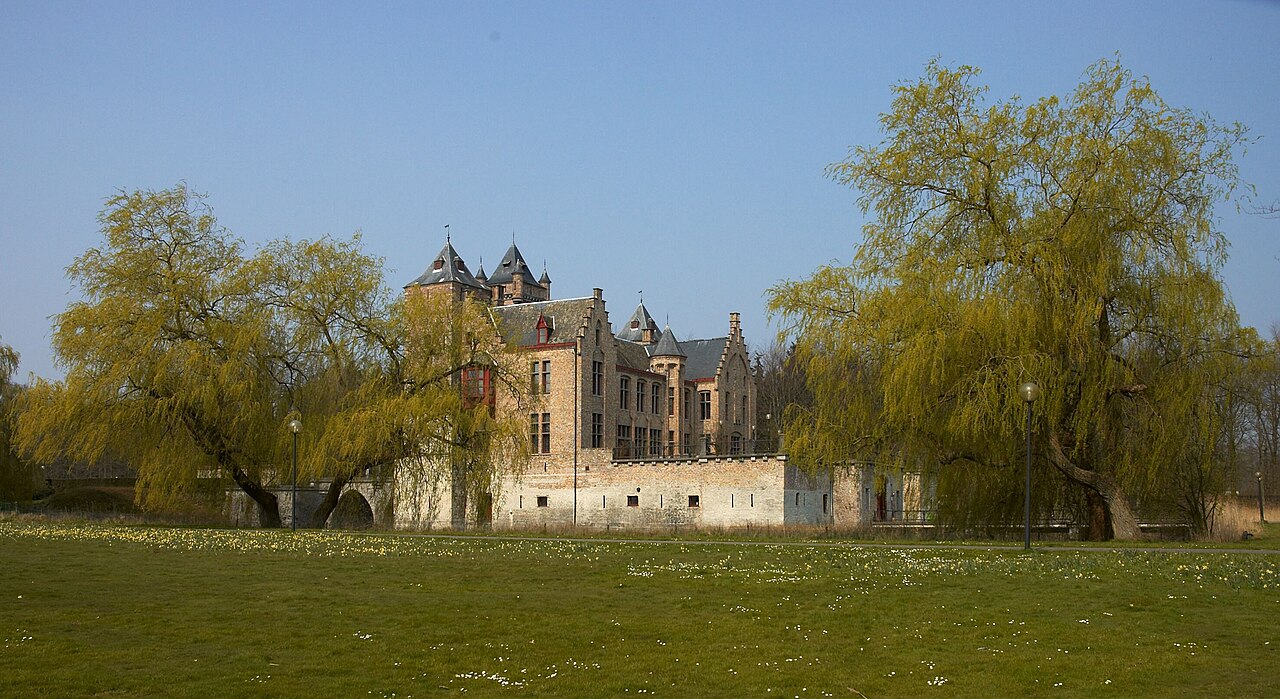
Loppem Castle, also known as Kasteel van Loppem, is situated east of the town of Loppem in the province of West Flanders, within the Flemish Region of Belgium. Despite its appearance, the castle is a relatively modern structure, constructed in the mid-19th century. It was built between 1858 and 1862 by Baron Charles van Caloen and his wife, Countess Savina de Gourcy van Caloen, replacing an earlier 18th-century mansion that once stood on the site.

Architectural design and style

The castle was designed by two prominent architects of the period: Edward Welby Pugin, an English architect known for his Gothic Revival works, and Jean-Baptiste de Béthune, a Belgian architect and designer who was a leading figure in the Flemish Gothic Revival movement. De Béthune's influence is especially evident in the castle's distinctive Flemish Gothic Revival style, which combines medieval Gothic architectural elements with local Flemish traditions.

The castle's design features geometrical lines and intricate decorative details that reflect the revivalist style popular in the 19th century. Characteristic elements include pointed arches, steeply pitched roofs, ornate gables, and detailed stonework. The structure harmonizes the romantic medieval aesthetic with the modern needs of its time, making it a notable example of post-medieval revival architecture in Belgium.

Historical significance and royal connection

During the closing months of World War I, King Albert I of Belgium and his wife, Queen Elisabeth of Bavaria, took residence at Loppem Castle for about a month. This period was marked by significant political activity, as the king held important meetings within the castle's walls. These gatherings were crucial in shaping Belgium's post-war future and underscore the castle's role beyond a private residence, serving as a site of national importance during a turbulent time.

Ownership and preservation

The last private inhabitant of Loppem Castle was Baron Jean van Caloen. In 1952, he established a foundation that took ownership of the castle and its surrounding domain. This transition ensured the preservation of the castle and opened it to the public as a museum. The foundation's stewardship has maintained the castle's architectural integrity and historical ambiance.

Visiting Loppem Castle today

Today, Loppem Castle operates as a museum, welcoming visitors who wish to explore its unique architecture and historical interiors. The castle offers a glimpse into the 19th-century revivalist architectural movement and the aristocratic lifestyle of its original owners. Visitors can appreciate the ornate halls, decorated chambers, and the castle's exterior features, including its gardens and grounds.

The castle's location in West Flanders makes it accessible for tourists interested in Belgian history, architecture, and royal heritage. Its combination of Flemish Gothic Revival architecture and historical significance related to World War I distinguishes it as a cultural landmark in the region.

Frequently asked questions (FAQ)

What is the historical significance of Loppem Castle?
Loppem Castle, built in the late 19th century, is a remarkable example of neo-Gothic architecture in Belgium. It served as a retreat for the prominent Belgian politician and historian, Charles van de Woestyne, and is surrounded by rich historical narratives related to the local nobility.
When was Loppem Castle constructed?
Loppem Castle was constructed between 1856 and 1864, designed by architect Alphonse Balat. It reflects the architectural style and social ambitions of the time, showcasing Belgium's historical context during the 19th century.
Can I visit Loppem Castle?
Yes, Loppem Castle is open to the public for visits. Guests can explore the beautiful gardens and the stunning interiors, providing an immersive experience of its historical significance.
What are the opening hours for Loppem Castle?
Loppem Castle typically opens from Wednesday to Sunday, with varying hours depending on the season. It is advisable to check the official website for the most current opening times before planning your visit.
Is it possible to buy tickets online for Loppem Castle?
Yes, visitors can purchase tickets online through the castle's official website. This allows for easier planning and ensures entry on your preferred date, especially during busy seasons.
What is the best time to visit Loppem Castle?
The best time to visit Loppem Castle is during the spring and early autumn months when the gardens are in full bloom. Additionally, the weather is generally more pleasant, making your visit more enjoyable.
Are there any nearby attractions to Loppem Castle?
Yes, nearby attractions include the beautiful parks and walking trails of the surrounding countryside, as well as the historic city of Bruges, which is only a short drive away. Visitors can easily combine their trip to the castle with a cultural exploration of the region.
How accessible is Loppem Castle for visitors with disabilities?
Loppem Castle strives to be accessible to all visitors. While some areas may have limitations due to the castle's historical structure, efforts have been made to provide access to key locations for those with mobility challenges.
What are the ticket prices for visiting Loppem Castle?
Ticket prices for Loppem Castle are generally affordable, with discounts available for students and seniors. It is recommended to check the official website for the latest pricing details and any special offers that may be available during your visit.

Information

Palace Castle

Address

Steenbrugsestraat 26, Belgium

Loading map...

Visitor reviews

No reviews yet. Been here? Write the first review and help other travelers!

Write the first review

Visited this castle? Share your experience

Your review helps other travelers and adds first-hand knowledge to our encyclopedia.
Write a review

(5/5)

0/2000 characters

Your review will be visible after admin approval

Nearby castles

2.2 km
Tillegem Castle — Belgium castle

Tillegem Castle

Bruges, Belgium

Tillegem Castle, locally known as Kasteel van Tillegem, is a remarkable example of a moated castle located just south of the historic city of Bruges in the province of West Flanders, within the Flemish region of Belgium. While local tradition suggests a predecessor structure may have existed as early as the 9th century, the current castle's origins are firmly rooted in the 12th or 13th century, a period marking the height of medieval fortification construction in this region. Medieval origins and architectural design The castle was originally constructed as a square moated fortress, a common defensive design of the high medieval period. It featured square corner towers that provided vantage points for surveillance and defense, indicative of the military architecture of the time. The first known owner was Lord Jan van Voormezele, a noble figure associated with the castle's early history. The moat surrounding the castle not only served as a defensive barrier but also enhanced its imposing presence within the landscape. Ownership and transformations through the centuries Over the subsequent centuries, Tillegem Castle passed through the hands of various wealthy families from Bruges. These owners undertook multiple renovations and reconstructions, motivated both by the need to repair wartime damages and to adapt the castle to more comfortable residential standards as the medieval fortress evolved into a noble residence. These modifications reflect the broader European trend of castles transitioning from purely military strongholds to stately homes. The 19th-century revival and restoration In 1879, the castle entered a significant phase of restoration and stylistic transformation when it was acquired by Baron Eugène Charles de Peñaranda de Franchimont. Under his patronage, the castle was rebuilt in the distinctive Flemish Gothic Revival style, a 19th-century architectural movement that sought to revive medieval Gothic design elements with romantic and nationalistic undertones. The renowned architect Jean-Baptiste de Béthune was commissioned for this project, and his work gave the castle its present-day appearance. Béthune's design emphasized pointed arches, ornate brickwork, and decorative gables, all characteristic of the Flemish Gothic Revival aesthetic. Modern usage and preservation Tillegem Castle remained a private residence until 1980, after which it was transferred to the provincial government. Recognizing its cultural and architectural value, the government undertook restoration efforts to preserve the castle's integrity while adapting it for modern use. Today, the castle serves as office space for provincial government functions, a practical reuse that has helped maintain the building's upkeep and relevance. Access and surroundings While the castle itself is not open to public tours due to its current administrative function, visitors can enjoy the castle's surrounding park, which remains freely accessible. The park offers a scenic environment that complements the castle's historic atmosphere, providing a glimpse into the estate's grandeur and its integration with the natural landscape. Architectural significance and heritage value Tillegem Castle stands as a significant example of the evolution of medieval castles in Belgium, illustrating the transition from a fortified moated structure to a romanticized Gothic Revival residence. Its preservation and adaptive reuse demonstrate a successful balance between heritage conservation and contemporary functionality. The castle's Flemish Gothic Revival style is particularly notable for its regional expression of 19th-century architectural revivalism, making it an important cultural landmark in West Flanders. Key architectural features Square moat surrounding the castle, a defensive feature from its medieval origins. Square corner towers that define the castle's original layout and fortification strategy. Flemish Gothic Revival elements such as pointed arches, intricate brickwork, and decorative gables added during the 19th-century restoration. Integration of modern amenities during the 20th-century restoration to accommodate office use. Historical context within the region The castle's location near Bruges places it within a historically rich area known for its medieval trade, political significance, and architectural heritage. Bruges itself was a major center of commerce and culture during the Middle Ages, and estates like Tillegem Castle played a role in the rural landscape surrounding the city, serving as seats of local power and noble residence. Tillegem Castle's history reflects the broader patterns of feudal ownership, architectural adaptation, and heritage preservation that characterize many historic castles in Belgium and Western Europe. Its ongoing use and maintenance ensure that it remains a living part of the region's cultural fabric.

High Medieval (11th–13th c.)
Details
7.8 km

Ryckevelde Castle

Bruges, Belgium

Ryckevelde Castle, locally known as Kasteel Ryckevelde, is situated in a spacious park east of the city of Bruges, in the province of West Flanders, within the Flemish region of Belgium. Despite its traditional appearance, this castle is a 20th-century construction built in the style of Flemish Gothic Revival, a movement that sought to revive medieval architectural forms with modern construction techniques and materials. Historical background and construction The castle was commissioned by Baron Raphael Gilles de Pélichy and constructed over a period spanning from 1913 to 1929. This lengthy building phase was interrupted by the First World War, which affected much of Belgium and delayed many architectural projects. The design reflects a deliberate homage to the medieval castles of the Flemish region, incorporating characteristic elements such as pointed arches, ornate stonework, and steeply pitched roofs. Baron de Pélichy’s family occupied Ryckevelde Castle until 1946, after which the estate underwent a significant change in function. Architectural features of Ryckevelde Castle The castle exemplifies the Flemish Gothic Revival style, a subset of the broader Gothic Revival movement popular in Europe during the late 19th and early 20th centuries. Its architecture includes features such as decorative battlements, turrets, and gabled roofs that echo the medieval fortifications of the region. The construction employs both traditional masonry techniques and modern methods available in the early 20th century, resulting in a structure that appears authentically medieval but benefits from contemporary building standards. The castle is surrounded by a large parkland that enhances its stately presence and provides a scenic setting. Use as Ryckevelde Europe House In 1956, Ryckevelde Castle was repurposed as the headquarters for the Ryckevelde Europe House, a foundation established by the Capuchin friar Karel Verley. This institution aimed to educate and engage young people about the concept of Europe as a political and cultural entity during the post-war period, a time when European integration was gaining momentum. The castle served as a training and conference center for this purpose until 2002, playing a role in fostering European awareness and cooperation among youth. Current status and public access Today, Ryckevelde Castle functions primarily as a venue for private events, including parties, corporate gatherings, and cultural activities. The castle itself is not open for general public tours, but the surrounding park and grounds remain accessible to visitors and locals alike, offering a pleasant environment for walks and outdoor enjoyment. The castle’s relatively recent construction means it does not have the centuries-old history typical of many Belgian castles, yet its architectural style and setting contribute to its charm and appeal as a heritage site within the region. Location and regional context Ryckevelde Castle is located on Rijckeveldestraat, providing easy access from Bruges, one of Belgium’s most visited historic cities. The castle’s presence adds to the cultural landscape of West Flanders, a province known for its rich medieval architecture and historic estates. The castle’s parkland and buildings contribute to the local heritage and serve as a reminder of early 20th-century architectural revival trends in Belgium.

Post-Renaissance (17th–18th c.)
Details
8.3 km

Male Castle

Lodewijk van Malestraat, Belgium

Male Castle, known locally as Kasteel van Male, is a significant medieval fortress located in the village of Male, within the province of West Flanders in the Flemish region of Belgium. The castle's origins trace back to the 9th century, when it began as a moated wooden tower designed as a refuge against Viking incursions, reflecting the turbulent early medieval period in this region. Early medieval origins and initial construction The earliest structure at the site was a simple wooden tower surrounded by a moat, typical of early medieval defensive architecture. This initial fortification served as a protective refuge during the frequent Viking raids that threatened the coastal and riverine territories around Bruges. The strategic location of Male Castle near Bruges made it an important defensive outpost in the region. Transition to stone and the high medieval period In the 12th century, the wooden fortification was replaced by a more durable stone castle under the direction of Philip I, Count of Flanders. This transition marked a significant evolution in the castle's architecture and defensive capabilities. The stone castle included a chapel, which according to tradition was consecrated in 1166 by Thomas Becket, the exiled Archbishop of Canterbury. This consecration highlights the castle's dual role as both a military stronghold and a noble residence. Role as a residence and court During the Middle Ages, Male Castle served primarily as a residence and administrative court for the Counts of Flanders. It was a center of regional power and governance, reflecting the political importance of the Counts in medieval Flanders. Notably, in 1329, it was the birthplace of Count Louis II of Flanders, also known as Louis of Male, underscoring its status as a noble residence. Conflicts and destruction in the late medieval period Male Castle's history is marked by repeated sieges and destruction due to the region's volatile political landscape. During the French occupation, the castle was garrisoned by French troops but was retaken by the forces of Bruges in 1302 during a local uprising. Later, the castle was captured and destroyed by the citizens of Ghent in 1382, reflecting the intense urban-rural conflicts in Flanders. The castle was rebuilt but again suffered attacks by Ghent's townspeople in 1453. It was burned down in 1472 and rebuilt once more, with the current keep dating from this period. This keep, which now functions as a gate tower, is notable for its foundations directly in the moat and is flanked by symmetrical wings added during the rebuilding phase. In 1490, the castle was looted by the troops of the Count of Nassau, adding to its turbulent history of conflict and reconstruction. Spanish period and decline During the Spanish occupation of the Low Countries, Male Castle was sold in 1558 by Philip II to the Spanish knight Juan Lopez Gallo. Following this sale, the castle gradually lost its military and political significance and passed through the hands of various noble families. It became somewhat neglected and faded from prominence over the centuries. Modern history and restoration Male Castle was occupied by German forces during both World War I and World War II. The castle suffered significant damage during these occupations, leaving it in a ruinous state by the end of the Second World War. In 1953, the last noble owner, Baron Gillès de Pélichy, transferred ownership of the castle to the St. Trudo convent in Bruges. The nuns moved into the castle in 1954, and a comprehensive restoration project was undertaken, lasting until 1972. This restoration aimed to preserve the castle's historical architecture while adapting it for use as a convent. In the 21st century, the castle was purchased by a Belgian businessman in 2011. The nuns vacated the premises in 2013, and since then, the businessman's daughter has resided on the castle grounds. Plans have been announced to convert Male Castle into a luxury suite hotel, although it is currently not open to the public. Architectural features and significance Male Castle is an example of a medieval moated castle that evolved over several centuries. The surviving keep, dating from the late 15th century rebuilding, is a key feature, notable for its placement directly in the moat and its function as a gate tower. The castle's wings, added during the same period, give it a symmetrical appearance uncommon in earlier medieval fortifications. The castle's architecture reflects the transition from early wooden fortifications to stone castles designed for both defense and noble residence. Its repeated destruction and rebuilding demonstrate the turbulent history of Flanders during the Middle Ages, marked by conflicts between local cities, foreign occupiers, and noble families. Cultural and historical context Male Castle's history is closely intertwined with the political and military struggles of Flanders. It served as a residence for the Counts of Flanders, a defensive stronghold against Viking raids, and a contested site during urban uprisings and foreign occupations. The castle's survival and restoration contribute to the understanding of medieval and early modern history in the region. Although currently not accessible to visitors, Male Castle remains an important heritage site that illustrates the architectural and historical developments of Flemish castles. Its preservation and planned future use as a luxury hotel may offer new opportunities for public engagement with this significant monument.

Early Medieval (5th–10th c.)
Details

