Longtown Castle
Longtown Castle stands prominently in the town of Longtown, Herefordshire, England, as a significant example of Norman military architecture in the Welsh Marches. Founded in the 11th century shortly after the Norman Conquest, the castle occupies a strategic position overlooking the River Monnow near an important river crossing and transport routes. Its location on the site of an earlier Roman military fortification highlights the long-standing military importance of this area.
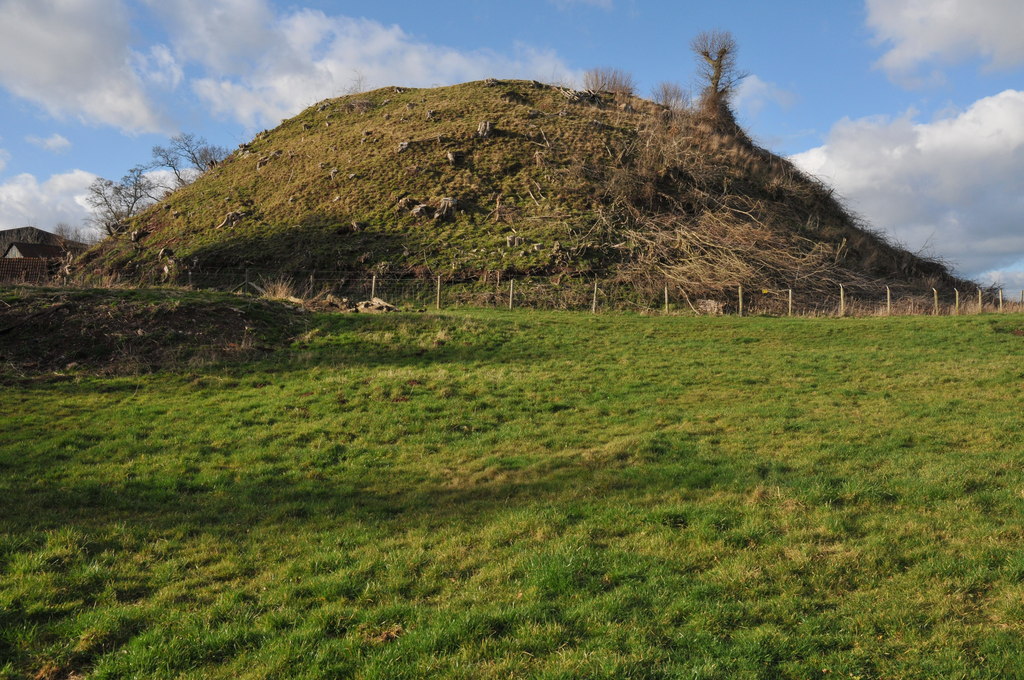
The castle was originally established by Walter de Lacy as a wooden motte-and-bailey fortress, a common form of Norman fortification designed for rapid construction and effective defense. This early castle replaced a previous fortification at Pont Hendre and was intended to consolidate Norman control over this volatile frontier with Wales. The motte, a raised earthwork mound approximately 10 meters high, was surmounted by a wooden keep initially, which was later replaced with stone.
Medieval reconstruction and architectural evolution
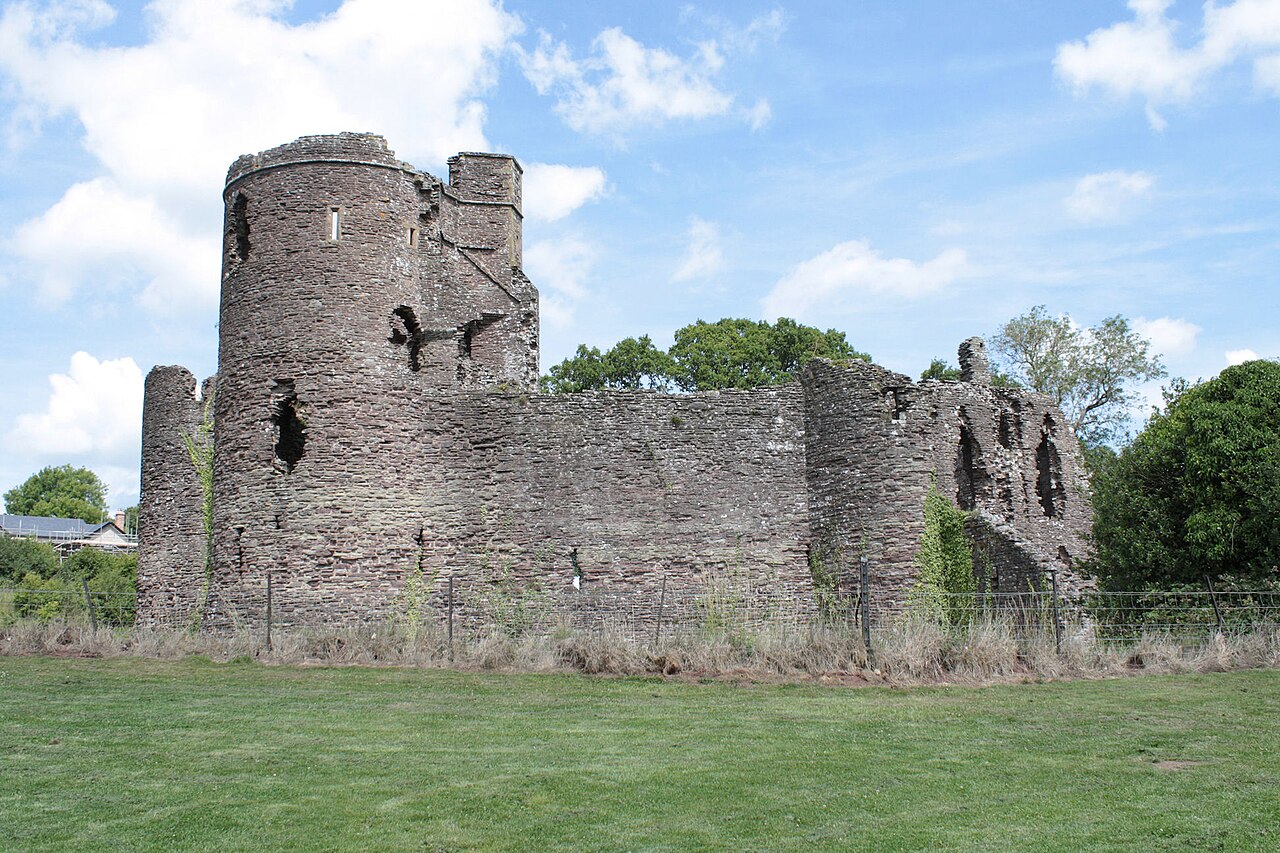
In the mid-12th century, Walter's descendant Gilbert de Lacy undertook a major rebuilding of Longtown Castle in stone. This reconstruction was a significant architectural development, replacing timber defenses with durable stonework, including a circular stone keep or great tower, which remains the most prominent feature of the castle today. The keep's walls are notably thick, between four and five meters, and it is characterized by three evenly spaced turrets. The design reflects common architectural traits of castles found throughout the Welsh Marches, emphasizing strong defensive capabilities.
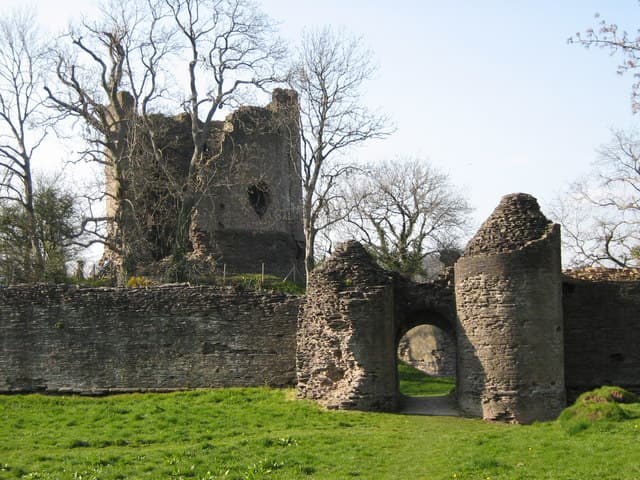
Alongside the keep, the castle's defensive layout includes a rectangular bailey divided into three distinct sections—two baileys on the west side and one on the east—each capable of independent defense. The inner western bailey is protected by a formidable curtain wall of stone, two to three meters thick, while an outer western bailey is enclosed by an additional stone wall, extending the defensive perimeter. The western side also features a stone gatehouse with two small turrets and evidence of a portcullis, underscoring the castle's strong fortifications.
Construction materials and techniques
The castle's stonework comprises primarily sandstone rubble with ashlar detailing, which provided both structural strength and aesthetic refinement. The foundations of the keep are shallower than typical for such a large stone structure, a detail that has intrigued architectural historians. The castle's evolution from timber to stone reflects broader trends in medieval fortification design, where permanence and resistance to siege warfare became paramount.
Historical significance and ownership
Longtown Castle's history is closely tied to the turbulent political landscape of the Welsh Marches. It passed through the hands of several notable noble families, including the de Lacys, John Fitzgeoffrey, the de Verduns, Bartholomew Burghersh, the Despensers, Beauchamps, and ultimately the Nevilles. These transfers of ownership reflect the castle's strategic importance in controlling the border region and its role in the ongoing Anglo-Welsh conflicts during the medieval period.
Records from the early 14th century indicate that Longtown Castle maintained a garrison of around 30 men in 1317, underscoring its continued military relevance at that time. However, by the late 14th century, the castle's military significance waned. It experienced a brief resurgence in 1403 during the Owain Glyndŵr uprising, when it was refortified to resist the Welsh rebellion. After this period, the castle gradually fell into decline and disuse.
Impact of wider historical events
The surrounding town of Longtown also suffered setbacks, particularly following the Black Death pandemic in the 14th century, which led to a decline in its prominence as a trading center. During the English Civil War in the mid-17th century, local tradition and archaeological evidence such as discovered cannonballs suggest that the castle was deliberately damaged or 'slighted' to prevent its reuse as a military stronghold.
Later use and preservation efforts
In the centuries following its military decline, Longtown Castle saw various domestic and community structures erected within its grounds. These included a house, shop, school, gallows, and a building known as Castle Lodge. Many of these were lean-to constructions attached to the castle's existing walls, incorporating reused stonework from the castle itself.
By the 20th century, the castle was in a ruinous state, with much of its stonework having been repurposed for local buildings. The Ministry of Works acquired the site and undertook restoration efforts in the 1970s, removing many of the later additions to reveal and preserve the medieval fabric. Today, Longtown Castle is a scheduled monument with its central ruins stabilized and maintained to prevent further decay.
Archaeological and community engagement
Since 2016, ongoing archaeological work supported by community projects has helped to deepen understanding of the castle's history and layout. The extensive earthworks surrounding the castle survive on common land, marking the boundaries of the early settlement and providing valuable insights into medieval defensive planning and settlement patterns.
Architectural features and castle layout
Longtown Castle's layout is distinctive for its division of the bailey into three defensible areas, a feature not commonly found in other motte-and-bailey castles. The inner western bailey contains the remains of the great hall and essential service buildings necessary for the castle's functioning as a noble residence and military stronghold.
The stone keep atop the motte is the castle's most imposing surviving feature. Its circular design with thick walls and turrets reflects both defensive needs and the architectural style of the period. The keep's first-floor hall would have served as the main living and administrative space.
The gatehouse on the western side, with its turrets and portcullis groove, demonstrates the castle's layered defenses, designed to repel attackers and control access. The curtain walls and outer baileys provided multiple lines of defense, allowing defenders to fall back and regroup if outer defenses were breached.
Earthworks and external defenses
Outside the stone walls, two additional earthwork circuits to the north and south likely supported wooden palisades and enclosed the early settlement associated with the castle. These earthworks contribute to the understanding of the castle's role not just as a military fortress but as a focal point for community and economic activity in the medieval period.
Today, visitors to Longtown Castle can explore the preserved ruins, including the stone keep, inner gatehouse, and fragments of the curtain wall. The surrounding earthworks remain visible and serve as a testament to the castle's historical importance and complex defensive design.
Frequently asked questions (FAQ)
- What is the historical significance of Longtown Castle?
- Longtown Castle, dating back to the 12th century, played a crucial role in the defense of the region during the medieval period. It was a strategic stronghold that witnessed many historical events, reflecting the turbulent history of the borderlands between England and Scotland.
- When was Longtown Castle built?
- Longtown Castle was constructed in the early 12th century, around 1120, by the Norman lord, Walter de Humez. Its architecture showcases the typical design of motte-and-bailey castles, which were common during that era.
- Can I visit Longtown Castle?
- Yes, Longtown Castle is open to visitors year-round, allowing you to explore its fascinating history and architecture. It's advisable to check for any special events or guided tours that may enhance your experience.
- What are the opening hours for Longtown Castle?
- Longtown Castle is generally open from 10 AM to 4 PM daily, but hours may vary during holidays and special events. It's best to visit the official website or contact the site for the most up-to-date information before your visit.
- Is there an admission fee for Longtown Castle?
- Yes, there is a small admission fee to enter Longtown Castle, which helps with its maintenance and preservation. Discounts may be available for children, seniors, and groups, so be sure to inquire on-site.
- How do I get to Longtown Castle?
- Longtown Castle is easily accessible by car and public transportation, located near the A7 road. The nearest train station is in Carlisle, and local buses frequently service the area, making it convenient for visitors.
- What is the best time to visit Longtown Castle?
- The best time to visit Longtown Castle is during the spring and summer months when the weather is milder and the gardens are in full bloom. Additionally, many historical reenactments and events take place during this period, enriching your experience.
- Are there any nearby attractions to visit?
- Yes, there are several attractions near Longtown Castle, including the scenic Solway Coast and the historic town of Carlisle. You can also explore nearby Hadrian's Wall, a UNESCO World Heritage site that offers a glimpse into Roman history.
- Is Longtown Castle accessible for individuals with disabilities?
- Yes, Longtown Castle strives to be accessible to all visitors. While some areas may have limited access due to historical preservation, staff is available to assist and provide information on the best routes for those with mobility challenges.
Photo gallery

Information
Website
Visit websiteSources & official resources
Verify the information above using these authoritative references.
Loading map...
Visitor reviews
No reviews yet. Been here? Write the first review and help other travelers!
Write the first reviewVisited this castle? Share your experience
Your review helps other travelers and adds first-hand knowledge to our encyclopedia.