Longroiva Castle
Longroiva Castle, or Castelo de Longroiva, is a remarkable medieval fortress perched on a granite hill overlooking the scenic Côa Valley in the Beira Interior Norte region of Portugal. Its strategic position atop a high ridge provided commanding views of the surrounding landscape, a common feature among the chain of fortified mountain towns that secured the Beira frontier during the Middle Ages. This castle embodies a rich history spanning from pre-Roman times through the medieval period and into the early modern era.
Historical origins and early medieval significance
The site of Longroiva Castle has a history of occupation dating back to the pre-Roman castro settlements typical of the region, constructed between the 4th and 2nd centuries BCE. Known as Longóbriga during Roman rule, the fortified hilltop settlement was part of the broader Roman defensive network securing the territory. Subsequent control by the Visigoths and later Muslim groups saw further fortifications added to the site.
The Christian Reconquest of the Iberian Peninsula brought significant changes, with the earliest documented mention of Longroiva occurring in 960. At this time, Countess Flâmula Rodrigues, niece of the influential noblewoman Mumadona Dias, donated the fortified village to the Monastery of Guimarães. This donation was part of a broader repopulation and consolidation effort following the expulsion of the Moors from the region by King Ramiro II of León.
By the early 12th century, the area was sparsely populated, prompting local nobility to encourage settlement. In 1126, Dom Egas Gozendes II de Baião granted a charter offering privileges to attract new settlers, a status later confirmed in 1145 by Fernão Mendes, Lord of Bragança. These charters laid the groundwork for the growth of the village and its fortifications.
Templar influence and medieval fortifications
Longroiva Castle’s medieval layout and significant construction phase are closely linked to the Knights Templar. In 1145, the area was donated to the Templars, with Master Hugo Martonio initially overseeing the order's interests. The castle’s current form is generally attributed to Master Gualdim Pais, the renowned Templar Grand Master, who undertook substantial rebuilding around 1176. A Latin inscription embedded in the keep’s stonework once confirmed this date, underscoring the castle’s importance within the Templar network.
The castle functioned as part of a defensive chain along the Beira frontier, alongside other key fortresses such as Guarda, Linhares da Beira, Celorico da Beira, Trancoso, and Marialva. These fortifications were strategically sited on high granite ridges, providing mutual support and control over vital routes and valleys.
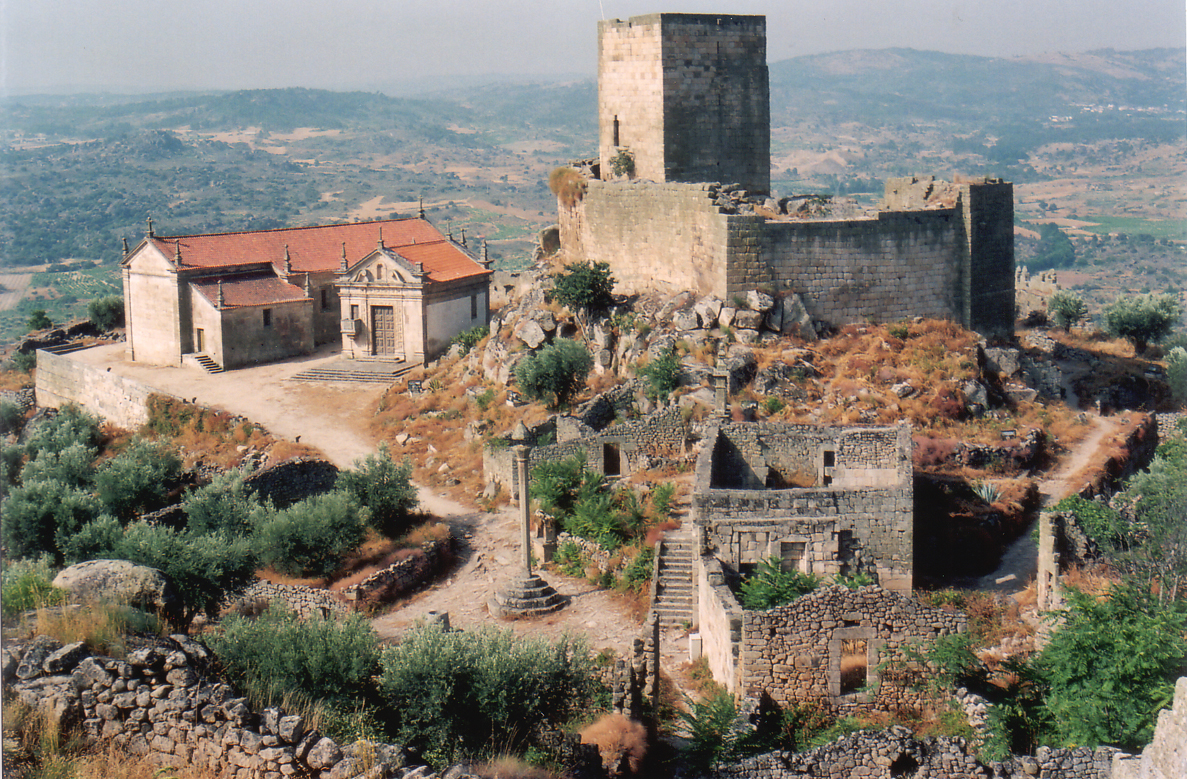
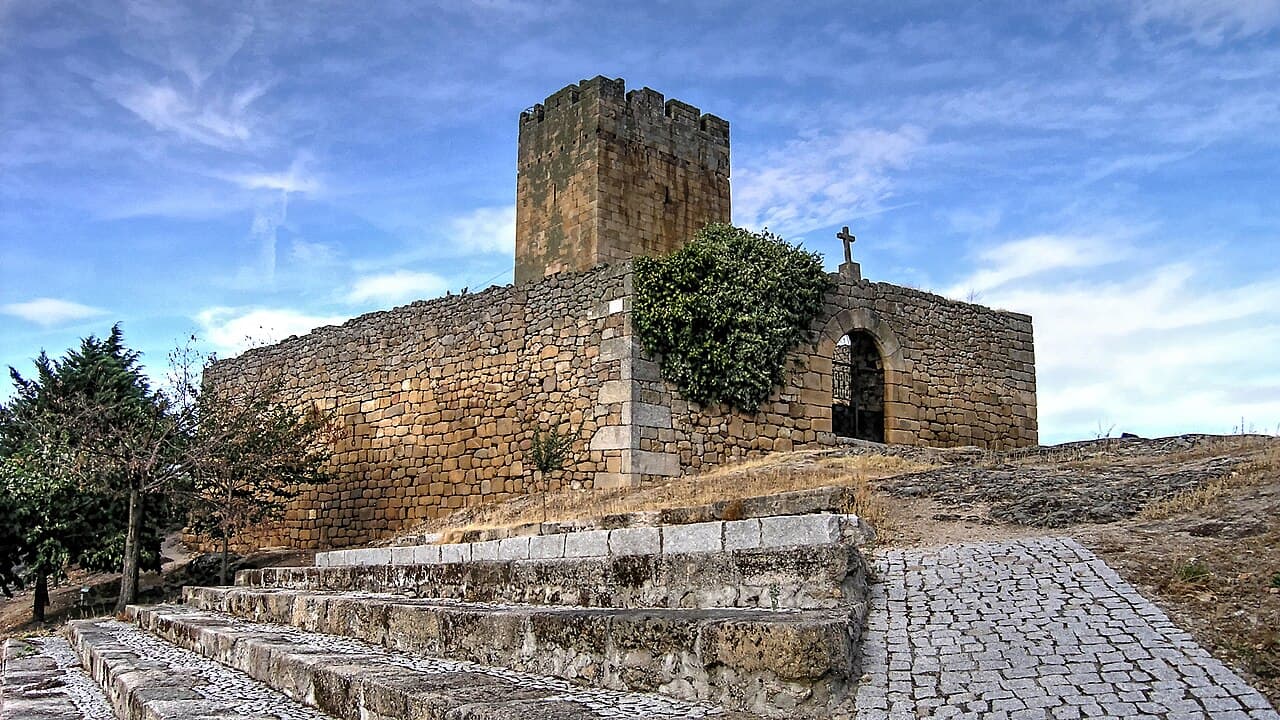
The keep of Longroiva Castle is a dominant feature, rising approximately 20 meters high at the northeast corner. Internally divided into three floors, it includes a cistern at its base for water storage and a distinctive Manueline-style mullioned window halfway up, protected historically by a wooden defensive gallery. The curtain walls, which likely enclosed a larger area originally, show variation in thickness, with the north wall being noticeably thinner and the keep’s entrance now accessible only from outside the enclosure.
Later medieval and early modern developments
Throughout the reigns of Portuguese monarchs Afonso I, Sancho I, and Denis I, the castle’s privileges and importance were reaffirmed. King Denis ordered repairs in 1304 to maintain its defensive and administrative functions. After the suppression of the Knights Templar in the early 14th century, control passed to the Order of Christ in 1319, which continued to use the castle as a military and residential center.
By the early 16th century, under King Manuel I, the castle had transitioned from a frontier fortress to a rural administrative hub. A 1505 report noted the presence of the Commander’s Palace of the Order of Christ within the castle’s main square, highlighting its role in governance. The castle received a new Manueline charter in 1510, and maintenance works were conducted in 1517 by Frei Garcia de Melo.
Architectural features and layout
The castle’s trapezoidal layout combines elements of Romanesque and Gothic architecture, characteristic of its long construction history. The curtain walls enclose a small courtyard, now serving as the village cemetery, a use dating back to the 19th century after the castle’s decline.
The keep is the most prominent surviving structure, with its three floors featuring rectangular arched openings and narrow cruciform arrow slits for defense. The Manueline mullioned window is a notable decorative element, reflecting the Portuguese late Gothic style. The wooden gallery that once protected this window was a practical defensive feature, now lost.
Within the castle grounds are two cisterns, vital for water storage during sieges. The remains of the Commander’s Palace and the adjacent Templar house provide insight into the castle’s administrative and residential functions, though these structures are largely in ruins.
Decline, preservation, and current status
From the 18th century onward, Longroiva Castle experienced a gradual decline. Its internal buildings fell into ruin, roofs were lost, and the cisterns became blocked. The gates lost their wooden doors and bars, and stone was quarried from the castle for other uses during the 19th century.
Following the dissolution of religious orders in Portugal in 1834, the castle’s main courtyard was adapted as the municipal cemetery, a function it still serves today. Recognition of the castle’s historical and cultural importance came in 1943 when it was declared a National Monument.
Subsequent conservation efforts have uncovered ancient cisterns and stabilized the ruins, but much of the castle remains in a fragile state. The site is freely accessible to visitors, offering a glimpse into the layered history of this hilltop fortress and its role in regional defense and administration through the centuries.
Visitor experience and significance
Today, visitors to Longroiva Castle can explore its weathered curtain walls and the imposing keep, though the keep itself is closed to the public. The small courtyard cemetery adds a unique character to the site, blending historical preservation with local community use. Nearby, interpretation spaces hint at efforts to enhance visitor understanding of the castle’s rich heritage.
Longroiva Castle stands as a testament to the complex history of the Beira Interior region, reflecting influences from Roman, Visigothic, Muslim, and Christian medieval cultures. Its architectural features and historical associations with the Knights Templar and the Order of Christ make it a significant monument in Portugal’s medieval heritage.
Frequently asked questions (FAQ)
- What is the historical significance of Longroiva Castle?
- Longroiva Castle is historically significant as a medieval fortress linked to the Knights Templar and the Order of Christ, playing a key role in securing the Beira frontier in Portugal.
- Can I visit Longroiva Castle today?
- Yes, Longroiva Castle is freely accessible to visitors. While the keep is closed, visitors can explore the curtain walls and courtyard, which serves as the village cemetery.
- What architectural styles are present in Longroiva Castle?
- The castle features a combination of Romanesque and Gothic architectural styles, with notable Manueline decorative elements, especially in the keep's mullioned window.
- When was Longroiva Castle built?
- The castle’s main medieval construction dates to the 12th century, with significant rebuilding by the Knights Templar around 1176.
- Why was the castle’s courtyard converted into a cemetery?
- Following the decline of the castle and the dissolution of religious orders in the 19th century, the main courtyard was adapted as the municipal cemetery, a use that continues today.
Photo gallery

Information
Address
R. do Adro, Portugal
Loading map...
Visitor reviews
No reviews yet. Been here? Write the first review and help other travelers!
Write the first reviewVisited this castle? Share your experience
Your review helps other travelers and adds first-hand knowledge to our encyclopedia.