Castelo Melhor
Castelo Melhor is a historic hilltop castle located in northern Portugal, overlooking the right bank of the Côa River. Its strategic position on a rocky hilltop about 450 meters above sea level has made it a significant defensive site from ancient times through the medieval period. The site was first fortified by the Turduli peoples in pre-Roman times, who established a castro, an early fortified settlement typical of the Iberian Peninsula. This early occupation laid the groundwork for the castle's enduring military importance.
During the 12th century, the territory was under the control of the Kingdom of León. Between 1209 and 1210, King Alfonso VII of León granted a foral, or charter, to the settlement and ordered the construction of a castle to strengthen the military presence in this border region. The castle's initial purpose was to secure the area amid ongoing disputes between Portugal and Castile.
Medieval fortifications and royal influence
After the Treaty of Alcañices in 1297, Castelo Melhor was incorporated into the Kingdom of Portugal. King Dinis confirmed the settlement's privileges in 1298 and initiated significant modifications to the castle's defenses. These improvements included the addition of two rectangular towers flanking the main entrance on the northwest side, as well as a circular keep tower oriented toward the settlement to guard the only accessible approach. These fortifications reflect Castelo Melhor's role as a secondary defensive position within the Riba-Côa line, a frontier defense system.
In the late 14th century, King Fernando ordered repairs to the castle. During the 1383–1385 dynastic crisis, Castelo Melhor briefly fell under Castilian control but was returned to Portugal by the Treaty of Monção in 1389. Early 15th-century repairs were undertaken under the reigns of King John I and King Afonso V. In 1422, the population of Castelo Melhor was recorded at approximately 1,704 inhabitants, and Afonso V elevated the settlement to town status, integrating it with the municipality of Almendra.
Decline and noble ownership
By 1496, the population had sharply declined to 204 residents. At the end of the 15th century, King John II granted the lands to João Fernandes Cabral. The castle and settlement became linked to noble families who later focused their power in Belmonte, which contributed to Castelo Melhor's decline in prominence.
In 1584, the settlement was raised to the status of a county seat under Rui Mendes de Vasconcelos. During the 1640 Restoration Wars, an artillery battery was constructed on the eastern flank of the hilltop to enhance the castle's defenses. By the 18th century, Castelo Melhor was subordinate to Almendra, with the Counts of Castelo Melhor serving as donataries, or land grantees. In 1758, the settlement had 89 residents and was recognized as a defensible county seat, although it lacked a permanent garrison.
The town was elevated to a marquisate in 1766. In 1855, the municipality of Almendra e Castelo Melhor was dissolved, and the area became part of Vila Nova de Foz Côa. Since 1982, Castelo Melhor has been classified as an Imóvel de Interesse Público (Property of Public Interest), reflecting its cultural and historical significance.
Architectural features and remains
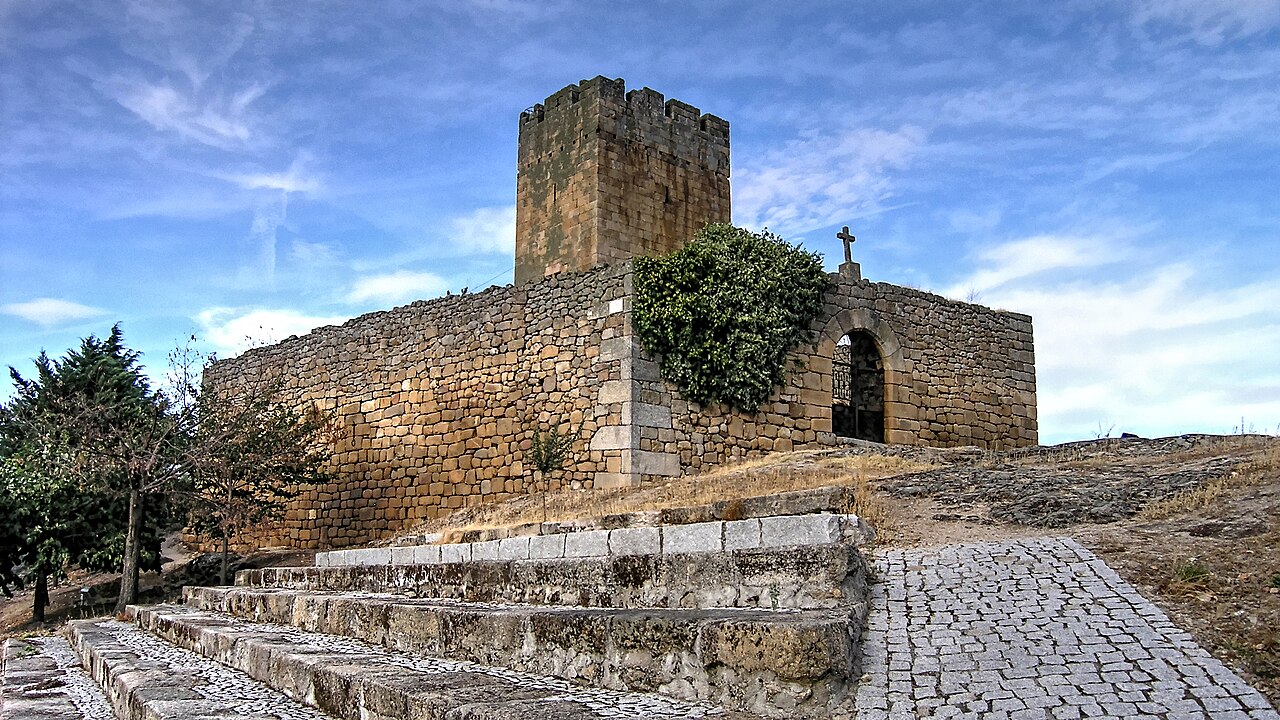
The castle's layout is an irregular polygon shaped by the rocky terrain and large boulders on the hilltop. The defensive walls are constructed from small schist stones and vary in height between three and six meters. Unlike many medieval castles, the walls lack merlons, the upright sections typically found on battlements, but include a staircase that provides access to the wall walk.
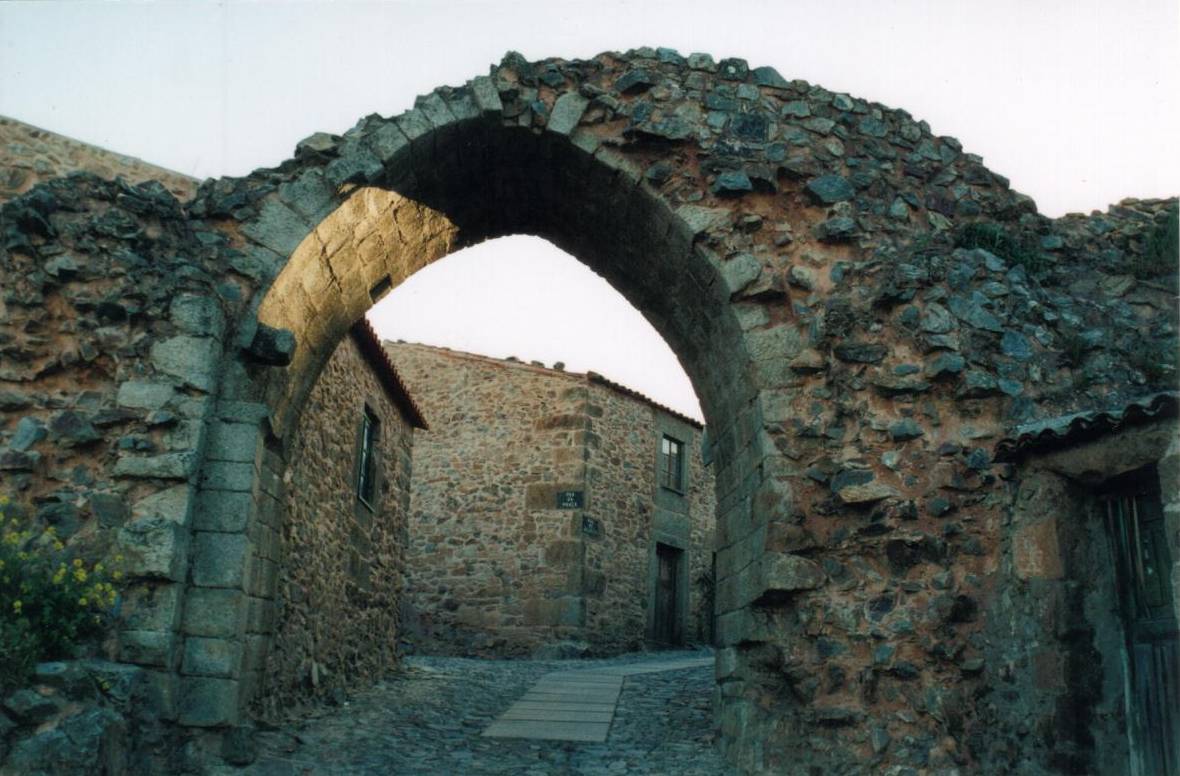
The main entrance on the northwest side is notable for its triple-arched gate, flanked by two rectangular towers added during King Dinis's early 14th-century reforms. Behind the northern wall stands a circular tower oriented toward the settlement, designed to protect the only accessible side of the castle.
Between the gate and the circular tower, as well as along the southern wall, remains of reinforcement walls suggest the former presence of a barbican, a fortified outwork protecting the entrance. Additionally, three conical corbels are found behind the eastern and northwestern sections of the walls, serving as projecting supports for defensive structures.
Within the castle courtyard lies a circular cistern without a cover, located in the northeast corner, which would have been essential for water storage during sieges. Nearby are the remains of several rectangular buildings, indicating the presence of internal structures such as living quarters or storage facilities.
Today, the castle walls are generally in a damaged state, reflecting centuries of exposure and lack of permanent maintenance. Although it no longer houses a garrison, Castelo Melhor was historically considered defensible when necessary, particularly during periods of conflict along the Portuguese-Castilian border.
Historical context and strategic importance
Castelo Melhor's location overlooking the confluence of the Côa and Douro rivers gave it a commanding view of the surrounding landscape, making it a key defensive position in northern Portugal. Its role evolved through various historical periods, from a pre-Roman castro to a medieval fortress integral to border defense during the turbulent relations between Portugal and Castile.
The castle was part of the broader defensive network known as the Riba-Côa line, which consisted of fortifications designed to protect the eastern frontier of Portugal. Its fortifications, especially the towers and gatehouse, were adapted over time to meet changing military needs, including the addition of artillery defenses during the 17th century Restoration Wars.
Despite its decline in political prominence after the late 15th century, Castelo Melhor remained an important symbol of local authority and defense. Its integration into noble estates and later municipal structures reflects the shifting patterns of land ownership and governance in Portugal over several centuries.
Archaeological and cultural significance
Today, Castelo Melhor is recognized for its archaeological and cultural value. The castle's ruins provide insight into medieval military architecture adapted to rugged terrain. Its classification as an Imóvel de Interesse Público ensures its protection and highlights its importance as part of Portugal's heritage.
Visitors to the site can explore the remains of the walls, towers, and internal structures, gaining a tangible sense of the castle's historical role. The surrounding landscape, including views of the Côa and Douro rivers, adds to the site's appeal for both history enthusiasts and nature lovers.
Frequently asked questions (FAQ)
- When was Castelo Melhor originally constructed?
- Castelo Melhor was originally constructed in the early 13th century, following a charter granted by King Alfonso VII of León between 1209 and 1210.
- What architectural features characterize Castelo Melhor?
- The castle features an irregular polygonal layout adapted to rocky terrain, with schist stone walls, a triple-arched gate flanked by rectangular towers, a circular keep tower, and remains of a barbican.
- What historical events affected Castelo Melhor during the 14th century?
- In the late 14th century, King Fernando ordered repairs to Castelo Melhor. During the 1383–1385 dynastic crisis, the castle briefly fell under Castilian control but was returned to Portugal by the Treaty of Monção in 1389.
- Is Castelo Melhor accessible to visitors today?
- Castelo Melhor is accessible as a historical ruin, allowing visitors to explore the remains of its walls, towers, and internal structures, although facilities may be limited due to its ruined condition.
- Why was Castelo Melhor strategically important?
- Its location overlooking the Côa and Douro rivers provided a commanding defensive position, making it a key part of the Riba-Côa line protecting Portugal's eastern frontier.
Information
Website
Visit websiteSources & official resources
Verify the information above using these authoritative references.
Loading map...
Visitor reviews
No reviews yet. Been here? Write the first review and help other travelers!
Write the first reviewVisited this castle? Share your experience
Your review helps other travelers and adds first-hand knowledge to our encyclopedia.