Loka Castle

Loka Castle in Škofja Loka, Slovenia
Škofja Loka, Skofja Loka, Slovenia
High Medieval (11th–13th c.)
Well Preserved

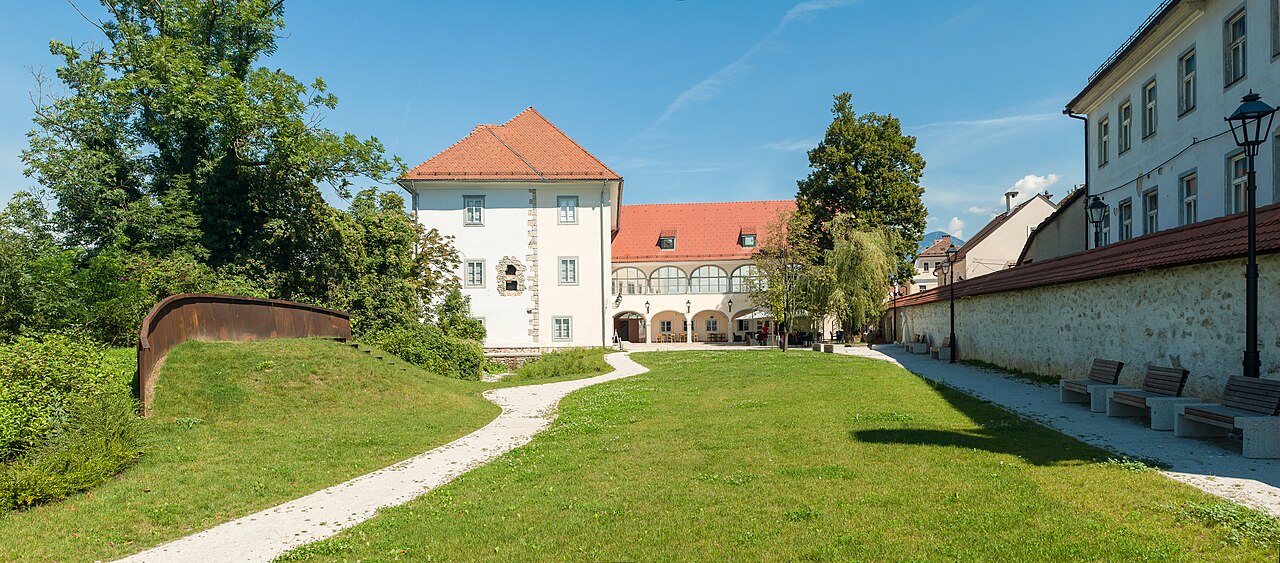
Loka Castle stands prominently above the town of Škofja Loka in Slovenia, embodying centuries of architectural evolution and historical significance. Originally referenced in 1202 as castrum firmissimum, or "very strong castle," it served as a strategic residence for the Bishops of Freising. The castle occupies a natural terrace on a hillside, offering commanding views and control over the surrounding landscape. While the current structures mainly reflect the 16th-century Renaissance rebuilding, archaeological and architectural evidence reveals a complex history reaching back to the 10th century.

The castle's location was once home to three distinct fortifications during the 12th century: the Upper Tower on Krancelj, the Lower Fort, and the original Loka Castle itself. These early fortifications underscored the area's strategic importance in controlling local trade routes and regional power dynamics. The castle's role as a bishop's residence highlights its political and ecclesiastical significance during the High Medieval period.

Medieval origins and architectural evolution

The oldest surviving part of the castle is the north-eastern tower, which incorporates foundations dating back to the 10th century. This tower was built on the remains of an earlier fortification, demonstrating the site's long-term defensive use. The castle's initial medieval construction phase is generally dated to the 13th century, consistent with the earliest documentary evidence.

Throughout the centuries, Loka Castle underwent several significant modifications. The most notable rebuilding occurred after the 1511 earthquake, which severely damaged many structures in the region. The castle was reconstructed in the Renaissance style, featuring a circular layout that dominates the skyline above Škofja Loka. This design included thick defensive walls, a moat, and a primary entrance equipped with a wooden drawbridge, reconstructed during restoration work in 2006–2008.

Later renovations and uses

The castle suffered further damage during the 1691 earthquake and underwent repairs in 1716. In the late 19th century, the Ursuline nuns took over management of the castle, transforming parts of it for educational purposes. They notably demolished the original Romanesque yard tower to build a school, marking a shift from military to civic use.

Architectural features and layout

Loka Castle is characterized by its circular defensive walls that conclude the town's medieval fortifications. The castle's design integrates multiple towers and a fortified courtyard, reflecting both its defensive function and residential status. The north-eastern tower remains the oldest and most historically significant structure within the complex.

The castle's entrance is notable for its historical wooden drawbridge, which was carefully reconstructed in the early 21st century to reflect its original defensive mechanism. The surrounding walls and towers reveal a blend of medieval masonry techniques and Renaissance architectural influences, particularly visible in the castle's layout and decorative elements.

Cultural significance and current status

Today, Loka Castle serves as the home of the Loka Museum, which has been housed in the castle since 1959. The museum preserves and exhibits the rich cultural heritage of Škofja Loka and the surrounding region, including archaeological finds, historical artifacts, and art collections.

The castle's preservation and renovation efforts, especially those carried out between 2006 and 2008, have ensured that it remains a well-preserved example of a High Medieval hill castle with Renaissance modifications. Visitors can explore the castle's historic architecture, learn about its role in regional history, and enjoy panoramic views of Škofja Loka and its environs.

Visiting and educational opportunities

The castle's location atop a natural terrace makes it an accessible and attractive destination for tourists interested in medieval architecture and Slovenian history. The museum offers educational programs and exhibitions that highlight the castle's significance, the history of the bishops' rule, and the town's development.

Frequently asked questions (FAQ)

What are the opening hours of Loka Castle?
Loka Castle is open to visitors from April to October, typically from 10 AM to 6 PM. During the winter months, the castle may have reduced hours, so it's advisable to check the official website for the most up-to-date information. Guided tours are available during the main season.
What is the historical significance of Loka Castle?
Loka Castle, dating back to the 12th century, is one of the oldest castles in Slovenia and has played a crucial role in the region's history. It served as a noble residence and a defensive fortress, reflecting the architectural evolution of the time. The castle's rich history is showcased through various exhibits that attract history enthusiasts.
How do I get to Loka Castle?
Loka Castle is situated in Škofja Loka, easily accessible by car or public transport from Ljubljana. If you’re driving, there is parking available nearby, and for those using public transport, local buses frequently connect to the town. Once in Škofja Loka, the castle is a short walk from the town center.
Can I access Loka Castle with a wheelchair?
Loka Castle has made efforts to improve accessibility for all visitors, including those with mobility challenges. However, due to the castle's historical structure, some areas may still pose difficulties. It is recommended to contact staff in advance to inquire about specific accessibility options.
When is the best time to visit Loka Castle?
The best time to visit Loka Castle is during the spring and early autumn months when the weather is mild and pleasant. These seasons also feature fewer tourists, allowing for a more relaxed experience. Additionally, visiting during this time lets you enjoy the beautiful surrounding nature.
What are the ticket prices for Loka Castle?
Ticket prices for Loka Castle are generally affordable, with discounts available for students and seniors. Family tickets may also be offered, making it a great option for visitors traveling with children. Be sure to check the official website for the latest pricing information and any special offers.
Is it possible to take guided tours at Loka Castle?
Yes, guided tours are available at Loka Castle, providing an insightful experience into its rich history and architecture. Tours are typically conducted in multiple languages, catering to international visitors. It's advisable to book your tour in advance, especially during peak tourist season.
What nearby attractions can I visit after Loka Castle?
After exploring Loka Castle, visitors can enjoy the charming old town of Škofja Loka, known for its medieval architecture and lovely streets. Additionally, the nearby Škofja Loka Valley offers beautiful hiking trails and natural scenery. The area is rich in culture and history, making it a perfect stop for further exploration.

Information

Hill Castle

Sources & official resources

Verify the information above using these authoritative references.

Loading map...

Visitor reviews

No reviews yet. Been here? Write the first review and help other travelers!

Write the first review

Visited this castle? Share your experience

Your review helps other travelers and adds first-hand knowledge to our encyclopedia.
Write a review

(5/5)

0/2000 characters

Your review will be visible after admin approval

Nearby castles

9 km
Kieselstein Castle — Slovenia castle

Kieselstein Castle

Kranj, Slovenia

Kieselstein Castle, also known as Khislstein, is a prominent 13th-century hill castle located in the city of Kranj, within the Upper Carniola region of Slovenia. The castle occupies a strategic position overlooking the river Sava and the historic city pier, a site that was naturally defensible and vital for controlling river crossings. Its origins trace back to an earlier 11th-century round keep, which served as a fortified lookout before the construction of the current castle structure in 1256. Medieval origins and strategic importance The castle was initially built by the Counts of Ortenburg under an agreement with Duke Ulrik III of Carinthia, the lord of Kranj at the time. This early construction reflects the typical high medieval military architecture designed to secure important trade and transport routes along the Sava River. The castle's location was crucial for the defense of the city and its pier, serving as a watchpoint and a fortification against potential invaders. From its establishment until 1420, the castle was managed by the ministeriales or vassals of the Ortenburgs, known as the knights von Chreinburch. This feudal arrangement ensured the castle's role as a local stronghold within the broader political landscape of the Holy Roman Empire. Transition to the Counts of Celje and later Habsburg rule In 1420, ownership passed to Count Herman II of Celje, a powerful noble family influential in the region during the late medieval period. The castle's significance continued as it was integrated into the city's defenses during the turbulent times of Turkish incursions in the 15th century. The Counts of Celje held the castle until their extinction in 1456, after which it became part of the Habsburg domains. Renaissance transformation and later noble ownership In the mid-16th century, the Habsburgs sold the castle to Baron Janž Khiessl, who obtained imperial permission from Emperor Ferdinand I to rename the castle after himself. Baron Khiessl undertook significant renovations, expanding the original tower into an L-shaped Renaissance castle, which largely defines the castle's present-day appearance. This transformation reflects the architectural shift from purely defensive medieval structures to more comfortable and representative noble residences during the Renaissance. Subsequent owners included members of the Moscon, Ravbar, Apfaltrer, Auersperg, and Natalis Pagliaruzzi noble families, each contributing to the castle's evolving history and preservation. 20th-century history and restoration The castle was purchased by the state in 1913. Between the two world wars, it served as government offices, reflecting its continued administrative importance. After World War II, the castle was nationalized, aligning with the broader post-war political changes in Slovenia. In 1952, the castle underwent a significant renovation led by the renowned Slovenian architect Jože Plečnik. Plečnik's work focused on preserving the castle's historical character while adapting it for modern use. Today, the castle houses the Kranj Municipal Agency for the Protection of Natural and Cultural Heritage and the Upper Carniola Museum, serving as a cultural and historical center. Architectural features and layout Kieselstein Castle's architecture showcases its evolution from a medieval defensive tower to a Renaissance noble residence. The original round keep was the focal point of the early fortification, surrounded by thick stone walls designed for defense. The later addition of the L-shaped wing by Baron Khiessl introduced residential and administrative spaces, reflecting Renaissance architectural trends emphasizing comfort and status. The castle's integration into the city walls during the period of Ottoman threats highlights its military significance. Defensive features such as battlements, arrow slits, and fortified gates were adapted to meet the challenges of the time. Renovation and preservation efforts Jože Plečnik's mid-20th century renovation was sensitive to the castle's historical fabric. He emphasized the restoration of key architectural elements while ensuring the building could accommodate modern functions. This balance of preservation and adaptation has allowed Kieselstein Castle to remain a vital part of Kranj's cultural heritage. Cultural significance and current use Today, Kieselstein Castle stands as a symbol of Kranj's medieval past and its ongoing cultural vitality. The castle's role as the seat of the Upper Carniola Museum connects visitors with the region's history, art, and traditions. Its location and preserved architecture offer insights into the defensive strategies and noble lifestyles of the past centuries. The castle is accessible to the public during museum hours and provides educational programs, exhibitions, and cultural events that highlight the heritage of Kranj and the wider region.

High Medieval (11th–13th c.)
Details
10.6 km

Smlednik Castle Ruins

Smlednik, Slovenia

Smlednik Castle ruins stand on a hill overlooking the Sava River in Smlednik, Slovenia. The site has a long history of fortification, with origins tracing back to a prehistoric fort and a Roman stronghold established in later periods. The castle itself was presumably constructed in the 12th century during the high medieval period, making it a significant example of medieval military architecture in central Slovenia. The strategic location and early origins The hilltop where Smlednik Castle stands was valued for its commanding view and control over a key crossing of the Sava River. This strategic position was first utilized by the Counts of Weimar Orlamunde, the initial lords of the region. In the 11th century, they built a defense tower on the site, which served as the nucleus for the later castle complex. Architectural development through the medieval period The original tower was expanded in several phases, reflecting the evolving military and residential needs of its occupants. Despite these expansions, the castle's structure remained largely unchanged after 1610. This preservation makes Smlednik Castle an important example of a mid-sized medieval castle that retains its architectural integrity from the high medieval period through the early modern era. Castle layout and features The castle's design includes a central defense tower on the hilltop, surrounded by walls adapted to the natural terrain. The fortifications were intended to protect the castle from potential invaders attempting to control the vital river crossing. Although now in ruins, remnants of the stone walls and foundational structures provide insight into the castle's original defensive capabilities. Historical significance and decline Smlednik Castle played a role in the regional defense system during the medieval period. The Counts of Weimar Orlamunde used it to establish and maintain control over the surrounding lands. However, by the second half of the 17th century, the castle was already described as a ruin by the noted Slovenian chronicler Janez Vajkard Valvasor. This suggests that the castle fell into disuse and decay sometime in the early modern period, likely due to changes in military technology and political shifts in the region. Present condition and cultural heritage Today, Smlednik Castle exists as ruins that offer valuable archaeological and historical insights. The site is a well-preserved example of medieval fortification in central Slovenia and attracts visitors interested in medieval architecture and Slovenian history. The ruins allow for study of the castle's construction techniques and the strategic importance of its location throughout history. Visitor information While the castle is in ruins, it remains accessible to visitors who can explore the hilltop and observe the remains of the defense tower and fortifications. The site provides panoramic views of the Sava River valley and surrounding countryside, enhancing its appeal to tourists and historians alike. Architectural and historical context Smlednik Castle is representative of high medieval castle architecture in Slovenia, characterized by its hilltop location, stone construction, and defensive features designed to control important transit routes. The castle's survival in an unaltered state since the early 17th century offers a rare glimpse into the architectural evolution of medieval fortifications in this part of Europe. The castle's history reflects broader trends in medieval European fortification, where strategic locations such as river crossings were heavily fortified by local nobility to assert control and provide defense against rival powers. The transition from a solitary defense tower to a more complex castle structure illustrates the changing military and residential needs during the medieval period.

High Medieval (11th–13th c.)
Details
13.2 km

Brdo Castle

Kranj, Slovenia

Brdo Castle near Kranj, Slovenia, stands as a significant Renaissance-era mansion with a rich history intertwined with political and cultural developments in the region. Constructed in 1510 by the Carniolan nobleman Georg (Jurij) Egkh, who served as the general administrator of Habsburg private estates in the Duchy of Carniola, the castle originally showcased the refined Renaissance architectural style. Over the centuries, it has undergone numerous renovations and stylistic changes, reflecting the evolving tastes and functions assigned to the estate. Historical development and ownership Initially built as a noble residence, Brdo Castle was acquired in the 18th century by Michelangelo Zois, a prominent figure whose family played a vital role in the Carniolan Enlightenment. His son, Žiga Zois, was a noted patron of the arts and natural sciences, linking the castle to the intellectual currents of the time. In the 19th century, the mansion changed ownership multiple times, during which its interior was extensively renovated, adapting to contemporary tastes and needs. By the early 20th century, the castle had fallen into a state of decline until it was purchased in 1935 by Prince Paul of Yugoslavia. Under his ownership, the estate was transformed from a provincial mansion with eclectic and Biedermeier elements into a refined summer royal residence. This period saw the castle hosting distinguished guests, including Edward VIII of the United Kingdom, marking its importance as a site of high-profile social and political gatherings. Brdo castle in the yugoslav and slovenian states Following the establishment of the Communist Yugoslav state in 1945, the castle was confiscated from the Karadjordjević dynasty and became a summer retreat for Josip Broz Tito, the Yugoslav leader. Alongside Vila Bled near Lake Bled, Brdo was one of Tito’s preferred residences during spring and summer months. Notably, in spring 1980, Tito suffered a seizure at Brdo Castle and was subsequently transferred to the University Medical Centre Ljubljana, where he later died. After Tito’s death, the estate passed to the Socialist Republic of Slovenia and eventually to the Government of independent Slovenia. The castle continues its traditional role as a venue for national and international conferences. In 1990, it hosted a critical meeting of leaders from the six Yugoslav republics attempting to prevent the federation’s dissolution. It also hosted the first official meeting between George W. Bush and Vladimir Putin in 2001, and during Slovenia's EU Presidency in 2008, it was the site of multiple high-level international meetings. Architectural features and renovations The original Renaissance style of Brdo Castle is evident in its layout and structural elements, although the building has been extensively remodeled over the centuries. The 18th-century ownership introduced Baroque influences, while Prince Paul’s renovations in the 1930s refined the mansion’s appearance into a more elegant and functional royal residence. The castle features formal gardens and a park landscape that complement its architectural grandeur. The interior is richly decorated with artworks by prominent Slovene artists, including France Mihelič, Maksim Sedej, Boris and Zdenko Kalin, and Karel Putrih. These decorations include paintings, frescos, and sculptures that enhance the cultural and artistic value of the estate, linking it firmly to Slovenia’s national heritage. Current use and cultural significance Today, Brdo Castle serves as the Slovenian Government’s main venue for diplomatic meetings and official events. Its role as a site for hosting international summits and conferences underscores its continuing political importance. The castle’s blend of historical architecture and modern function makes it a unique symbol of Slovenia’s past and present. The estate’s extensive parklands and proximity to Kranj make it accessible for visitors interested in exploring Slovenia’s noble heritage and political history. While the castle itself is primarily used for official functions, its grounds occasionally open for cultural events, providing a glimpse into the grandeur of Renaissance and later architectural styles preserved through careful maintenance and restoration.

Renaissance (15th–17th c.)
Details

