Lohagarh Fort
Lohagarh Fort, also known as the Iron Fort, is a formidable 18th-century bastioned fortress situated in Bharatpur, Rajasthan, India. Commissioned by Maharaja Suraj Mal in 1732, the fort is renowned for its robust defensive architecture and its significant role in the military history of northern India during the post-Renaissance period.
Historical context and construction
The fort was constructed during a period of intense regional conflicts and power struggles in Rajasthan. Maharaja Suraj Mal, a prominent Jat ruler, built Lohagarh Fort to serve as a strategic military stronghold protecting his kingdom. The name "Lohagarh," meaning "Iron Fort," reflects its reputation for strength and impregnability. The fort's design incorporates bastioned walls and thick ramparts that were innovative for their time, enhancing its defensive capabilities against artillery and siege warfare which was evolving rapidly in the 18th century.
Architectural features
Bastioned fortifications
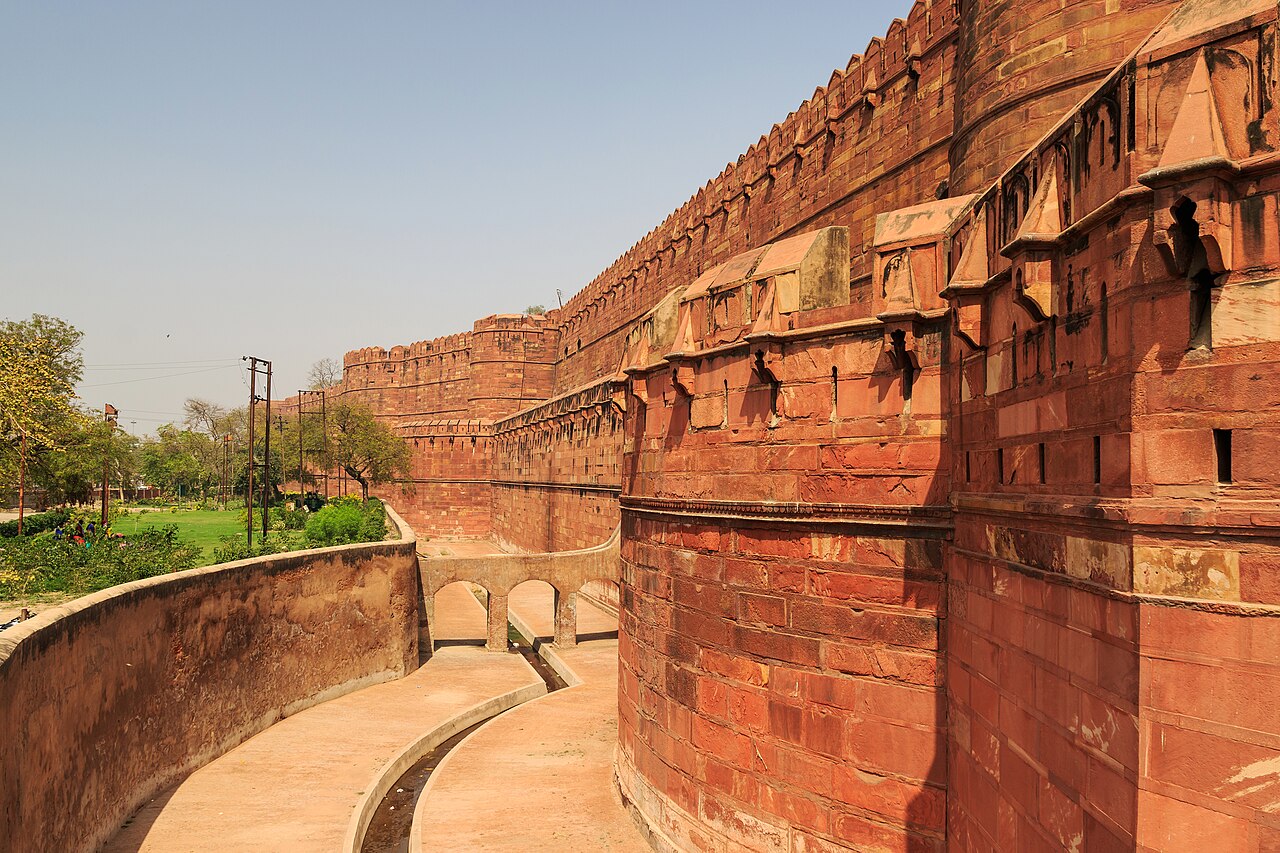
The fort is classified as a bastioned fortress, characterized by its angular bastions protruding from the main walls. These bastions allowed defenders to cover adjacent walls with crossfire, eliminating blind spots and making direct assaults extremely difficult. The walls are constructed from local stone and brick, designed to absorb cannon fire and resist scaling attempts.
Moats and gates
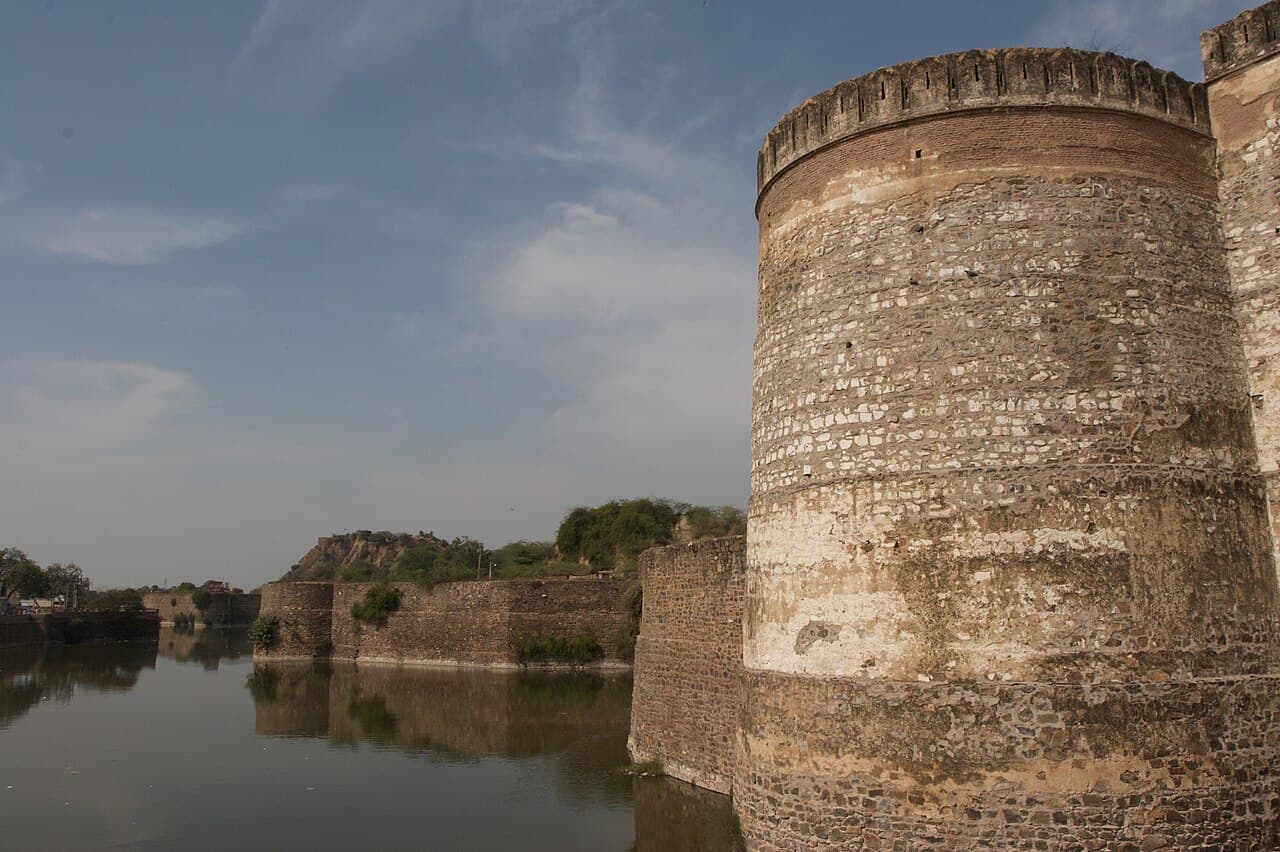
Lohagarh Fort is surrounded by a broad moat, which served as a first line of defense against invading forces. The moat was filled with water, complicating any attempts at mining or direct wall breaches. The fort's gates are heavily fortified, with intricate defensive mechanisms including iron spikes and reinforced doors to withstand battering rams.
Interior structures
Inside the fort, there are several palatial structures, including the Chhatri Mahal, Diwan-i-Khas (hall of private audience), and residential quarters. These buildings exhibit a blend of Rajput and Mughal architectural styles, featuring ornate carvings, arches, and courtyards. The fort also contains storerooms, armories, and water reservoirs, ensuring sustenance during prolonged sieges.
Military significance and sieges
Lohagarh Fort gained lasting fame for its resilience during multiple sieges by the British East India Company. The British launched at least 13 attempts to capture the fort, highlighting its strategic importance. Notably, during the Siege of Bharatpur in 1805, British forces under Lord Lake failed in four separate attempts to storm the fortress, underscoring its formidable defenses.
Despite its reputation for impregnability, the fort was eventually breached on January 18, 1826, during the Second Siege of Bharatpur. British forces commanded by Lord Combermere succeeded in capturing the fort, marking a significant moment in the colonial conquest of Rajasthan. This event ended the fort's long-standing status as an unconquerable stronghold.
Legacy and cultural heritage
Today, Lohagarh Fort stands as a symbol of Rajput military architecture and the resilience of the Jat rulers of Bharatpur. The fort's walls and bastions remain largely intact, offering insight into 18th-century fortification techniques. It attracts historians, architects, and tourists interested in India's martial past and architectural heritage.
The fort's combination of military engineering and ornate palatial elements reveals the dual purpose of such structures in the period: defense and royal residence. Its survival through numerous assaults makes it a unique example of a bastioned fort that effectively resisted early modern siege warfare until the advent of more advanced artillery tactics.
Frequently asked questions (FAQ)
- When was Lohagarh Fort built and by whom?
- Lohagarh Fort was built in 1732 by Maharaja Suraj Mal, a prominent Jat ruler of Bharatpur, Rajasthan.
- What architectural style characterizes Lohagarh Fort?
- The fort features bastioned fortress architecture with a blend of Rajput and Mughal styles in its palatial structures.
- Why is Lohagarh Fort historically significant?
- It is known for withstanding multiple British sieges, particularly the failed attempts by Lord Lake in 1805, marking it as a formidable military stronghold.
- Is Lohagarh Fort open to visitors?
- Yes, Lohagarh Fort is open to the public and managed by the Government of Rajasthan, with visiting hours typically during daylight.
- What are the main defensive features of Lohagarh Fort?
- Key defensive features include thick bastioned walls, a broad water-filled moat, reinforced gates, and strategically placed bastions for crossfire.
Photo gallery

Information
Current owner
Government of Rajasthan
Loading map...
Visitor reviews
No reviews yet. Been here? Write the first review and help other travelers!
Write the first reviewVisited this castle? Share your experience
Your review helps other travelers and adds first-hand knowledge to our encyclopedia.