Agra Fort
Agra Fort, also known as Qila Agra and the Red Fort of Agra, is a monumental bastioned fortress located in the historic city of Agra, India. This imposing structure served as the principal residence of the Mughal emperors and a strategic military base during the height of the Mughal Empire. The fort's history is intertwined with the rise and consolidation of Mughal power in northern India, making it a critical site for understanding the region's architectural and political heritage.
The origins of the fort trace back to earlier fortifications, but the present-day structure was primarily constructed under the reign of Emperor Akbar between 1565 and 1573. Akbar transformed the site into a massive fortified complex that combined robust military architecture with refined royal palaces. The fort is situated approximately 2.5 kilometers northwest of the Taj Mahal, another iconic Mughal monument, emphasizing Agra's importance as the empire's capital before it shifted to Delhi in 1638.
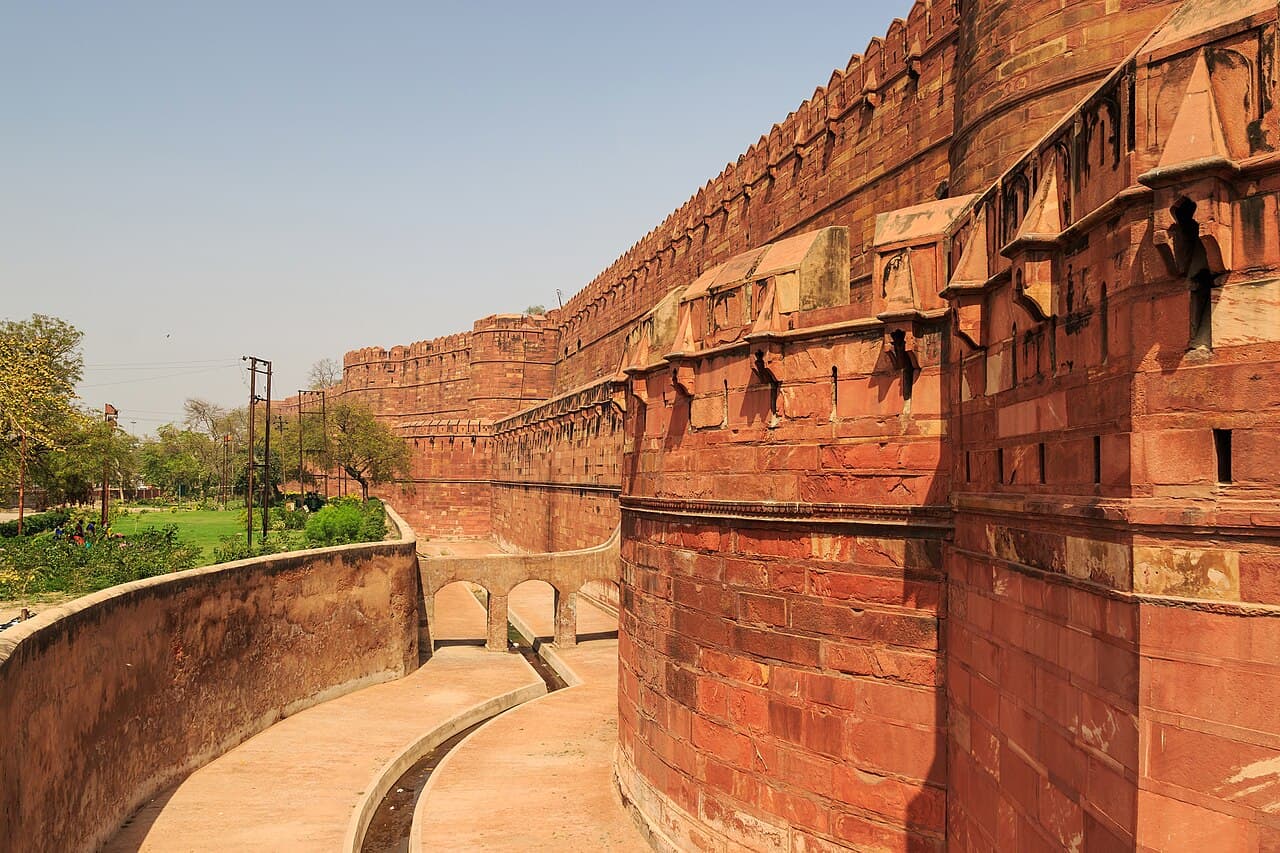
Agra Fort's design reflects the Renaissance period influences mingled with traditional Mughal architectural styles. Its massive red sandstone walls rise up to 70 feet high and extend over 2.5 kilometers in perimeter, enclosing a vast area that functioned almost like a walled city. The fort's defensive features include massive bastions, moats, and elaborate gateways such as the Delhi Gate and the Lahore Gate, which controlled access and provided formidable protection against invaders.
The architectural layout and key structures
The fort's internal layout is a blend of military and residential architecture, divided into two main parts: the northern section reserved for the emperor's palaces and the southern section housing the military barracks and administrative buildings. This dual-purpose design showcases the fort's role as both a royal residence and a military stronghold.
Imperial palaces and halls
Within the fort, several significant buildings stand out for their architectural and historical importance. The Jahangir Palace and the Khas Mahal are exquisite examples of Mughal palace architecture, featuring delicate white marble inlays and intricate pietra dura work. The Diwan-i-Khas (Hall of Private Audience) is renowned for its ornate design and was used by the emperor for private meetings and important state affairs.
The Musamman Burj, an octagonal tower with balconies overlooking the Yamuna River, is historically significant as the place where Emperor Shah Jahan was imprisoned by his son Aurangzeb. This tower offers panoramic views and exemplifies the fusion of military and aesthetic considerations in the fort's design.
Defensive features and fortifications
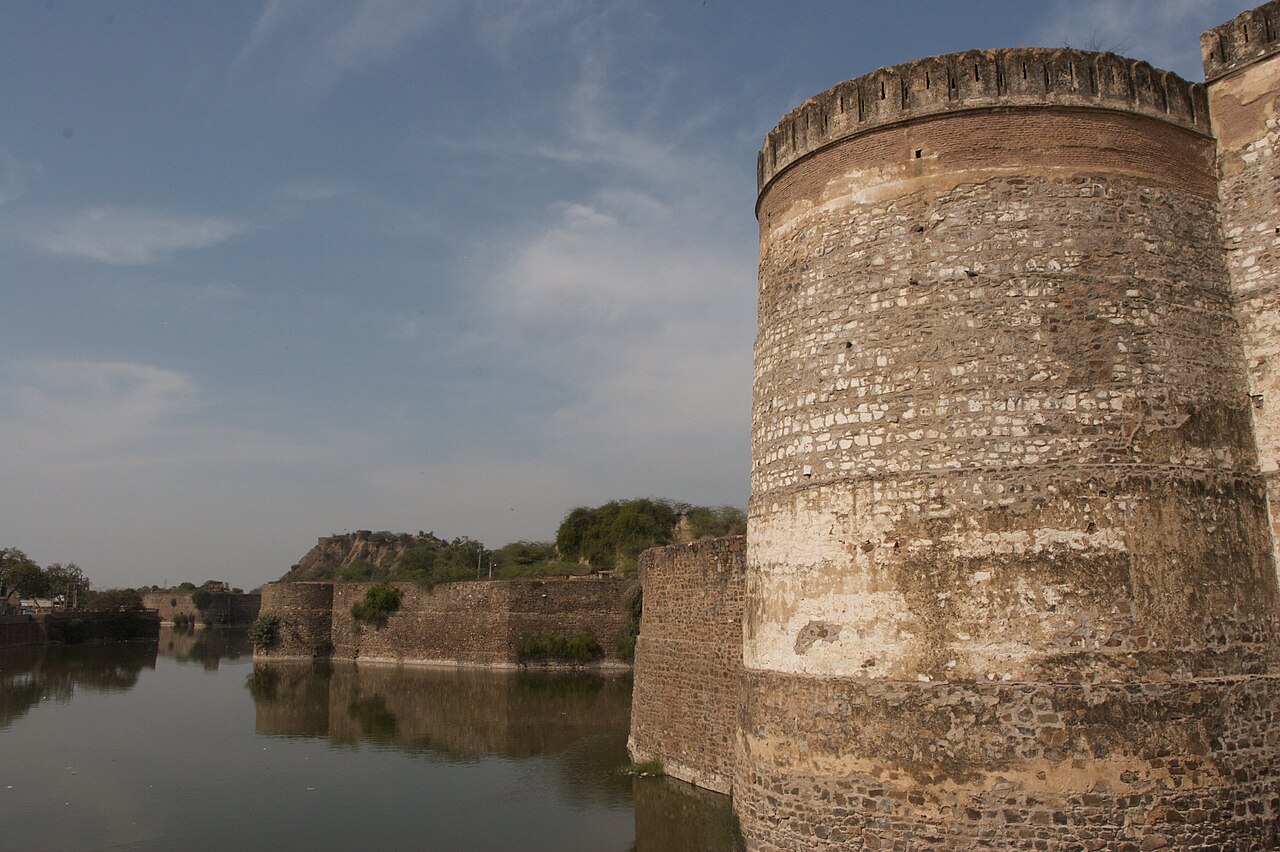
The fort's massive red sandstone curtain walls are punctuated by formidable bastions and towers, designed to withstand artillery attacks. The moat surrounding the fort added another layer of defense, making direct assaults difficult. The main gates were heavily fortified, with complex entryways designed to slow down and expose attackers.
The fort's layout also includes extensive underground passages and armories, reflecting the military ingenuity of the Mughal architects. These features ensured that the fort could be defended even during prolonged sieges.
Historical significance and timeline
The site of Agra Fort has a layered history predating the Mughal period. It was occupied by the Chauhan Rajputs in the 15th century and later became a key stronghold under the Sikandar Lodi dynasty, who made Agra his capital. After the First Battle of Panipat in 1526, the Mughals captured the fort, marking the beginning of their dominance in northern India.
Humayun, the second Mughal emperor, was crowned at Agra Fort in 1530, cementing its status as a royal seat. However, it was under Akbar's reign that the fort was extensively rebuilt and expanded into the grand complex known today. The fort remained the main residence of Mughal emperors until 1638 when the capital was shifted to Delhi by Shah Jahan.
During the later Mughal period, the fort witnessed political turmoil, including the imprisonment of Shah Jahan and the eventual decline of Mughal power. It was briefly held by the Jats of Bharatpur for 13 years and later came under British control during colonial rule.
UNESCO World Heritage status
In recognition of its outstanding architectural and historical value, Agra Fort was inscribed as a UNESCO World Heritage Site in 1983. This designation highlights its importance as a symbol of Mughal architectural innovation and its role in the history of India.
Architectural style and influences
Agra Fort exemplifies Mughal architecture, which is characterized by a blend of Islamic, Persian, Timurid, and Indian architectural elements. The use of red sandstone contrasted with white marble accents creates a striking visual effect. The fort's palaces feature intricate carvings, inlay work, and decorative arches that demonstrate the craftsmanship of Mughal artisans.
The fort's design reflects the Renaissance period sensibilities that influenced Mughal architecture, particularly in the emphasis on symmetry, geometry, and the integration of gardens and water features within the complex.
Visiting Agra Fort today
Today, Agra Fort remains a major tourist attraction, drawing visitors from around the world who come to explore its vast courtyards, majestic halls, and imposing fortifications. The fort is accessible daily, with guided tours available to provide historical context and architectural insights.
Visitors can explore the Diwan-i-Am (Hall of Public Audience), the Anguri Bagh garden, and the Sheesh Mahal (Palace of Mirrors), each offering a glimpse into the luxurious lifestyle of the Mughal emperors. The fort's proximity to the Taj Mahal makes it a convenient and essential stop for those interested in Mughal history and architecture.
Efforts to preserve and maintain the fort continue, ensuring that this well-preserved bastioned fortress remains a testament to India's rich cultural heritage.
Frequently asked questions (FAQ)
- When was Agra Fort built and by whom?
- Agra Fort was primarily built by Mughal Emperor Akbar between 1565 and 1573, transforming an earlier fortification into a massive bastioned fortress.
- What are the main architectural features of Agra Fort?
- The fort features massive red sandstone walls, bastions, moats, ornate palaces like Jahangir Palace and Khas Mahal, and the Diwan-i-Khas hall with intricate marble inlays.
- Is Agra Fort open to visitors year-round?
- Yes, Agra Fort is open daily from 6:00 to 18:00, allowing visitors to explore its extensive grounds and historic buildings throughout the year.
- How can I get to Agra Fort from the Taj Mahal?
- Agra Fort is located about 2.5 kilometers northwest of the Taj Mahal and can be reached by car, rickshaw, or on foot via a short drive or walk along the Yamuna River.
- What is the significance of Agra Fort in Mughal history?
- Agra Fort served as the main residence of Mughal emperors until 1638 and was a key military and administrative center during the empire's height.

Information
Opening hours
Sun-Sat 6:00-18:00
Ticket prices
₹650 for foreign tourists, ₹50 for Indian citizens
Current owner
Archaeological Survey of India
Loading map...
Visitor reviews
No reviews yet. Been here? Write the first review and help other travelers!
Write the first reviewVisited this castle? Share your experience
Your review helps other travelers and adds first-hand knowledge to our encyclopedia.