Llansteffan Castle
Llansteffan Castle stands as a remarkable medieval fortress overlooking the Tywi estuary in Carmarthenshire, Wales. Its strategic position atop a promontory offers commanding views of the surrounding landscape, a feature that has made this site a focal point of defense and settlement for millennia. Originally an Iron Age hillfort dating back to around 600 BCE, Llansteffan's location was chosen for its natural defensive advantages long before the Normans constructed the castle we recognize today.
The castle itself was founded during the 12th century as part of the Norman expansion into Wales. Built shortly after 1100, Llansteffan Castle was initially established by the Normans to consolidate their control over the region. It was granted to the Marmion family before passing through marriage to the de Camville family, who played a significant role in the castle's development and fortification over the following centuries. The site's layered history reflects the turbulent medieval period marked by frequent conflicts between the native Welsh princes and Norman lords.
Early medieval origins and norman construction
The site of Llansteffan Castle is notable for its incorporation of much older Iron Age earthworks. The original hillfort featured a double ditch on its western side, part of a defensive system designed to protect the settlement from invaders. When the Normans arrived, they strategically utilized these existing earthworks as part of their castle defenses, integrating them into the new fortifications. The hill was deliberately cleared of trees to expose any approaching foot soldiers to the castle's archers, enhancing its defensive capabilities.
The initial Norman castle was likely a motte and bailey structure, a common design in early Norman military architecture, though later phases replaced much of the timber with stone. Early historical records indicate that the castle was contested shortly after its establishment. In 1146, Maredudd ap Gruffydd captured Llansteffan from the forces of Maurice FitzGerald, Lord of Lanstephan, and his brother William FitzGerald, Lord of Emlyn. However, the Normans retook the castle in 1158, underscoring the ongoing struggle for control in this borderland region.
13th-century fortifications and architectural evolution
The de Camville family were instrumental in the castle's transformation during the late 12th and early 13th centuries. Around 1192, William de Camville began replacing earlier wooden defenses with more durable stone structures. This period saw the construction of the castle's stone curtain walls, which enclosed the inner ward on the southern high ground of the promontory. These walls incorporated the ancient earthworks, blending prehistoric and medieval military architecture.
Key architectural features from this era include the imposing gatehouse tower, rising three stories high and serving as the main entrance to the inner ward. This gatehouse was constructed following Welsh campaigns around 1215 led by Llywelyn the Great, who briefly recaptured the castle. Adjacent to the gatehouse are the foundations of a round tower, believed to have functioned as a keep or stronghold within the inner ward.
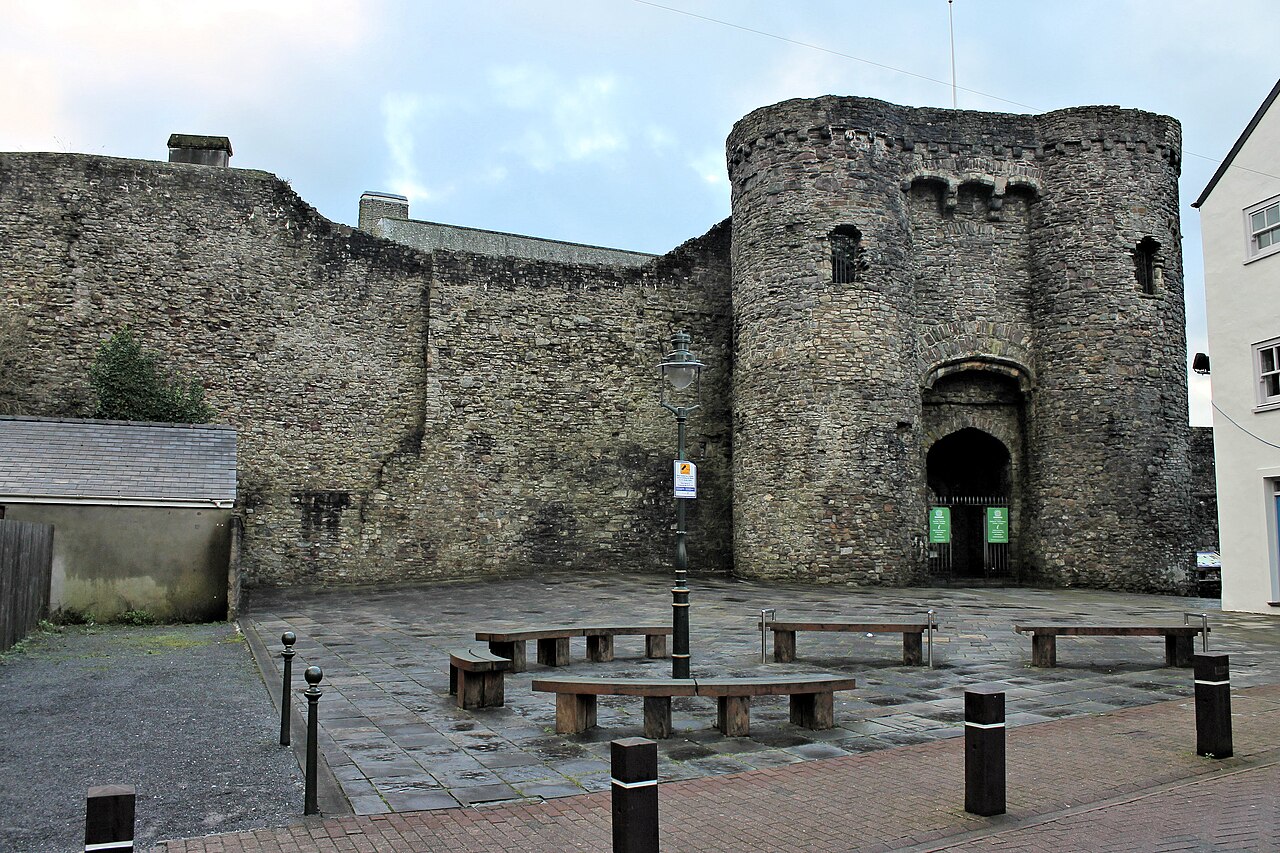
The outer bailey, located to the north of the inner ward, was fortified with a separate stone curtain wall built after 1257. This wall featured two D-shaped towers, one of which survives as a three-story structure with living quarters, demonstrating the dual defensive and residential functions of the castle's design. The outer bailey’s main gatehouse, constructed in the late 13th century, is a substantial three-story building flanked by two prominent D-shaped towers. Inside, narrow semicircular towers housed a latrine and a staircase, while above the gateway was a hall with private chambers on the upper floor.
Historical conflicts and ownership changes
The castle's history is marked by repeated sieges and changes in ownership, reflecting the broader political struggles of medieval Wales. After Llywelyn ap Gruffudd captured Llansteffan in 1257, it returned to the de Camville family by the 1260s. The castle faced further challenges in the early 15th century during the Welsh uprising led by Owain Glyndŵr. His forces captured Llansteffan twice, around 1403 and again circa 1405, before it was retaken by Sir John Pennes in 1408.
Following these turbulent events, Llansteffan Castle was granted to the Crown and passed through the hands of notable nobles, including Humphrey, Duke of Gloucester, Margaret of Anjou, William Herbert, and finally Jasper Tudor in 1485. Tudor adapted the castle’s two-tower gatehouse into a residential building, marking a shift from purely military to domestic use.
Architectural features and surviving remains
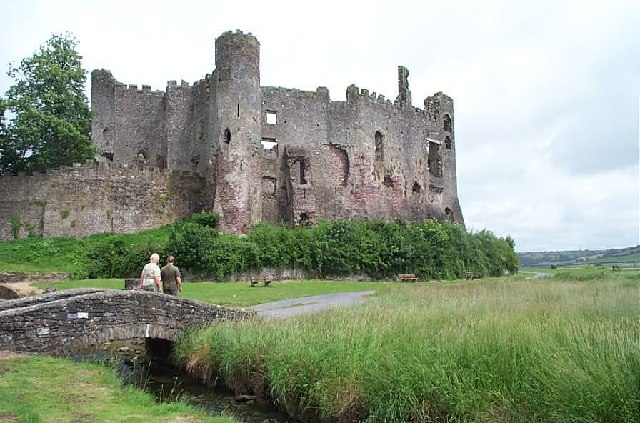
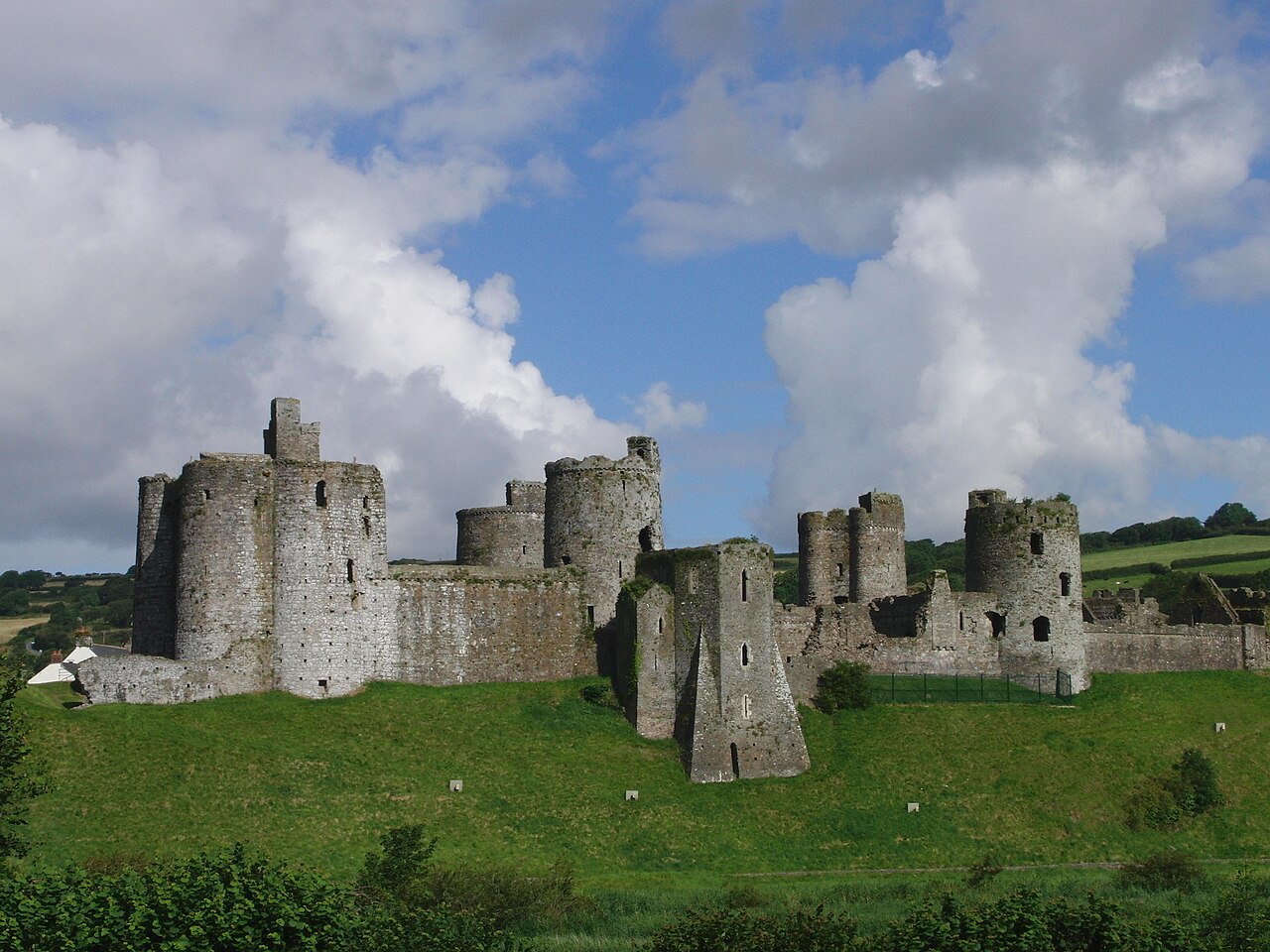
Today, Llansteffan Castle remains a striking ruin that vividly illustrates its layered history. The castle’s layout is divided into the inner ward and the outer bailey, connected by a breach in the curtain wall likely created in the 14th century. The inner ward is protected by steep cliffs to the south and the ancient double ditch earthworks to the west, enhancing its natural defenses.
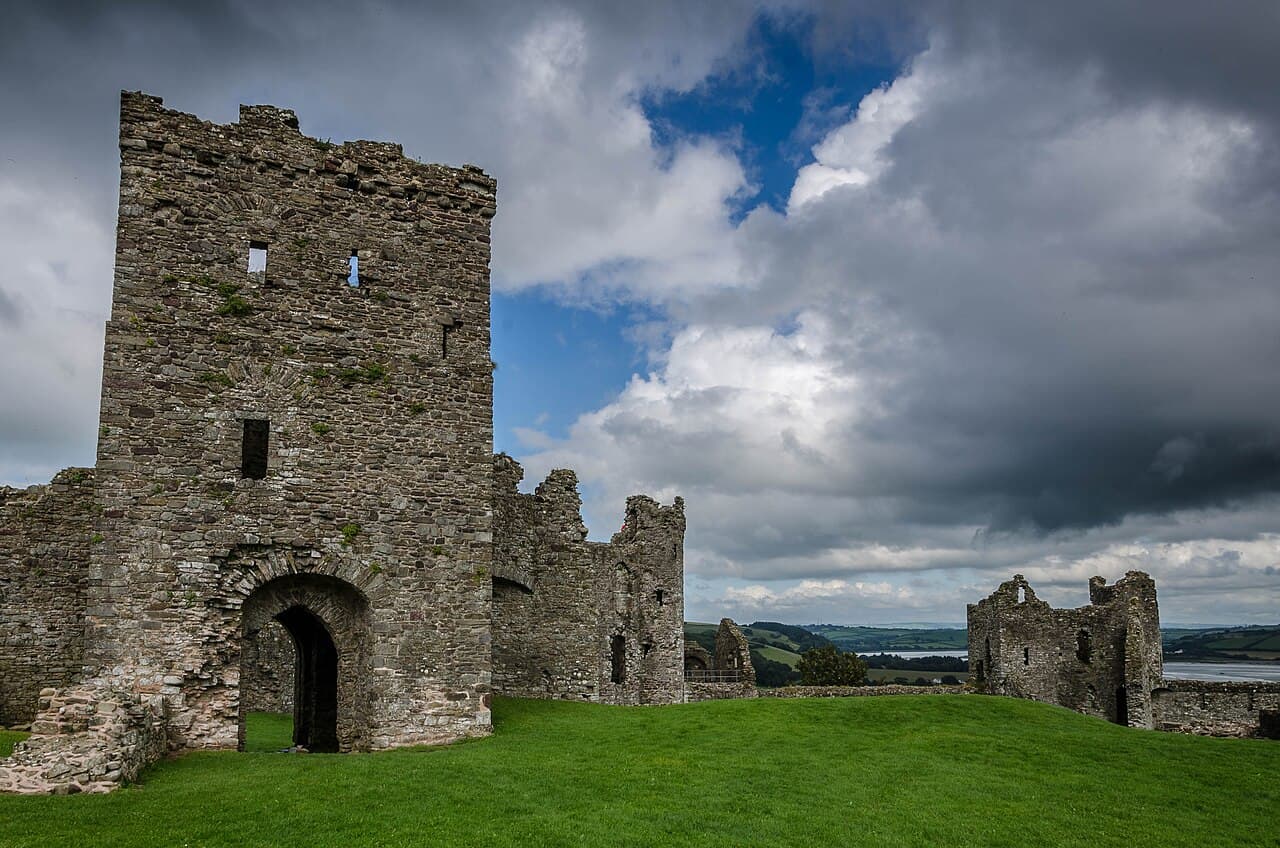
Visitors can explore the well-preserved gatehouse tower, the foundations of the round tower keep, and remnants of domestic buildings such as a hall and a well. The outer bailey’s curtain wall and towers, especially the large north tower with its residential quarters, provide insight into the castle’s dual role as a fortress and noble residence.
On the eastern side, a bastion-like reinforcement strengthens the outer bailey’s defenses, adjacent to the ruins of a large barn dating from the late 15th century. This barn likely replaced a medieval great hall, reflecting changes in the castle’s function over time. The extensive use of local stone throughout the castle’s construction contributes to its enduring presence on the landscape.
Cultural significance and visitor experience
Llansteffan Castle is an important heritage site that offers a tangible connection to Wales’s medieval past. Its combination of prehistoric earthworks and Norman stone fortifications provides a unique example of how defensive architecture evolved over centuries. The castle’s dramatic setting overlooking the Tywi estuary enhances its appeal to visitors interested in history, architecture, and scenic beauty.
While much of the castle is in ruins, the well-preserved gatehouses and curtain walls allow visitors to appreciate the scale and complexity of medieval fortifications. The site is accessible to the public, offering opportunities for exploration and education about the region’s turbulent history and architectural heritage.
Overall, Llansteffan Castle stands as a testament to the enduring strategic importance of this promontory site, reflecting the layered history of conquest, conflict, and adaptation that shaped medieval Wales.
Frequently asked questions (FAQ)
- What is the historical significance of Llansteffan Castle?
- Llansteffan Castle is a medieval fortress that dates back to the 12th century, originally built by the Normans to control the surrounding lands. It played a crucial role in the defense against Welsh uprisings and has witnessed numerous historical events, making it an important site in the history of Wales.
- Can I visit Llansteffan Castle year-round?
- Yes, Llansteffan Castle is open to visitors throughout the year. However, it's recommended to check specific seasonal opening hours as they may vary, especially during the winter months.
- How do I get to Llansteffan Castle?
- Llansteffan Castle is located in the village of Llansteffan, easily accessible by road. The nearest major city is Carmarthen, from where you can take public transport or drive, with ample parking available near the castle.
- When is the best time to visit Llansteffan Castle?
- The best time to visit Llansteffan Castle is during the spring and summer months when the weather is pleasant, and the surrounding landscape is in full bloom. This also allows you to enjoy the stunning views from the castle’s ramparts.
- What are the opening hours for Llansteffan Castle?
- Llansteffan Castle typically opens at 10 AM and closes at 5 PM, with extended hours in the summer. It’s advisable to verify the current hours before your visit, as they may change seasonally.
- Is Llansteffan Castle accessible for visitors with disabilities?
- Llansteffan Castle has some accessibility features; however, due to its historical nature, certain areas may not be fully accessible. It’s best to contact the site directly for detailed information regarding accessibility options and any assistance available.
- What are the ticket prices for Llansteffan Castle?
- The ticket prices for Llansteffan Castle are generally affordable, with discounts available for children, students, and seniors. Family tickets may also be offered, so it’s worthwhile to check the official website for the latest pricing details.
- Are there any nearby attractions to Llansteffan Castle?
- Yes, there are several nearby attractions, including the beautiful Llansteffan beach and the scenic coastal paths that offer stunning views of the landscape. Additionally, the town of Carmarthen, with its historical sites and shops, is just a short drive away.
Photo gallery

Information
Website
Visit websiteSources & official resources
Verify the information above using these authoritative references.
Loading map...
Visitor reviews
No reviews yet. Been here? Write the first review and help other travelers!
Write the first reviewVisited this castle? Share your experience
Your review helps other travelers and adds first-hand knowledge to our encyclopedia.