Laugharne Castle
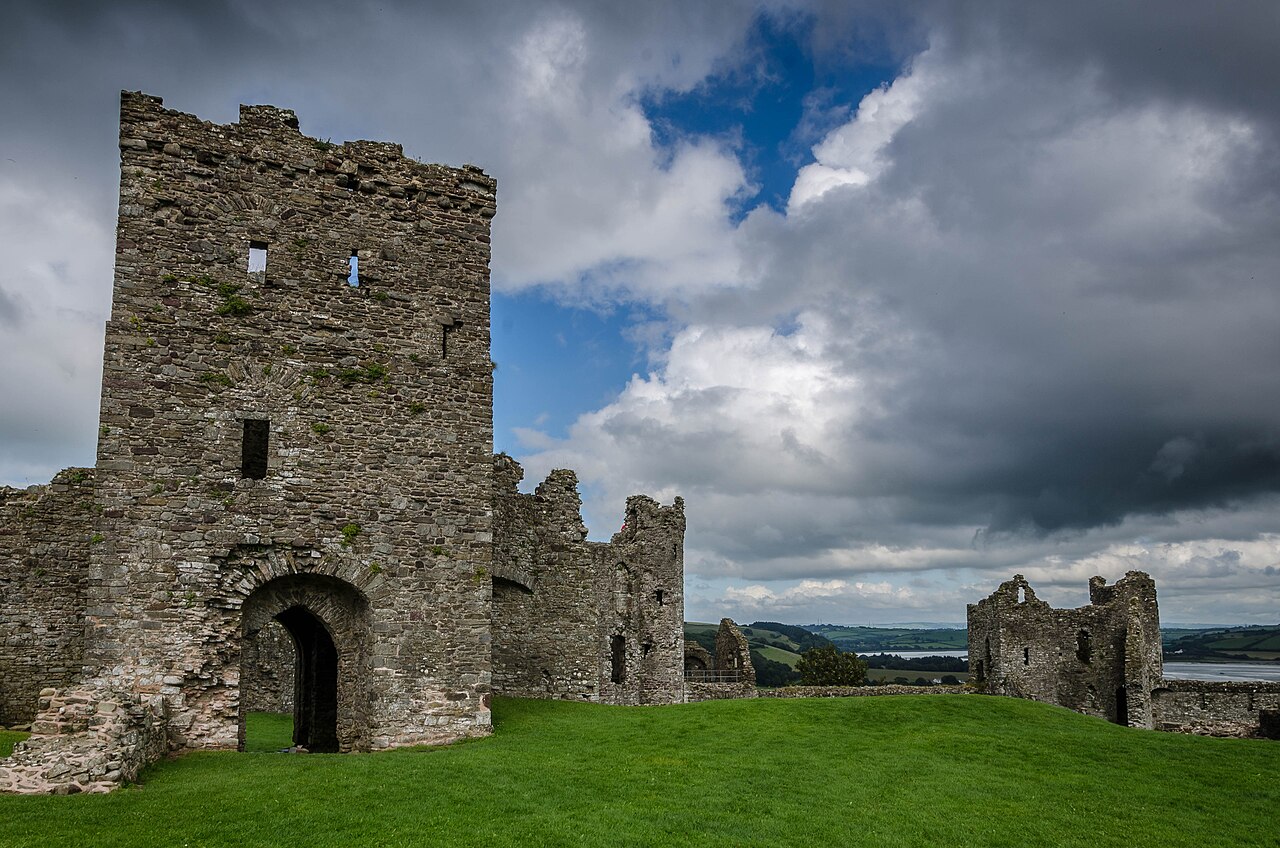
Laugharne Castle, located in the historic town of Laugharne in Carmarthenshire, Wales, is a remarkable example of architectural evolution spanning nearly a millennium. Originally established in the early 12th century, the castle reflects the complex history of Norman conquest, Welsh resistance, medieval fortification, Tudor domestic transformation, and later decline into romantic ruins. Over the centuries, Laugharne Castle has been shaped by political upheaval, military conflict, and cultural significance, making it a treasured heritage site under the care of Cadw.
The castle's origins date back to around 1116 when it was founded by Robert Courtemain, a Norman lord who entrusted its oversight to a Welsh ally, Bleddyn ap Cedifor. This early establishment formed part of a strategic network of fortifications designed to control key routes through South Wales following the Norman invasion. Although the original castle was likely a timber and earthwork ringwork typical of early Norman military architecture, no visible remains from this phase survive today. Archaeological excavations have revealed traces of a large hall from this period, indicating an administrative and defensive center of significance.
Medieval fortifications and the de brian legacy
In the late 12th century, Laugharne Castle became a focal point of diplomatic and military activity. Notably, between 1171 and 1172, it hosted peace negotiations between Henry II of England and Rhys ap Gruffudd (Lord Rhys), Prince of Deheubarth. Following Henry II's death in 1189, Lord Rhys seized the castle, possibly burning it during the takeover. The Normans rebuilt it, only to lose it again in 1215 to Llywelyn the Great during his campaigns in South Wales.
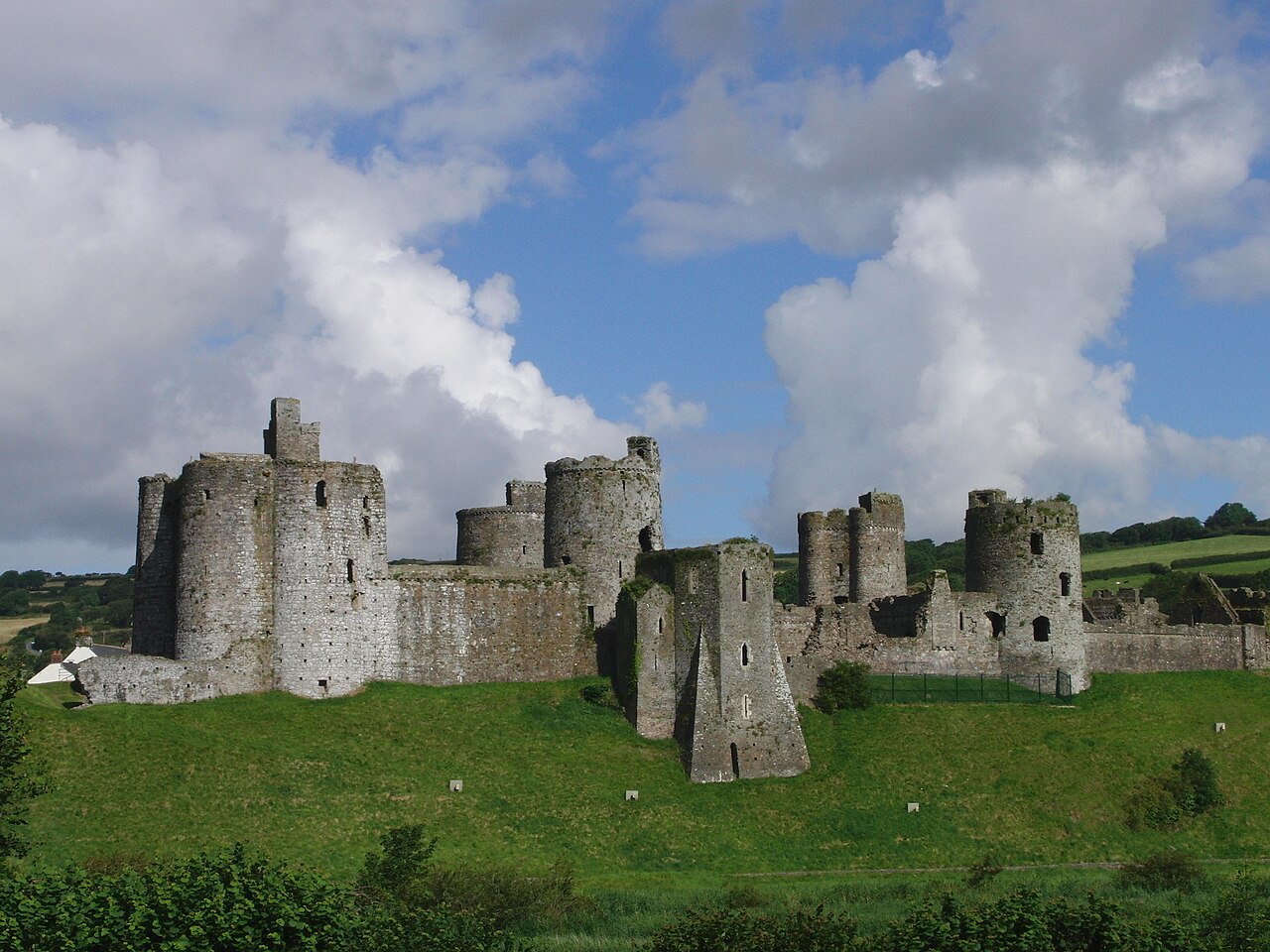
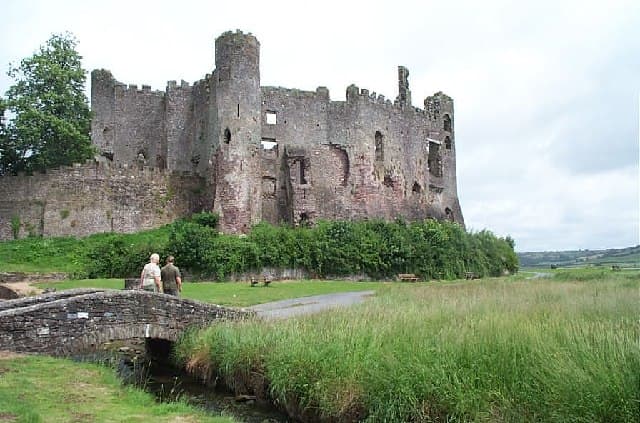
By 1247, the castle was granted to the influential de Brian family, who undertook extensive rebuilding and fortification efforts. The most significant surviving structures at Laugharne date from this late 13th century period under the de Brians. Guy de Brian IV initiated the construction of robust stone curtain walls and two prominent round towers on the north side, which remain defining architectural features. These towers, especially the north-west tower with its distinctive medieval domed roof, served defensive and administrative functions, including acting as a keep and guarding the main entrance.
Further enhancements in the 14th century included the addition of a new gatehouse projecting from the inner bailey’s entrance and a round tower at the south-west corner featuring deep spurs for improved defense. The castle’s curtain walls were heightened and reinforced with a unique greenish stone contrasting with the earlier red sandstone, marking different construction phases. Guy de Brian VII’s tenure saw improvements to residential quarters, reflecting the castle’s role as both a military stronghold and noble residence.
Tudor transformation under sir john perrott
The castle’s fortunes shifted in the 16th century when Queen Elizabeth I granted Laugharne to Sir John Perrott in 1575, reputedly an illegitimate son of Henry VIII. Perrott transformed the medieval fortress into a comfortable Tudor mansion, emphasizing domestic comfort and aesthetic appeal over purely defensive features. He remodeled the great hall along the southern curtain wall, added decorative battlements, and extended residential buildings within the inner bailey. A large rectangular accommodation block replaced the curtain wall between the two northern towers, reflecting Tudor architectural trends.
Despite these improvements, the castle’s condition declined soon after Perrott’s death in 1592, with an inventory describing the residence as of poor quality. This decline was exacerbated by the turbulent political climate of the era.
Civil war siege and decline into romantic ruin
Laugharne Castle played a strategic role during the English Civil War in 1644. Initially held by Royalist forces, it was besieged for a week by Parliamentary troops led by Major-General Rowland Laugharne. The castle suffered significant damage from cannon fire during the siege. Following its capture, it was deliberately slighted to prevent further military use, leading to its gradual abandonment and ruin.
By the 18th and 19th centuries, the castle had become a picturesque ruin, inspiring artists and poets drawn to its melancholic and romantic atmosphere. Nearby, the Georgian-style Castle House was built around 1730, and the castle’s outer ward was landscaped into formal gardens in the early 19th century, featuring gravel paths, hedges, and rose beds. These gardens were restored in the late 20th century, preserving the site's historic landscape character.
Literary connections and modern preservation
In the 20th century, Laugharne Castle gained cultural prominence through its association with notable literary figures. The author Richard Hughes lived in Castle House during the 1930s and 1940s, using the castle’s summerhouse gazebo as a writing retreat. The poet Dylan Thomas, famed for his evocative poetry and prose, also frequented the site, composing works such as "Portrait of the Artist as a Young Dog" in the garden pavilion overlooking the River Taf estuary.
Today, Laugharne Castle is a protected heritage site managed by Cadw, the Welsh historic environment service. It is a Grade I listed building and a scheduled ancient monument, open to the public from spring through autumn. Visitors can explore the castle’s layered architectural remains, including the medieval curtain walls, round towers, Tudor residential structures, and the atmospheric ruins that tell the story of Wales’ turbulent history.
Architectural features and archaeological insights
Medieval defensive structures
The castle’s surviving round towers are among its most striking features. The north-west tower, with its four stories and vaulted stone ceilings, served as the main keep and gatehouse, featuring a domed roof unique among Welsh castles. The adjacent north-east tower, though partially collapsed, reveals evidence of a spiral staircase and multiple floors added during later medieval and Tudor modifications.
The curtain walls connecting these towers exhibit thick masonry typical of late medieval fortifications, designed to withstand sieges and artillery attacks. The use of contrasting greenstone in the south-west corner of the inner ward highlights the castle’s phased construction and adaptation to evolving military technologies.
Tudor domestic adaptations
Sir John Perrott’s Tudor remodeling introduced features prioritizing comfort and style. The large rectangular accommodation block replaced earlier curtain walls, providing spacious living quarters with semi-circular stair towers. Decorative battlements added to the curtain walls served more as aesthetic elements than functional defenses, reflecting the reduced military role of the castle in the late 16th century.
Excavations have uncovered remnants of a Tudor cobbled courtyard and a stone kitchen floor, offering insights into the daily life and domestic arrangements of the period. The transformation from fortress to mansion illustrates broader trends in castle architecture during the Tudor era, where residences were adapted for noble living rather than strict military purposes.
Archaeological discoveries
Archaeological investigations over the past two decades have been instrumental in uncovering the castle’s complex history. Excavations have revealed foundations of early timber structures, medieval halls, and Tudor additions, helping to map the castle’s development through successive phases. The layering of materials and construction techniques provides a tangible record of the region’s political and social changes from the Norman invasion through the post-medieval period.
These findings have informed careful restoration efforts aimed at preserving the castle’s fabric while allowing visitors to appreciate its historical significance and architectural evolution.
Frequently asked questions (FAQ)
- What is the historical significance of Laugharne Castle?
- Laugharne Castle, built in the 13th century, is a prime example of medieval military architecture in Wales. It played a crucial role in the conflicts between the Welsh and the English, and its ruins reflect the turbulent history of the region, particularly during the Wars of the Roses.
- When was Laugharne Castle built?
- Construction of Laugharne Castle began in the early 1100s and continued through the 13th century. Its strategic location allowed it to serve as both a defensive fortress and a residence for the local lords.
- Can I visit Laugharne Castle year-round?
- Yes, Laugharne Castle is open to visitors year-round. However, it’s advisable to check the official website for any seasonal variations in opening hours or special events that may affect accessibility.
- What are the opening hours for Laugharne Castle?
- Laugharne Castle typically opens at 10 AM and closes at 5 PM, but these hours may vary depending on the season. It is recommended to verify the current opening times before planning your visit.
- Is it possible to access Laugharne Castle with mobility issues?
- While Laugharne Castle does have some accessible areas, its historic ruins may pose challenges for visitors with mobility issues. It is best to contact the site in advance to inquire about specific accessibility options available.
- What are the ticket prices for Laugharne Castle?
- Admission prices for Laugharne Castle are typically modest, with discounts available for children, seniors, and families. Be sure to check the official site for the most up-to-date pricing information and any special offers.
- When is the best time to visit Laugharne Castle?
- The best time to visit Laugharne Castle is during the late spring and early autumn when the weather is mild and gardens are in bloom. Additionally, visiting during weekdays may offer a quieter experience compared to weekends.
- What nearby attractions can I explore while visiting Laugharne?
- While in Laugharne, visitors can explore the picturesque village, including the Dylan Thomas Boathouse and the scenic estuary views. Other nearby attractions include the beautiful beaches of Pendine Sands and the historic town of Tenby.
Photo gallery

Information
Website
Visit websiteSources & official resources
Verify the information above using these authoritative references.
Loading map...
Visitor reviews
No reviews yet. Been here? Write the first review and help other travelers!
Write the first reviewVisited this castle? Share your experience
Your review helps other travelers and adds first-hand knowledge to our encyclopedia.