Kidwelly Castle
Kidwelly Castle stands as a monumental testament to Norman military architecture and power in medieval Wales. Overlooking the River Gwendraeth in Carmarthenshire, this imposing fortress was established in the early 12th century to secure Anglo-Norman control over a strategically vital border region. The castle's history is marked by numerous sieges, reconstructions, and adaptations reflecting the evolving art of fortification over several centuries.
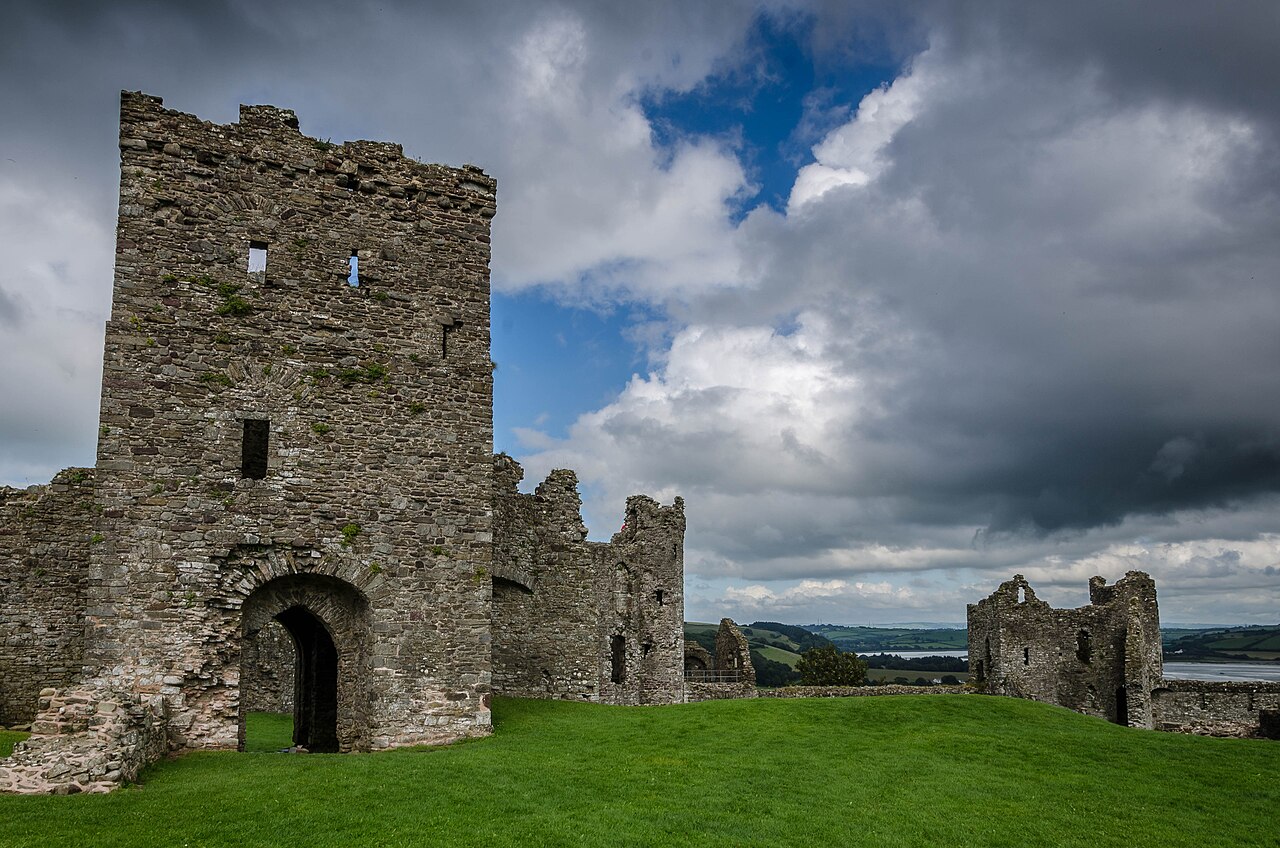
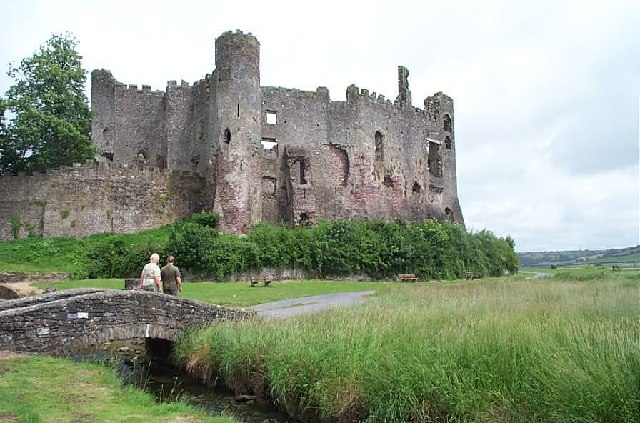
The origins of Kidwelly Castle trace back to around 1106 when Roger, Bishop of Salisbury, a key Norman figure, initiated the construction of a ringwork earthwork on a steep ridge overlooking the river. This early fortification utilized timber and earthworks, characteristic of initial Norman military expedients designed to establish control quickly in newly conquered territories. The castle's location was chosen to command the river passes and to monitor movement through the region, complementing other Norman fortifications in nearby Laugharne, Llansteffan, and Loughor.
The early history and Norman consolidation
During the 12th century, Kidwelly Castle was a focal point of conflict between the Welsh princes and the Anglo-Norman lords. The castle changed hands multiple times, notably falling to Rhys ap Gruffydd, Prince of Deheubarth, in 1159. Rhys is credited with reconstructing the castle in stone around 1190, replacing the original wooden defenses with more durable fortifications. Despite this, the castle reverted to Norman control by 1201, remaining a contested stronghold amidst ongoing Welsh resistance.
The castle's early stone walls included a semi-circular bank and ditch on the river-facing side, supplemented by wooden palisades and towers. The strategic use of the river as a natural defense and supply route was integral to the castle's design, allowing it to withstand numerous sieges during this turbulent period.
Medieval architectural evolution and fortifications
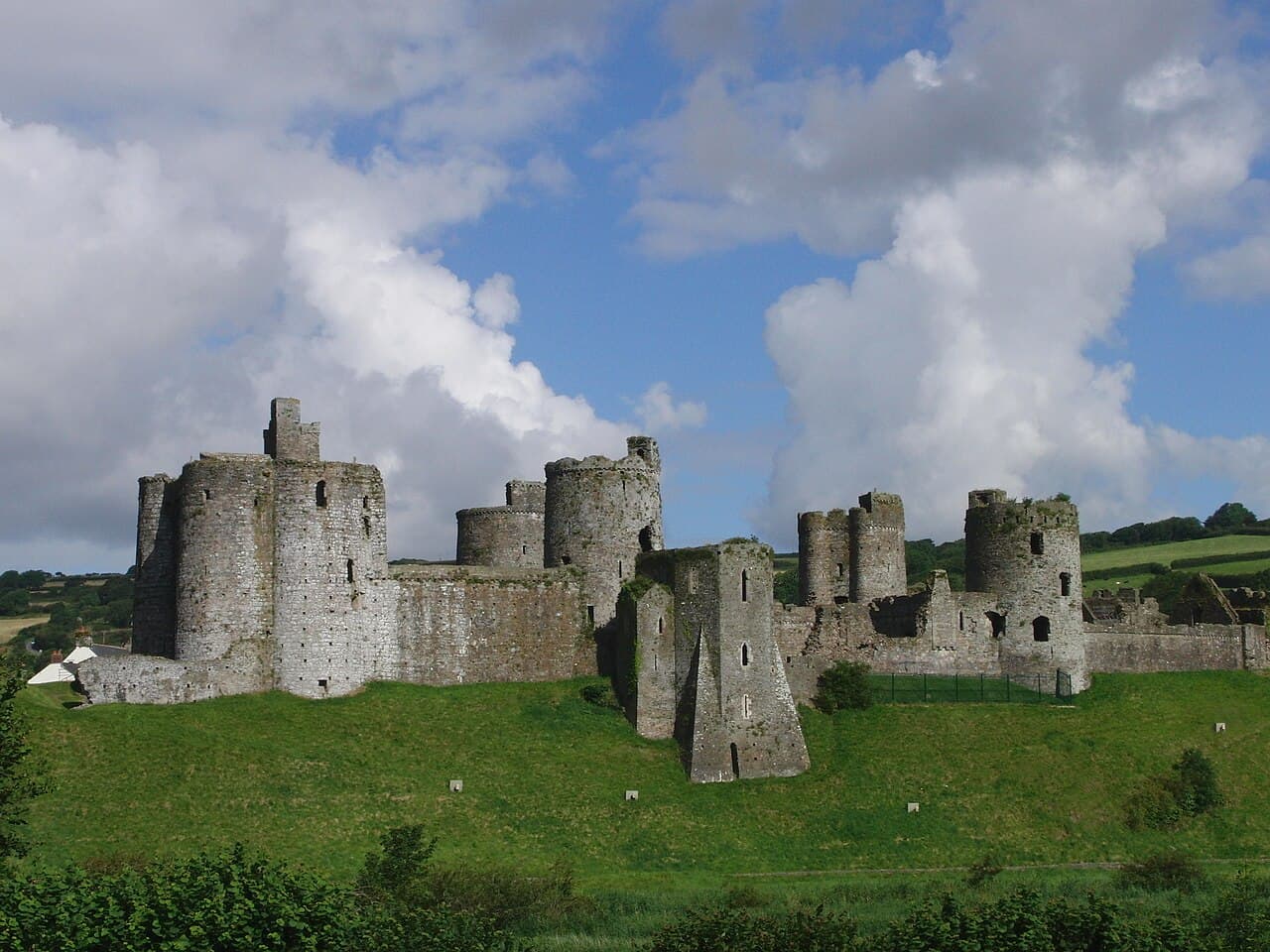
From the late 12th century into the 14th century, Kidwelly Castle underwent significant architectural enhancements. The initial ringwork was gradually replaced and expanded into a formidable stone fortress featuring a distinctive concentric layout. Although the river prevented a fully concentric design, the castle's plan includes a square inner bailey with four round towers at each corner, overlooking a semi-circular outer curtain wall on the landward side.
The outer defenses include a robust ring wall built in rubble stone, with three semi-circular towers along the western side, providing flanking fire against attackers. The northern gatehouse, once flanked by two semi-circular towers and protected by a drawbridge, now survives only in foundations but was a critical defensive feature in its time.
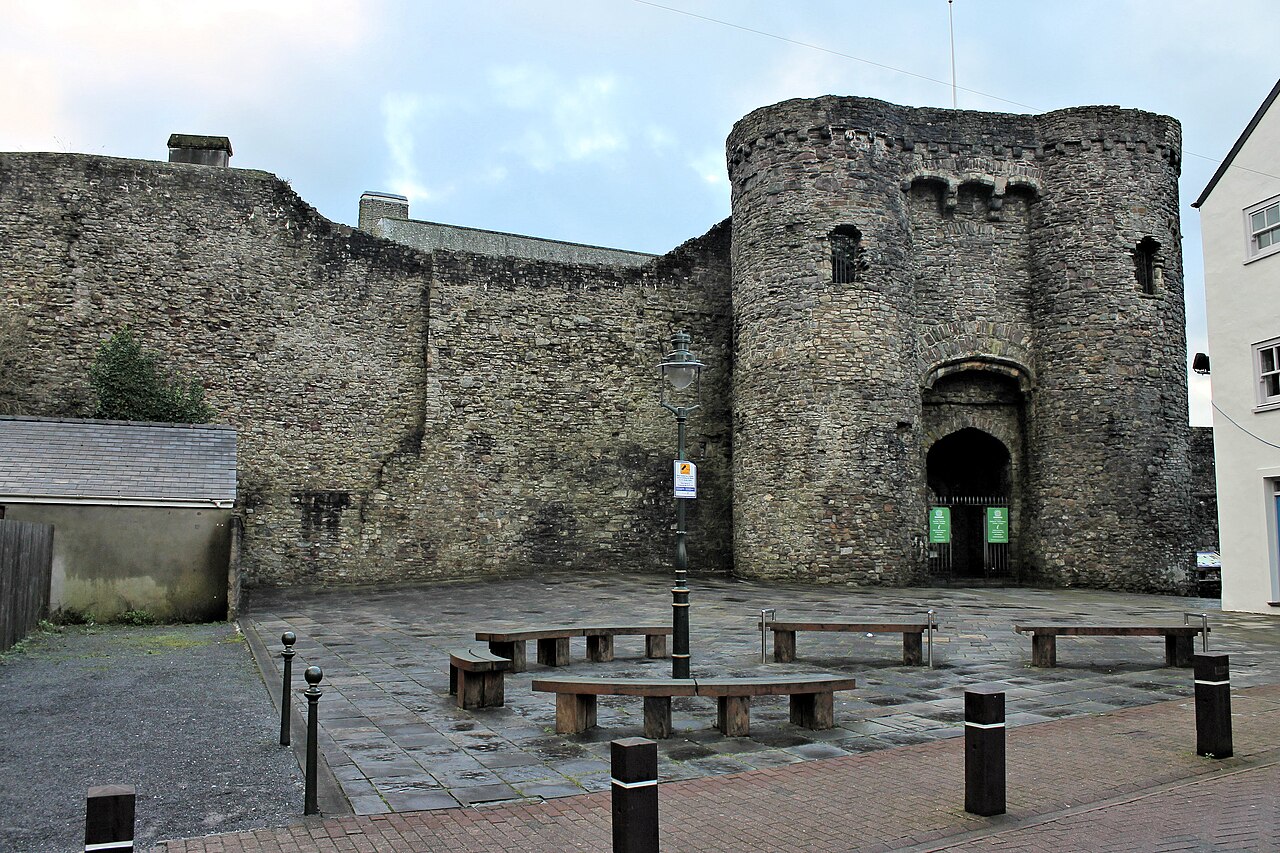
One of the castle's most impressive structures is the large triple-storey southern gatehouse, constructed from around 1388 to circa 1422. This gatehouse features two semi-circular flanking towers, a vaulted passage with a portcullis, and a drawbridge. Inside, over twenty rooms are arranged across three floors, including guardrooms, secure vaults, a great hall, kitchen, private chambers, and bedrooms equipped with fireplaces and latrines. The gatehouse roof was originally lead-covered and defended by battlements, highlighting its dual role as a residence and a stronghold.
The inner bailey and domestic buildings
The inner bailey contains the ruins of a late 13th-century palace, combining a great hall and private chambers above a cellar. Adjacent to this is a polygonal chapel tower with an attached sacristy, supported by large buttresses. A wooden gallery likely connected the chapel to the nearby northeast tower, providing a sheltered passage for clergy and nobility.
Additional late medieval buildings include two large gabled halls in the outer bailey, dating from the late 15th century, which may have functioned as stables or a courthouse. Smaller ancillary structures, such as a bakehouse, are also present, illustrating the castle's role as a center of administration and domestic life beyond its military function.
Military significance and historical events
Kidwelly Castle's military importance is underscored by its involvement in numerous conflicts. It was unsuccessfully besieged by forces of Owain Glyndŵr in 1403 during the Welsh rebellion. Although the adjacent town was captured with assistance from French and Breton soldiers, the castle itself withstood the siege until relieved by a Norman army a few weeks later. The gatehouse suffered extensive damage during this siege and was subsequently rebuilt under the orders of King Henry V.
The castle largely escaped damage during the English Civil War, reflecting its declining strategic importance by the 17th century as political stability in the region improved. Ownership passed through various noble families, including the Vaughans, who held the castle from 1630 until 1927.
Archaeological investigations and preservation
In the early 20th century, archaeological excavations led by Sir C. Fox and C.A.R. Radford provided valuable insights into the castle's construction phases and historical development. Today, the castle is managed by Cadw, the Welsh historic environment service, which oversees its conservation and public access.
The castle remains are substantial, with well-preserved walls, towers, and gatehouse structures. Defensive earthworks such as a sharp V-shaped ditch encircle the castle on all sides except the river-facing eastern slope. A short wall crossing the southern ditch likely represents the remains of a 15th-century small gatehouse. The integration of the castle's design with the local topography demonstrates sophisticated medieval military engineering.
Legends and cultural significance
The surrounding countryside of Kidwelly Castle is steeped in legend, notably reputed to be haunted by the headless ghost of Gwenllian ferch Gruffydd, wife of the Welsh prince Gruffydd ap Rhys. Gwenllian was beheaded in 1136 following a battle near the castle, and her story symbolizes Welsh resistance to Norman conquest.
Kidwelly Castle has also found a place in popular culture, serving as a filming location for the iconic movie Monty Python and the Holy Grail. It appears in the opening scene after the titles, establishing the medieval setting, although subsequent close-up shots were filmed elsewhere.
Architectural highlights
- Ringwork earthwork origins with timber and earth defenses.
- Concentric castle design with a square inner bailey and semi-circular outer curtain wall.
- Four round corner towers with varied functions including domestic quarters, dungeon, and chapel.
- Triple-storey southern gatehouse with portcullis, drawbridge, and extensive internal chambers.
- Late 13th-century palace ruins with great hall and chapel tower.
- Defensive earthworks including a V-shaped ditch and multiple curtain walls.
Kidwelly Castle remains a significant example of Norman and medieval military architecture in Wales. Its layers of construction and adaptation over centuries reflect the changing nature of warfare, lordship, and domestic life in the borderlands between England and Wales. Today, it offers visitors a tangible connection to the turbulent medieval past and stands as a cherished historic monument under the stewardship of Cadw.
Frequently asked questions (FAQ)
- How do I get to Kidwelly Castle?
- Kidwelly Castle is located in Kidwelly, United Kingdom. You can reach the castle by car, taking the A484 road, or by public transport via local buses that connect to nearby towns. The castle is well-signposted, making it easy to find.
- What is the historical significance of Kidwelly Castle?
- Kidwelly Castle dates back to the 12th century and is one of the best-preserved examples of Norman architecture in Wales. It played a crucial role in the defense of the region during the Middle Ages and was a vital stronghold during conflicts between the Welsh and the English. The castle's history reflects the turbulent past of Wales and its struggle for independence.
- When was Kidwelly Castle built?
- Construction of Kidwelly Castle began in 1106 under the direction of the Norman lord Roger de Montgomery. It has undergone several phases of development and restoration over the centuries, with significant expansions occurring in the 13th century. The castle stands as a testament to the architectural styles and military needs of the time.
- Can I visit Kidwelly Castle year-round?
- Yes, Kidwelly Castle is open to visitors throughout the year, although hours may vary depending on the season. It is advisable to check the official website for the most accurate and up-to-date information regarding opening hours and any seasonal events. Visiting outside peak tourist seasons can provide a more intimate experience.
- Why is Kidwelly Castle considered an architectural marvel?
- Kidwelly Castle is renowned for its impressive stone construction and unique features, including its well-preserved walls, towers, and gatehouse. The castle showcases a blend of Romanesque and Gothic architectural styles, reflecting the evolution of fortification design. Its strategic location and defensive structures highlight the ingenuity of medieval engineering.
- Is it possible to access all areas of Kidwelly Castle?
- While many parts of Kidwelly Castle are accessible to visitors, some areas may have limitations due to safety regulations or ongoing preservation efforts. The main grounds, towers, and castle walls are typically open for exploration, allowing visitors to enjoy stunning views and historical insights. It's recommended to wear comfortable shoes as some paths may be uneven.
- What are the ticket prices for visiting Kidwelly Castle?
- Ticket prices for Kidwelly Castle are generally affordable, with discounts available for children, seniors, and families. Admission fees contribute to the maintenance and preservation of the site, making your visit even more meaningful. Check the official site for the latest pricing and any special offers.
- What are the nearby attractions to Kidwelly Castle?
- In addition to Kidwelly Castle, visitors can explore the picturesque town of Kidwelly, which offers charming shops and local eateries. Nearby, the beautiful Pembrey Country Park and Cefn Sidan Beach provide opportunities for outdoor activities and scenic walks. These attractions make a great complement to your castle visit.
- What is the best time to visit Kidwelly Castle?
- The best time to visit Kidwelly Castle is during the spring and summer months when the weather is typically milder and more conducive to outdoor exploration. Additionally, visiting during special events or festivals can enhance your experience, offering unique insights into the castle's history. Early mornings or late afternoons on weekdays may provide a quieter atmosphere.
Photo gallery

Information
Website
Visit websiteSources & official resources
Verify the information above using these authoritative references.
Loading map...
Visitor reviews
No reviews yet. Been here? Write the first review and help other travelers!
Write the first reviewVisited this castle? Share your experience
Your review helps other travelers and adds first-hand knowledge to our encyclopedia.