
Llandovery Castle
Llandovery Castle, located in the town of Llandovery in Carmarthenshire, Wales, is a significant example of a high medieval hill castle with a complex history stretching from the early twelfth century through the sixteenth century. Perched on a prominent knoll overlooking the River Towy and the surrounding landscape, the castle's strategic position allowed it to control key routes in the upper Tywi valley, making it a focal point of military and political activity in medieval Wales.
Early foundation and anglo-norman origins
The castle's origins trace back to around 1116, when Richard Fitz Pons, a Norman knight and follower of Bernard de Neufmarché, was granted the lordship of Cantref Bychan. Fitz Pons likely initiated the construction of a motte-and-bailey castle on the site, utilizing the natural rock outcrop and elevated terrain to create a defensible position. This early timber fortification was part of the Norman expansion into Welsh territories during the early twelfth century, serving as a military base to assert control over the region.
Medieval conflicts and shifting control
Throughout the twelfth and thirteenth centuries, Llandovery Castle was repeatedly contested in the ongoing struggle between the Normans and the native Welsh princes. It was attacked by Gruffydd ap Rhys in 1116 and captured by Rhys ap Gruffydd in 1158, marking periods of Welsh control. Despite King Henry II of England investing heavily in repairs between 1159 and 1162, the castle was recaptured by the Welsh shortly thereafter, remaining under Welsh influence for over a century.
The death of Lord Rhys led to internal disputes among Welsh rulers, with the castle passing through various hands including Rhys Gryg and Rhys Mechyll. This period highlights the complex political dynamics of medieval Wales, where allegiances and territorial control were often fluid.
English conquest and stone reconstruction
The castle's fate shifted decisively in 1277 when John Giffard seized it during King Edward I's campaign to consolidate English authority in Wales. Giffard undertook a significant rebuilding project, transforming the castle from its earlier timber form into a stone fortress. This reconstruction included the erection of a large D-shaped stone keep on the western side and the construction of a gatehouse with twin towers on the northern side, complemented by a well-tower and curtain walls enclosing the motte.
Despite these improvements, the castle remained vulnerable to Welsh uprisings. It was briefly retaken in 1282 during a general Welsh revolt and again in 1287 by forces led by Rhys ap Maredudd, who killed the English garrison before the castle was retaken by English forces.
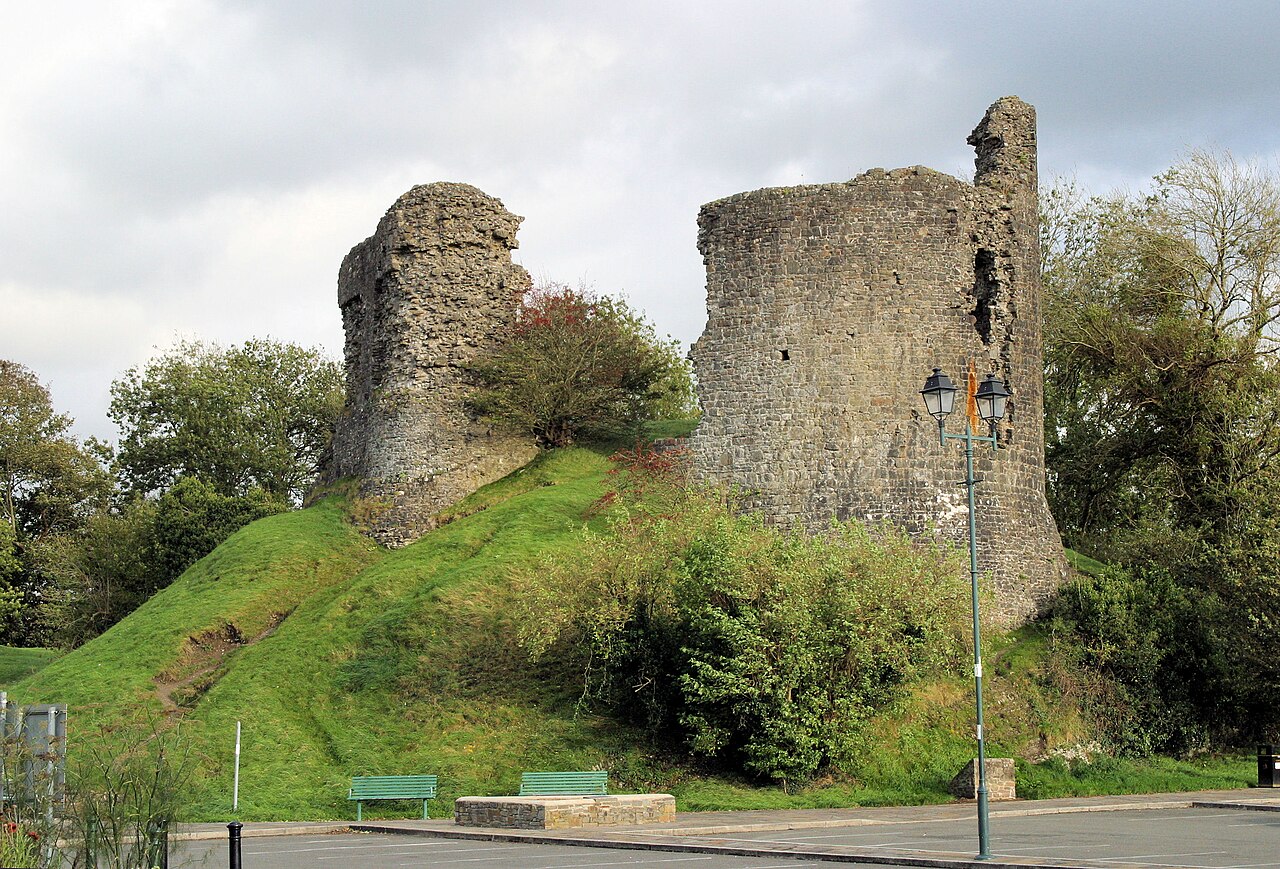
Photo by Stuart Logan • CC BY-SA 2.0
Later medieval history and decline
Ownership passed to the Audley family in 1299 and later to the Touchet family in the fourteenth century. By this time, the castle's military significance was diminishing, although it remained active during the Owain Glyndŵr rebellion in the early fifteenth century. King Henry IV visited Llandovery Castle in 1400, and the castle withstood a siege in 1403 during Glyndŵr's uprising, reflecting its continued strategic importance.
However, the castle's fortunes declined in the following century. In 1532, it was burned during a local rebellion led by Hywel ap Rhys and was never rebuilt. Subsequently, much of the castle's stone was quarried for local building projects, leaving the site in a ruinous condition.
Architectural features and surviving remains
The ruins of Llandovery Castle today provide valuable insight into its architectural evolution. The large D-shaped keep on the western edge of the motte is the most prominent surviving structure, illustrating the late thirteenth-century stone rebuilding phase. The gatehouse on the northern side, featuring two towers and a well-tower, guarded the main entrance to the bailey, which lies adjacent to the motte on the northeast side.
Remnants of the curtain wall survive around the filled-in ditch, outlining the defensive perimeter of the castle. The bailey area likely contained domestic and economic buildings, although these were probably protected by earthworks and wooden palisades rather than stone walls. The castle's position on a hill with steep slopes to the east and west provided natural defenses, enhancing its military effectiveness.
Landscape and location significance
Situated approximately 67 meters above sea level, the castle overlooks the confluence of the River Brân and the River Tywi. The surrounding terrain consists of rolling hills to the northeast and flatter lands to the southwest, emphasizing the castle's role in controlling key regional routes and local settlements. Its proximity to the modern town of Llandovery highlights the continuity of settlement and the castle's historical role as a local power center.
Cultural heritage and modern recognition
Llandovery Castle is protected as a Grade II* listed site and a Scheduled Monument, reflecting its historical and architectural significance. In 2001, a steel monument was erected near the site to commemorate Llywelyn ap Gruffudd Fychan, a Welsh noble executed in 1401 for supporting the Glyndŵr rebellion. This memorial underscores the castle's enduring connection to Welsh national history and identity.
Today, the castle ruins attract visitors interested in medieval history and Welsh heritage. Although in a ruinous state, the site offers a tangible link to the turbulent history of medieval Wales and the Norman conquest. Its surviving structures, strategic location, and historical associations make it an important monument for understanding the region's past.
Frequently asked questions (FAQ)
- What is the historical significance of Llandovery Castle?
- Llandovery Castle, built in the 13th century, is an important example of medieval military architecture in Wales. It played a crucial role in the defense against the Welsh and was strategically located to control the surrounding area. The castle's ruins reflect the turbulent history of the region, making it a fascinating site for history enthusiasts.
- When was Llandovery Castle built?
- Llandovery Castle was constructed around 1228 under the orders of the Lord of the Manor. It was built to consolidate Norman control in the area following the Anglo-Norman invasion of Wales. Over the centuries, it underwent various modifications and played a significant role in local conflicts.
- Can I visit Llandovery Castle?
- Yes, Llandovery Castle is open to the public for visitors interested in exploring its historical ruins. You can walk around the site and appreciate the architecture, even though the structure is mostly in ruins. Be sure to check local guidelines for visiting times and any potential restrictions.
- What are the opening hours for Llandovery Castle?
- The opening hours for Llandovery Castle vary throughout the year, typically being open from 10:00 AM to 5:00 PM during the summer months. In the winter, the hours may be reduced, so it’s advisable to check ahead for the most current information. Visitors can enjoy the castle grounds at their leisure during these hours.
- Is it possible to access Llandovery Castle with mobility aids?
- The site of Llandovery Castle has uneven ground and old stone paths, which may pose challenges for those with mobility aids. However, visitors can still access certain areas of the castle grounds with assistance. It’s recommended to reach out to local tourism services for detailed information on accessibility options.
- What is the best time to visit Llandovery Castle?
- The best time to visit Llandovery Castle is during the late spring and summer months, from May to September, when the weather is generally milder and more pleasant. This is also when the surrounding landscapes are at their most beautiful, enhancing your visit. Additionally, local events and activities often take place during this period.
- Are there nearby attractions to Llandovery Castle?
- Yes, Llandovery Castle is located near several attractions, including the beautiful Brecon Beacons National Park, which offers numerous outdoor activities such as hiking and cycling. The town of Llandovery itself features charming shops and local eateries, allowing visitors to experience Welsh culture. Other historical sites nearby can enrich your visit to the area.
- What are the ticket prices for Llandovery Castle?
- Access to Llandovery Castle is free, allowing visitors to explore the ruins without any admission fees. This makes it an excellent destination for budget-conscious travelers. However, donations are appreciated to help with the maintenance and preservation of the site.
Photo gallery

Information
Website
Visit websiteLoading map...
Visitor reviews
No reviews yet. Be the first to share your experience!