Dinefwr Castle
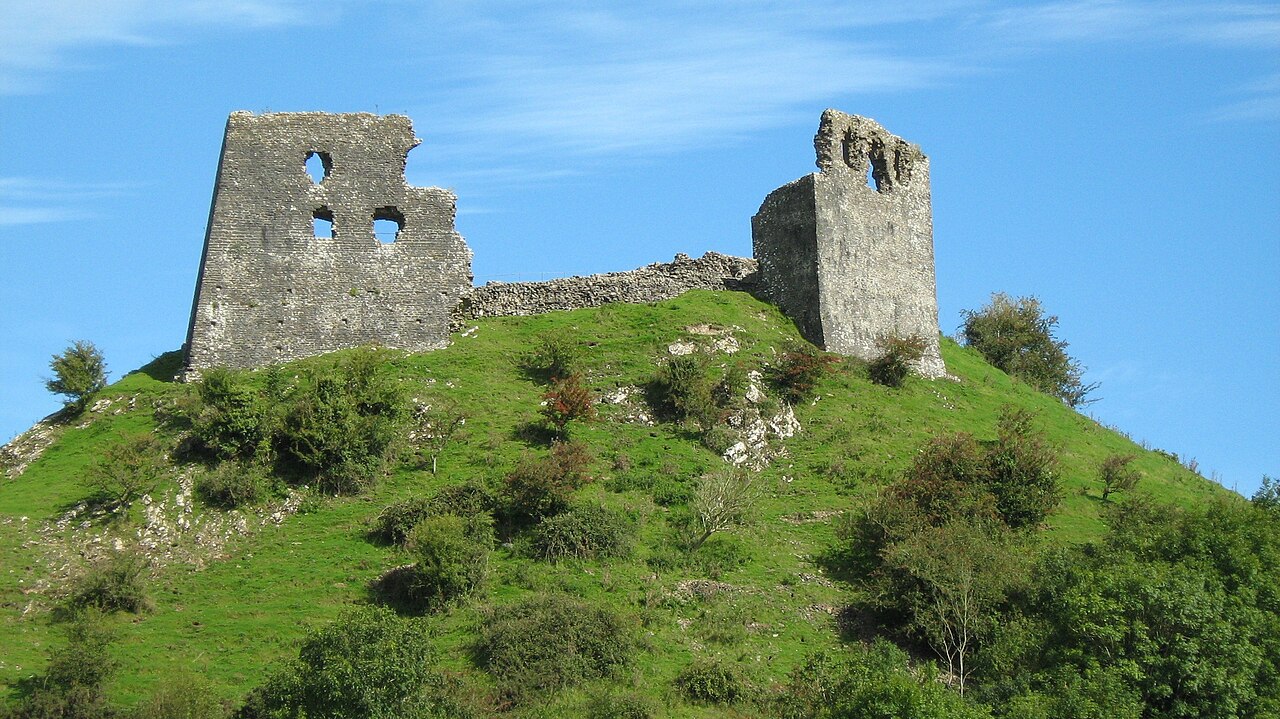
Dinefwr Castle stands prominently on a steep ridge overlooking the northern bank of the River Tywi near Llandeilo in Wales. This high medieval hill castle was the principal seat of the Kingdom of Deheubarth, serving as a symbol of Welsh princely power for centuries. Its commanding position with a steep drop of about 30 meters to the river below provided natural defenses, making it a formidable stronghold throughout its history.
The castle's origins are rooted in Welsh tradition, which attributes its foundation to Rhodri the Great in the 10th century. However, archaeological evidence confirms that the earliest surviving structures date from the 12th century. The most significant early builder was Rhys ap Gruffydd (Lord Rhys), who ruled Deheubarth from 1155 to 1197 and undertook major rebuilding efforts around 1180, establishing Dinefwr as his principal residence. His reign marked the height of Deheubarth's power, and the castle became a center of Welsh political and military activity.
Architectural features and layout
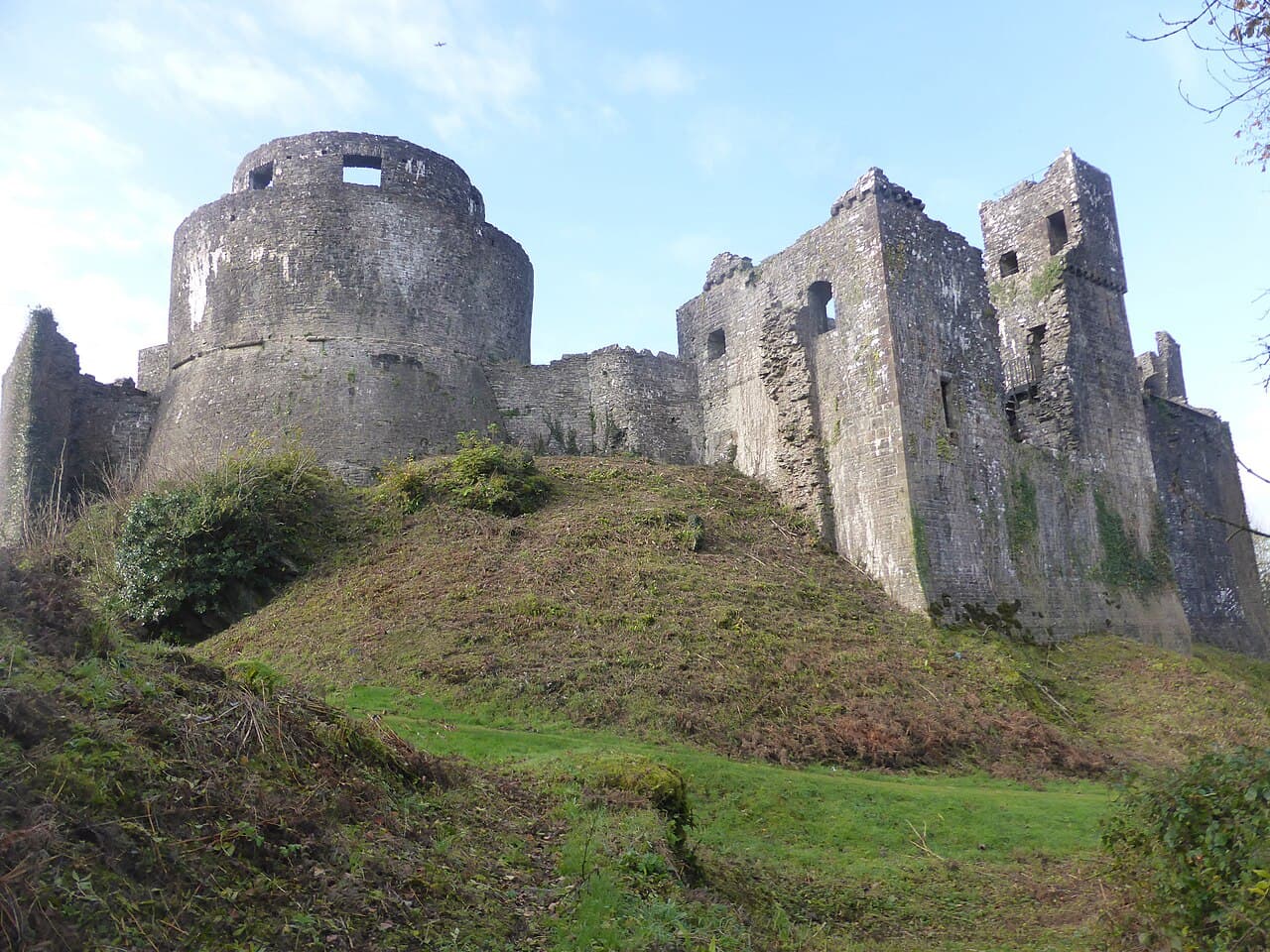
Dinefwr Castle's layout is defined by a roughly pentagonal inner courtyard enclosed by a polygonal curtain wall primarily dating from the early 13th century. The curtain wall protects the main defensive area on three sides, complemented by a deep rock-cut ditch that enhances its natural defenses. The entrance was originally on the eastern side, where visitors passed through a now-ruined outer bailey and a fortified barbican before reaching the inner ward.
The castle's most dominant feature is its large, squat circular keep, rising approximately 12 meters high and located on the eastern side of the inner courtyard. This two-storey tower has a broad, sturdy base designed for stability and defense. The original entrance was on the upper floor, accessible by removable stairs to enhance security. Later, a ground-level entrance was cut into the keep. Inside, the keep contains notable medieval features such as a well and several garderobes (medieval latrines built into the walls for effective drainage).
Atop the keep are the remains of a 17th-century summer house, which was added when the castle was repurposed as a leisure retreat. Large windows from this period still survive, and access was provided by a stone staircase and a bridge connecting the keep to the curtain wall walkway, demonstrating the castle's adaptive reuse over time.
Additional defensive structures include a rectangular tower on the northwest side of the inner ward and residential buildings on the northeast side. These residential quarters were initially constructed in the late 13th century and expanded around 1326 with a large rectangular hall, reflecting the castle's evolution from a purely military fortress to a noble residence.
Historical significance and ownership
The castle's history is deeply intertwined with the fortunes of the Dinefwr dynasty and the broader political landscape of medieval Wales. After Lord Rhys's death in 1197, the castle passed to his son Rhys Gryg, who enhanced the fortress, including the construction of the keep. During the early 13th century, the castle was caught in the power struggles involving Llywelyn the Great of Gwynedd, who restored the castle after Rhys Gryg was forced to dismantle it.
Ownership shifted frequently in the turbulent years that followed. In 1255, Llywelyn the Last granted Dinefwr to Rhys Fychan and later to Maredudd ap Rhys. Maredudd allied with King Edward I of England during his campaigns in Wales, and his son Rhys ap Maredudd assisted Edward in capturing Dinefwr in 1277. Despite promises, Edward did not reward Rhys ap Maredudd, who was executed in 1291. The castle then became an English royal possession.
Throughout the 14th and 15th centuries, the castle endured sieges and rebellions, including a notable siege by Owain Glyndŵr in 1403 during the Welsh revolt. It was also involved in the rebellion of Llywelyn Bren in 1316 and later came into the hands of influential families such as the Despensers and Sir Rhys ap Thomas, who undertook extensive rebuilding in the late 15th century.
In 1531, the castle was confiscated by the crown following the execution of Rhys ap Gruffydd for treason, though his family later regained possession. By the 17th century, the castle's military importance had waned, and it was adapted as a summer house and leisure retreat, with the keep modified accordingly. Unfortunately, the summer house burned down in the 18th century.
Cultural heritage and preservation
Today, Dinefwr Castle is a protected historic site managed by Cadw on behalf of the Wildlife Trust of South and West Wales. It forms part of the scenic Dinefwr Park, which includes a deer park and offers extensive views over the Tywi valley. The castle remains in a partially preserved state, with many of its medieval walls, towers, and the keep still standing, though some sections have been lost over time.
Visitors can explore the castle grounds via a fortified entrance and walk along the battlements and towers. A narrow spiral staircase leads to the top of the keep, providing panoramic views of the surrounding landscape, including the deer park to the north and the Tywi valley to the south and west. Features such as the well, garderobes, and remnants of the summer house add to the site's historical interest.
Access to the castle is facilitated by a free parking area in Llandeilo town, with a walking route through the Wildlife Trust's access path. There is also a small free car park for disabled visitors near the castle, accessible via a rough track. Visitors parking at the National Trust site may be subject to an entrance fee unless they hold membership with the National Trust, Wildlife Trust of South and West Wales, or Cadw.
Notable nearby landmarks
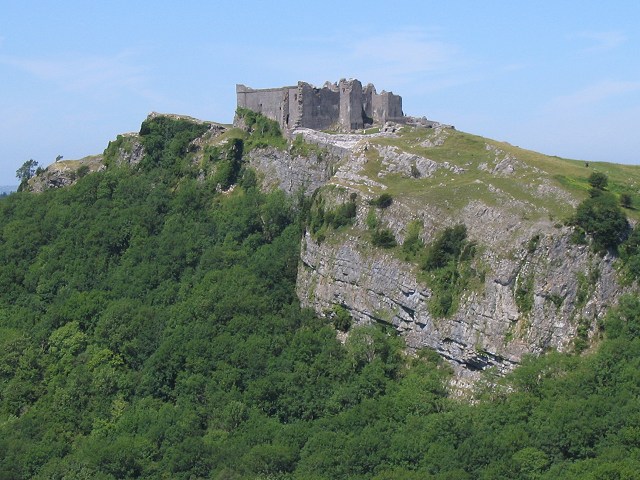
Within a few miles of Dinefwr Castle stand other significant medieval Welsh castles such as Carreg Cennen Castle to the south, built by Rhys ap Gruffydd, and Dryslwyn Castle, visible on a hill to the southwest, guarding the Tywi valley. These sites collectively illustrate the strategic importance of this region during the Middle Ages.
Historical anecdotes
The castle's history includes colorful stories such as the account by Giraldus Cambrensis of King Henry II's aborted attempt to assault Dinefwr. A local Welsh cleric misled the English reconnaissance party by guiding them along a difficult route and feigning hardship by eating grass, leading to the abandonment of the attack plan.
Architectural evolution and adaptations
Over the centuries, Dinefwr Castle evolved from a Welsh princely fortress into an English administrative center and later a leisure retreat. The initial medieval defensive structures were augmented with residential buildings and large halls to accommodate noble living standards. The 17th-century modifications, including the summer house atop the keep, reflect changing uses from military to domestic and recreational purposes.
The castle's defensive features—such as the curtain walls, barbican, and keep—demonstrate typical high medieval military architecture in Wales, designed to withstand sieges and project power. The presence of garderobes and a well within the keep highlights the attention to practical needs in castle design.
Despite partial ruin, the surviving structures provide valuable insights into the architectural styles and construction techniques of the period, as well as the social and political history of medieval Wales.
Frequently asked questions (FAQ)
- How do I get to Dinefwr Castle?
- Dinefwr Castle is located in Llandeilo, Wales, and is easily accessible by car, with parking available on-site. If you're using public transport, the nearest train station is Llandeilo, which is about a 15-minute walk from the castle.
- What is the historical significance of Dinefwr Castle?
- Dinefwr Castle is a site of great historical importance, originally built in the 12th century and serving as a royal fortress of the Kingdom of Deheubarth. It is a key example of medieval military architecture and played a central role in Welsh history, particularly during the conflicts between the Welsh princes and the English crown.
- When was Dinefwr Castle built?
- Dinefwr Castle was constructed in the early 12th century, with significant modifications made in the 13th century. The castle has undergone various changes over the centuries, reflecting the evolving architectural styles and the political history of the region.
- Can I bring my dog to Dinefwr Castle?
- Yes, dogs are welcome at Dinefwr Castle, but they must be kept on a lead at all times. The castle grounds provide a lovely space for walks, and dog owners can enjoy the beautiful surroundings together.
- Why is Dinefwr Castle a popular tourist attraction?
- Dinefwr Castle attracts visitors for its stunning architecture, rich history, and picturesque setting within Dinefwr Park. The castle offers panoramic views of the surrounding countryside, making it a favorite spot for photography and leisurely exploration.
- Is it possible to explore the interior of Dinefwr Castle?
- Visitors can explore certain areas of Dinefwr Castle, including the ruins and the grounds, but access to some interior spaces may be limited. Guided tours are available at specific times, providing insights into the castle's history and architecture.
- What are the opening hours for Dinefwr Castle?
- Dinefwr Castle is typically open from 10 AM to 5 PM, but it's advisable to check the official website for any seasonal variations or special events that may affect opening hours. During peak seasons, extended hours may be available for visitors.
- What are the ticket prices for Dinefwr Castle?
- Ticket prices for Dinefwr Castle vary, with discounts available for children, students, and seniors. Family tickets are also offered, making it an affordable option for group visits. Check the official website for the most up-to-date pricing and any special offers.
- What is the best time to visit Dinefwr Castle?
- The best time to visit Dinefwr Castle is during the spring and summer months when the weather is typically warmer, and the surrounding gardens are in full bloom. This period also coincides with various events and activities hosted at the castle, enhancing the visitor experience.
- Are there any nearby attractions to Dinefwr Castle?
- Yes, there are several nearby attractions, including the Dinefwr Park, which is a UNESCO World Heritage Site, and the historic town of Llandeilo with its quaint shops and cafes. Nature enthusiasts may also enjoy exploring the Brecon Beacons National Park, located a short drive away.
Photo gallery

Information
Website
Visit websiteSources & official resources
Verify the information above using these authoritative references.
Loading map...
Visitor reviews
No reviews yet. Been here? Write the first review and help other travelers!
Write the first reviewVisited this castle? Share your experience
Your review helps other travelers and adds first-hand knowledge to our encyclopedia.