Carreg Cennen Castle
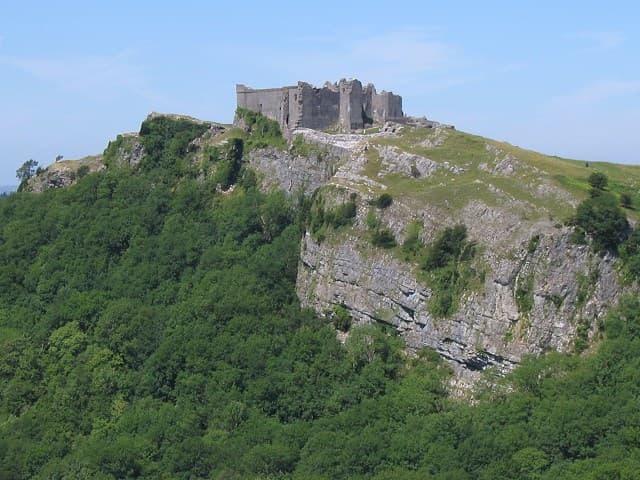
Carreg Cennen Castle is a striking medieval fortress perched atop a 91.5-meter-high limestone outcrop near the River Cennen in Llandeilo, Wales. Renowned for its dramatic setting and commanding views, the castle is a prime example of a high medieval hill castle that played a significant role in Welsh and English history. Though now a ruin, it remains a powerful symbol of the turbulent border conflicts and shifting allegiances of the 12th to 15th centuries.
Archaeological evidence reveals that the site of Carreg Cennen has been important since prehistoric times. Human remains found in nearby caves date back to the prehistoric era, and the location likely served as an Iron Age hillfort before the medieval castle was constructed. The discovery of Roman coins from the 1st and 2nd centuries further underscores the site's long-standing strategic significance, though there is no evidence of permanent Roman occupation.
The origins and medieval history of carreg cennen castle
The first masonry castle at Carreg Cennen was probably built in the 12th century by the Welsh ruler known as The Lord Rhys, who died in 1197. This initial fortification marked the transformation of the site from a prehistoric stronghold to a medieval defensive structure. The castle's earliest recorded history includes its capture and recapture during the volatile period of Welsh-English conflicts. In 1248, Rhys Fychan ap Rhys Mechyll reclaimed the castle from English control, highlighting its contested status.
King Edward I of England seized Carreg Cennen in 1277 during his campaign to conquer Wales. In 1283, Edward granted the castle to John Giffard, commander of English forces responsible for quashing Welsh resistance, including the death of Llywelyn ap Gruffudd. Giffard and his son undertook extensive remodeling and strengthening of the castle, creating the formidable stone fortress whose ruins are visible today. Their work included the construction of a twin-towered gatehouse, a barbican, and a strong inner ward with multiple towers.
Ownership of Carreg Cennen passed through several prominent figures, including the Despensers and John of Gaunt, before returning to royal possession under King Henry IV. During the early 15th century, the castle was besieged by Owain Glyndŵr and his forces in 1403 as part of the Welsh Revolt but was not captured. The siege inflicted significant damage, which was repaired by 1409.
In the mid-15th century, Carreg Cennen became a Lancastrian stronghold during the Wars of the Roses. In 1462, a Yorkist force captured the castle and deliberately demolished its defenses to prevent its future military use, leaving it in a ruinous state that persists today.
Architectural features and defensive design
Layout and fortifications
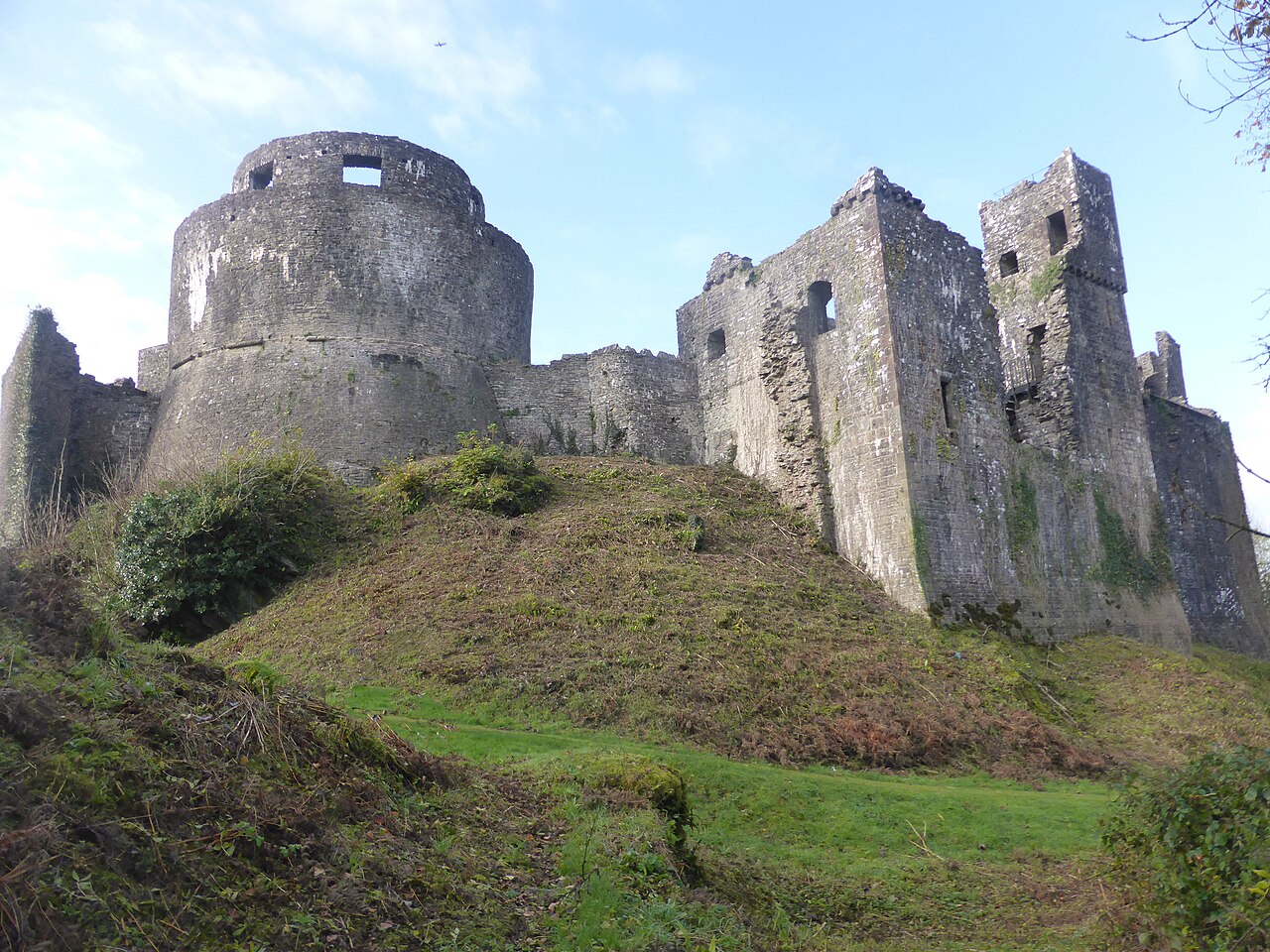
The castle's design is centered on a square inner ward enclosed by strong curtain walls and protected by six towers of varying shapes. The most prominent feature is the twin-towered gatehouse on the north side, which functioned as the castle's keep and main defensive stronghold. This gatehouse is a three-story stone structure with robust corner towers reinforced to resist undermining and equipped with two portcullises for enhanced security.
The inner ward contains a range of domestic buildings along the eastern curtain wall, including a great hall with an open fireplace, kitchens with large hearths, and private chambers such as the so-called King's Chamber, notable for its intricately carved stone fireplace and traceried windows offering views over the courtyard and the surrounding landscape. Adjacent to these is a chapel tower with the altar base still visible on the second floor.
Outer defenses and natural features
The castle is naturally defended by steep limestone cliffs to the south and deep rock-cut ditches to the west. To the north and east lies an outer ward with a fortified barbican guarding the approach to the inner ward. This barbican features two drawbridges over deep pits, a rare defensive element in Welsh castles, enhancing the castle's layered protection.
Access to the inner ward is only possible via the northern approach, which climbs steeply past the rock-cut ditch and through the barbican. The castle walls incorporate latrines draining externally and rainwater cisterns carved into sandstone within the gatehouse towers. A unique feature is a natural cave beneath the castle, accessible via a vaulted passage from the southeast corner of the inner ward. This cave contains a freshwater spring, which would have been vital for the castle's water supply during dry periods, supplementing rainwater collection.
Defensive adaptations and later modifications
During the Wars of the Roses, additional defensive adaptations were made, including the installation of a musket gun port in the northwest tower, reflecting evolving military technology. The castle's walls and towers show evidence of repairs and modifications responding to the changing demands of warfare over several centuries.
The castle's decline and preservation
After its capture and slighting by Yorkist forces in 1462, Carreg Cennen fell into ruin and was never fully restored as a military fortress. From the 18th century onward, the picturesque ruins attracted artists and antiquarians, notably inspiring a painting by J. M. W. Turner in 1798. In the 19th century, restoration efforts were undertaken by the second Earl Cawdor, although the castle remained largely a romantic ruin.
In 1932, the site came under government guardianship, and since the 1960s, ownership has been with the Morris family of Castell Farm due to a legal oversight. Today, the castle is maintained by Cadw, the Welsh Government's historic environment service, which has stabilized and partially restored the remains to ensure their preservation.
Visitors access the castle via a steep climb from Castell Farm, where farm buildings including a converted threshing barn now serve as a tearoom and shop. The surrounding farmland continues traditional agricultural practices, preserving the rural character of the site. The castle is open daily, allowing visitors to explore its evocative ruins and appreciate its commanding views and rich history.
Cultural significance and visitor experience
Carreg Cennen Castle is celebrated for its dramatic setting and well-preserved medieval architecture, making it a popular destination for history enthusiasts and tourists. Its unique combination of natural defenses and sophisticated fortifications exemplifies the strategic ingenuity of medieval Welsh castle builders. The castle's association with key historical figures and events, including Owain Glyndŵr's revolt and the Wars of the Roses, adds to its cultural importance.
Visitors can explore the extensive ruins, including the gatehouse, towers, domestic quarters, and the subterranean cave with its freshwater spring. Interpretive signage and facilities at Castell Farm enhance the visitor experience, providing insights into the castle's history and architecture. The surrounding landscape offers opportunities for hiking and enjoying panoramic views of the Welsh countryside.
Frequently asked questions (FAQ)
- How do I get to Carreg Cennen Castle?
- Carreg Cennen Castle is accessed via a steep climb from Castell Farm near Llandeilo. Visitors can park at the farm and follow the marked path uphill to the castle ruins.
- What is the historical significance of Carreg Cennen Castle?
- Carreg Cennen Castle played a key role in medieval Welsh-English conflicts, including the Welsh Revolt led by Owain Glyndŵr and the Wars of the Roses. Its strategic hilltop location made it a formidable fortress.
- Can I explore the interior of the castle?
- Yes, visitors can explore the extensive ruins of Carreg Cennen Castle, including the gatehouse, towers, great hall, kitchens, and the underground cave. Safety measures are in place, but some areas may be uneven due to the ruinous condition.
- When is the best time to visit Carreg Cennen Castle?
- The castle is open daily, with spring to early autumn offering the best weather for exploring. The site’s elevated position provides spectacular views year-round, but weather can affect accessibility.
- Are there facilities available for visitors at the castle?
- Facilities at Castell Farm include a tearoom and a shop located in a converted threshing barn. The farmyard also hosts rare breeds of livestock, adding to the rural charm of the visit.
Photo gallery

Information
Sources & official resources
Verify the information above using these authoritative references.
Loading map...
Visitor reviews
No reviews yet. Been here? Write the first review and help other travelers!
Write the first reviewVisited this castle? Share your experience
Your review helps other travelers and adds first-hand knowledge to our encyclopedia.