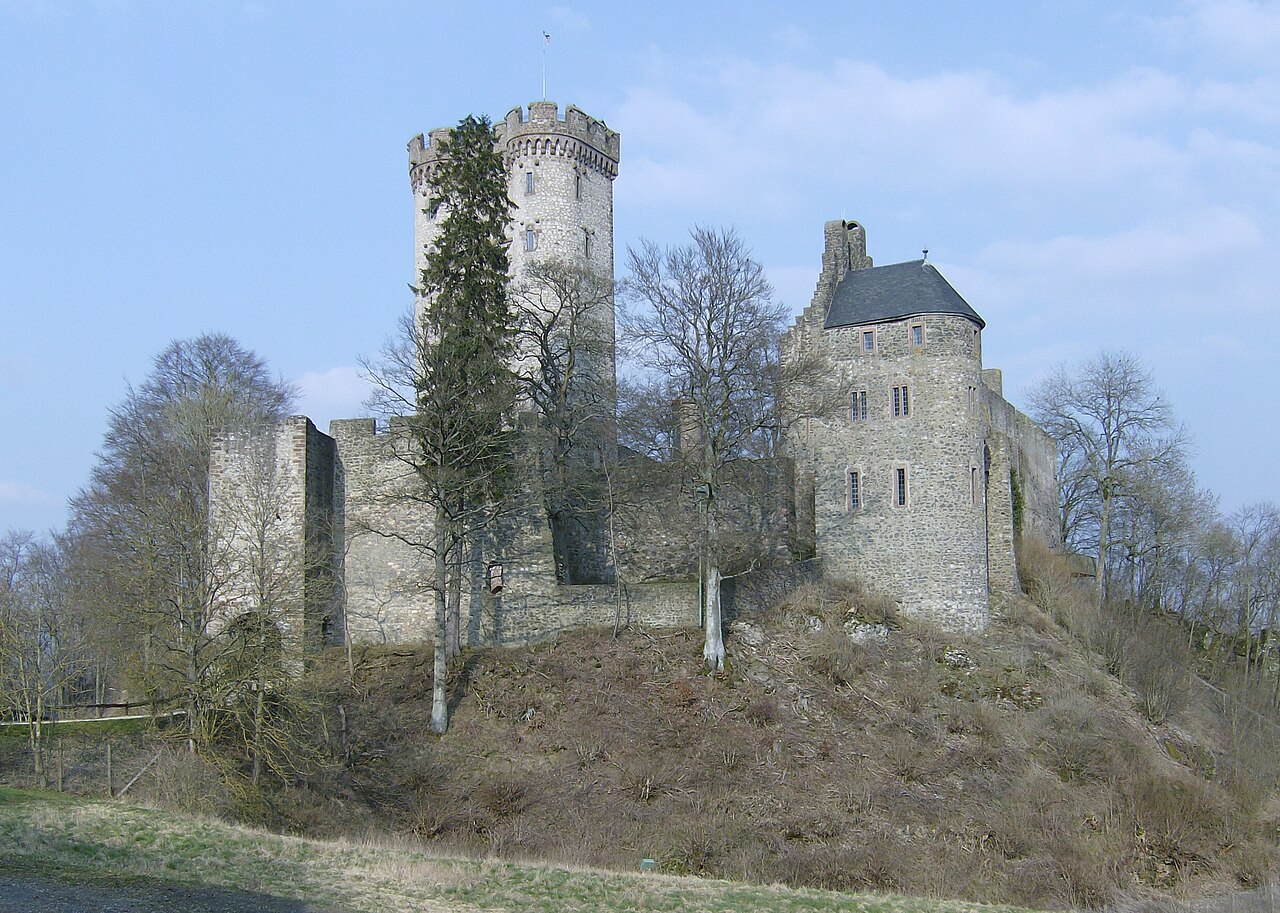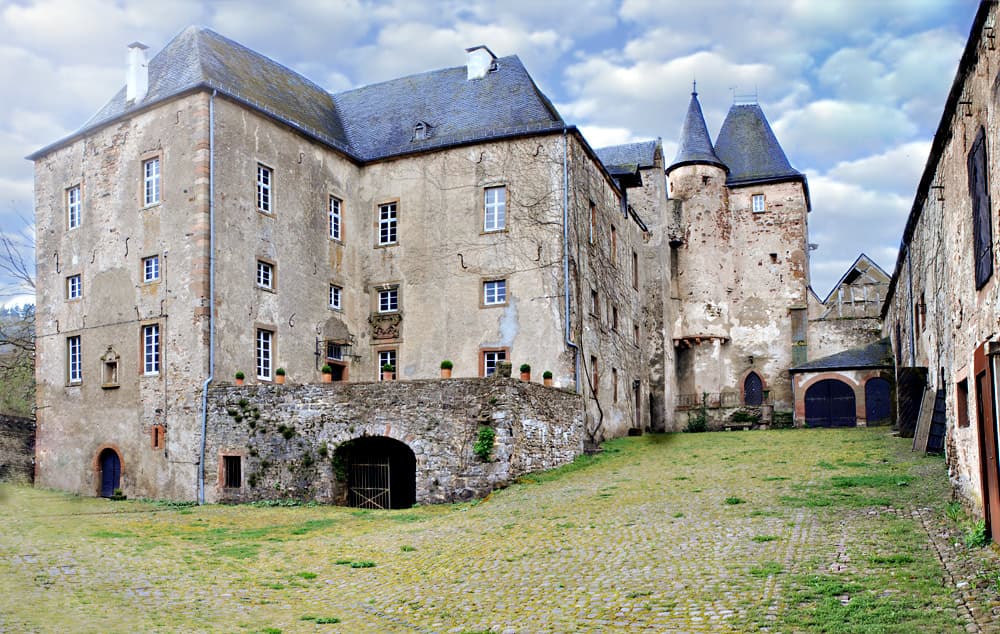
Lissingen Castle
Lissingen Castle stands as a remarkable example of a well-preserved moated castle dating back to the 13th century. Situated on the banks of the River Kyll near Gerolstein in the Eifel region of Germany, it is distinguished by its unique status as a double castle, comprising the upper castle (Oberburg) and the lower castle (Niederburg), each with separate ownership since their division in 1559. This dual structure is a rare architectural and historical feature that reflects the complex feudal and familial arrangements of the time.
Alongside Bürresheim Castle and Eltz Castle, Lissingen is one of the few castles in the Eifel that has never been destroyed, preserving an authentic glimpse into medieval and early modern castle life. Its origins trace back even further, with archaeological evidence suggesting the site was once a Roman settlement or military camp connected to the nearby Roman horse-changing station, Ausava, on the ancient route between Trier and Cologne.
Historical origins and medieval development
The earliest documentary mention of Lissingen Castle dates to 1212, when it was recorded as the possession of the knightly family von Liezingen, vassals to the powerful Prüm Abbey. The abbey controlled extensive estates in the region, including nearby villages such as Büdesheim and Sarresdorph. The castle's strategic location and fortifications were developed in response to the threat of Norman raids in the 9th century, evolving from defensive towers into a fortified complex with ring walls and moats to protect ecclesiastical lands.
Throughout the High Middle Ages, Lissingen Castle grew in significance as a noble residence and administrative center. In 1514, the abbey granted the castle in fief to Gerlach Zandt von Merl, marking the beginning of the Zandt family's long association with the estate. The division of the castle in 1559 into upper and lower sections reflected the complexities of inheritance and estate management common in the period.
Architectural evolution and renaissance transformation
Between 1661 and 1663, the lower castle underwent a major reconstruction under Ferdinand Zandt von Merl, who transformed three medieval residential towers into an imposing Renaissance manor house. This renovation exemplified the shift from purely defensive architecture to more comfortable and representative noble residences, incorporating elegant sandstone fireplaces, vaulted cellars, and spacious reception rooms.
The lower castle also featured a small chapel, documented in the early 18th century as the oratory of the von Zandt family, which was eventually deconsecrated in the early 20th century. The estate's agricultural functions expanded with the construction of a large tithe barn and stables, reflecting the castle's role as a manorial center.
The castle mill and early industrial innovations
An integral part of the lower castle complex is the castle mill, originally a standalone grain mill incorporated into the estate after the 1559 division. In the early 20th century, the mill was adapted to generate hydroelectric power, supplying electricity to the castle and surrounding village until 1936. The presence of the millstream and the Oosbach stream, which powered the mill and provided water for livestock and firefighting, highlights the castle's self-sufficient estate infrastructure.
A notable feature added around 1920 is the Königswinter oven, a large wood-fired stone oven used for baking bread, which has been restored and remains operational today, contributing to the castle's cultural and culinary heritage.
The upper castle and its renaissance-baroque character
The upper castle is centered around a walled courtyard enclosed by a long Renaissance-Baroque manor house and a 14th-century gate tower that served as the original main entrance. The courtyard includes a barn, washhouse, and a Baroque administration building, demonstrating the estate's multifaceted functions.
The chapel house within the upper castle initially served religious and burial purposes before being converted for residential use. Additional structures include a Renaissance gatehouse and an 18th-century farmer's cottage that combined living quarters with stables and barns, illustrating the integration of noble and agricultural life.
Surrounding the upper castle is a park area that evolved from former kitchen gardens, enhancing the estate's aesthetic and leisure qualities.
Historical significance and modern use
Lissingen Castle's long history reflects the broader political and social changes in the region. After the French Revolution and the subsequent annexation of the left bank of the Rhine in 1794, the castle came under French administration. Following the Congress of Vienna in 1815, it became part of the Kingdom of Prussia.
During World War II, the castle served as a billet for Wehrmacht regiments, a command post for the German General Staff, and later as a temporary prison for high-ranking military captives. Post-war, the estate returned to agricultural use under the ownership of the Greven family until economic challenges led to neglect and disrepair by the late 20th century.
Restoration efforts beginning in the late 1980s have revitalized the lower castle, transforming it into a cultural venue with exhibitions of historic carriages, sleighs, and traditional crafts. The castle mill and bakery with the historic stone oven offer visitors a unique glimpse into the estate's working heritage. The upper castle remains a private residence with parts available as holiday apartments, maintaining the castle's living legacy.
Architectural and cultural heritage protection
The entire Lissingen Castle complex is protected as a cultural monument under the Hague Convention, recognizing its outstanding architectural and historical value. The preservation of its medieval fortifications, Renaissance and Baroque manor houses, and ancillary buildings provides an exceptional example of a double castle estate that has continuously evolved over centuries without destruction.
Visitors to Lissingen Castle can explore its historic courtyards, admire the stone masonry and vaulted cellars, and experience the castle's rich history through exhibitions and cultural events. The combination of defensive structures, noble residences, agricultural buildings, and early industrial innovations like the hydroelectric mill offers a comprehensive insight into the life and development of a significant Eifel castle.
Frequently asked questions (FAQ)
- When was Lissingen Castle first mentioned in historical records?
- Lissingen Castle was first documented in 1212 as a possession of the knightly von Liezingen family, marking its early medieval origins.
- What makes Lissingen Castle unique among castles in the Eifel region?
- It is one of the few castles in the Eifel, along with Bürresheim and Eltz, that has never been destroyed, preserving its original medieval and Renaissance structures.
- Can visitors tour both the upper and lower castles?
- The lower castle operates as a cultural venue and museum open to the public, while the upper castle is a private residence with some holiday apartments available by arrangement.
- What architectural styles are represented at Lissingen Castle?
- The castle showcases a blend of medieval fortifications, Renaissance manor houses, and Baroque additions, reflecting its long architectural evolution.
- How did World War II affect Lissingen Castle?
- During WWII, the castle served as a billet for Wehrmacht units, a German General Staff command post, and a temporary prison for high-ranking military captives.
- Is Lissingen Castle accessible year-round?
- Visiting hours vary seasonally, with the lower castle open for exhibitions and cultural events primarily during warmer months; advance arrangements are recommended for visits to the upper castle.
Photo gallery

Information
Sources & official resources
Verify the information above using these authoritative references.
Loading map...
Visitor reviews
No reviews yet. Been here? Write the first review and help other travelers!
Write the first reviewVisited this castle? Share your experience
Your review helps other travelers and adds first-hand knowledge to our encyclopedia.