Kasselburg Castle
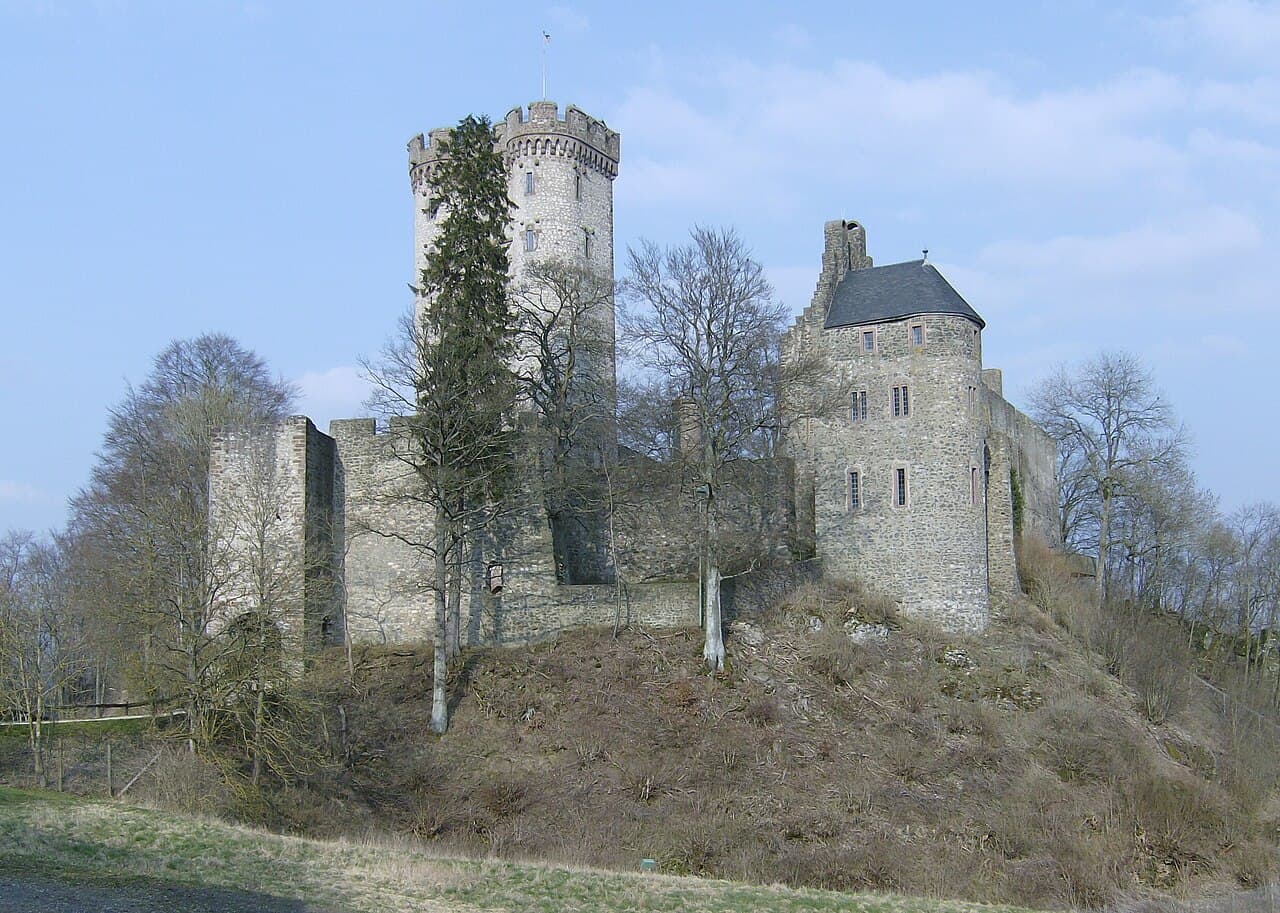
Kasselburg Castle stands as a significant high medieval hill castle ruin perched on a 490-metre-high basalt massif in Pelm near Gerolstein, Rhineland-Palatinate, Germany. The castle's strategic location atop this volcanic rock formation provided natural defense advantages and commanding views of the surrounding Eifel region. Its remains today offer a glimpse into medieval fortification architecture and the complex history of noble families that controlled it.
Architectural features and layout
The most prominent feature of Kasselburg is its 37-metre-high double tower, which uniquely functioned as both a gate tower and a tower house. While earlier assumptions attributed its construction to the lords of Blankenheim shortly after 1335, detailed structural investigations reveal multiple construction phases, indicating contributions from various builders over time. This tower is accessible to visitors today and offers panoramic views of the surrounding landscape.
Despite its imposing height, the double tower is not a bergfried (a typical fighting tower). The actual bergfried, built around the 12th century, is smaller with a square ground plan and is located in the eastern part of the inner bailey. This bergfried was later converted into a tower house during the 14th century, reflecting evolving residential and defensive needs.
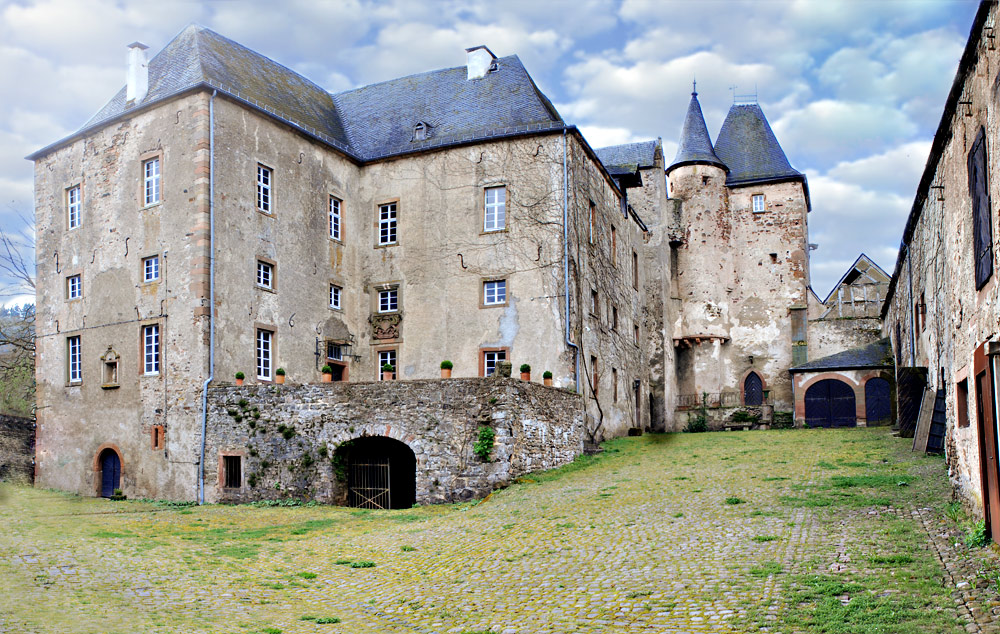
The castle's inner ward also includes a nearly 33-metre-long palas dating from the 14th century, which served as the main residential building. The palas was a key element of medieval castles, housing the great hall and living quarters for the lord and his retinue.
Expansion efforts in the mid-15th century led to the development of a large outer bailey featuring burgmann houses and various domestic buildings. These additions reflect the castle's adaptation to changing military and domestic functions, as well as increased residential capacity.
Historical background and ownership
The origins of Kasselburg Castle trace back to the 12th century. While the initial builders may have been the lords of Castel, definitive evidence is lacking. The castle appears in historical records first in 1291 as "Castilburg" and later in 1314 as "Castelberch." Ownership before 1335 remains uncertain; however, it is documented that Gerhard V of Blankenheim acquired the castle through inheritance division that year, establishing the Blankenheim-Kasselburg lineage.
This noble line was elevated to the countship but ended in 1406 with Count Gerhard VII's death. Subsequently, the castle passed by marriage to William I of Loen, linking it to the Heinsberg family. Over the centuries, ownership shifted among various prominent families, including the counts of the Mark, the dukes of Arenberg, and the prince-electors of Trier.
The castle's strategic importance and valuable location led to numerous property disputes. In 1674, the Imperial Chamber Court of Wetzlar adjudicated these conflicts, awarding the castle to the dukes of Arenberg. Under their control, Kasselburg served as artillery barracks, marking the beginning of its decline.
By the 18th century, the castle was described as dilapidated. After French forces seized it in 1794, it passed to Prussian control in 1815. Efforts to preserve the ruin began in the 19th century, notably after King Frederick William IV's visit in 1838, which prompted repair work and public access improvements funded by a railway company donation.
Further restoration and conservation were carried out in the 20th century by state historic preservation authorities and, since 1946, by the Castle Administration of Rhineland-Palatinate. Today, the site is managed by the Directorate for Castles, Palaces and Ancient Monuments, ensuring its protection and accessibility.
Significance and visitor experience
Kasselburg Castle is an important cultural monument illustrating the architectural evolution of medieval hill castles in the Eifel region. Its ruins, especially the double tower and palas, provide valuable insight into medieval defensive structures and noble residences.
Visitors can explore the remains of the inner and outer baileys, climb the double tower for expansive views, and appreciate the castle's integration with its natural basalt setting. Interpretive signage and guided tours enrich the visitor experience, highlighting the castle's complex history and architectural features.
Architectural phases and construction techniques
The multiple construction phases evident in Kasselburg's structures reflect adaptations to military technology and residential needs over several centuries. The use of local basalt stone in walls and towers demonstrates practical use of available materials, contributing to the castle's durability despite its ruinous state.
The transformation of the bergfried into a tower house in the 14th century signals a shift toward more comfortable living spaces within fortified structures, a trend seen across many European castles during the late medieval period.
Access and conservation status
Kasselburg is classified as a ruined hill castle and an archaeological site, with ongoing conservation efforts to stabilize and preserve the remaining structures. The castle is open to the public, with the double tower accessible for climbing. Safety measures are in place to protect visitors and the fragile ruins.
The site is an important destination for those interested in medieval architecture, history, and the natural beauty of the Vulkaneifel landscape.
Frequently asked questions (FAQ)
- How do I get to Kasselburg Castle?
- Kasselburg Castle is located in Gerolstein, Germany, and can be accessed by car, bicycle, or on foot. There are designated parking areas nearby, and public transportation options are available, including local buses that connect to the castle.
- What are the opening hours of Kasselburg Castle?
- Kasselburg Castle is generally open to visitors from 10 AM to 6 PM during the summer months and from 10 AM to 4 PM in winter. It's advisable to check the official website for any seasonal changes or special holiday hours before planning your visit.
- Is there an entrance fee to visit Kasselburg Castle?
- Yes, there is an admission fee to enter Kasselburg Castle. Ticket prices are typically around €5 for adults and reduced rates for children and seniors, offering great value for exploring its rich history and stunning views.
- When was Kasselburg Castle built?
- Kasselburg Castle was originally constructed in the 12th century, serving as a strategic fortification. It has undergone various renovations and restorations over the centuries, reflecting different architectural styles and historical periods.
- Can I bring my pet to Kasselburg Castle?
- Pets are generally not allowed inside the castle grounds to ensure the comfort and safety of all visitors. However, you may find designated areas nearby where pets can be accommodated.
- Why is Kasselburg Castle historically significant?
- Kasselburg Castle holds historical significance as a medieval fortification that played a vital role in the region's defense. Its well-preserved architecture and stunning location also make it a valuable resource for understanding the local history and culture of the Eifel region.
- What is the best time to visit Kasselburg Castle?
- The best time to visit Kasselburg Castle is during the spring and early autumn months when the weather is pleasant and the surrounding landscape is in full bloom. Additionally, these seasons often feature fewer crowds compared to the peak summer months.
- Is Kasselburg Castle accessible for visitors with disabilities?
- Kasselburg Castle has made efforts to improve accessibility for visitors with disabilities, offering ramps and designated pathways. However, some areas may still present challenges due to the castle's historic structure, so it’s recommended to check in advance for specific accommodations.
- What nearby attractions can I visit after Kasselburg Castle?
- After exploring Kasselburg Castle, visitors can enjoy nearby attractions such as the Gerolstein Town Museum and the scenic trails of the Eifel National Park. Additionally, the picturesque town of Gerolstein offers charming cafes and shops to enhance your visit.
Photo gallery

Information
Loading map...
Visitor reviews
No reviews yet. Been here? Write the first review and help other travelers!
Write the first reviewVisited this castle? Share your experience
Your review helps other travelers and adds first-hand knowledge to our encyclopedia.