Gerolstein Castle
Gerolstein Castle, also known as Löwenburg, stands as a remarkable example of a high medieval hill castle in the Eifel region of Germany. First documented in 1115, the castle was established by Gerhard von Blankenheim as a symbol of regional authority and noble power. Over the centuries, it evolved from a modest stronghold into a formidable fortress, reflecting the changing military and architectural demands of the 12th to 17th centuries.
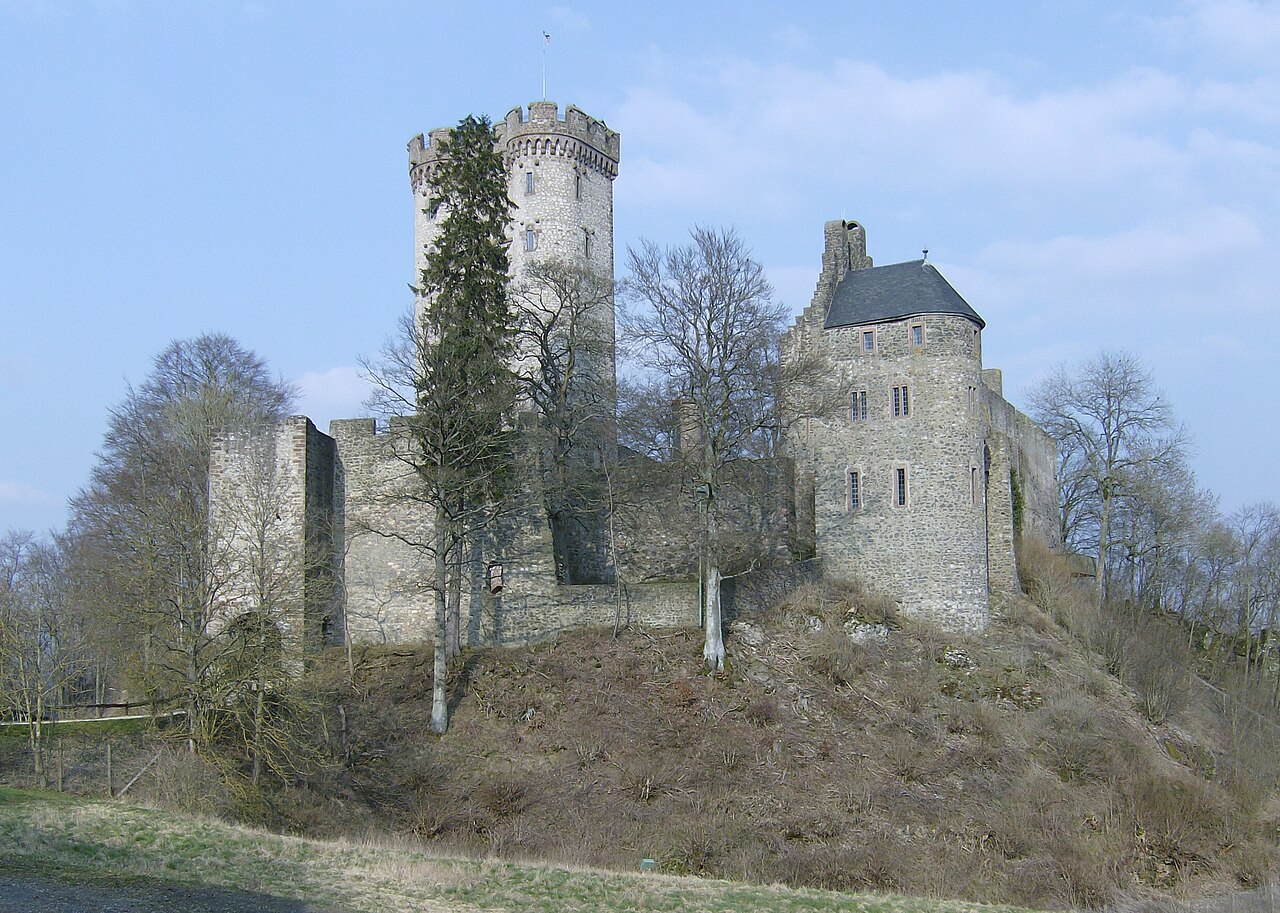
Perched atop a rocky hill approximately 440 meters above the surrounding Kyll valley, Gerolstein Castle’s strategic location allowed it to control important trade routes and oversee the surrounding landscape. The castle’s name is closely linked to its founder, with the nearby town of Gerolstein deriving its name from Gerhard, underscoring the castle’s historical significance in the region.
Medieval origins and early expansions
The initial construction phase in the early 12th century laid the foundation for what would become an extensive fortified complex. The castle was originally designed as a seat of power for the Blankenheim family, reflecting typical high medieval defensive architecture with a focus on natural topography and stone fortifications.
During the 13th century, under the stewardship of Gerhard IV, Gerolstein Castle underwent significant enlargement. This expansion included the development of clearly defined inner and outer baileys, or fortified courtyards, which enhanced the castle’s defensive capabilities and accommodated a growing administrative and residential function. The castle’s layout from this period reveals the transition from purely military fortress to a multifunctional noble residence.
Ownership changes and religious additions
The castle’s ownership shifted several times during the 15th century, reflecting the complex political landscape of the Holy Roman Empire. In 1423, the Blankenheim family ceded control to the House of Loon-Heinsberg. Later, in 1468, Dietrich III, Count of Manderscheid, acquired the castle, marking the beginning of the Manderscheid family’s long association with Gerolstein.
In 1486, two chapels were constructed, underscoring the castle’s dual role as a military stronghold and a center of religious life. One chapel was located within a half-tower inside the main castle, serving the inhabitants’ spiritual needs, while the second chapel was situated below the rock formation in the lower courtyard, accessible to those in the outer bailey. These religious structures highlight the integration of faith and defense in medieval castle design.
Fortifications and military significance in the early modern period
The 16th century brought further enhancements to Gerolstein Castle’s defenses in response to the advent of gunpowder artillery. A massive shield wall was constructed, measuring approximately 35 meters long, 11 meters high, and 2 meters thick. This imposing barrier was designed to absorb cannon fire and protect the castle’s vulnerable sections, demonstrating an adaptation to new military technologies.
Despite these improvements, the castle suffered a severe setback in 1670 when its powder tower was struck by lightning, causing a catastrophic explosion that damaged significant portions of the fortress. This event marked the beginning of the castle’s decline as a military stronghold.
Siege and destruction in the late 17th century
Gerolstein Castle became embroiled in the regional conflicts of the late 17th century. On July 6, 1691, French forces captured the fortress during a campaign to assert control over the Eifel region. However, their occupation was brief, as they lost the castle on August 5, 1691, during which the town of Gerolstein was destroyed. The castle itself, while damaged, remained largely intact immediately following these events.
In the 18th century, deliberate dismantling of parts of the castle’s walls began, signaling a shift away from its military importance. The ruins gradually fell into disrepair, compounded by further damage during World War II. Today, the remains of Gerolstein Castle offer a poignant glimpse into the layered history of noble residence, military architecture, and regional power struggles.
Architectural features and surviving remains
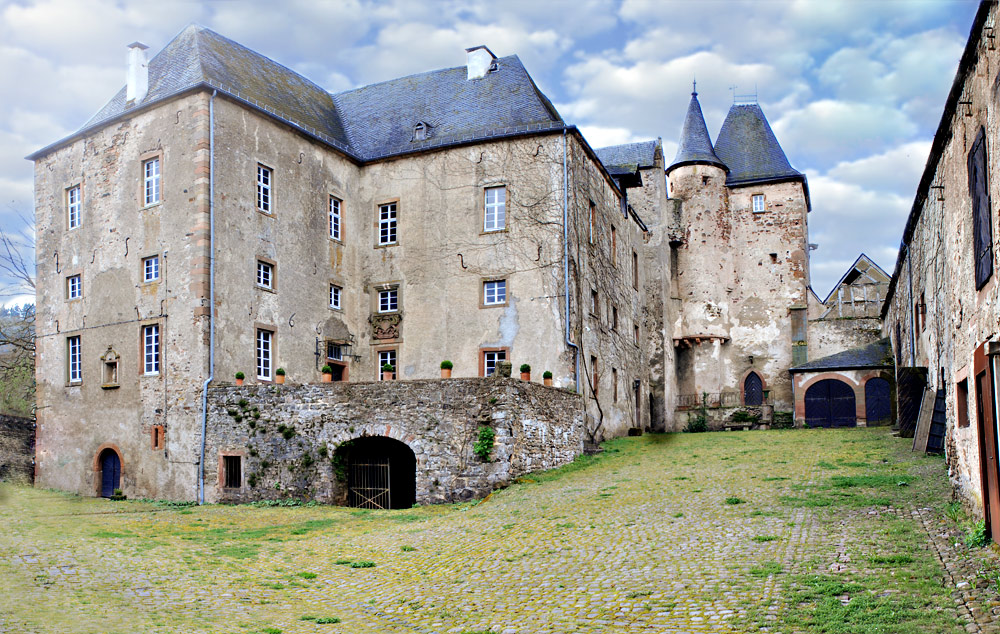
Gerolstein Castle’s surviving structures reflect its complex history. The castle is built on a rocky hilltop, utilizing the natural terrain to enhance its defenses. The massive 16th-century shield wall remains one of the most striking features, illustrating the adaptation of medieval fortifications to early modern warfare.
The castle’s layout includes a main fortified area and a northern outer bailey, which together formed a comprehensive defensive system. The remains of living quarters, curtain walls, and the chapels provide insight into the daily life and religious practices of its inhabitants. Restoration efforts have preserved some of these elements, allowing visitors to appreciate the castle’s historical and architectural significance.
A projecting rock formation partially conceals parts of the site, adding to its natural defensive qualities and creating a complex layout that challenges modern interpretation. The castle’s position overlooking the Kyll valley offered both strategic military advantages and commanding views of the surrounding landscape.
Chapels and religious significance
The two chapels built in 1486 are notable for their integration into the castle’s defensive structures. The chapel within the half-tower served the noble family and castle garrison, while the lower courtyard chapel was accessible to servants and soldiers, reflecting the social hierarchy within the fortress. These chapels emphasize the role of religion in medieval castle life, not only as a spiritual refuge but also as a symbol of authority and legitimacy.
Defensive innovations
Gerolstein Castle’s massive shield wall represents a significant architectural response to the challenges posed by artillery. Its thickness and height were designed to withstand cannon fire, a relatively new threat in the 16th century. This feature, combined with the natural rock formations, made the castle a formidable defensive site well into the early modern period.
Gerolstein castle today
Today, Gerolstein Castle stands as a well-preserved ruin and a cultural monument within the Eifel region. It attracts historians, architecture enthusiasts, and tourists interested in medieval military architecture and noble heritage. The castle’s ruins are accessible to the public, offering panoramic views and a tangible connection to the region’s medieval past.
Efforts to maintain and restore parts of the castle have ensured that this historic site remains a valuable educational resource. Interpretive signage and guided tours provide visitors with insights into the castle’s construction, historical events, and architectural evolution.
Gerolstein Castle’s enduring presence atop its rocky hill continues to symbolize the resilience and complexity of medieval fortifications in Germany, making it an essential destination for those exploring the rich tapestry of European castle history.
Information
Website
Visit websiteSources & official resources
Verify the information above using these authoritative references.
Loading map...
Visitor reviews
No reviews yet. Been here? Write the first review and help other travelers!
Write the first reviewVisited this castle? Share your experience
Your review helps other travelers and adds first-hand knowledge to our encyclopedia.