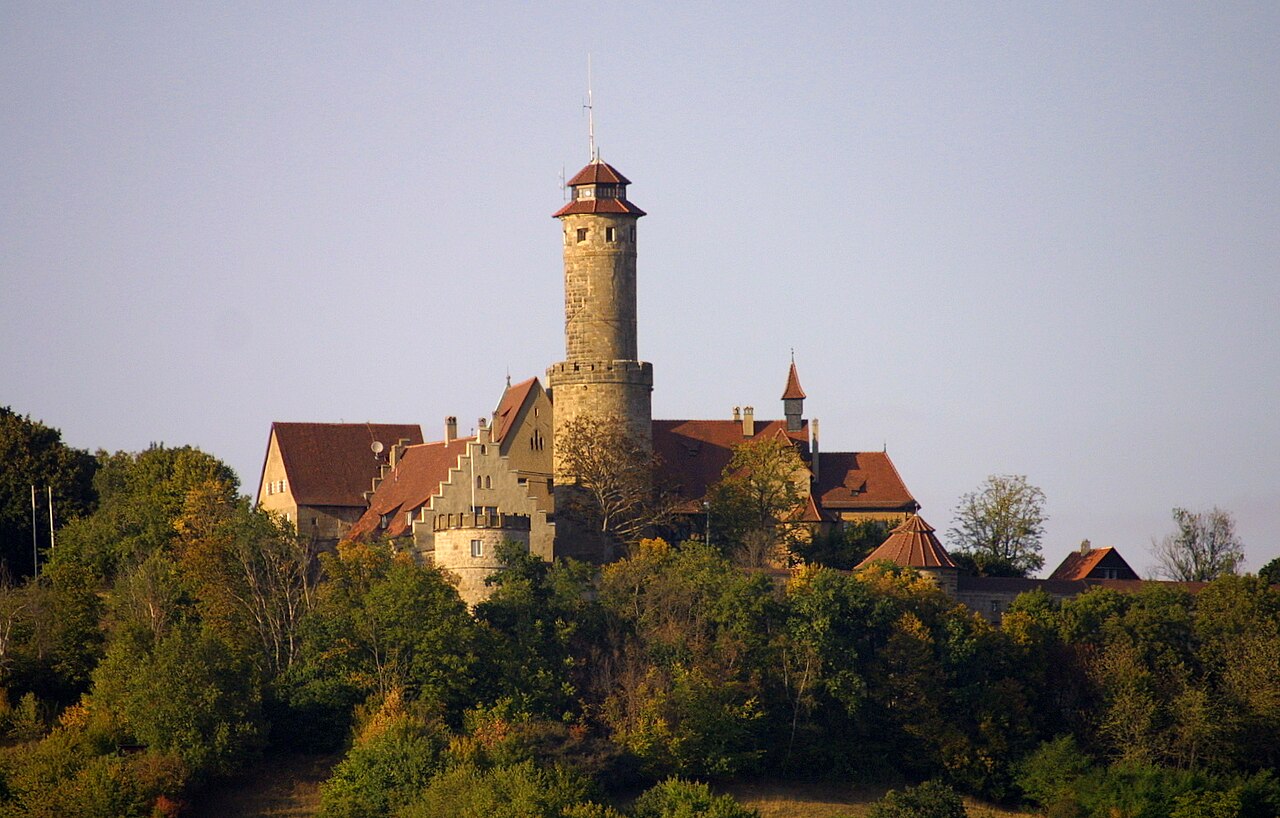
Lisberg Castle
Lisberg Castle is one of the oldest surviving castles in the Franconia region of Germany, with its first documented mention dating back to around 820 AD. This historic fortress has witnessed centuries of regional power shifts and architectural evolution, making it a remarkable example of medieval and early modern castle construction. Originally owned by the Babenberger family, who were the earls of the region, Lisberg Castle served as a sanctuary for the local population during turbulent times.
Historical significance and ownership
The castle's strategic location in the Steigerwald area allowed it to play a unique role in regional conflicts. Lisberg Castle was simultaneously under the possession of the Catholic prince-bishops of Bamberg and the Protestant Margraves of Ansbach. This dual ownership was unusual and provided a form of protection to the castle and its inhabitants. When political or military tensions escalated, the people of Lisberg could switch allegiances between these powers, effectively avoiding the fate of destruction that befell the other 31 castles in the surrounding Steigerwald region.
Architectural evolution and features
Romanesque elements
The oldest surviving structure within Lisberg Castle is the Romanesque donjon, a fortified tower that served as the primary defensive stronghold and residence. This donjon features thick stone walls and narrow windows typical of early medieval fortifications. Adjacent to the donjon is the dark prison, a grim reminder of the castle's defensive and judicial functions during the Middle Ages. The castle's inner gate also retains its original Romanesque style, characterized by rounded arches and robust masonry.
Gothic and Renaissance additions
Subsequent architectural developments introduced elements from later styles. The women's house within the castle complex exemplifies Gothic architecture, featuring pointed arches and more elaborate stonework that contrast with the earlier Romanesque austerity. Around 1600, the castle was expanded with the construction of a Renaissance palace, reflecting the changing tastes and increased comfort desired by its noble inhabitants. This palace includes larger windows, decorative facades, and more spacious interiors.
Interior highlights
Among the castle's notable interior spaces are the large kitchen and the great hall. The great hall was redesigned in 1776 by Otto Philipp von Muenster, a prominent noble associated with the castle. This renovation introduced refined decorative elements and updated the hall to suit the social functions of the time. The kitchen remains a significant example of the castle's service areas, illustrating the domestic life of its noble residents.
Later history and preservation
Over the centuries, Lisberg Castle was home to various noble families, with the Freiherrn of Muenster being among the most influential lords. The castle's continuous occupation and maintenance have helped preserve its diverse architectural elements. Today, the castle is owned by Hans Fischer, who has undertaken efforts to revive and maintain the property, ensuring its legacy endures.
Architectural and cultural importance
Lisberg Castle stands as a testimony to the layered history of Franconia, showcasing architectural styles from the Romanesque through Gothic to Renaissance periods. Its unique history of dual religious ownership and strategic survival during regional conflicts adds to its cultural significance. The castle's preservation allows visitors and scholars to explore the evolution of medieval fortifications and noble residences in Germany.
Visiting Lisberg Castle
Visitors to Lisberg Castle can explore its historic structures, including the donjon, women's house, and Renaissance palace. The castle's interiors, featuring the great hall and large kitchen, offer insights into noble life across centuries. While the castle remains a private property, arrangements for tours or visits may be possible through the current owner.
Frequently asked questions
- When was Lisberg Castle built? Lisberg Castle was first mentioned in historical records around 820 AD, making it one of the oldest castles in Franconia.
- What architectural styles are present at Lisberg Castle? The castle features Romanesque, Gothic, and Renaissance architectural elements, reflecting its long history and various expansions.
- Who were the notable owners of Lisberg Castle? The Babenberger family, the Catholic prince-bishops of Bamberg, the Protestant Margraves of Ansbach, and the Freiherrn of Muenster were among the significant owners.
- Can visitors tour Lisberg Castle? As a privately owned property, visiting arrangements depend on the owner, but the castle's historical significance makes it a potential destination for guided tours.
- Why did Lisberg Castle survive regional destruction? Its dual ownership allowed the local people to switch allegiances, protecting it from the fate that befell many other castles in the Steigerwald area.
Frequently asked questions (FAQ)
- How do I get to Lisberg Castle?
- Lisberg Castle is located in the charming village of Lisberg, Germany. You can reach it by car via the A70 highway or take a regional train to the nearest station, followed by a short bus ride or taxi to the castle.
- What is the historical significance of Lisberg Castle?
- Lisberg Castle dates back to the 12th century and played a crucial role in the region's defense during the medieval period. It has witnessed numerous historical events and has been a symbol of local heritage and resilience.
- When was Lisberg Castle built?
- Construction of Lisberg Castle began in the early 12th century, around 1100 AD. Over the centuries, it has undergone various renovations and expansions, reflecting different architectural styles.
- Can I take guided tours of Lisberg Castle?
- Yes, guided tours are available for visitors, providing insights into the castle's rich history and architecture. Tours typically include access to the main halls, towers, and beautiful gardens.
- Why is Lisberg Castle known for its architecture?
- Lisberg Castle showcases a blend of Romanesque and Gothic architectural styles, with impressive stonework and intricate details. Its well-preserved towers and defensive walls are a testament to medieval engineering.
- Is it possible to host events at Lisberg Castle?
- Yes, Lisberg Castle offers facilities for hosting various events, including weddings and corporate gatherings. The picturesque setting and historical ambiance make it a popular choice for memorable occasions.
- What are the opening hours for Lisberg Castle?
- Lisberg Castle is open to visitors from April to October, typically from 10 AM to 6 PM. It is advisable to check the official website for any seasonal changes or special event hours.
- What are the ticket prices for visiting Lisberg Castle?
- Ticket prices for Lisberg Castle are generally affordable, with discounts available for students and seniors. Children under a certain age may enter for free, making it a great destination for families.
- When is the best time to visit Lisberg Castle?
- The best time to visit Lisberg Castle is during the late spring and early fall, when the weather is mild and the gardens are in full bloom. This allows for a more enjoyable outdoor experience while exploring the castle grounds.
- Are there any nearby attractions to Lisberg Castle?
- Yes, nearby attractions include the historic town of Bamberg, a UNESCO World Heritage Site, known for its stunning architecture and vibrant culture. Additionally, the surrounding countryside offers beautiful hiking trails and scenic views.
Information
Current owner
Hans Fischer
Loading map...
Visitor reviews
No reviews yet. Been here? Write the first review and help other travelers!
Write the first reviewVisited this castle? Share your experience
Your review helps other travelers and adds first-hand knowledge to our encyclopedia.