Liptov Castle Ruins
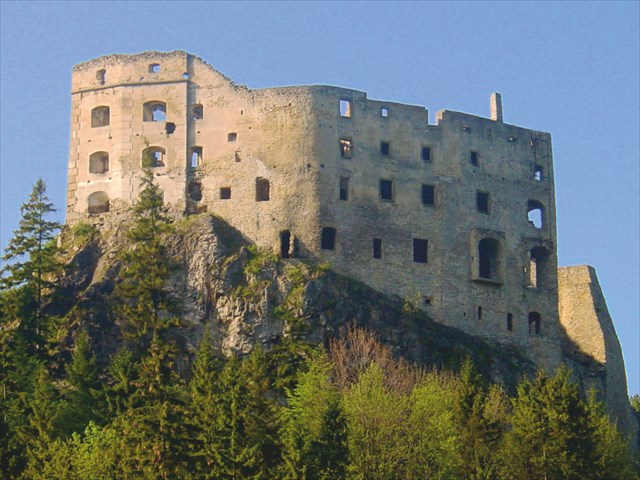
Liptov Castle stands as a remarkable example of medieval fortification perched at the highest elevation of any castle in Slovakia, situated at 993 metres above sea level. This hill castle occupies a strategic vantage point on Sestrč Hill near Ružomberok, commanding expansive views over the Liptov Basin and the surrounding valleys. Its origins trace back to the High Medieval period, with the first documented mention in 1262 during the reign of King Béla IV of Hungary. The castle was constructed as a royal stronghold to protect the kingdom's northern borders and oversee vital trade routes leading towards Orava and Poland.
The location of Liptov Castle is notable not only for its altitude but also for its natural defensive advantages. The hill features steep rock faces on two sides and precipitous slopes on the other two, which shaped the castle's layout and defensive architecture. This natural fortification was augmented by man-made structures including curtain walls, towers, gates, and water cisterns, designed to sustain prolonged sieges and military campaigns.
Historical development and significance
The site of Liptov Castle has a history of settlement extending far beyond the medieval era. Archaeological evidence reveals that the hilltop was fortified as early as the Iron Age, with a hillfort dating from around the 1st century BCE. Additionally, findings from the Hallstatt culture and Eneolithic period indicate continuous human presence and strategic importance over millennia.
The medieval castle was erected in the aftermath of the devastating Mongol invasion of 1241–1242, as part of King Béla IV's efforts to strengthen the kingdom's defenses. The 1262 record confirms the castle's role as a royal fortress. In the late 13th and early 14th centuries, Liptov Castle was controlled by prominent regional leaders such as Matthew Csák and the župan Donč. By 1340, it had become the administrative center of the Liptov župa, serving as the seat of regional governance.
Throughout the 13th and 14th centuries, the castle's territorial domain was extensive, covering the entire Liptov region and extending beyond the Choč Mountains. However, the construction of nearby castles like Likava and Liptovský Hrádok gradually reduced its jurisdiction. The castle endured frequent destruction and rebuilding, reflecting the turbulent political and military conflicts of the era.
Sieges, ownership changes, and decline
Between 1431 and 1434, the castle was occupied by Hussite forces, marking a significant episode in its military history. In 1447, it was deliberately destroyed due to its use as a refuge by robber knights. Subsequently, the noble Pongrác acquired the castle and initiated repairs, including the construction of a more modern curtain wall to improve its defenses.
From 1459, control passed to the Polish magnate Piotr Komorowski, a supporter of the Jagiellonian dynasty. After a failed attempt by young Casimir Jagiellon to assert authority in 1471, King Matthias Corvinus compelled Komorowski to surrender the fortress. In 1474, Matthias ordered the castle's complete demolition to prevent its future military use, effectively ending its functional lifespan.
Architectural features and archaeological discoveries
The castle's architecture reflects its adaptation to the challenging topography and evolving defensive needs. The earliest phase included a residential tower, a small enclosed courtyard fortified by walls, two gates, and a water cistern. Excavations have uncovered foundations of these structures, along with a second cistern, indicating sophisticated water management essential for sustaining inhabitants during sieges.
Later modifications in the 15th century introduced an extended curtain wall (locally called a parkán), enhancing the castle's perimeter defense. The remains of a residential palace and multiple towers have been identified, revealing a complex layout designed for both habitation and military functionality.
One of the most intriguing archaeological finds is a smithy located beneath the western defensive wall. This workshop produced numerous projectiles such as arrowheads and stones used in sieges, alongside blacksmithing tools and materials. This discovery highlights the castle's preparedness for prolonged conflict and its role as a center for arms production.
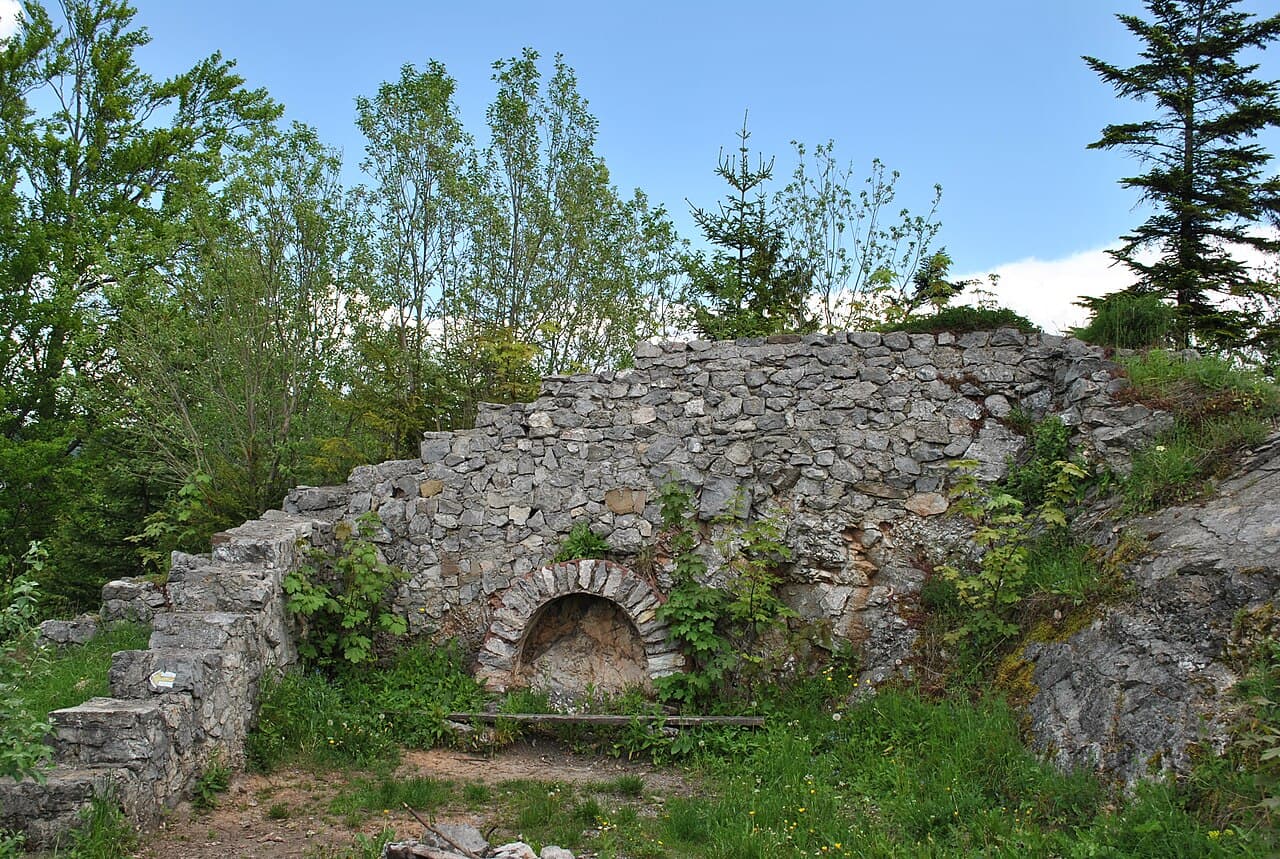
Despite centuries of ruin, the site preserves valuable architectural fragments, mostly concealed beneath soil and vegetation. These ruins provide insight into medieval construction techniques and the castle's strategic significance in Central European history.
Cultural heritage and modern preservation efforts
Known by various names over the centuries—including Pustý hrad ("Deserted Castle"), Starý hrad ("Old Castle"), and the Hungarian Óvar ("Old Castle")—Liptov Castle's remote location contributed to its decline in prominence after the 15th century. It remained largely forgotten until archaeological excavations began in the late 20th century.
Starting in 1976, extensive excavations led by Dr. Václav Hamuliak brought renewed attention to the site. These efforts have uncovered significant structural remains and artifacts, enabling preservation and interpretation of the castle's historical and architectural legacy. Today, Liptov Castle is an important archaeological site and cultural landmark, attracting visitors interested in medieval history and Slovak heritage.
Visitors to the ruins can enjoy panoramic views of the surrounding landscape and explore the archaeological exposition set within the natural environment. The castle's elevated position and historical significance make it a unique destination for those fascinated by medieval fortifications and Central European history.
Frequently asked questions (FAQ)
- What is the historical significance of Liptov Castle Ruins?
- Liptov Castle Ruins, located in Ružomberok, Slovakia, dates back to the 13th century and served as a strategic fortress to protect the region. It played a crucial role during various conflicts and has witnessed significant historical events over the centuries, reflecting the turbulent history of medieval Slovakia.
- When was Liptov Castle built?
- Liptov Castle was constructed around the mid-13th century, with its establishment linked to the need for defense against invasions. The castle underwent several modifications and expansions throughout its history, particularly during the 14th and 15th centuries.
- How do I get to Liptov Castle Ruins?
- Liptov Castle Ruins can be accessed by a short hike from the nearby town of Ružomberok. The trail is well-marked and offers beautiful views of the surrounding landscape, making it a pleasant journey for visitors.
- Can I visit Liptov Castle Ruins year-round?
- Yes, Liptov Castle Ruins are open to visitors year-round, although accessibility may vary depending on weather conditions. The best time to visit is during the warmer months, from late spring to early autumn, when the trails are most accessible and the views are stunning.
- What are the opening hours for Liptov Castle Ruins?
- Liptov Castle Ruins do not have formal opening hours as they are an outdoor site. Visitors can explore the ruins at their convenience, but it is advisable to plan your visit during daylight hours for safety and to fully appreciate the scenery.
- Is it possible to guide myself around the ruins?
- Yes, visitors can freely explore the Liptov Castle Ruins at their own pace. Informational signs located around the site provide insights into the castle’s history and architecture, allowing for an enriching self-guided experience.
- Are there any ticket prices for visiting Liptov Castle Ruins?
- There are no entrance fees to visit Liptov Castle Ruins, making it an affordable attraction for all visitors. However, donations for the preservation of the site are appreciated and can help maintain this historical landmark.
- What nearby attractions should I consider visiting?
- While visiting Liptov Castle Ruins, consider exploring the nearby town of Ružomberok, which offers charming architecture and local cuisine. Additionally, the picturesque Liptovská Mara reservoir and the stunning Low Tatras National Park are within a short drive, providing plenty of opportunities for outdoor activities.
Photo gallery

Information
Loading map...
Visitor reviews
No reviews yet. Been here? Write the first review and help other travelers!
Write the first reviewVisited this castle? Share your experience
Your review helps other travelers and adds first-hand knowledge to our encyclopedia.