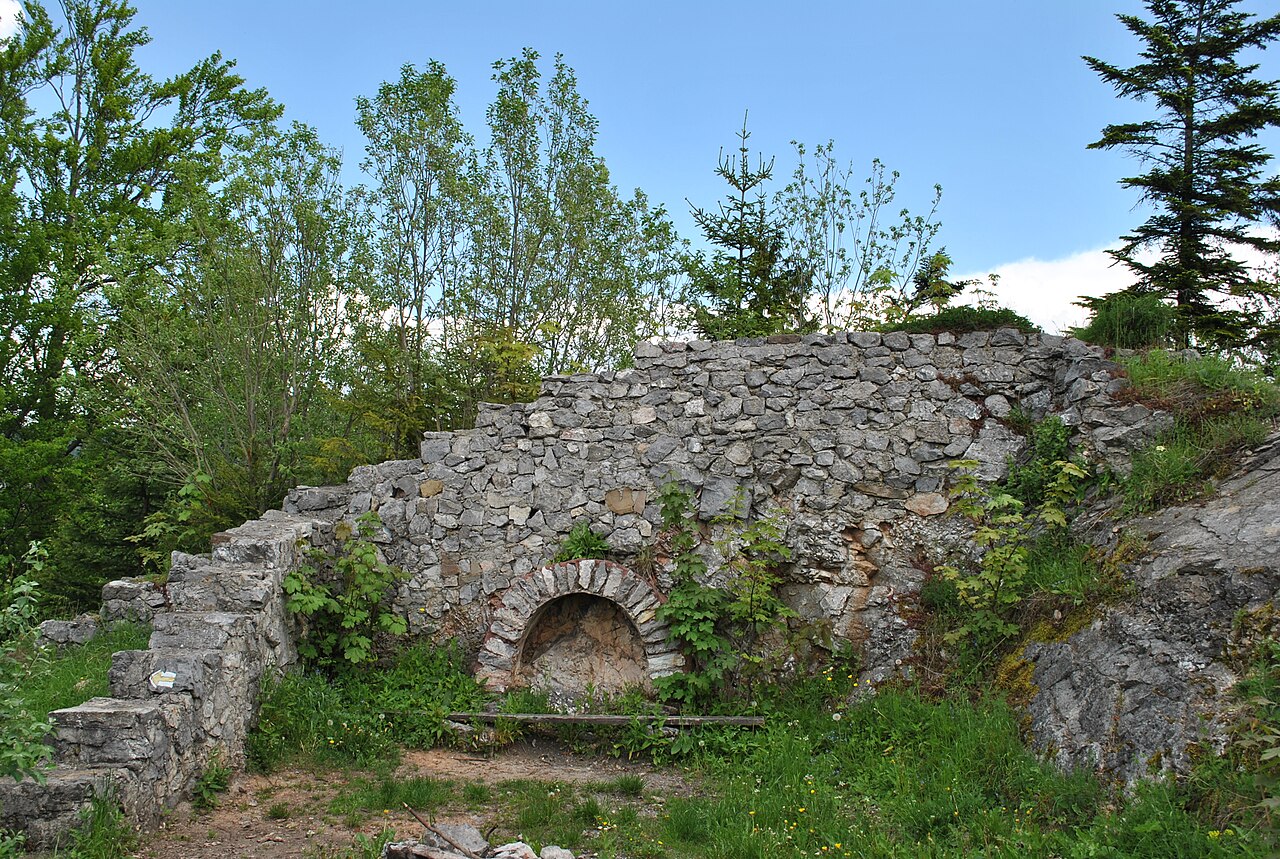
Horná Lehota

Horná Lehota Renaissance castle in Slovakia
Horná Lehota, Slovakia
Late Medieval (14th–15th c.)
Ruins

Horná Lehota castle is a remarkable example of a Renaissance defensive manor located on the edge of the village of Horná Lehota in Slovakia. Constructed in the second half of the 16th century, the castle was built by Juraj Abaffy, a nobleman and captain of the Orava Castle. The Abaffy family received the village from František Thurza as a reward for loyal service, and the manor remained under their ownership until the early 20th century.

The historical context and ownership

The castle's origins are closely tied to the political and military history of the region during the Renaissance period. The Abaffy family, influential in the Orava region, established the manor as a fortified residence that combined both defensive and residential functions. This was a common practice among the nobility in the 16th century, reflecting the turbulent times and the need for protection against invasions and local conflicts.

After World War II, the castle fell into disrepair and was left in ruins for many years. In 1989, the local authorities of Horná Lehota took over the property, and in 1990 it was sold to a private company. Between 1991 and 1993, the castle underwent a significant restoration and was adapted into a motel. Unfortunately, the motel was abandoned after a few years and the castle currently remains unused.

Architectural features and style

The restoration work successfully revived the castle's original appearance, preserving its Renaissance architectural style influenced by Italian design. The manor is a two-story building topped with a steep roof covered with wooden shingles. Four corner turrets on the first floor enhance its defensive character and aesthetic appeal.

Inside, visitors can still observe the preserved Renaissance vaults and cellars, along with original stone details that highlight the craftsmanship of the period. These architectural elements are significant for understanding the construction techniques and stylistic preferences of Renaissance manors in Central Europe.

Defensive and residential elements

The castle’s layout reflects its dual purpose as a residence and a defensive stronghold. The corner turrets provided vantage points for surveillance and defense, while the thick walls and vaulted cellars offered protection and storage. The high shingle roof not only served practical purposes but also contributed to the building’s distinctive silhouette.

Current condition and cultural significance

Although the castle was restored and adapted for modern use in the early 1990s, its current status is that of ruins due to abandonment. Despite this, Horná Lehota castle remains an important cultural monument, illustrating the Renaissance architectural heritage and noble lifestyle in Slovakia.

Its location near the village provides a tangible connection to the local history and the legacy of the Abaffy family. Preservation efforts and potential future restoration could enhance its value as a historical site and tourist attraction.

Visiting Horná Lehota castle

While the castle is currently not in use and access may be limited, its exterior and surrounding area offer insights into Renaissance defensive architecture. Visitors interested in Slovak history and Renaissance architecture will find Horná Lehota castle a noteworthy site for exploration and study.

Frequently asked questions (FAQ)

How do I get to Horná Lehota Castle?
Horná Lehota Castle is located in the picturesque village of Horná Lehota, Slovakia. It is accessible by car or public transport, with several bus routes connecting to nearby towns. Be sure to check local transport schedules for the most convenient options.
What is the historical significance of Horná Lehota Castle?
Horná Lehota Castle dates back to the 14th century and reflects the rich history of feudal Slovakia. It served as a defensive structure and residence for local nobility, showcasing the architectural styles of its era. The castle's history is intertwined with the development of the surrounding region, making it an important cultural landmark.
When was Horná Lehota Castle built?
Horná Lehota Castle was constructed in the late 14th century, with its origins tied to the medieval period of Slovakia. Over the centuries, the castle underwent several renovations, which contributed to its unique architectural features that blend different styles. Its long history makes it a fascinating site for visitors interested in medieval architecture.
Can I take a guided tour of the castle?
Yes, guided tours of Horná Lehota Castle are available for visitors who wish to learn more about its history and architecture. These tours typically include access to the main areas of the castle and provide in-depth information from knowledgeable guides. It's recommended to check the schedule in advance and book your spot during peak tourist seasons.
Why is Horná Lehota Castle a popular tourist destination?
Horná Lehota Castle attracts visitors due to its stunning architecture, rich history, and beautiful surrounding landscape. The castle offers a glimpse into Slovakia's medieval past and is an excellent spot for photography and exploration. Additionally, its location makes it a great starting point for discovering other nearby attractions.
Is it possible to host events at Horná Lehota Castle?
Yes, Horná Lehota Castle can be rented for special events, including weddings and corporate gatherings. The castle provides a unique and historic setting that adds charm to any occasion. It's advisable to contact the management for details on availability and services offered.
What are the opening hours of Horná Lehota Castle?
Horná Lehota Castle is typically open to visitors from April to October, with varying hours depending on the season. During peak tourist months, the castle may have extended hours to accommodate more visitors. Always check the official website or contact the castle for the most current opening times before your visit.
What are the ticket prices for visiting Horná Lehota Castle?
Ticket prices for Horná Lehota Castle are generally affordable, with discounts available for students and seniors. Children often receive free or reduced admission, making it a family-friendly destination. It's best to check the official website for the latest pricing information and any special promotions that may be available.
What is the best time to visit Horná Lehota Castle?
The best time to visit Horná Lehota Castle is during the spring and early autumn months when the weather is mild and the landscape is at its most beautiful. This period allows for pleasant sightseeing and exploration of the surrounding area. Additionally, visiting during weekdays can help avoid larger crowds.
Are there any nearby attractions to Horná Lehota Castle?
Yes, there are several attractions near Horná Lehota Castle that visitors can explore, including natural parks and charming villages. The scenic landscapes of the Slovak Paradise National Park and various hiking trails are also in close proximity. Make sure to plan your itinerary to include these nearby sites for a more enriching experience.

Information

Lowland Castle

Loading map...

Visitor reviews

No reviews yet. Been here? Write the first review and help other travelers!

Write the first review

Visited this castle? Share your experience

Your review helps other travelers and adds first-hand knowledge to our encyclopedia.
Write a review

(5/5)

0/2000 characters

Your review will be visible after admin approval

Nearby castles

2.7 km
Zamek Orawski — Slovakia castle

Zamek Orawski

Zamek Orawski, Slovakia

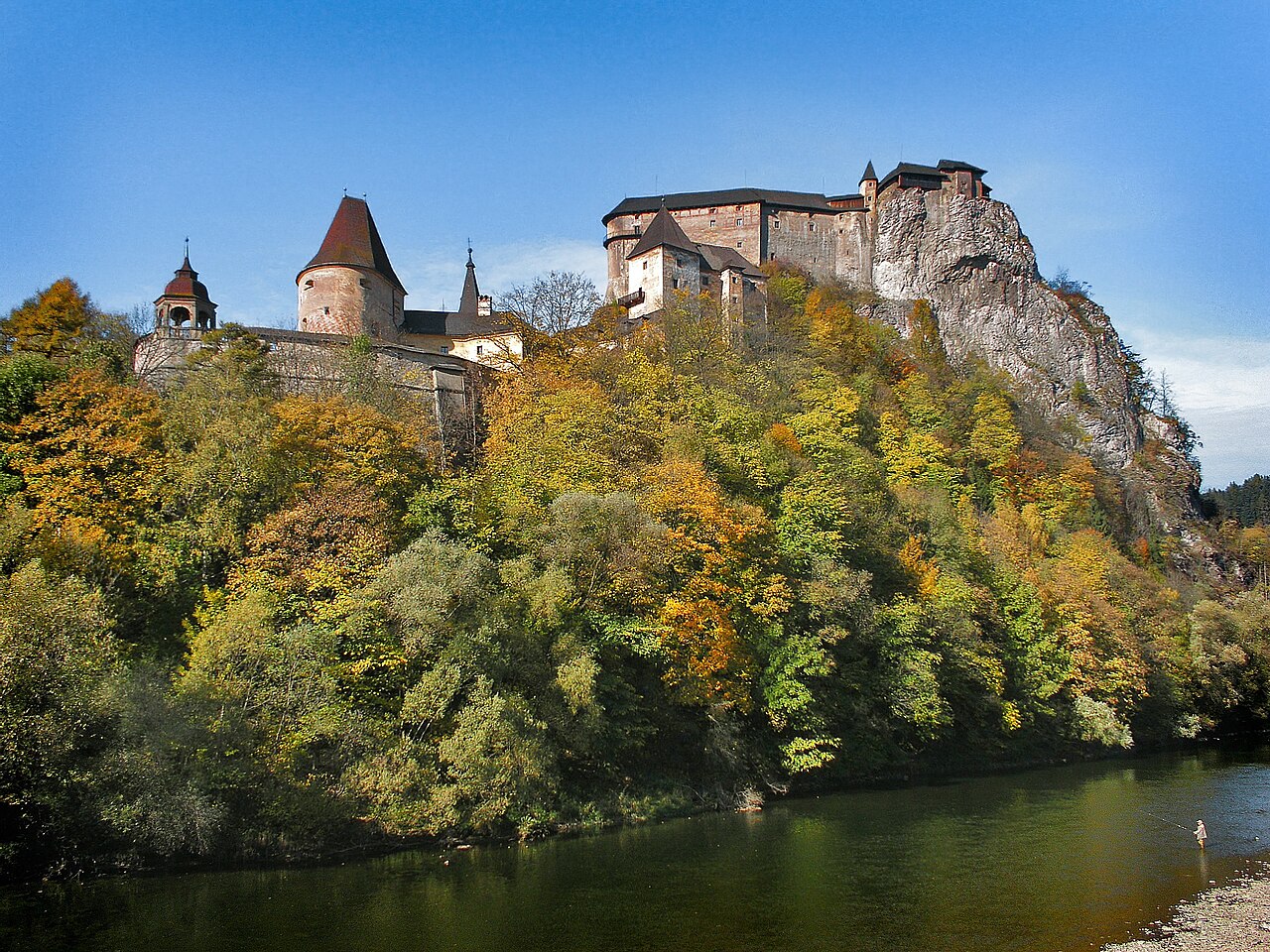
Orava Castle, known locally as Zamek Orawski, is one of Slovakia's most iconic and well-preserved medieval fortresses. Perched dramatically atop a steep limestone cliff rising 112 meters above the Orava River, the castle commands sweeping views of the surrounding landscape. Its strategic location and imposing architecture have made it a symbol of the region's turbulent history and cultural heritage.The castle's origins date back to the 13th century, shortly after the devastating Mongol invasion of 1241, which prompted King Béla IV of Hungary to fortify his northern borders. The first documented mention of Orava Castle appears in 1267, when it became royal property under Béla IV. Constructed initially as a wooden fortification on a rocky spur, it was soon rebuilt in stone to enhance its defensive capabilities. The earliest structures included a stone-built ground floor with upper wooden floors, a common practice in medieval castle construction to balance defense with available resources.Architectural evolution and castle layoutThe castle complex is divided into three main sections: the Upper Castle, the Middle Castle, and the Lower Castle, each reflecting different phases of construction and architectural styles. The Upper Castle is the oldest part, built directly on the cliff's edge, making it nearly impregnable. It originally served as the primary defensive stronghold and royal residence, featuring a tall, narrow tower that functioned as a donjon or keep.The Middle Castle developed later, incorporating Renaissance elements under the ownership of notable nobles such as Jan z Dębowca and Jan Korwin in the 16th century. This section includes two large round bastions designed for artillery, a five-story palace constructed between 1539 and 1543, and enhanced fortifications such as a new gate with a moat and drawbridge. These upgrades were a direct response to the growing threat of Ottoman incursions and advances in military technology.The Lower Castle houses the Thurzó Palace, a Baroque castle church with an altar dating from 1751-1752, and additional residential wings. Defensive features here include two guard towers flanking the main entrance and bastions adapted for cannon defense. The castle's complex defensive system comprises multiple gates, fortified walls, and a defensive moat, illustrating its dual role as a fortress and administrative center.Historical significance and ownershipThroughout its history, Orava Castle was a key military and administrative hub in the Kingdom of Hungary. It served as the seat of Árva county and was governed by castle captains and nobles who often played crucial roles in regional politics. Ownership passed through several prominent families, including the Csáks, Komorowskis, Zápolyas, and the influential Thurzó family, who held the castle from the 16th century until the 20th century.The castle withstood numerous sieges and conflicts, notably resisting the Hussite armies and the forces of Jan Jiskra in the 15th century. During the anti-Habsburg uprisings of the 17th and early 18th centuries, it was occupied by Kuruc rebels under Francis II Rákóczi before being recaptured by imperial forces in 1709 after a prolonged artillery siege. These events left their mark on the castle's fortifications and interior, prompting continual modernization and repairs.Destruction and restorationA catastrophic fire in 1800 devastated much of Orava Castle, destroying all wooden structures and interior furnishings except for parts of the Lower Castle protected by roofing. For decades, the castle remained partially in ruins until restoration efforts began in the mid-19th century under the stewardship of Edmund Zichy. In 1868, Zichy founded one of Slovakia's first regional museums within the castle, preserving its history and artifacts for public education.Further restoration and archaeological work took place throughout the 20th century, culminating in the castle's current status as a well-preserved historical monument and museum. The castle now houses numerous exhibitions, including archaeological, ethnographic, natural history, and art collections, attracting visitors interested in medieval architecture, Slovak history, and cultural heritage.Architectural highlights and visitor experienceVisitors to Orava Castle can explore its complex layout, which follows the natural contours of the cliff. The castle's three gates provide access to the distinct courtyards and sections, each featuring unique architectural elements such as the Renaissance palaces, the Baroque chapel, and the defensive bastions equipped for artillery.The castle's interiors include the Knights' Hall, a picture gallery, an armory displaying historical weapons, and period-style furnished rooms that convey the lifestyle of its noble inhabitants. The castle also offers panoramic views of the Orava River valley, enhancing its appeal as a cultural and scenic destination.Orava Castle's eerie and majestic presence has inspired popular culture, most famously serving as the filming location for Count Orlok's castle in the 1922 silent horror film Nosferatu. This connection adds a layer of mystique and draws visitors intrigued by its cinematic history.Access and tourismLocated near the village of Oravský Podzámok in the Žilina Region of Slovakia, Orava Castle is easily accessible by car and public transport. It operates as a museum with regular opening hours and offers guided tours that delve into its rich history and architectural features. Seasonal events, including theatrical performances and night tours, enhance the visitor experience by bringing the castle's history to life.As one of Slovakia's premier tourist attractions, Orava Castle combines historical significance, architectural grandeur, and cultural heritage, making it a must-visit site for enthusiasts of medieval castles and Central European history.

High Medieval (11th–13th c.)
Details
4.8 km

Regec Castle

Orava, Slovakia

Regec Castle stands as a prominent medieval fortress nestled in the scenic Orava region of Slovakia. Constructed in the 14th century, this castle has witnessed numerous historical phases and architectural modifications, reflecting the complex history of the region. Its strategic location on a hilltop provided natural defense advantages, making it a significant stronghold throughout the medieval period. Historical background and significance The origins of Regec Castle date back to the mid-14th century, during a time when fortifications were essential for controlling trade routes and defending territories in the Kingdom of Hungary, which then included present-day Slovakia. The castle was initially built as a hill castle to serve both military and administrative functions. Over the centuries, it played a vital role in regional defense, witnessing various conflicts and power struggles. Throughout its history, the castle was owned and inhabited by several noble families who contributed to its architectural evolution. It also served diverse purposes, including functioning as a noble residence, an ammunition depot, a prison, and eventually a historical museum preserving the cultural heritage of the area. Architectural features and style The castle complex is characterized by a heterogeneous architectural style resulting from multiple phases of construction and renovation. The core of the fortress exhibits typical Gothic elements, including robust stone walls, narrow slit windows for archers, and defensive towers designed for surveillance and protection. Additional modifications introduced Renaissance influences, particularly in the residential quarters, where larger windows and decorative elements enhanced the comfort and aesthetic appeal. The castle's layout includes a keep, curtain walls, gatehouses, and various courtyards that reflect its multifunctional use over time. Defensive structures The castle's defensive system was carefully designed to exploit the natural topography. The hill castle setting allowed for commanding views of the surrounding landscape, enabling early detection of approaching enemies. The walls were fortified with battlements and towers positioned at strategic points to provide overlapping fields of fire. The entrance was protected by a fortified gatehouse and a drawbridge over a dry moat, adding layers of security. Inside, narrow passageways and hidden chambers were constructed to facilitate defense and escape if necessary. Transformations and current condition Over the centuries, Regec Castle underwent several transformations reflecting changing military technologies and residential needs. The castle suffered damage during various conflicts but was partially restored in later periods to preserve its historical significance. Today, the castle stands as a partially preserved monument, with some sections in ruins while others have been stabilized or restored to allow public access. It serves as a cultural and historical museum, attracting visitors interested in medieval architecture and Slovak heritage. Visiting Regec Castle Visitors to Regec Castle can explore its extensive grounds, including the defensive walls, towers, and courtyards. Informative displays and guided tours provide insights into the castle's history, architectural features, and the lifestyle of its former inhabitants. The castle's location in the picturesque Orava region also offers opportunities for hiking and enjoying the natural beauty surrounding the fortress. Seasonal events and cultural programs are occasionally held on-site, enhancing the visitor experience. Accessibility and practical information Opening hours typically vary seasonally, with longer hours in summer months. Entrance fees support the maintenance and preservation of the site. Visitors are advised to wear suitable footwear due to uneven terrain and some steep paths. Nearby attractions include the Orava Castle and the Orava Museum, enriching the cultural itinerary.

High Medieval (11th–13th c.)
Details
12.3 km
Liptov Castle Ruins — Slovakia castle

Liptov Castle Ruins

Ružomberok, Slovakia

Liptov Castle stands as a remarkable example of medieval fortification perched at the highest elevation of any castle in Slovakia, situated at 993 metres above sea level. This hill castle occupies a strategic vantage point on Sestrč Hill near Ružomberok, commanding expansive views over the Liptov Basin and the surrounding valleys. Its origins trace back to the High Medieval period, with the first documented mention in 1262 during the reign of King Béla IV of Hungary. The castle was constructed as a royal stronghold to protect the kingdom's northern borders and oversee vital trade routes leading towards Orava and Poland. The location of Liptov Castle is notable not only for its altitude but also for its natural defensive advantages. The hill features steep rock faces on two sides and precipitous slopes on the other two, which shaped the castle's layout and defensive architecture. This natural fortification was augmented by man-made structures including curtain walls, towers, gates, and water cisterns, designed to sustain prolonged sieges and military campaigns. Historical development and significance The site of Liptov Castle has a history of settlement extending far beyond the medieval era. Archaeological evidence reveals that the hilltop was fortified as early as the Iron Age, with a hillfort dating from around the 1st century BCE. Additionally, findings from the Hallstatt culture and Eneolithic period indicate continuous human presence and strategic importance over millennia. The medieval castle was erected in the aftermath of the devastating Mongol invasion of 1241–1242, as part of King Béla IV's efforts to strengthen the kingdom's defenses. The 1262 record confirms the castle's role as a royal fortress. In the late 13th and early 14th centuries, Liptov Castle was controlled by prominent regional leaders such as Matthew Csák and the župan Donč. By 1340, it had become the administrative center of the Liptov župa, serving as the seat of regional governance. Throughout the 13th and 14th centuries, the castle's territorial domain was extensive, covering the entire Liptov region and extending beyond the Choč Mountains. However, the construction of nearby castles like Likava and Liptovský Hrádok gradually reduced its jurisdiction. The castle endured frequent destruction and rebuilding, reflecting the turbulent political and military conflicts of the era. Sieges, ownership changes, and decline Between 1431 and 1434, the castle was occupied by Hussite forces, marking a significant episode in its military history. In 1447, it was deliberately destroyed due to its use as a refuge by robber knights. Subsequently, the noble Pongrác acquired the castle and initiated repairs, including the construction of a more modern curtain wall to improve its defenses. From 1459, control passed to the Polish magnate Piotr Komorowski, a supporter of the Jagiellonian dynasty. After a failed attempt by young Casimir Jagiellon to assert authority in 1471, King Matthias Corvinus compelled Komorowski to surrender the fortress. In 1474, Matthias ordered the castle's complete demolition to prevent its future military use, effectively ending its functional lifespan. Architectural features and archaeological discoveries The castle's architecture reflects its adaptation to the challenging topography and evolving defensive needs. The earliest phase included a residential tower, a small enclosed courtyard fortified by walls, two gates, and a water cistern. Excavations have uncovered foundations of these structures, along with a second cistern, indicating sophisticated water management essential for sustaining inhabitants during sieges. Later modifications in the 15th century introduced an extended curtain wall (locally called a parkán), enhancing the castle's perimeter defense. The remains of a residential palace and multiple towers have been identified, revealing a complex layout designed for both habitation and military functionality. One of the most intriguing archaeological finds is a smithy located beneath the western defensive wall. This workshop produced numerous projectiles such as arrowheads and stones used in sieges, alongside blacksmithing tools and materials. This discovery highlights the castle's preparedness for prolonged conflict and its role as a center for arms production. Despite centuries of ruin, the site preserves valuable architectural fragments, mostly concealed beneath soil and vegetation. These ruins provide insight into medieval construction techniques and the castle's strategic significance in Central European history. Cultural heritage and modern preservation efforts Known by various names over the centuries—including Pustý hrad ("Deserted Castle"), Starý hrad ("Old Castle"), and the Hungarian Óvar ("Old Castle")—Liptov Castle's remote location contributed to its decline in prominence after the 15th century. It remained largely forgotten until archaeological excavations began in the late 20th century. Starting in 1976, extensive excavations led by Dr. Václav Hamuliak brought renewed attention to the site. These efforts have uncovered significant structural remains and artifacts, enabling preservation and interpretation of the castle's historical and architectural legacy. Today, Liptov Castle is an important archaeological site and cultural landmark, attracting visitors interested in medieval history and Slovak heritage. Visitors to the ruins can enjoy panoramic views of the surrounding landscape and explore the archaeological exposition set within the natural environment. The castle's elevated position and historical significance make it a unique destination for those fascinated by medieval fortifications and Central European history.

High Medieval (11th–13th c.)
Details