Beszeniowa
Beszeniowa Castle stands as an enduring example of a Renaissance defensive manor in the small village of Beszeniowa, located in the historic region of Liptov, Slovakia. Known primarily for its thermal springs, the village also hosts this remarkable castle, which has preserved much of its original character despite centuries of architectural evolution. Constructed in 1644, the castle reflects the defensive and residential needs of the nobility during the Renaissance period in Central Europe.
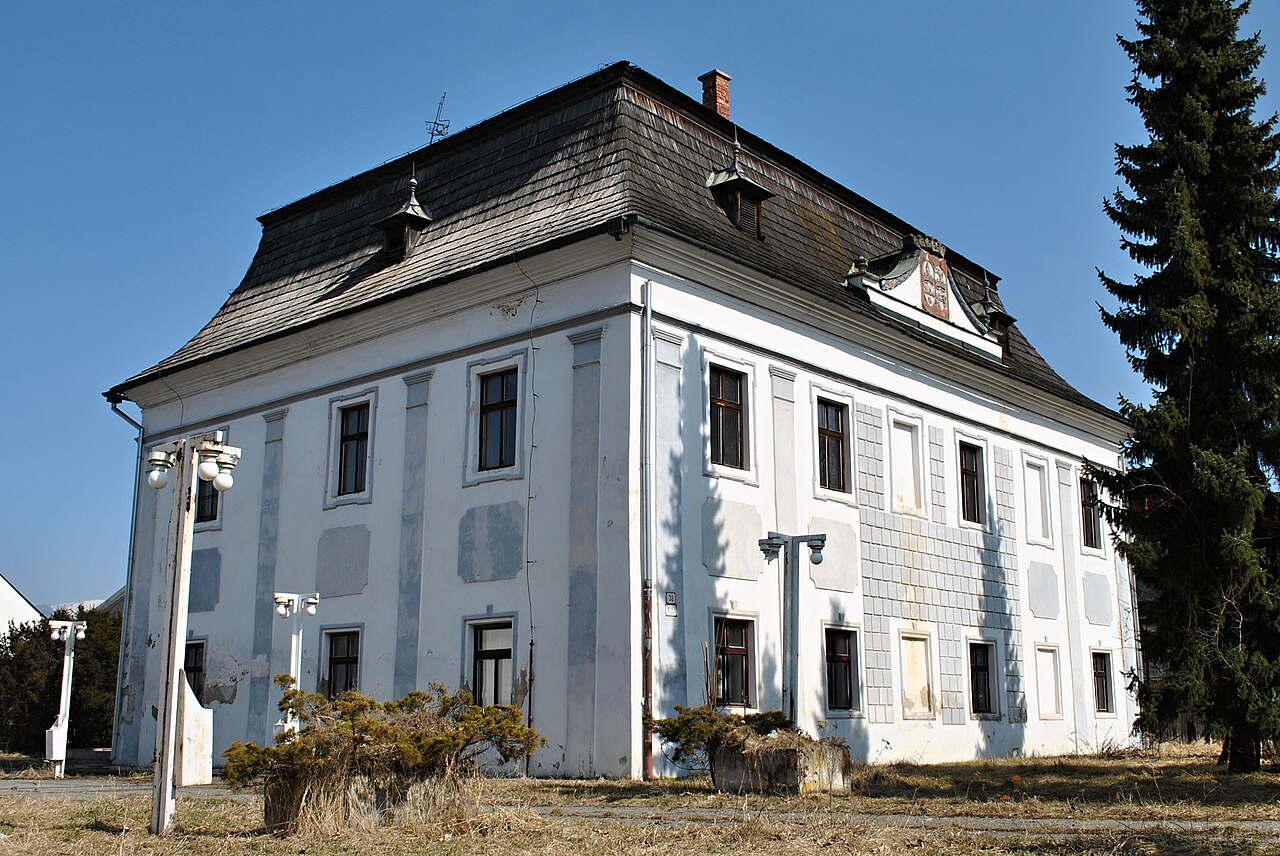
The castle was commissioned by Latislav Mitoška, although some historical sources attribute its construction to the Dvornikovič family. This discrepancy highlights the common challenges in tracing precise ownership and builder records from the 17th century. The castle was designed as a two-storey building featuring four square corner towers, a typical Renaissance architectural feature that combined both defensive and aesthetic functions. This layout provided a fortified residence that could withstand minor sieges while offering comfortable living quarters.
Architectural design and Renaissance features
The original Renaissance design of Beszeniowa Castle is characterized by its symmetrical nine-axis facade with a central risalit containing the main entrance hall. The castle's four corner towers rise prominently, each covered with traditional wooden shingles, which is a distinctive roofing technique that has been preserved to this day. The use of shingles not only provided weather protection but also contributed to the castle's unique silhouette against the surrounding landscape.
Inside, the castle originally featured Renaissance vaulted ceilings, which have survived through later renovations. These vaults reflect the architectural advances of the period, emphasizing both structural stability and decorative appeal. The castle’s interior layout was designed to balance defensive needs with residential comfort, including spacious halls and chambers that accommodated the noble family and their retinue.
Baroque and Classicist transformations
During the 18th century, Beszeniowa Castle underwent significant interior and roof modifications in the Baroque style. This period saw the introduction of more ornate and decorative elements, including elaborate ceiling stuccoes and redesigned rooflines that softened the castle's originally austere Renaissance appearance. The Baroque influence added grandeur and a sense of modernity for the time, aligning the castle with contemporary aristocratic tastes.
Further changes occurred in the mid-19th century when the castle was remodeled in the Classicist style. This phase introduced cleaner lines and more restrained decorative motifs, reflecting the neoclassical ideals of harmony and proportion. The Classicist renovations helped to update the castle’s appearance, ensuring its relevance and functionality as a noble residence well into the modern era.
Post-war adaptation and current status
After World War II, efforts were made to adapt Beszeniowa Castle for use as a hunting museum. Although the museum was never established, these modifications reflect the castle's ongoing cultural significance and the attempts to preserve its heritage. Today, the castle remains in private ownership, which has contributed to its well-preserved condition.
The castle is surrounded by a small park, enhancing its picturesque setting and providing a tranquil environment that complements its historic architecture. The preservation of the castle’s original Renaissance form alongside its Baroque and Classicist elements offers visitors a unique opportunity to explore the architectural evolution of a Central European noble residence over several centuries.
Structural and stylistic details
Exterior features
The castle’s exterior is dominated by its four square corner towers, which provide both defensive vantage points and aesthetic balance. The shingle-covered roofs and towers are notable for their traditional craftsmanship, which has been carefully maintained. The nine-axis facade with a central risalit creates a harmonious and imposing frontage that reflects Renaissance ideals of symmetry and proportion.
Interior spaces
Inside, visitors can observe the blend of architectural styles, with Renaissance vaulted ceilings coexisting alongside Baroque decorative stuccoes. These elements illustrate the castle’s layered history and the changing tastes of its inhabitants. The interior spaces were designed to serve both practical and ceremonial functions, including reception halls, private chambers, and service areas.
Historical and cultural significance
Beszeniowa Castle is a valuable cultural monument that encapsulates the architectural and historical transitions from the Renaissance through the Baroque and Classicist periods in Slovakia. Its survival in a well-preserved state makes it an important example of regional noble residences that combined defense with domestic comfort.
The castle’s association with notable families such as the Mitoška and Dvornikovič families provides insight into the social history of the Liptov region during the 17th to 19th centuries. Furthermore, its location in a village famed for thermal springs adds an additional layer of interest for visitors exploring the natural and historical heritage of Slovakia.
Visiting Beszeniowa Castle
Although Beszeniowa Castle is privately owned and not regularly open to the public, its exterior and surrounding park can be appreciated by visitors interested in Renaissance architecture and Slovak history. The castle’s unique blend of architectural styles and its preserved defensive features make it a noteworthy site for those exploring the cultural landscapes of Central Europe.
For heritage enthusiasts and scholars, Beszeniowa Castle offers a tangible connection to the region’s noble past and architectural traditions, standing as a testament to the enduring legacy of Renaissance design adapted through subsequent centuries.
Frequently asked questions (FAQ)
- What is the historical significance of Beszeniowa Castle?
- Beszeniowa Castle, dating back to the 13th century, is an important example of medieval architecture in Slovakia. It played a crucial role in the defense against invasions and has witnessed numerous historical events over the centuries, making it a significant landmark in the region.
- When was Beszeniowa Castle built?
- Construction of Beszeniowa Castle began in the early 13th century and was completed in the 14th century. This long construction period reflects the castle's incremental development as it adapted to the evolving military and residential needs of its occupants.
- Can I visit Beszeniowa Castle year-round?
- Yes, Beszeniowa Castle is open to visitors year-round, although hours may vary seasonally. It's advisable to check the official website or contact local tourism offices for the most current visiting hours and any seasonal events.
- Is it possible to explore the castle grounds on my own?
- Visitors are allowed to explore the castle grounds independently, but guided tours are also available for a more in-depth experience. A guided tour can provide valuable insights into the castle's history and architectural features that self-guided visitors might miss.
- What are the opening hours for Beszeniowa Castle?
- Beszeniowa Castle typically opens at 10 AM and closes at 6 PM during the peak season, while hours may be reduced during the off-peak months. It is recommended to check ahead for any special events or changes in schedule before your visit.
- How much does it cost to enter Beszeniowa Castle?
- Ticket prices for Beszeniowa Castle are generally affordable, with discounts available for students, seniors, and children. For the most accurate and up-to-date pricing, it's best to consult the castle's official website prior to your visit.
- When is the best time to visit Beszeniowa Castle?
- The best time to visit Beszeniowa Castle is during the spring and early autumn when the weather is mild, and the landscape is particularly beautiful. Additionally, visiting during these times may help you avoid the larger crowds typical of the summer months.
- What nearby attractions can I visit while in Beszeniowa?
- While in Beszeniowa, visitors can explore nearby attractions such as the picturesque village of Bardejov, known for its well-preserved medieval architecture, and the stunning nature trails of the surrounding area. These sites offer a perfect complement to your visit to the castle.
- How do I get to Beszeniowa Castle?
- Beszeniowa Castle is accessible by car and public transportation, with several bus routes operating in the area. It is located just a short distance from major cities, making it a convenient day trip for visitors exploring the region.
Information
Loading map...
Visitor reviews
No reviews yet. Been here? Write the first review and help other travelers!
Write the first reviewVisited this castle? Share your experience
Your review helps other travelers and adds first-hand knowledge to our encyclopedia.