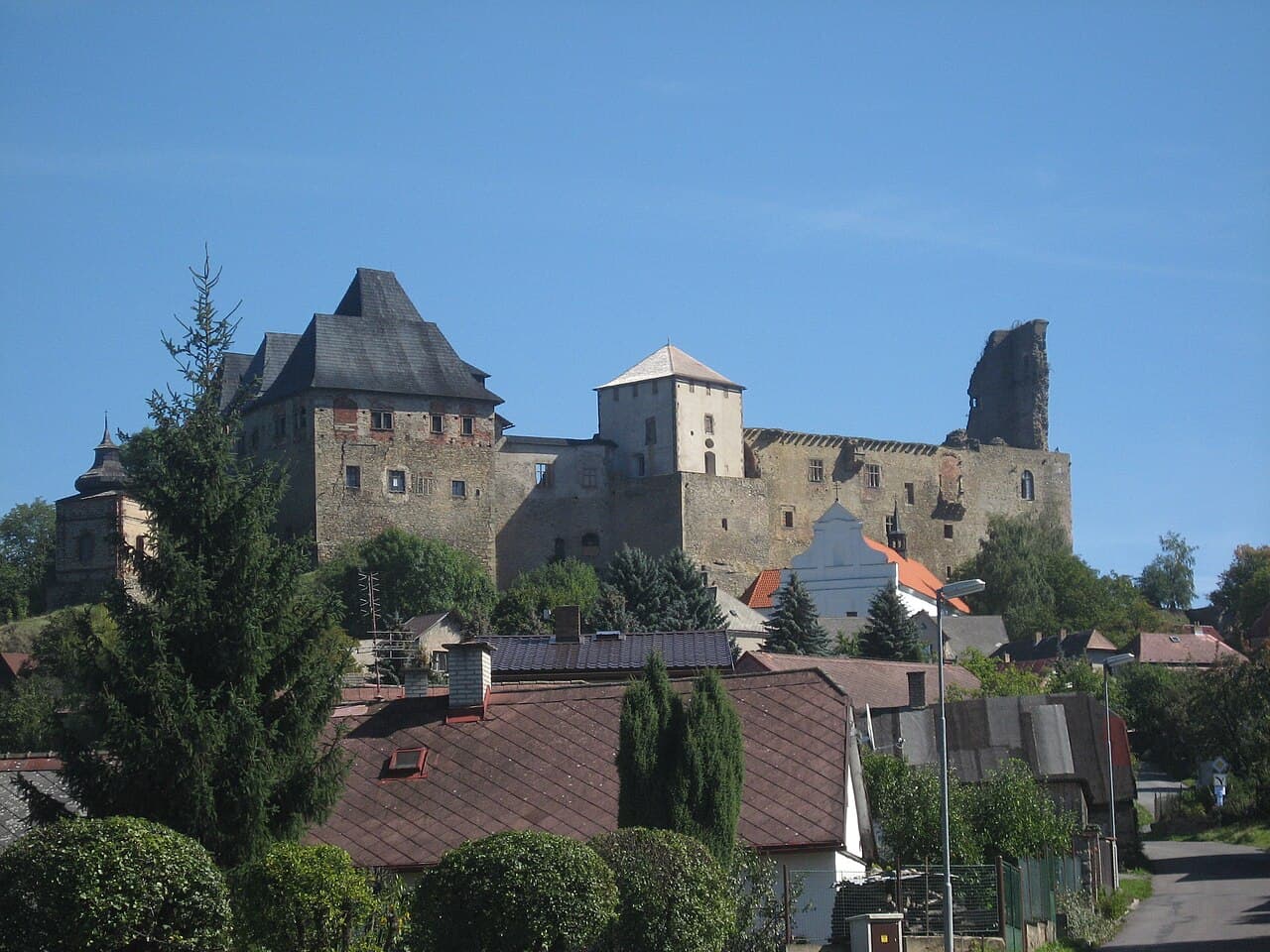
Lipnice nad Sázavou Castle
Lipnice nad Sázavou Castle stands as a remarkable example of medieval fortification and noble residence in the heart of the Czech Republic. Perched strategically on a hill overlooking the Sázava river valley, it commands sweeping views of the surrounding Iron Mountains and Ždďárské vrchy hills. Founded in the early 14th century, this hill castle has witnessed centuries of architectural evolution, historical upheaval, and cultural significance, making it a key heritage site in Czechia.
The castle's origins date back to around 1310, when Raimund of Lichtenburk, a prominent Moravian governor and magnate, established the fortress. The location was carefully chosen for its defensive advantages and control over vital regional routes. Early written records from 1314 and 1316 confirm the castle's existence and its administrative importance. Throughout the 14th century, ownership changed hands multiple times, including confiscation by King John of Luxembourg and transfer to Jindřich of Lipé, who played a significant role in the castle's development.
Medieval origins and early development
During the mid-14th century, the castle was incorporated into the holdings of the Bohemian Crown under King Charles IV. It was during this period that the castle's religious and administrative functions expanded notably. The establishment of a chapter for six canons and a dean by Vítek of Landštejn in 1380 marked Lipnice as a center of ecclesiastical significance. This dual role as both fortress and religious site shaped much of its architectural and cultural character.
One of the most important early modifications was undertaken by Čeněk of Vartenberk in the early 15th century, who enhanced the castle's defenses, particularly the Samson tower. The castle chapel gained prominence with the ordination of the first Hussite priests in 1417, and the castle is reputedly the place where the Lipnice Bible, a significant medieval manuscript, was completed in 1421. These events highlight the castle's role in the religious and political currents of the time.
Late gothic transformation and renaissance enhancements
The Trčka of Lípa family, who controlled the castle from 1436 for nearly two centuries, initiated extensive renovations that transformed Lipnice into a residence reflecting the late Gothic style. Their tenure saw the removal of internal walls to create larger unified spaces, the construction of a new palace connecting the southern donjon and the chapel, and the addition of vaulted ceilings and bay windows that enhanced both the castle's functionality and aesthetic appeal.
Between 1561 and 1593, Martin of Thurn introduced Renaissance architectural features, including a two-flight staircase and the addition of a second floor to the older palace structures. These enhancements signified a shift from purely defensive architecture to more comfortable noble living quarters, blending fortification with elegance.
Sieges, decline, and preservation efforts
The castle endured significant military action during the Thirty Years’ War, notably resisting a siege by Swedish forces in 1639 and later occupation from 1645 to 1648. These conflicts inflicted considerable damage, contributing to the castle's gradual decline. Ownership passed to Matouš Vernier de Rougemont, a French imperial officer, but the Vernier family did not reside at Lipnice, leading to neglect and partial abandonment.
By the 19th century, the castle had fallen into ruin, exacerbated by a storm in 1847 that caused a tower collapse and a devastating fire in 1869. Despite these setbacks, early 20th-century preservation efforts began with the formation of the Lipnice Castle Rescue Corps in 1917 and later involvement by the Czech Tourist Club, which helped stabilize and protect the ruins. Today, the castle is state-owned and managed by the National Heritage Institute, with ongoing partial restoration maintaining its cultural and historical value.
Architectural features and castle layout
The castle's layout reflects its long history of construction and adaptation. The central feature is a large stone donjon tower on a trapezoidal base measuring 21 meters on its longest side, serving as the main residential and defensive keep. Connected to this is the first gate tower via a second-floor passage, facilitating secure internal movement.
Defensive structures include a barbican wall with a vaulted passage featuring a decorative star vault, and remnants of a rectangular tower with barrel-vaulted ground floors and battlement walkways. The burgrave’s building, originally two stories, was converted into a religious chapter house after 1380, illustrating the castle’s dual administrative and ecclesiastical role.
The rear palace complex, approximately 40 by 20 meters, was constructed in two main phases, with the addition of the Samson tower near the end of the 14th century. Vaulted cellars beneath living quarters and a large hall opening onto the courtyard highlight the castle's residential function. The Trčka family's late Gothic renovations unified interior spaces and modernized fortifications, including earth bastions protecting the outer bailey and northeast side.
Chapel of st. lawrence
The chapel of St. Lawrence is architecturally significant, designed on a square plan with an early Gothic polygonal presbytery. It retains original window tracery and rib vaulting, with carved figurative corbels depicting medieval symbolism such as a knight's head, a monster, and a sow nursing boys with Jewish hats. The chapel’s interior features a vaulted sedile and fragments of 14th-century wall paintings, though the nave was reconstructed after fires in the 15th and 17th centuries.
Fortifications and town defenses
Beyond the castle, the defensive system extended to the town's fortifications, including the White Tower on a hill above the southern town edge. This round tower, surrounded by a ditch and rampart, served as an advanced bastion and integral part of the broader defensive network protecting Lipnice nad Sázavou.
Castle interiors and archaeological finds
The castle's cellars contain the remains of a medieval banquet hall, a deep well, and a former prison, offering insights into the social and functional aspects of castle life. The onsite museum exhibits archaeological artifacts and everyday objects, including a notable collection of Gothic stove tiles dating from the 14th to 16th centuries, highlighting craftsmanship and domestic culture during the castle’s peak.
Cultural significance and modern stewardship
Lipnice nad Sázavou Castle holds a special place in Czech cultural history, not only as a medieval fortress but also through its association with the writer Jaroslav Hašek, who worked as a guide here. Its preservation as a partially restored ruin allows visitors to explore the layers of history embedded in its walls and appreciate the architectural evolution from a defensive stronghold to a noble residence.
Managed by the National Heritage Institute, the castle is accessible to the public and serves as a focal point for regional tourism and education. Its combination of Gothic and Renaissance architectural elements, along with its rich historical narrative, make Lipnice nad Sázavou Castle a significant monument in Czechia’s medieval heritage.
Frequently asked questions (FAQ)
- When was Lipnice nad Sázavou Castle founded?
- Lipnice nad Sázavou Castle was founded around 1310 by Raimund of Lichtenburk, a Moravian governor and nobleman.
- What architectural styles are featured in Lipnice nad Sázavou Castle?
- The castle primarily features Gothic architecture with later Renaissance additions, reflecting its evolution from a medieval fortress to a noble residence.
- Can visitors explore the chapel of St. Lawrence at the castle?
- Yes, the chapel of St. Lawrence is a highlight of the castle, known for its early Gothic design, original window tracery, rib vaulting, and medieval wall painting fragments.
- Is Lipnice nad Sázavou Castle accessible to the public?
- Yes, the castle is open to visitors and managed by the National Heritage Institute, offering tours and educational exhibits throughout the year.
- What role did the castle play during the Thirty Years’ War?
- During the Thirty Years’ War, Lipnice nad Sázavou Castle was besieged by Swedish forces and occupied from 1645 to 1648, suffering significant damage.
- Are there any notable historical artifacts at Lipnice nad Sázavou Castle?
- The castle museum houses archaeological finds including Gothic stove tiles from the 14th to 16th centuries, medieval banquet hall remains, and a former prison.
Photo gallery

Information
Sources & official resources
Verify the information above using these authoritative references.
Loading map...
Visitor reviews
No reviews yet. Been here? Write the first review and help other travelers!
Write the first reviewVisited this castle? Share your experience
Your review helps other travelers and adds first-hand knowledge to our encyclopedia.



