Lipienek
Lipienek castle stands as a significant relic of the late medieval period in Poland, offering a glimpse into the military and architectural prowess of the Teutonic Order. Located in the village of Lipienek, this hill castle was strategically positioned on a long peninsula jutting into what was once the zamkowe lake, now largely vanished and surrounded by wetlands. The castle's remains lie amidst marshy terrain, which historically provided natural defense and isolation.
The origins of the site trace back to at least 1277, when a fortified wooden and earth stronghold of the Teutonic Knights was first documented. This early fortress was destroyed during a Yotvingian raid on the Chełmno land, a turbulent border region. Soon after, likely before the end of the 13th century, the Knights began constructing a more durable stone castle to serve as the seat of their local commander, or wójt, who reported directly to the Grand Master in Malbork. This transition from a wooden fortification to a masonry castle reflects the growing military and administrative importance of Lipienek within the Teutonic state.
Architectural layout and defensive features
The castle was built on a raised landform several meters above the surrounding swampy meadows and bogs, enhancing its defensive capabilities. It was further protected by a small river to the south and west, which fed a moat encircling the castle. The main fortress was a four-winged rectangular complex measuring approximately 33 by 39 meters. Although much of the castle was destroyed over the centuries, archaeological and historical evidence allows partial reconstruction of its layout.
The castle included a central courtyard surrounded by buildings that were partially vaulted and basemented, indicating functional spaces for storage and shelter. At the northeast corner stood a prominent square main tower, serving as both a lookout and final defensive stronghold. The castle was enclosed by a low outer wall reinforced with buttresses, running along an artificially shaped hilltop roughly square in shape with sides about 60 meters long. This outer wall created a bailey or outer ward, providing an additional defensive perimeter.
The entrance was located on the east side, accessible from a lower castle area or outer bailey, separated by a wide moat. This outer bailey had its own defensive walls and a gatehouse, with the moat being about 20 meters wide and 4 meters deep, filled with water, which made direct assault difficult. Along the northern and southern outer walls were auxiliary buildings used for economic and military support functions.
Historical significance and military role
Lipienek castle was a key defensive position in the Teutonic Order's network of fortifications in the Chełmno land. Its strategic importance was demonstrated during the 1330 siege by King Władysław Łokietek of Poland, who, supported by Hungarian and Ruthenian troops, attempted to reclaim the Dobrzyń land. Despite the use of siege engines and repeated assaults, the castle's defenses held firm under the command of the Teutonic commander Otto von Luterberg. Unable to capture the fortress, the king accepted a truce, limiting damage to the surrounding countryside.
After the Battle of Grunwald in 1410, a decisive defeat for the Teutonic Order, the castle was briefly occupied by King Władysław Jagiełło's forces. However, the Poles only looted the castle and withdrew the same year, allowing the Teutonic Knights to regain control. The castle remained under Teutonic ownership until the Thirteen Years' War (1454–1466), after which the Second Peace of Toruń returned the Chełmno land to Poland. Lipienek then became the seat of Polish royal starosts, maintaining its military relevance into the late 16th century.
Decline and current state
The castle's decline began during the Swedish Deluge (the Polish-Swedish war) in 1659, when it was captured multiple times and suffered significant damage. These events effectively ended its role as a defensive fortress. Subsequently, the castle was repurposed for agricultural and economic uses. Following the First Partition of Poland in 1772, Lipienek ceased to be a royal property and was neglected, leading to rapid deterioration.
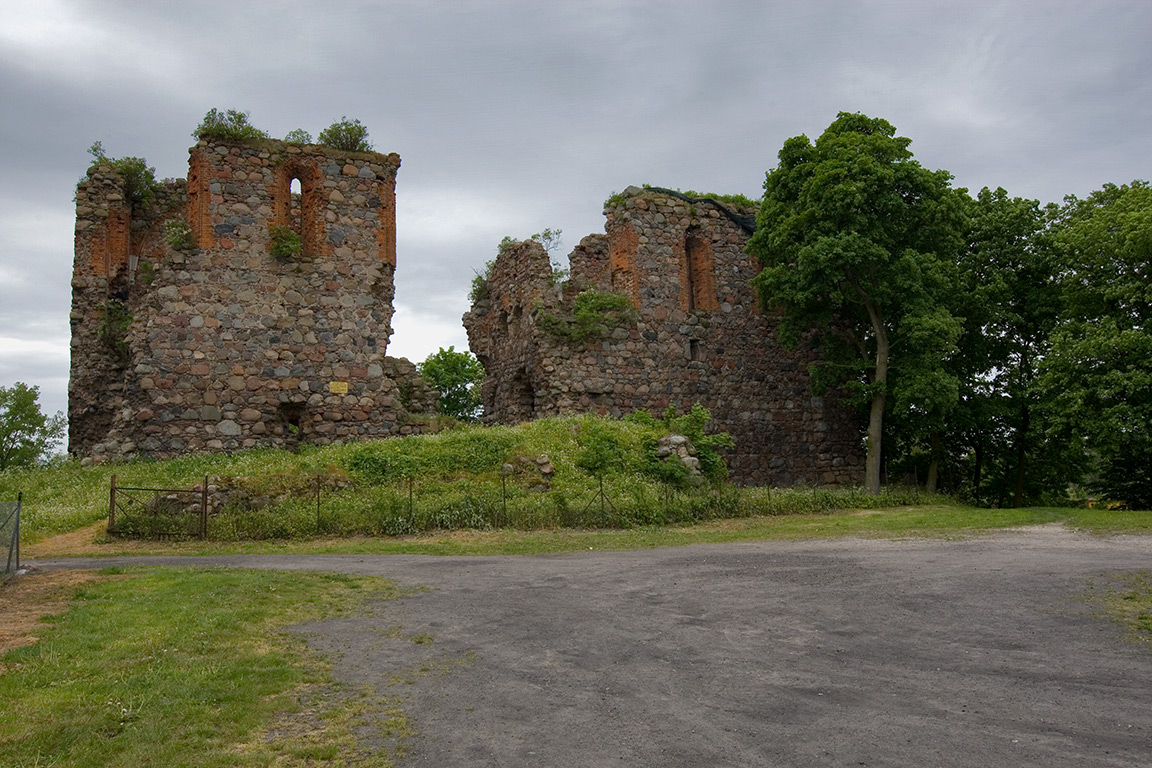
Today, the castle is largely in ruins, overshadowed by dense vegetation that obscures much of the site. Only fragments of the main walls and a barrel-vaulted cellar in the eastern part of the castle remain visible. The outer defensive walls and moat are more discernible, offering valuable insight into the castle's former defensive system. Subsurface remains of walls and foundations may still exist, awaiting archaeological exploration to uncover further details about the castle's history and architecture.
Archaeological potential and heritage value
Despite its ruined condition, Lipienek castle holds significant cultural and historical value as a testament to the Teutonic Order's military architecture and regional influence. Its location in a relatively remote area has contributed to its preservation as an archaeological site. Future excavations could reveal more about the castle's construction techniques, spatial organization, and the daily life of its inhabitants.
As a late medieval hill castle with a complex defensive system including moats, outer walls, towers, and baileys, Lipienek is an important example of Teutonic fortifications in Poland. It contributes to understanding the broader historical narrative of the Polish-Teutonic conflicts and the shifting political landscape of Central Europe during the Middle Ages.
Visiting lipienek castle today
Located off the main tourist routes, Lipienek castle offers a quiet and contemplative experience for visitors interested in medieval history and archaeology. The site is accessible but requires walking through natural terrain, often overgrown, which may limit ease of access. There are no extensive visitor facilities on site, emphasizing its status as a largely undeveloped historic ruin.
Visitors can explore the visible remains of the castle's walls and moat, while imagining the former grandeur of this Teutonic fortress. The surrounding wetlands and natural environment add to the atmosphere, providing a unique setting for those interested in Poland's medieval heritage.
Frequently asked questions (FAQ)
- How do I get to Lipienek Castle?
- Lipienek Castle is located in the village of Lipienek, Poland. You can reach it by car, as there are nearby parking facilities, or by public transport, with local buses connecting to the nearest town. It's advisable to check local transport schedules for convenient travel options.
- What is the historical significance of Lipienek Castle?
- Lipienek Castle dates back to the late medieval period and played a vital role in the regional defense system. Its architecture reflects the historical transitions in style and construction techniques over the centuries. The castle has witnessed numerous historical events, adding to its cultural importance in Polish history.
- When was Lipienek Castle built?
- Construction of Lipienek Castle began in the late 14th century and was completed in the early 15th century. It was originally built as a fortress to protect the area from invasions. Over the years, it has undergone various renovations, each adding to its historical narrative.
- Can I visit Lipienek Castle year-round?
- Yes, Lipienek Castle is open to visitors throughout the year, although the best time to visit is during the spring and summer months when guided tours and events are more frequent. During the winter, access might be limited due to weather conditions, so it’s advisable to check ahead for any seasonal changes in opening hours.
- Why is Lipienek Castle a popular tourist attraction?
- Lipienek Castle attracts visitors due to its rich history and stunning architecture. The picturesque surroundings and well-preserved structures offer a glimpse into Poland's past. Additionally, the castle often hosts cultural events, making it a vibrant part of the local community.
- Is it possible to enter the castle grounds for free?
- Visitors can access the castle grounds for free, but there may be a fee for guided tours and entry into certain areas of the castle. It's recommended to check the official website for the latest information on pricing and any special exhibitions that may have additional charges.
- What are the opening hours for Lipienek Castle?
- Lipienek Castle typically opens at 10 AM and closes at 6 PM during the tourist season. In the off-season, hours may vary, so visitors are encouraged to verify the current opening times before planning their visit. It's also wise to consider that guided tours may have specific schedules.
- Are there any nearby attractions to explore after visiting Lipienek Castle?
- Yes, there are several nearby attractions such as the beautiful Lipienek Lake, perfect for a scenic picnic, and local hiking trails offering stunning views of the countryside. Additionally, the village itself features charming architecture and local shops where visitors can experience regional culture. Exploring these sites can enhance your overall visit to the area.
- What are the ticket prices for Lipienek Castle?
- Ticket prices for Lipienek Castle vary depending on the type of tour and visitor age. Generally, adults pay a small fee, while children and seniors may receive discounted rates. For the most accurate and up-to-date pricing information, visiting the castle's official website is recommended.
Information
Loading map...
Visitor reviews
No reviews yet. Been here? Write the first review and help other travelers!
Write the first reviewVisited this castle? Share your experience
Your review helps other travelers and adds first-hand knowledge to our encyclopedia.