Lion Tower
Lion Tower, also known as Barsbay Tower (Arabic: برج برسباي, Burj Barsbay), is a prominent example of Mamluk military architecture situated at the eastern end of the Tripoli harbor in North Lebanon. Built in the 14th century during the late medieval period, this bastioned fortress played a critical role in the coastal defense system against Crusader incursions and later threats from the rising Ottoman Empire. Its strategic location allowed it to guard the harbor entrance, controlling naval access and protecting the city of Tripoli from maritime attacks.
Historical context and strategic significance
The construction of Lion Tower occurred during a turbulent era marked by frequent conflicts between the Mamluks, Crusaders, and emerging Ottoman forces. The Mamluks, who ruled Egypt and parts of the Levant from the 13th to the early 16th century, invested heavily in fortifying key coastal cities like Tripoli to secure trade routes and military dominance in the eastern Mediterranean. Lion Tower was part of a broader network of fortifications designed to reinforce Tripoli's defenses, complementing the city's larger citadel and other smaller towers along the coast.
This fortress exemplifies the Mamluks' military engineering advances, particularly in adapting to evolving siege technologies and naval warfare. Its presence at the harbor's edge enabled early detection and deterrence of enemy ships, contributing to the city's resilience during prolonged periods of siege and conflict.
Architectural features and design elements
Bastioned fortress layout
Lion Tower is classified as a bastioned fortress, characterized by its robust defensive structures including thick walls and angled bastions designed to withstand artillery fire and provide overlapping fields of fire. The tower's compact form was optimized for both land and sea defense, allowing defenders to repel attackers approaching from multiple directions.
Distinctive Mamluk stonework and decorations
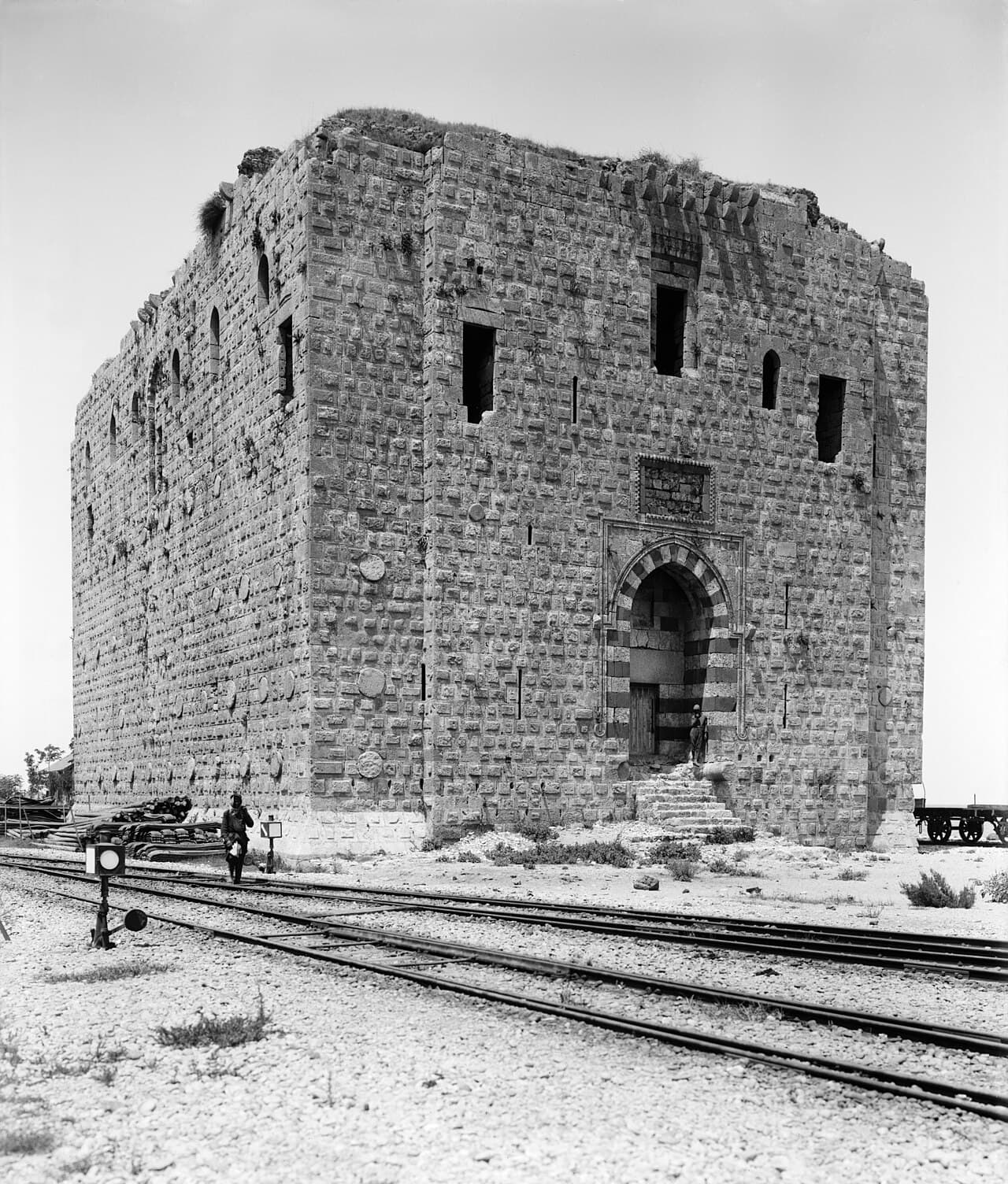
The tower prominently features ablaq masonry, a hallmark of Mamluk architecture, consisting of alternating black-and-white ashlar stone stripes that create a striking visual effect. This decorative technique not only enhanced the tower's aesthetic appeal but also demonstrated the Mamluks' mastery of stone craftsmanship.
Embedded within the tower's walls are horizontally placed repurposed Roman granite columns, a practical reinforcement method that also reflects the region's layered historical influences. These columns contribute to the tower's structural integrity and provide a tangible link to the area's ancient past.
Defensive architectural elements
The base of Lion Tower features a sloping talus, an angled stone foundation designed to deflect projectiles and prevent undermining of the walls. This feature is typical of military architecture aimed at resisting siege engines and artillery bombardment. Additionally, the tower is equipped with arrowslits that allowed archers to defend the structure while remaining protected.
Decorative relief moldings and remnants of heraldic symbols on the tower's façade hint at the identity of its patrons and the political significance of the fortress. These artistic details provide insight into the cultural and symbolic roles the tower played beyond its military function.
Preservation and current condition
Today, Lion Tower remains a well-preserved example of Mamluk bastioned fortresses. Despite the passage of centuries and the region's complex history, the tower retains much of its original stonework and architectural features. Its survival offers valuable insight into medieval military architecture and the defensive strategies employed in the eastern Mediterranean.
The tower is accessible to visitors interested in exploring Lebanon's rich historical heritage and provides a tangible connection to the Mamluk period's architectural and military legacy.
Architectural and cultural heritage significance
Lion Tower stands as a significant monument within the context of medieval Levantine fortifications. Its combination of functional military design and decorative stonework exemplifies the dual priorities of defense and representation in Mamluk architecture. The use of ablaq masonry and incorporation of ancient Roman elements highlight the cultural syncretism characteristic of the region's historical architecture.
As part of Tripoli's coastal defense network, Lion Tower contributes to understanding the broader geopolitical dynamics of the late medieval eastern Mediterranean, including the interactions between Crusader states, Mamluk rulers, and the Ottoman Empire.
Frequently asked questions (FAQ)
- How do I visit Lion Tower in Tripoli?
- Lion Tower is located at the eastern end of Tripoli harbor in North Lebanon. Visitors can reach it by local transportation or taxi from the city center. It is advisable to check local opening hours before planning a visit.
- What is the historical significance of Lion Tower?
- Lion Tower was built in the 14th century as part of the Mamluk defensive network protecting Tripoli from Crusader and Ottoman threats. It served as a strategic coastal fortress guarding the harbor entrance.
- What are the key architectural features of Lion Tower?
- The tower features distinctive Mamluk ablaq masonry, a sloping talus base for defense, arrowslits for archers, and repurposed Roman granite columns embedded in its walls.
- Is Lion Tower accessible to visitors?
- Yes, Lion Tower is accessible to visitors interested in Lebanon's medieval military architecture. However, accessibility may vary, so checking current visitor information is recommended.
- When was Lion Tower built?
- Lion Tower was constructed in the 14th century during the late medieval period under Mamluk rule.
Photo gallery

Photo by Tripoli_Tower_of_Lions_unedited.tif: Photo dept., American Colony (Jerusalem) derivative work: Chick Bowen (talk)•Public domain
Information
Loading map...
Visitor reviews
No reviews yet. Been here? Write the first review and help other travelers!
Write the first reviewVisited this castle? Share your experience
Your review helps other travelers and adds first-hand knowledge to our encyclopedia.