Citadel of Tripoli
The Citadel of Tripoli in Lebanon is a monumental hill castle with a rich history spanning over thirteen centuries. Founded in 636 CE by the early Islamic military commander Suphian ibn Mujid al-Azdi, the fortress initially served as a strategic military post overseeing key trade routes and the nearby Abu Ali River. Its location was chosen for both defense and control of the surrounding region, making it a vital stronghold through successive periods of rule.
During the 11th century, the Fatimid dynasty took control of the citadel, enhancing its religious and administrative significance by constructing a mosque within its walls. This addition reflected the fortress's evolving role not only as a military bastion but also as a center for Islamic worship and governance.
The citadel's prominence further increased during the First Crusade when, in 1103, Raymond IV, Count of Toulouse, captured Tripoli and the fortress, establishing the County of Tripoli. He expanded the fortress on the foundations of earlier Muslim structures and renamed it Mons Peregrinus ("Pilgrim's Mountain"). Raymond IV's burial within the citadel underscored its importance as a Crusader stronghold. The Crusader period left a lasting architectural and cultural imprint, although much of the original Crusader fabric was later altered or destroyed.
In 1289, the Mamluks seized Tripoli and partially destroyed the fortress. After nearly two decades of abandonment, restoration efforts began in 1307 under Saif al-Din Asandimur Kurji, who reinforced the defenses and installed a garrison. The citadel also became a regional administrative hub, notably under Sultan al-Kamil Shaaban in 1345, who used it as a center for land tax collection, a role that led to local unrest.
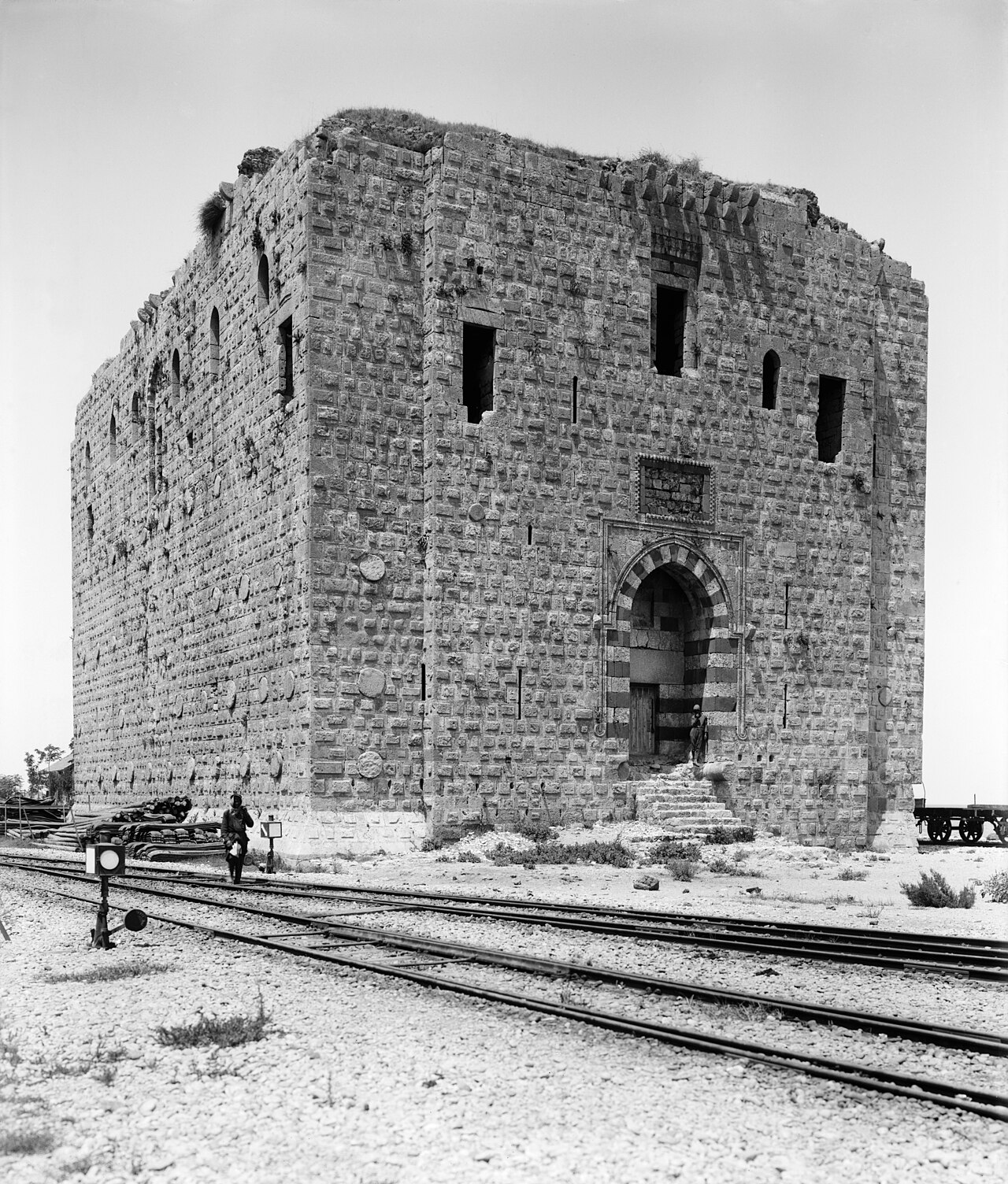
The Ottoman Empire took control in 1516, initiating significant reconstruction under Sultan Selim I and completing it during the reign of Suleiman the Magnificent in 1521. This rebuilding gave the fortress its present imposing form, commemorated by an inscription at the entrance. Ottoman modifications adapted the citadel for artillery warfare, enlarging gun ports and demolishing many Crusader structures except for a few tombs.
In the early 19th century, the governor Mustafa Agha Barbar undertook further renovations, maintaining the fortress's military and administrative functions. Over time, the citadel transitioned from a purely defensive fortress to a cultural and historical site, currently housing the Northern Lebanon & Akkar Museum, which showcases archaeological collections from the region.
Architectural features and layout
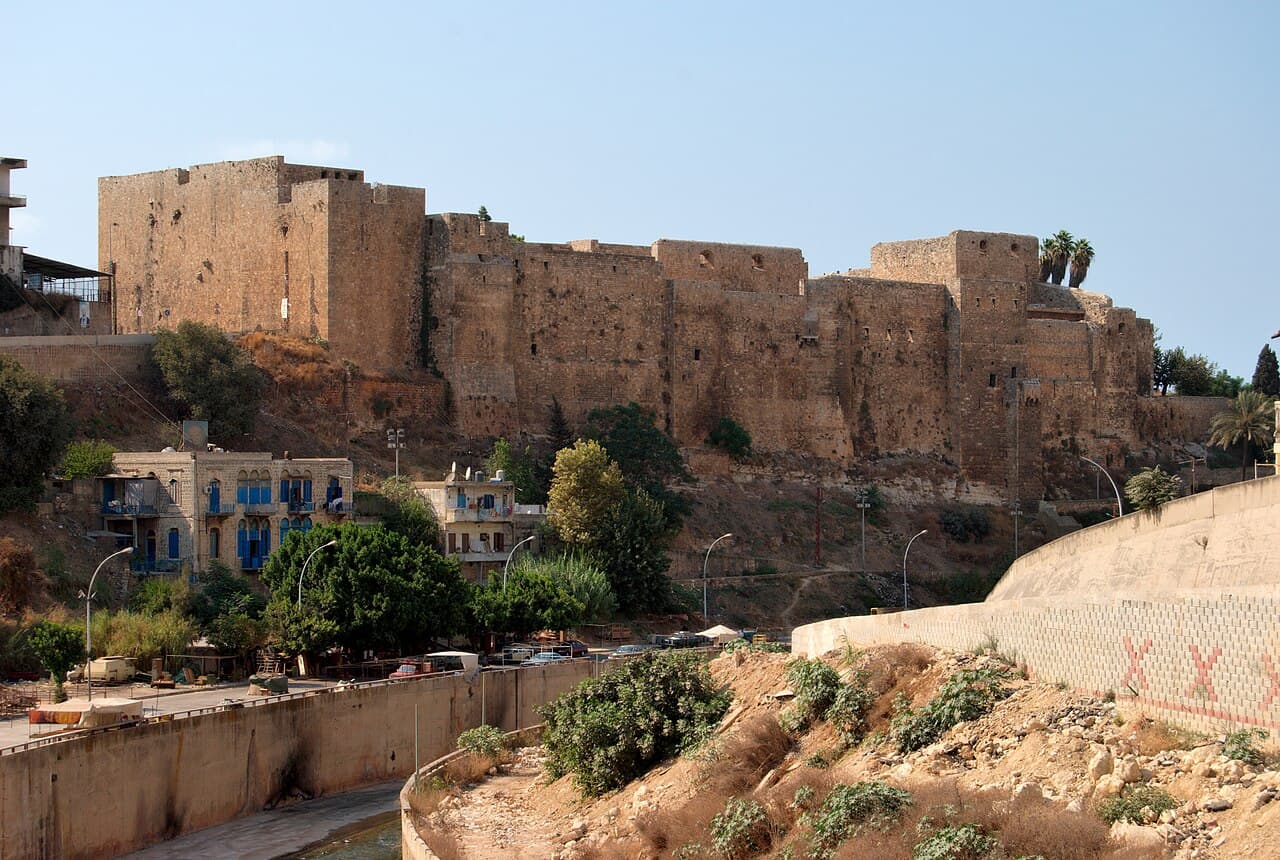
The citadel occupies an octagonal plan, measuring approximately 130 to 136 meters in length and 70 meters in width. Constructed primarily from tightly fitted sandstone blocks, the walls feature large stones measuring around 90 by 40 centimeters and smaller ones about 25 by 18 centimeters. Some blocks bear carved symbols dating back to the Crusader period, highlighting the fortress's layered history.
The fortress rises to four stories and contains nearly one hundred residential rooms, alongside essential facilities such as baths, prayer spaces, mosques, a prison, stables, meeting halls, wells, and water storage installations. This complex layout reflects the citadel's multifunctional role as a military, religious, and administrative center.
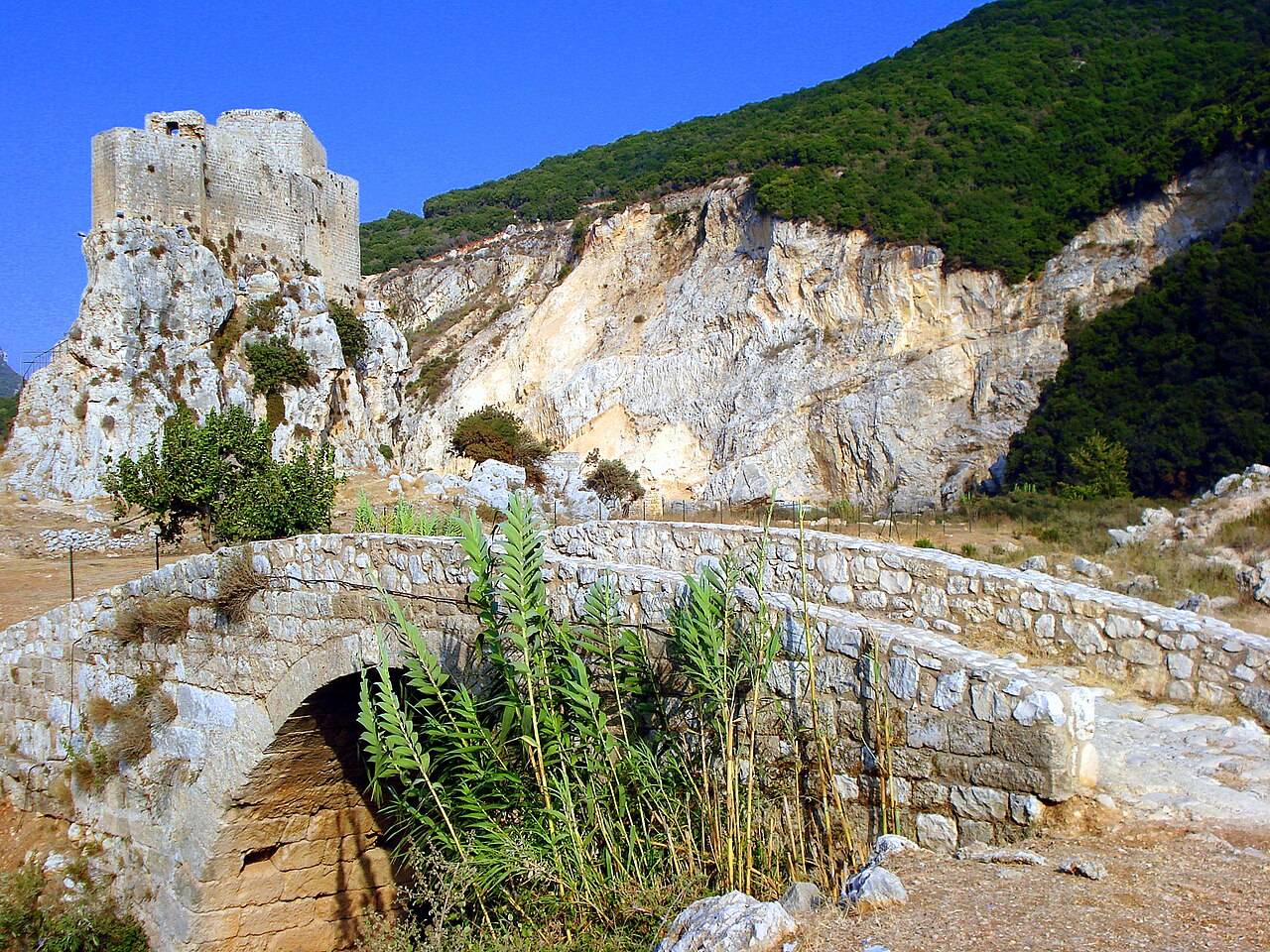
The defensive walls are robust, approximately two meters thick, and reinforced by multiple towers and about ten gates from various historical periods. A section of the wall is protected by a moat, crossed by a bridge, enhancing the fortress's defensive capabilities. The citadel commands views over the Abu Ali River and controls historic land routes to Beirut, Homs, and the harbor of Tripoli, underscoring its strategic importance.
Fortifications and defensive structures
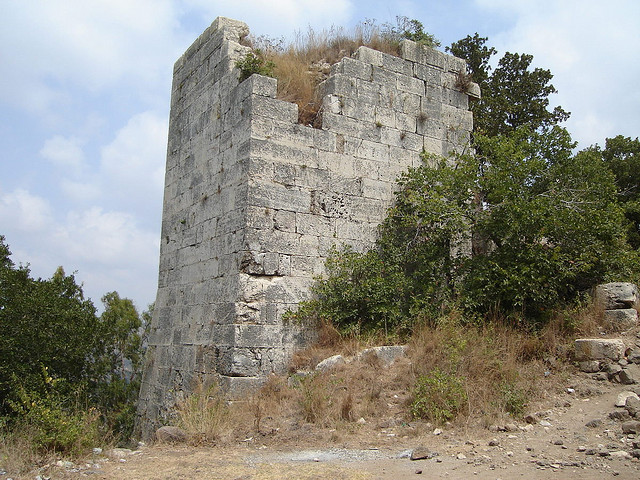
The citadel's fortifications include both inner and outer defenses. The outer perimeter features a rock-cut moat over 70 meters long and between two and three meters deep. This perimeter is strengthened by approximately twenty-five towers and bastions, some restored during the Ottoman reconstruction in 1521. These towers can reach heights of up to nineteen meters, with wall thicknesses ranging from six to seven meters.
Defensive openings include over twenty cannon ports designed for artillery use, alongside more than seventy arrow slits and machicolations—openings used for dropping objects on attackers. These features illustrate the fortress's evolution to meet the demands of changing military technology.
Within the fortress, two small, nearly concealed gates exist near towers numbered twelve and twenty-two. Local legends speak of secret underground passages linked to these gates, possibly serving as escape routes, though such passages remain part of the citadel's lore rather than confirmed facts.
Water management systems
Water supply was critical for the citadel's defense during sieges. A large cistern is located in tower seven, with two additional cisterns near the main tower. These were supplemented by a water wheel (noria) that drew water from the adjacent river, ensuring a reliable water source throughout prolonged conflicts.
Historical inscriptions and cultural significance
Several inscriptions contribute to the citadel's historical identity. Arabic inscriptions are found above the entrance to a shrine near tower thirteen, while an Ottoman inscription at the main gate commemorates the 1521 restoration under Suleiman the Magnificent. These texts provide valuable insights into the fortress's construction phases and patronage.
Although most Crusader-era buildings have been demolished or heavily altered by Ottoman modifications, a few Crusader tombs remain within the courtyard. These tombs serve as tangible links to the citadel's multifaceted past, reflecting its role as a military, religious, and administrative center across different civilizations.
Today, the Citadel of Tripoli stands as a layered architectural complex embodying its long history. It represents a palimpsest of military architecture, combining elements from early Islamic, Crusader, Mamluk, and Ottoman periods. The fortress's current role as a museum and cultural site allows visitors to explore this rich heritage in northern Lebanon.
Frequently asked questions (FAQ)
- How do I get to the Citadel of Tripoli?
- The Citadel of Tripoli is easily accessible by car or public transportation from various parts of the city. If you are traveling from Beirut, consider taking a bus or taxi for a more direct route. There are also local taxis available to take you to the citadel directly.
- What is the historical significance of the Citadel of Tripoli?
- The Citadel of Tripoli, built by the Crusaders in the 12th century, is a remarkable example of medieval military architecture. It has served various purposes throughout its history, including as a fortress and a royal residence. Its strategic location has made it a key player in the region's historical conflicts.
- When was the Citadel of Tripoli constructed?
- The construction of the Citadel of Tripoli began in the 1100s by the Crusaders and continued to evolve over the centuries. It showcases various architectural styles due to the different cultures that occupied it, including Crusader, Mamluk, and Ottoman influences. Its long history makes it a fascinating site for visitors interested in medieval history.
- Can I take photographs inside the Citadel of Tripoli?
- Yes, visitors are welcome to take photographs within the Citadel of Tripoli. The stunning views, unique architecture, and historical artifacts provide excellent opportunities for photography. However, it is advisable to respect any signage regarding restricted areas.
- Why is the Citadel of Tripoli considered an architectural marvel?
- The Citadel of Tripoli is renowned for its impressive fortifications and intricate design, showcasing a blend of various architectural styles. Its massive stone walls, towers, and unique layout reflect the military ingenuity of the period. The citadel's preservation allows visitors to appreciate its historical and architectural significance.
- Is it possible to explore the Citadel of Tripoli on my own?
- Yes, visitors can explore the Citadel of Tripoli at their own pace. However, guided tours are also available for those seeking in-depth knowledge about its history and architecture. This flexibility allows each visitor to tailor their experience according to their interests.
- What are the opening hours for the Citadel of Tripoli?
- The Citadel of Tripoli is typically open to visitors from 9 AM to 5 PM daily, though hours may vary on holidays. It is recommended to check ahead for any changes to the schedule. Arriving early can help you avoid crowds and enjoy a more peaceful visit.
- What are the ticket prices for the Citadel of Tripoli?
- Admission to the Citadel of Tripoli is generally affordable, making it accessible to a wide range of visitors. Ticket prices may vary for locals and tourists, so it's advisable to confirm current rates upon arrival. Discounts for students and groups may also be available.
- What are some nearby attractions I can visit after the Citadel of Tripoli?
- After visiting the Citadel of Tripoli, you can explore the nearby Old City of Tripoli, known for its charming streets and historic architecture. Other attractions include the Al-Mina archaeological site and the beautiful Tripoli souks. Each of these sites offers a unique insight into the rich culture and history of the region.
Photo gallery

Information
Loading map...
Visitor reviews
No reviews yet. Been here? Write the first review and help other travelers!
Write the first reviewVisited this castle? Share your experience
Your review helps other travelers and adds first-hand knowledge to our encyclopedia.