Lion Gate
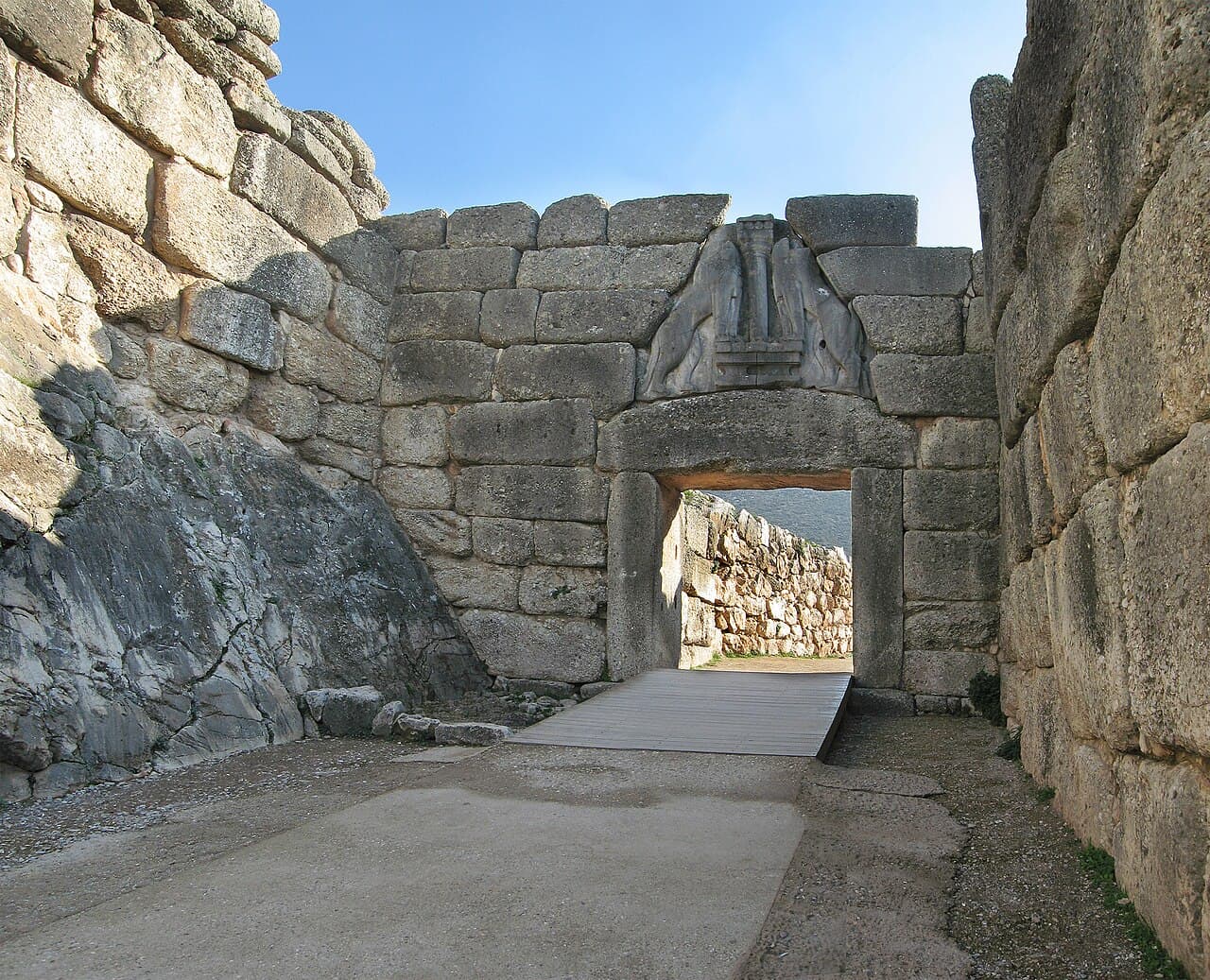
The Lion Gate (Greek: Πύλη των Λεόντων) serves as the monumental main entrance to the ancient citadel of Mycenae, located in Southern Greece. Constructed around 1250 BC during the Late Bronze Age, this gate is an outstanding example of Mycenaean architecture and art. Positioned on the northwestern side of the acropolis, the gate is renowned for its heraldic relief sculpture of two lions or lionesses above the entrance, which gives the gate its modern name.
Architectural significance and construction details
The Lion Gate is the only surviving monumental sculpture from the Mycenaean civilization and stands as the largest known sculpture from the Bronze Age Aegean. It is constructed using a post-and-lintel system with massive limestone blocks, including a massive lintel stone weighing approximately 20 tons. The relief of the lions is carved on a triangular limestone slab placed in the relieving triangle above the lintel, designed to reduce the weight on the lintel and prevent structural damage.
The gate's design reflects a sophisticated understanding of engineering and symbolism. The two lions or lionesses are depicted in a heraldic pose, standing on either side of a central column, which some scholars interpret as a symbol of royal power or divine protection. This iconography is unique in Bronze Age Greece and is the only known monumental relief sculpture from this period that has survived without being buried underground.
Historical context and cultural importance
The Lion Gate was built during the height of Mycenaean civilization, a powerful culture that flourished in Greece during the Late Bronze Age. Mycenae was a major center of political and military power, and the gate served as a fortified entrance to the citadel, emphasizing the strength and prestige of its rulers.
Notably, the gate is a rare surviving example of Mycenaean monumental art and architecture, providing valuable insights into the society, religious beliefs, and artistic conventions of the time. The presence of lions in the relief also attests to the historical existence of lions in Europe and Greece before their extinction in the region during later antiquity.
Symbolism and iconography of the lions
The lions depicted on the gate are believed to symbolize power, protection, and royal authority. The central column between the lions may represent a deity or a palace column, reinforcing the idea that the gate was both a physical and symbolic threshold to the seat of power. The heraldic arrangement of the lions is unique in ancient Greek art and serves as a potent emblem of Mycenaean sovereignty.
Preservation and archaeological significance
The Lion Gate remains remarkably well preserved, considering its age of over three millennia. It is one of the most important archaeological monuments in Greece and continues to attract scholars and tourists alike. The gate was known in classical antiquity and described in ancient literature, making it one of the few Bronze Age monuments continuously recognized throughout history.
Its survival provides a direct link to the Mycenaean civilization and offers an invaluable glimpse into Bronze Age fortification techniques, artistic expression, and cultural symbolism. The gate's enduring presence highlights the advanced engineering skills and artistic achievements of the Mycenaeans.
Location and visitor information
The Lion Gate is located at the archaeological site of Mycenae in the Peloponnese region of Greece. Visitors to the site can explore the gate along with other significant Mycenaean structures such as the royal tombs and the palace ruins. The site is accessible to the public and is a key destination for those interested in ancient Greek history and archaeology.
Frequently asked questions (FAQ)
- What is the Lion Gate and why is it significant?
- The Lion Gate is the main entrance to the ancient citadel of Mycenae, built around 1250 BC. It is significant for its monumental relief sculpture of two lions and is the largest surviving Bronze Age sculpture in Greece.
- When was the Lion Gate constructed?
- The Lion Gate was constructed during the Late Bronze Age, around 1250 BC, making it over 3,000 years old.
- Can visitors see the Lion Gate today?
- Yes, the Lion Gate is well preserved and accessible to visitors at the archaeological site of Mycenae in the Peloponnese region of Greece.
- What architectural techniques were used in building the Lion Gate?
- The gate uses a post-and-lintel system with massive limestone blocks and a relieving triangle above the lintel to reduce weight. The lions are carved on a triangular slab placed in this relieving triangle.
- Why are lions depicted on the gate?
- The lions symbolize power, protection, and royal authority. Their heraldic pose flanking a central column likely represents divine protection or the seat of power.
Photo gallery

Information
Current owner
Greek Ministry of Culture
Loading map...
Visitor reviews
No reviews yet. Been here? Write the first review and help other travelers!
Write the first reviewVisited this castle? Share your experience
Your review helps other travelers and adds first-hand knowledge to our encyclopedia.