Acronauplia
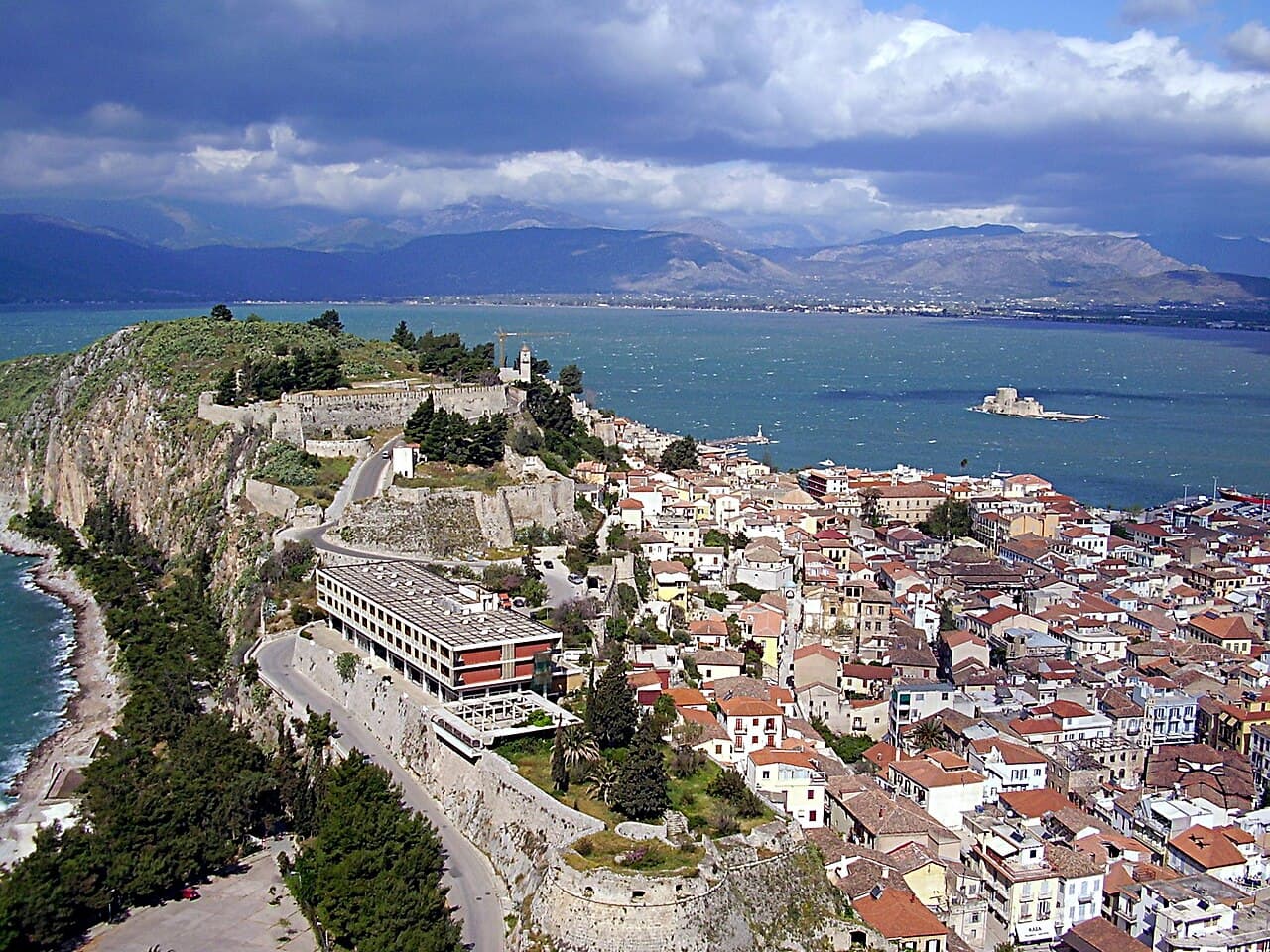
Acronauplia is the historic citadel and the oldest part of the city of Nafplion in the Peloponnese region of Greece. Its name derives from the Greek words "akro" meaning "highest" or "outermost" and "Nauplia," the ancient name of the city, reflecting its position as a fortified acropolis overlooking the surrounding area. The site has a long history of occupation and fortification, dating back to antiquity, making it a significant landmark in Greek military architecture.
Historical background and strategic importance
The Acronauplia fortress originally served as an independent town until the 13th century, when the arrival of the Venetians and the Franks led to its integration into the expanding fortifications of Nafplion. Its elevated position provided a commanding view over the Argolic Gulf and the surrounding plains, making it a key defensive stronghold throughout various historical periods.
During the Byzantine era, the fortress was an important military and administrative center. The Venetians, who controlled Nafplion in several phases between the 13th and 17th centuries, significantly enhanced the fortifications, adapting them to the evolving needs of artillery warfare. The fortress was also used by the Ottoman Turks during their occupation of the region, who referred to it as Iç Kale, meaning "Inner Castle" in Turkish.
Architectural features and fortifications
The fortress is classified as a bastioned fortress, characterized by its angular bastions designed to resist cannon fire and provide overlapping fields of defensive fire. The walls of Acronauplia exhibit a complex layering of construction phases, with remnants from the ancient, Byzantine, Venetian, and Ottoman periods. The fortifications include thick stone walls, bastions, ramparts, and gatehouses that reflect the military architectural styles of their respective eras.
The layout of the fortress follows the contours of the rocky hill on which it stands, maximizing natural defensive advantages. The bastions are strategically positioned to cover all approaches, and the walls incorporate embrasures and loopholes for muskets and cannons. The fortress also contains internal courtyards and chambers that served various military and administrative functions.
Use as a prison and modern transformation
In later centuries, particularly under the modern Greek state, parts of the fortress were repurposed as a prison. This use continued until the mid-20th century. Recognizing the site's potential for tourism due to its panoramic views over Nafplion and the Argolic Gulf, the Greek government undertook a transformation of the fortress area. A hotel complex was constructed within the fortress grounds, which remains operational today, blending historical preservation with modern hospitality.
Cultural significance and tourism today
Today, Acronauplia stands as a prominent cultural and historical monument in Nafplion. Visitors can explore the fortress walls, bastions, and remnants of its varied architectural heritage. The site offers sweeping views of the city and sea, making it a popular destination for tourists interested in history, architecture, and scenic landscapes.
The fortress is often included in guided tours of Nafplion and the Peloponnese, highlighting its role in the region's military history and its transformation from a medieval stronghold to a modern tourist attraction. Preservation efforts continue to maintain the structural integrity of the fortress while accommodating visitors.
Frequently asked questions (FAQ)
- What is the historical significance of Acronauplia?
- Acronauplia is the oldest part of Nafplion, serving as a fortress since antiquity and playing key roles under Byzantine, Venetian, and Ottoman control.
- Can visitors explore Acronauplia today?
- Yes, visitors can explore the fortress walls, bastions, and courtyards, enjoying panoramic views of Nafplion and the Argolic Gulf.
- What architectural style characterizes Acronauplia?
- Acronauplia is a bastioned fortress with fortifications from multiple periods, including Byzantine and Venetian military architecture.
- Was Acronauplia ever used for purposes other than defense?
- Yes, in modern times parts of Acronauplia were used as a prison before being converted into a hotel complex to support tourism.
Photo gallery

Photo by Andreas Tille This image is the original work of Andreas Tille. More images can be found at his image gallery, with this image being hosted at http://people.debian.org/~tille/nafplion/02_nafplion/castles/p4180061.html.•CC BY-SA 3.0
Information
Current owner
Greek government
Loading map...
Visitor reviews
No reviews yet. Been here? Write the first review and help other travelers!
Write the first reviewVisited this castle? Share your experience
Your review helps other travelers and adds first-hand knowledge to our encyclopedia.