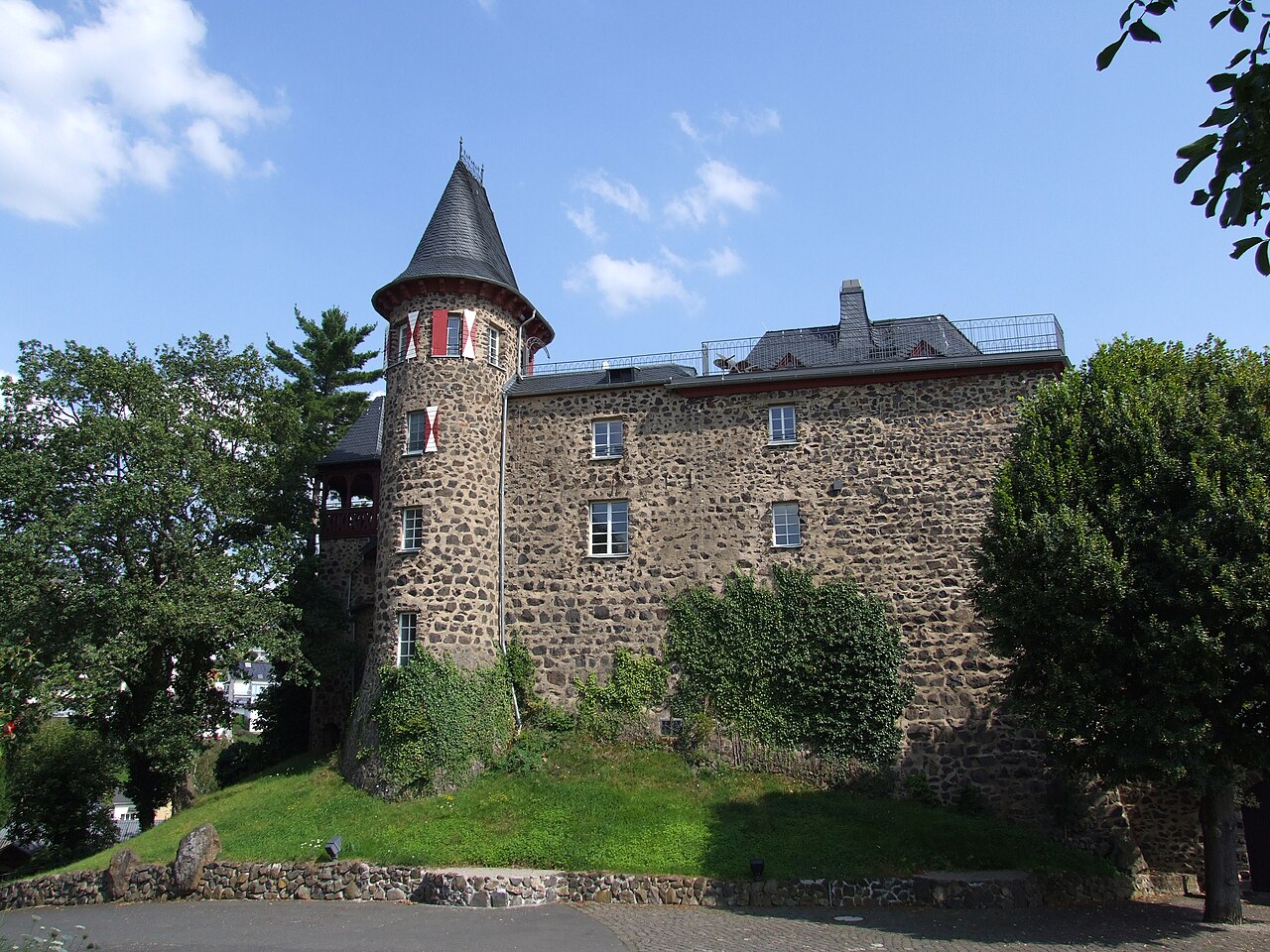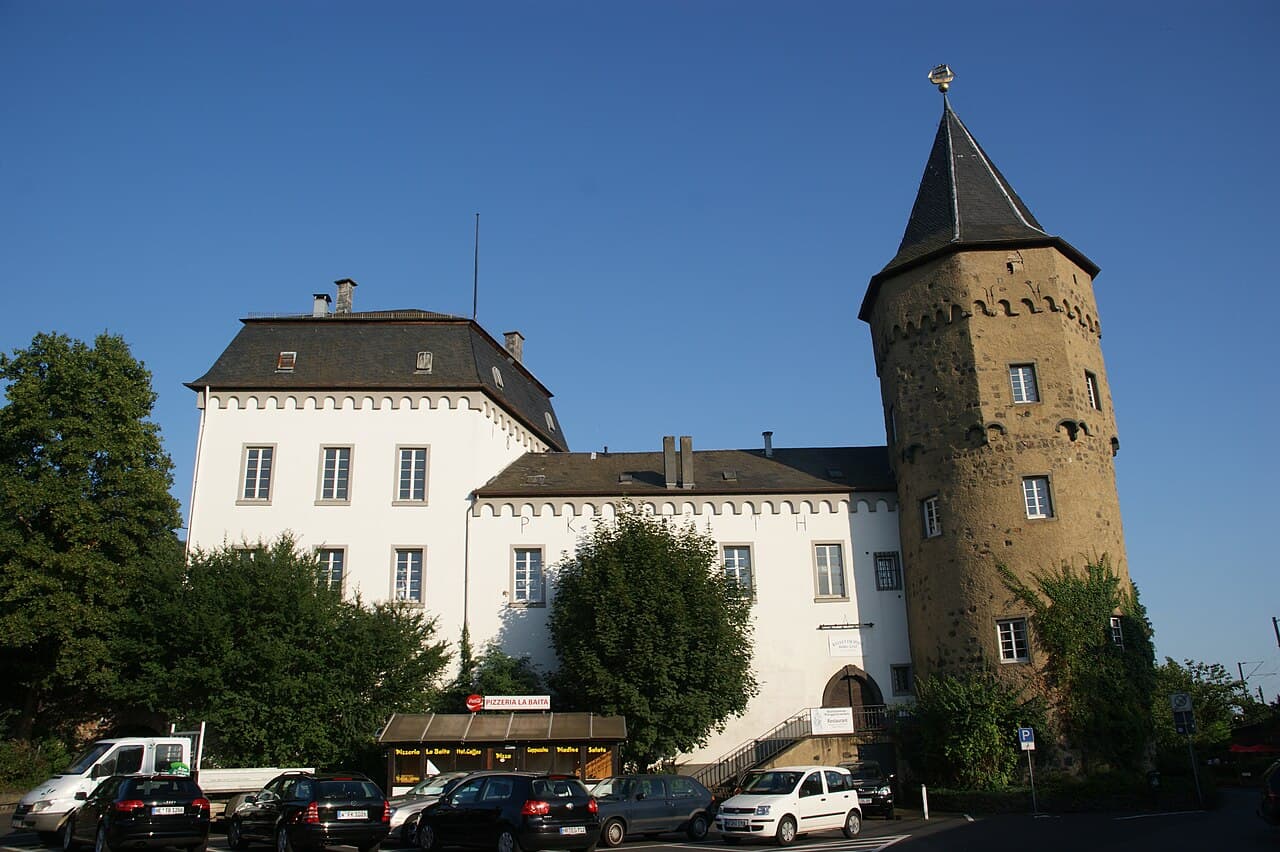
Linz Castle
Linz Castle, located in the historic town of Linz am Rhein, Germany, is a significant example of a late medieval hill castle constructed between 1364 and 1368. Commissioned by Heinrich von Virneburg, the then archbishop of Cologne, the castle's primary purpose was to serve as a customs fortress to collect tolls from river traffic on the Rhine. Its strategic position atop a hill overlooking the river allowed it to control and monitor commerce effectively, reflecting the economic and military importance of such fortifications during the 14th century.
Historical background and construction
The construction of Linz Castle began in 1364 under the direction of Archbishop Heinrich von Virneburg, who sought to consolidate control over the Rhine trade routes. The castle was built as a robust defensive structure with thick stone walls and a commanding presence, typical of late medieval fortifications. The design included a prominent keep and several defensive towers, enabling effective surveillance and defense against potential attackers.
Throughout its history, the castle played a vital role in regional conflicts and commerce. In 1475, during the Neuss War, it was besieged and suffered significant damage, demonstrating its military relevance in the turbulent political landscape of the time. The castle was repaired and maintained over the centuries, adapting to changing needs.
Architectural features and layout
Linz Castle exemplifies the architectural characteristics of a hill castle with its elevated position providing natural defense advantages. The castle complex includes a Great Knights' Hall, which historically served as a gathering and ceremonial space for the castle's occupants. The tower room and the inner castle courtyard offer insights into the daily life and defensive strategies employed.
The castle also features a dungeon that now houses a museum, preserving the site's historical narrative. An intriguing addition to the castle's attractions is the Roman glass works, showcasing ancient craftsmanship and linking the site to broader historical contexts beyond the medieval period.
Later uses and preservation
Following its medieval military and economic functions, Linz Castle underwent several transformations. From 1811 to 1851, it was repurposed as a prison, reflecting changes in its strategic importance after the town of Linz am Rhein was sold to Prussia in 1820. The castle's role as a prison was revived during the Second World War between 1942 and 1945.
Since 1985, the castle has been under private ownership. Extensive refurbishment has restored much of its historical character, making it accessible to the public once again. Today, it functions as a cultural venue, hosting medieval-themed catering events in the Great Knights' Hall, the tower room, and the inner castle. These events provide visitors with immersive experiences that highlight the castle's rich history and architectural grandeur.
Cultural significance and tourism
Linz Castle is a prominent tourist attraction in Linz am Rhein, drawing visitors interested in medieval architecture, history, and the scenic beauty of the Rhine valley. Its well-preserved late medieval structures and the integration of museum exhibits make it an educational destination. The castle's location within the town center enhances its accessibility and importance as a cultural landmark.
Visitors can explore the castle's various rooms and exhibitions, gaining insight into the economic and military roles it played over centuries. The combination of historical authenticity and modern restoration efforts ensures that Linz Castle remains a vital link to Germany's medieval past.
Frequently asked questions (FAQ)
- What is the historical significance of Linz Castle?
- Linz Castle was built in the 14th century by Archbishop Heinrich von Virneburg to collect tolls from river traffic on the Rhine, playing a key role in regional commerce and defense.
- Can I visit Linz Castle today?
- Yes, Linz Castle is open to the public as a cultural venue with museum exhibits and medieval-themed catering events in several historic rooms.
- When was Linz Castle built and by whom?
- The castle was constructed between 1364 and 1368 under the direction of Archbishop Heinrich von Virneburg of Cologne.
- What architectural features can I see at Linz Castle?
- Visitors can explore the Great Knights' Hall, tower room, inner courtyard, and the dungeon museum, which highlight the castle's late medieval defensive and residential design.
- Why was Linz Castle used as a prison?
- After the town of Linz am Rhein was sold to Prussia in 1820, the castle's military importance declined, leading to its use as a prison from 1811 to 1851 and again during World War II.
Photo gallery

Information
Current owner
Private owner
Loading map...
Visitor reviews
No reviews yet. Been here? Write the first review and help other travelers!
Write the first reviewVisited this castle? Share your experience
Your review helps other travelers and adds first-hand knowledge to our encyclopedia.