Linlithgow Palace
Linlithgow Palace stands as a significant historical site located in the town of Linlithgow, West Lothian, Scotland, approximately 15 miles (24 km) west of Edinburgh. This royal residence was among the principal homes of the Scottish monarchs during the 15th and 16th centuries, reflecting the architectural and political prominence of Scotland's monarchy in the late medieval period.
Early origins and medieval foundations
The site of Linlithgow Palace originally hosted a royal manor dating back to the 12th century. This early structure was primarily a fortified manor house, serving as a royal retreat and administrative center. The manor evolved over time, reflecting the changing needs and aspirations of the Scottish crown. By the 14th century, the site had begun to develop into a more substantial palace complex, incorporating defensive elements characteristic of medieval fortifications.
Architectural development during the high medieval period
Major construction and expansion of Linlithgow Palace took place during the 15th century, a period that saw the transformation of the site into a grand royal residence. The palace was built in the late medieval architectural style, featuring a rectangular courtyard surrounded by imposing walls and corner towers. The design included a great hall, private chambers, chapels, and service buildings arranged around the courtyard, demonstrating the multifunctional nature of royal palaces as both domestic and ceremonial spaces.
Key architectural features
- The great hall: Served as the main ceremonial space and was one of the largest rooms in the palace, used for banquets and official functions.
- Royal chambers: Private living quarters for the monarch and court, often richly decorated and strategically located for privacy and security.
- Chapel royal: A dedicated religious space within the palace complex, reflecting the importance of faith in medieval royal life.
- Defensive walls and towers: Provided protection and symbolized royal authority, although the palace was more a residence than a fortress.
Historical significance and royal connections
Linlithgow Palace was closely associated with several notable Scottish monarchs. It was the birthplace of Mary, Queen of Scots in 1542, one of Scotland's most famous and tragic rulers. The palace was frequently used as a royal residence by the Stewart dynasty, serving both as a home and a center for governance.
During the 16th century, the palace was a hub of political activity and court life. However, following the Union of the Crowns in 1603, when James VI of Scotland also became James I of England and moved his court to London, Linlithgow Palace's importance declined. It was maintained for some time but gradually fell into disuse.
Decline and destruction
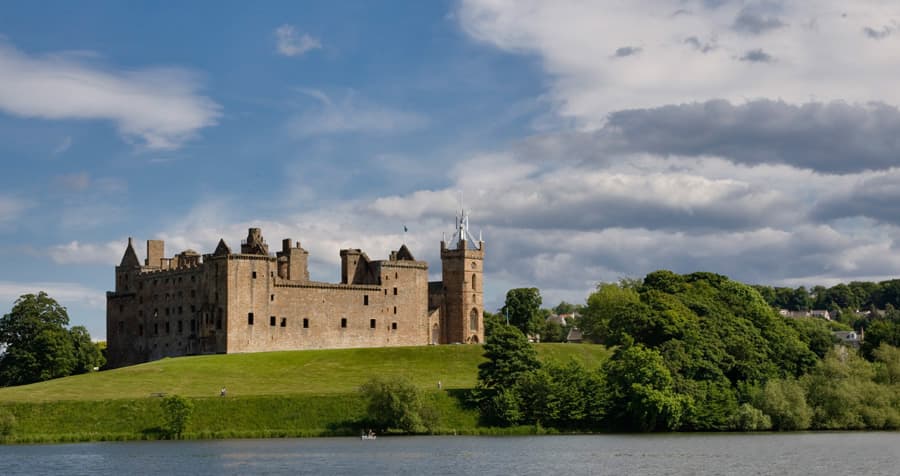
In the early 18th century, the palace suffered significant damage. It was severely burned in 1746 during the Jacobite rising, an event that led to its current state as ruins. The fire gutted the main buildings, leaving the stone walls and towers standing but the interiors lost.
Since then, Linlithgow Palace has remained a ruin but has been preserved as a historic monument. It is currently managed by Historic Environment Scotland, which ensures its conservation and facilitates public access.
Visitor experience and cultural heritage
Today, Linlithgow Palace is a popular tourist destination. Visitors can explore the extensive ruins, including the surviving walls, towers, and the layout of the former palace. Interpretive displays provide insight into the palace's history, architecture, and role in Scottish royal life.
The palace's location near Edinburgh makes it accessible for day trips, and it is often included in tours focusing on Scotland's royal heritage. The site also hosts occasional cultural events and educational programs that highlight its historical significance.
Preservation efforts
Efforts to stabilize and maintain the ruins have been ongoing to prevent further deterioration. These include structural reinforcements and careful management of visitor impact. The site is protected as a scheduled ancient monument, underscoring its importance to Scotland's cultural and architectural history.
Frequently asked questions (FAQ)
- How do I get to Linlithgow Palace?
- Linlithgow Palace is conveniently located in the town of Linlithgow, accessible by car, train, or bus. If traveling by train, the station is just a short walk from the palace. There are also several parking options nearby for those driving.
- What is the historical significance of Linlithgow Palace?
- Linlithgow Palace was once a royal residence for Scottish monarchs, notably Mary, Queen of Scots, who was born here in 1542. The palace has a rich history, serving as a center of power and influence during the 15th and 16th centuries. Its impressive architecture and historical events make it a key site in Scotland's royal heritage.
- When was Linlithgow Palace built?
- Linlithgow Palace was primarily constructed in the late 15th century, with significant expansions and renovations made over the next century. The palace showcases a blend of Renaissance and medieval architectural styles. It reflects the grandeur of Scottish royalty during its peak.
- Can I visit Linlithgow Palace year-round?
- Yes, Linlithgow Palace is open to visitors year-round, although opening hours may vary by season. It’s advisable to check the official website for the most current visiting hours and any seasonal closures. Planning your visit ahead of time ensures a smooth experience.
- Why is Linlithgow Palace a popular tourist attraction?
- Linlithgow Palace attracts visitors due to its stunning architecture, rich history, and beautiful setting by the loch. The palace offers insight into the lives of Scottish royalty and serves as a picturesque backdrop for photography. Its proximity to other attractions in the area also enhances its appeal.
- Is it possible to take guided tours of Linlithgow Palace?
- Yes, guided tours are available at Linlithgow Palace, providing visitors with a deeper understanding of its history and architecture. These tours are often led by knowledgeable guides who share fascinating stories and facts about the site. It's recommended to check the schedule in advance to secure your spot.
- What are the ticket prices for Linlithgow Palace?
- Tickets for Linlithgow Palace are reasonably priced, with discounts available for children, seniors, and families. Entry fees contribute to the maintenance and preservation of this historic site. Detailed pricing information can be found on the official website.
- What are the best times to visit Linlithgow Palace?
- The best times to visit Linlithgow Palace are during the spring and early autumn when the weather is mild, and the gardens are in bloom. Weekdays tend to be less crowded, allowing for a more enjoyable experience. Special events and exhibitions may also enhance your visit during certain times of the year.
- What nearby attractions can I visit while at Linlithgow Palace?
- While visiting Linlithgow Palace, you can also explore the nearby Linlithgow Loch, the town's historic high street, and the Linlithgow Museum. These attractions provide additional context to the palace's history and offer lovely walking paths and local shops. Plan a full day to enjoy the rich culture and scenery of this charming area.
Photo gallery

Information
Current owner
Historic Environment Scotland
Loading map...
Visitor reviews
No reviews yet. Been here? Write the first review and help other travelers!
Write the first reviewVisited this castle? Share your experience
Your review helps other travelers and adds first-hand knowledge to our encyclopedia.