Linköping Castle
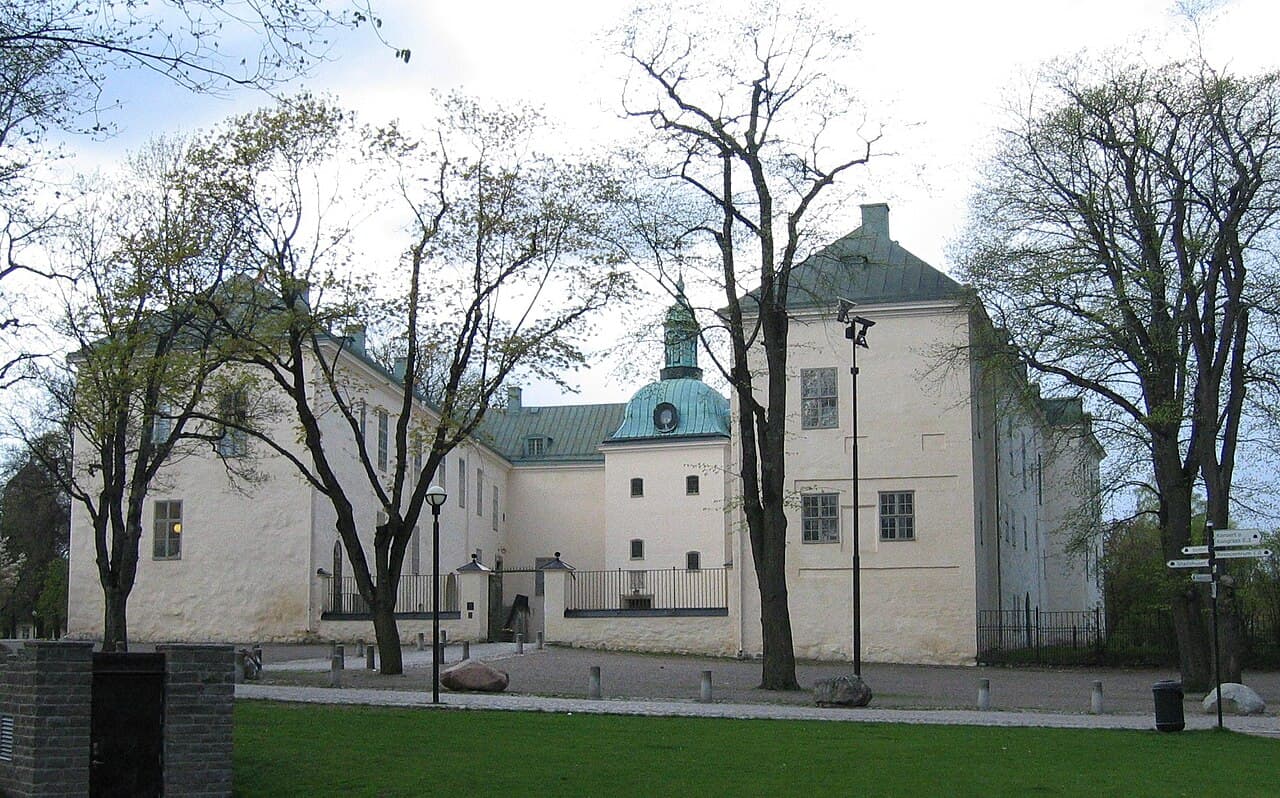
Linköping Castle is renowned as Sweden's oldest profane building, with its origins tracing back to the 12th century. The castle's west wing contains the oldest surviving parts, constructed primarily of limestone, reflecting its medieval roots. Originally established as a residence for the diocese by Bishop Gisle around 1149, the castle has served various roles throughout its extensive history, including that of a bishop's residence, royal stronghold, prison, and official government building. Today, it remains the residence of the County Governor of Östergötland, continuing its centuries-long administrative function.
Medieval origins and ecclesiastical significance
The castle's earliest phase began in the high medieval period, coinciding with the construction of the nearby Linköping Cathedral. This proximity symbolizes the intertwined religious and secular power in the region during the Middle Ages. The castle was first recognized in a papal letter by Pope Alexander III in 1178, identifying it as an important ecclesiastical estate. It also served as a seat for the Sverker dynasty, a royal family that played a significant role in Sweden's early history.
Fortification and architectural evolution in the 13th century
During the late 13th century, under Bishop Bengt Birgersson, the castle underwent significant fortification. This included the construction of a ring wall and a brick-built crenellated tower, marking one of the earliest uses of brick in Swedish castle architecture. These additions reflected the need for defense amid regional conflicts and the growing importance of the castle as both a religious and military site.
Renaissance transformation and political turmoil
The castle's role shifted dramatically during the Reformation in 1527, when King Gustav Vasa confiscated church properties, including Linköping Castle. This event ended its function as a bishop's residence, with Bishop Hans Brask, the last Catholic bishop to live there, fleeing the castle. Subsequently, the castle became a royal possession.
16th-century renovations
In the latter half of the 16th century, King Johan III and Duke Charles (later King Charles IX) undertook extensive renovations in the Renaissance style. These included the addition of stepped gables, a stair tower, and trumpet galleries, architectural elements that combined functionality with Renaissance aesthetics. The castle's façade was painted white with red borders accentuating doors and windows, a distinctive color scheme of the period.
The linköping bloodbath
Linköping Castle is historically significant as the site of the Linköping Bloodbath in 1600, where five Swedish nobles were executed following the Battle of Stångebro. The executions took place either in the castle courtyard or the adjacent market square, marking a grim episode in Swedish history.
Decline, restoration, and modern use
After a devastating fire in 1700 that destroyed much of Linköping city, the castle survived but fell into decline and was repurposed as a city prison. In 1796, a major restoration transformed the castle into a classical-style official residence for the county governor. This renovation removed many Renaissance features, plastered the exterior with a yellow façade, and introduced a new classical portal.
20th-century renovations and preservation
In 1880, the castle underwent a renovation that introduced neo-Renaissance elements, but these were reversed in the 1930s to restore the classical appearance. The castle was declared a state building monument in 1935, ensuring its preservation. A further restoration in 1995 uncovered original 12th-century elements, highlighting the castle's layered history.
Current functions and museum
Today, the northern wing houses a museum exhibiting the history of the castle, cathedral, and diocese from the 12th century to the present. The museum features unique 14th-century textiles and valuables from Sweden's empire period, displayed in the treasury. Visitors can also view a large model of the castle's state apartments in the great hall. The southern wing serves administrative purposes, including the governor's private residence and reception rooms.
Architectural features and grounds
The castle's layout reflects its evolution from a medieval bishop's estate to a fortified Renaissance residence and finally to a classical government building. The western wing contains the oldest structures, including a two-story limestone building and a small cellar. The ring wall and crenellated tower from the 13th century emphasize its defensive origins.
The southern wing, built in the 1570s by architect Arendt de Roy, extends along the original ring wall and adds residential and administrative space. Renaissance features such as stepped gables, a stair tower, and trumpet galleries on the eastern wall contribute to the castle's distinctive silhouette.
Inside, Renaissance fireplaces and decorated ceilings remain, though much of the interior reflects the 18th-century classical renovation. The castle grounds include a garden designed by Rudolf Abelin in 1905–06, replacing a former commercial nursery. The garden is enclosed by a lattice fence, allowing views from the neighboring park and integrating the castle into the urban landscape.
Location and cultural significance
Linköping Castle is prominently situated on elevated ground opposite Linköping Cathedral in the city of Linköping, Östergötland, Sweden. This positioning underscores the historical connection between the ecclesiastical and secular powers in the region. The castle remains a vital cultural heritage site, reflecting centuries of Swedish history, architecture, and governance.
Frequently asked questions (FAQ)
- What are the opening hours for visiting Linköping Castle museum?
- The museum in Linköping Castle's northern wing is typically open during regular daytime hours, often from 10:00 to 16:00, but visitors should check the official website for seasonal variations and special events.
- Is there an admission fee to enter Linköping Castle museum?
- Admission fees may apply for the museum exhibitions within Linköping Castle. Prices vary depending on age and group size, with discounts often available for children, students, and seniors.
- Can visitors see original medieval features inside Linköping Castle?
- Yes, visitors can view original medieval architectural elements such as the limestone cellar and parts of the 12th-century west wing. Renaissance features like fireplaces and decorated ceilings are also on display.
- What is the historical significance of Linköping Castle?
- Linköping Castle is significant as Sweden's oldest secular building and for its roles as a bishop's residence, royal fortress, and site of the 1600 Linköping Bloodbath following the Battle of Stångebro.
- How accessible is Linköping Castle for visitors with mobility issues?
- The castle has made efforts to improve accessibility, but due to its historic nature, some areas may have limited access. Visitors with mobility concerns are advised to contact the museum in advance for detailed information.
Photo gallery

Information
Sources & official resources
Verify the information above using these authoritative references.
Loading map...
Visitor reviews
No reviews yet. Been here? Write the first review and help other travelers!
Write the first reviewVisited this castle? Share your experience
Your review helps other travelers and adds first-hand knowledge to our encyclopedia.