Bjärka-Säby Castle
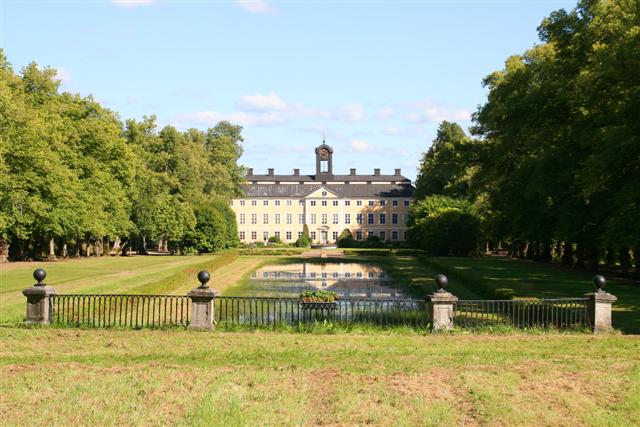
Bjärka-Säby Castle is a notable Baroque style château located in Bjärka-Säby, Sweden. Constructed between 1791 and 1800, it was originally built for the Swedish diplomat and nobleman Germund Louis Cederhielm. The design of the château was influenced by the prominent Swedish landscape architect Fredrik Magnus Piper, whose plans guided the initial construction phase. Piper was known for his expertise in landscape architecture, and the castle's surrounding grounds were crafted in the style of a traditional English park, emphasizing naturalistic layouts with carefully arranged trees, lawns, and water features that complemented the château's elegant architecture.
Architectural evolution and renovations
While the original design reflected late 18th-century Baroque influences, the château underwent significant changes in the late 19th century. Between 1894 and 1898, architect Agi Lindegren led a renovation that altered the building's appearance, emphasizing a more pronounced Baroque aesthetic. Lindegren's work diverged from Piper's original landscape and architectural vision, resulting in a château with a distinct Baroque character visible in its exterior details, ornamentation, and overall style.
Further restoration efforts in the early 20th century sought to respect the manor's historical origins. Between 1920 and 1921, architect Eric Fant, associated with the Nordic Museum, undertook renovations aimed at reflecting the château's late 18th-century origins. These interior restorations were guided by proposals from Sigurd Curman, secretary of the Swedish National Heritage Board, who advocated for preserving the historical integrity of the building's interiors. Despite these interior restorations, the château's exterior largely retains the Baroque appearance established by Lindegren's renovation.
Historical context and ownership
Originally commissioned by a figure prominent in Swedish diplomacy and nobility, Bjärka-Säby Castle has witnessed various phases of architectural and cultural transformation. Since 1980, the château has been owned by Sionförsamlingen i Linköping, the Pentecostal movement's church in Linköping, Sweden. This ownership reflects a shift from private noble residence to a property with religious and community functions, adding to the castle's layered history.
Landscape and park design
The grounds of Bjärka-Säby Castle are an important aspect of its heritage. Fredrik Magnus Piper's influence is evident in the traditional English park style landscaping, which was popular in Sweden during the late 18th century. This style favored naturalistic scenery over formal geometric gardens, featuring gently rolling lawns, scattered groves of trees, and serpentine paths that create a picturesque setting around the château. The landscape design complements the architectural elegance of the château and reflects contemporary tastes in aristocratic estate planning.
Architectural features and style
Bjärka-Säby Castle exemplifies the Baroque architectural style with its balanced proportions, decorative façades, and refined detailing. The building's layout and ornamentation showcase the transition from the late 18th-century architectural trends to the more embellished Baroque revival seen in the 19th-century renovations. The château features characteristic Baroque elements such as symmetrical façades, elaborate window surrounds, and ornamental cornices. The interior restorations have preserved period-appropriate details that highlight the building's historical significance and aesthetic value.
Cultural significance and preservation
As a well-preserved example of a Swedish Baroque château with a rich history of architectural modifications, Bjärka-Säby Castle holds cultural and historical importance. Its ownership by the Pentecostal church since 1980 has ensured the building's maintenance and continued use, preventing neglect that often threatens historic estates. The château remains a testament to Swedish noble architecture and landscape design of the late 18th century, enriched by subsequent 19th and early 20th-century interventions.
Visiting bjärka-säby castle
While primarily serving as a property for the Pentecostal congregation, Bjärka-Säby Castle attracts interest from those fascinated by Swedish architectural history and Baroque design. Visitors can appreciate the château's exterior and the surrounding parkland, which offer insights into aristocratic life and landscape aesthetics of the period. Information on public access and guided tours may be available through local cultural heritage organizations or the current owners.
Frequently asked questions (FAQ)
- When was Bjärka-Säby Castle built?
- Bjärka-Säby Castle was constructed between 1791 and 1800, commissioned by Germund Louis Cederhielm.
- What architectural style is Bjärka-Säby Castle?
- The castle is primarily Baroque in style, with renovations in the late 19th century emphasizing Baroque features.
- Who designed the landscape around Bjärka-Säby Castle?
- The surrounding landscape was designed by Fredrik Magnus Piper in the style of a traditional English park.
- Can visitors tour Bjärka-Säby Castle?
- The château is owned by the Pentecostal church and may have limited public access; visitors should check locally for tour availability.
- What renovations has Bjärka-Säby Castle undergone?
- Significant renovations occurred between 1894-1898 by Agi Lindegren and interior restorations in 1920-1921 by Eric Fant, preserving its historical character.
Information
Sources & official resources
Verify the information above using these authoritative references.
Loading map...
Visitor reviews
No reviews yet. Been here? Write the first review and help other travelers!
Write the first reviewVisited this castle? Share your experience
Your review helps other travelers and adds first-hand knowledge to our encyclopedia.