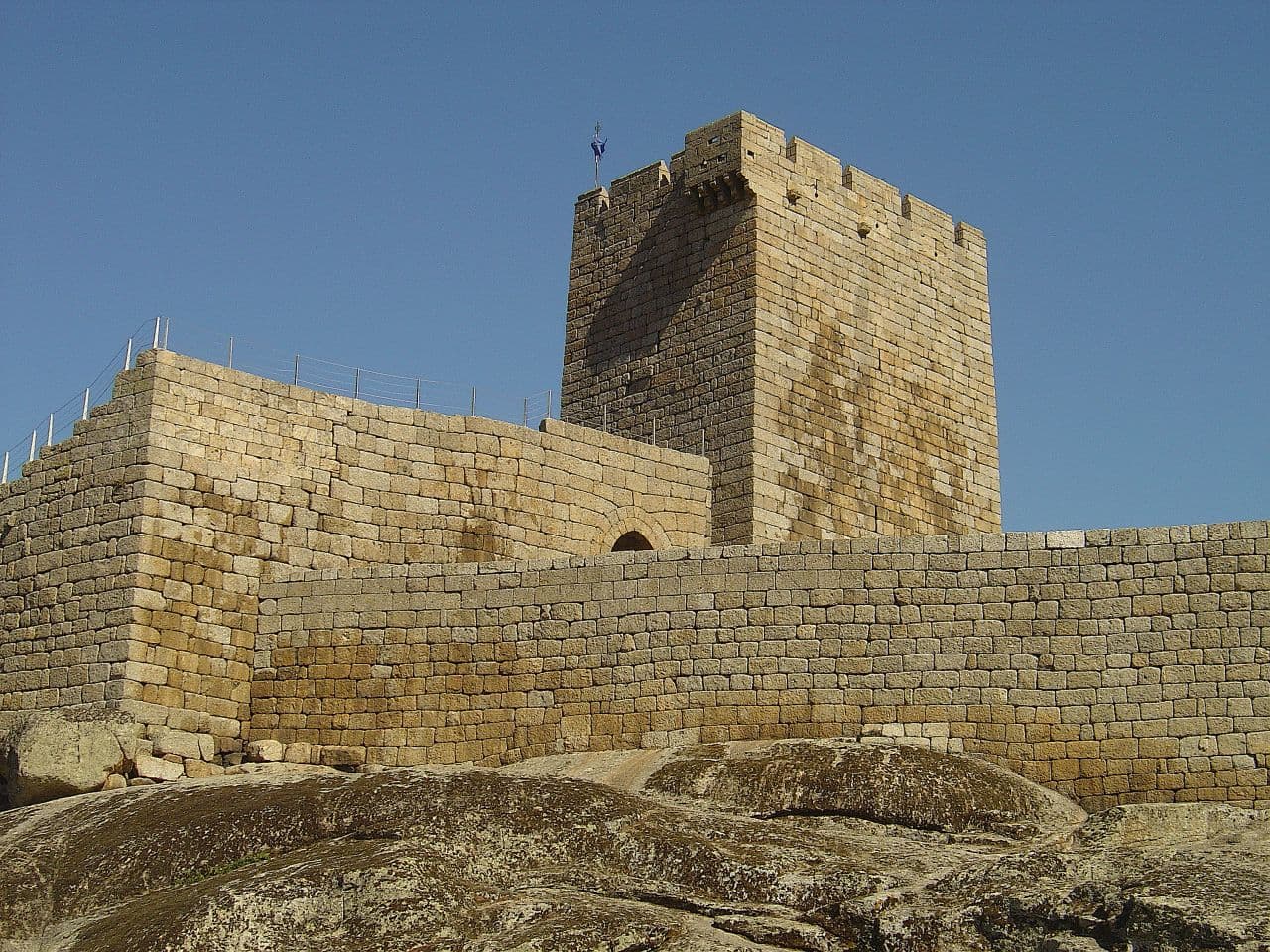
Linhares da Beira Castle — Portugal castle

Linhares da Beira Castle

Linhares da Beira Castle: medieval granite fortress in Portugal
Linhares da Beira, Portugal
High Medieval (11th–13th c.)
Well Preserved

Linhares da Beira Castle, known locally as Castelo de Linhares da Beira, is a remarkable medieval fortress situated in the village of Linhares, within the Beiras e Serra da Estrela region of Portugal. This hill castle commands a strategic position atop a granite ridge overlooking the Mondego valley, controlling the vital approaches between Celorico da Beira and the Serra da Estrela mountain range. Its location provided a natural defensive advantage, making it a key military stronghold on the Portuguese frontier during the Middle Ages.

The castle's origins trace back to the early 12th century, with archaeological evidence and masonry techniques confirming initial construction during the reign of King Afonso Henriques (Afonso I, 1139–1185). This period marked the consolidation of the Portuguese kingdom and the fortification of border territories against the neighboring Kingdom of León. Although the earliest fortifications date from this time, the castle's present form largely reflects extensive building campaigns carried out in the 13th and 14th centuries.

Architectural design and layout

Constructed entirely from durable granite, Linhares da Beira Castle occupies a long, narrow rocky outcrop that naturally divides into two main enclosures. The lower ward contains domestic buildings, storage facilities, and cisterns essential for water supply during sieges. The upper ward is dominated by two principal towers: the Keep Tower (Torre de Menagem) at the southern end and the Watch Tower (Torre de Vigia) to the north.

The Keep Tower, rectangular in shape and the older of the two, dates from the early 12th century and is traditionally attributed to the Order of the Knights Templar. It served as the primary defensive stronghold and residence for the castle's lord. The tower features arrow slits for archers and had balconies added during the 14th-century Gothic renovations, enhancing both defense and surveillance capabilities.

The Watch Tower was added during the Gothic reforms under King Denis of Portugal (1279–1325) and further modified under King Ferdinand I (1367–1383). It features numerous and narrower crenelations designed to improve offensive defense. A notable feature is the replica of a clock installed in the tower, originally added in the 17th century, which was connected to an external bell in 1817 to inform the local population of the time.

The castle is enclosed by robust granite walls covering approximately 1,200 square meters and includes four gates with distinct architectural features: a barrel vault at the first gate, a round arch at the second, a blunt arch separating the two enclosures, and the Traitors' Gate, a smaller postern gate used for secretive access or escape.

Historical significance and military role

Throughout the Middle Ages, Linhares da Beira Castle was a vital frontier post in the defense of the Portuguese kingdom. It formed part of a network of fortified mountain towns including Guarda, Celorico da Beira, Trancoso, Marialva, and Longroiva, all strategically placed to secure the Beira frontier against Castilian incursions.

During the 1383–1385 Portuguese Interregnum, the castle's garrison declared loyalty to King John I, reinforcing the kingdom's position in the region during this turbulent period of civil war and succession crisis. The castle's military importance continued through the late medieval period, adapting to evolving warfare technologies and political circumstances.

Under King Manuel I, Linhares da Beira was granted a new charter in 1510, reflecting its transformation from a primarily military fortress into a small administrative center. This transition marked a shift in the castle's function as the frontier stabilized and the focus moved towards governance and local administration.

Architectural styles and modifications

The castle's architecture reflects a blend of Romanesque and Gothic styles, characteristic of fortifications built and adapted between the 12th and 14th centuries. The original Romanesque elements are evident in the solid, austere construction of the keep and the use of barrel vaults in the gates.

Gothic influences appear in the later additions, such as the pointed arches, the defensive crenelations on the Watch Tower, and the balconies added to the keep. These modifications enhanced both the castle's defensive capabilities and its aesthetic appearance, aligning with contemporary military architectural trends in Portugal and Europe.

Current condition and visitor information

Today, Linhares da Beira Castle is well-preserved and remains a prominent historical monument in the region. It is freely accessible to visitors, offering panoramic views of the surrounding valleys and the Serra da Estrela mountains. The castle's two main towers, the Keep and the Watch Tower, are notable highlights, although access to their interiors may be restricted at times.

The castle's status as a National Monument underscores its cultural and heritage significance in Portugal. Its robust granite construction and commanding location continue to attract historians, architects, and tourists interested in medieval military architecture and Portuguese history.

Frequently asked questions (FAQ)

How do I get to Linhares da Beira Castle?
Linhares da Beira Castle is located in the picturesque village of Linhares da Beira, Portugal. You can reach it by car, with ample parking available nearby, or by public transportation, which connects to the larger towns in the region. The scenic drive through the Serra da Estrela mountains adds to the charm of your visit.
What is the historical significance of Linhares da Beira Castle?
Linhares da Beira Castle dates back to the 12th century and played a crucial role in the defense against Moorish invasions. It is a well-preserved example of medieval military architecture and has been classified as a National Monument. The castle's strategic location provided a vantage point over the surrounding landscape, making it an important fortification during its time.
When was Linhares da Beira Castle built?
The construction of Linhares da Beira Castle began in the late 12th century, shortly after the Reconquista. It was completed in the following century, showcasing the transitional architectural styles of that period. The castle has undergone various restorations, preserving its historical essence for future generations.
Can I visit Linhares da Beira Castle with my family?
Absolutely! Linhares da Beira Castle is family-friendly and offers an engaging experience for visitors of all ages. Children can explore the castle's towers and walls, while adults can appreciate the rich history and stunning views from the battlements.
Is it possible to access the castle year-round?
Yes, Linhares da Beira Castle is open to visitors year-round, although opening hours may vary by season. It is advisable to check the official website or local information for the most current visiting hours. This accessibility allows for a flexible visit at your convenience.
What are the ticket prices for visiting the castle?
Ticket prices for Linhares da Beira Castle are generally affordable, making it accessible for all visitors. Discounts may be available for students, seniors, and groups, so be sure to inquire at the entrance. It's a small investment for a journey through history and breathtaking views.
When is the best time to visit Linhares da Beira Castle?
The best time to visit Linhares da Beira Castle is during the spring and autumn months when the weather is mild and the surrounding landscape is vibrant with colors. Summer can be hot, while winter may bring colder temperatures, so plan your visit accordingly. These seasons also tend to have fewer tourists, allowing for a more peaceful experience.
Are there any nearby attractions to visit while in Linhares da Beira?
Yes, there are several attractions near Linhares da Beira Castle, including the charming village itself, which features traditional architecture and local crafts. The stunning natural landscapes of Serra da Estrela National Park are also nearby, offering opportunities for hiking and outdoor activities. Exploring the region's rich cultural heritage can make for a memorable trip.

Photo gallery

Linhares da Beira Castle
Click to view

Photo by Portuguese eyes [2]•CC BY 2.0

1 photo • Click any image to view in full screen

Information

Hill Castle

Address

Largo do Castelo, Linhares da Beira, Portugal

Loading map...

Visitor reviews

No reviews yet. Been here? Write the first review and help other travelers!

Write the first review

Visited this castle? Share your experience

Your review helps other travelers and adds first-hand knowledge to our encyclopedia.

Write a review

(5/5)

0/2000 characters

Your review will be visible after admin approval

Nearby castles

5.4 km

Castle of Folgosinho

Gouveia, Portugal

The Castle of Folgosinho is a notable medieval hill castle located in the municipality of Gouveia, Portugal. Constructed in the late 12th century under the reign of King Sancho I, this fortress stands as a testament to the early efforts of the Portuguese monarchy to consolidate and secure their territories during the formative years of the kingdom. The castle was likely built atop the remnants of an earlier Lusitanian castro, a type of fortified hill settlement used by pre-Roman inhabitants, highlighting the strategic importance of this site through successive historical periods. Its origins can be traced precisely to the year 1183, when construction was commissioned to strengthen royal control over the region. The settlement of Folgosinho was granted a foral (royal charter) in 1187 by King Sancho I, which established the legal and administrative framework for the community. This charter was reaffirmed by subsequent monarchs including King Afonso II in 1217 and King Denis in 1350, underscoring the sustained importance of the castle and its surrounding lands in medieval Portugal. A renewed foral was issued in 1512 by King Manuel I, reflecting the broader administrative reforms of the early 16th century. Historical significance and royal patronage Throughout the medieval and early modern periods, the lands around the castle were designated as Terra de El-Rei, meaning they were crown property. These territories were often entrusted to prominent noble families through donatary captaincies, including the Marqueses of Arronches, the Dukes of Lafões, and the Counts of Miranda do Corvo. Additionally, Folgosinho fell under the jurisdiction of the Order of Christ’s commandery, linking the castle to one of Portugal’s most influential religious-military orders, which played a significant role in the administration and defense of Portuguese lands during the Reconquista and beyond. The castle and town retained municipal status until 1836, when a nationwide administrative reorganization led to the loss of Folgosinho's municipal seat, which was transferred to the nearby town of Gouveia. This change marked a shift in regional governance but did not diminish the cultural and historical significance of the castle site. Architectural features and layout Perched atop a hill at approximately 930 to 933 meters above sea level on the slopes of the Serra dos Galhardos, the Castle of Folgosinho commands a commanding view over the Mondego valley. The fortress is characterized by its almost circular plan with a diameter of about 10 meters, a compact form typical of medieval military architecture designed for efficient defense. The castle walls are constructed from a combination of masonry and well-crafted stonework. The lower portions consist of roughly shaped stone blocks, while the upper sections feature finely worked stones. Along the top of the walls runs a slightly raised and deep adarve—a battlement walkway that allowed defenders to patrol and defend the perimeter effectively. The main entrance is situated on the western side, opening into a small courtyard that provides access to the interior of the castle. Opposite this gate, on the eastern side, stands a prominent square-shaped keep tower supported by stone corbels, which project from the walls to bear the tower’s weight. This keep served as the last line of defense and a lookout point. On the northern side, there is a secondary gate topped with a horizontal lintel and accompanied by a small bell. This gate is preceded by a decorative frieze that projects from the wall and is crowned by short rectangular merlons, the solid upright sections of battlements that provided cover for defenders. Additional defensive structures include three cylindrical guard towers spaced around the castle’s perimeter. These towers feature doors framed by broken arches, a distinctive architectural element where the arch comes to a sharp angle rather than a smooth curve, and are topped with rectangular merlons similar to those on the main walls. The castle’s construction prominently features quartz stone in both white and reddish hues, giving the fortress a visually striking appearance that distinguishes it from other medieval Portuguese castles. This choice of materials also reflects the local geology and available resources. Preservation and modern significance By the late 1930s, the Castle of Folgosinho had fallen into a state of ruin, yet its historical and cultural value was recognized early on. In 1936, it was declared a Property of Public Interest, which prompted efforts to preserve and restore the monument. While the castle remains in a state of partial reconstruction, much of its structure is well preserved, allowing visitors to appreciate its medieval character and architectural details. Today, the castle is integrated within the built-up area of Folgosinho, serving as a tangible link to the region’s rich past. A modern geodesic marker placed inside the castle grounds underscores the site’s continued relevance in contemporary surveying and mapping. The castle remains a significant cultural landmark, attracting historians, architects, and tourists interested in Portugal’s medieval heritage. The castle’s role in regional defense and administration The strategic location of the Castle of Folgosinho on the slopes of the Serra dos Galhardos allowed it to oversee and control movement through the Mondego valley, a key geographic corridor in central Portugal. This position was crucial during the turbulent periods of the Reconquista and the consolidation of Portuguese territory. As a fortified site under royal patronage and later noble stewardship, the castle played a dual role in both military defense and local administration. The granting of forais by successive kings reinforced the town’s legal status and governance, while the castle itself served as a symbol of royal authority and a bastion against external threats. Architectural influences and stylistic elements The castle’s architecture reflects typical medieval military design with adaptations to the local terrain and materials. The use of square keeps and cylindrical towers illustrates the evolution of defensive structures during the late 12th and early 13th centuries. The presence of broken arches and decorative friezes adds an element of aesthetic consideration alongside purely functional military features. Its compact circular plan is somewhat unusual compared to larger, more sprawling castles, suggesting a focus on a strong, easily defensible core rather than extensive outer baileys. This design would have facilitated a smaller garrison’s ability to defend the fortress effectively. Archaeological research and ongoing studies Archaeological investigations in the 20th century confirmed the castle’s medieval origins and its probable construction over an earlier Lusitanian castro. These studies have helped clarify the sequence of occupation and the strategic importance of the site through various historical epochs. While some details about the castle’s founding and early history remain debated among scholars, the physical evidence supports its role as a key fortification in the region’s medieval defensive network.

High Medieval (11th–13th c.)
Details
12.2 km

Celorico da Beira Castle

Celorico da Beira, Portugal

Celorico da Beira Castle, known locally as Castelo de Celorico da Beira, is a commanding medieval fortress perched on a granite outcrop in the village of Celorico da Beira, within the Beiras e Serra da Estrela region of Portugal. Situated approximately 550 meters above sea level on the northern slopes of the Serra da Estrela, the castle overlooks the expansive Mondego valley, offering strategic views that have defined its military importance for centuries. The site’s history extends back to ancient times, with archaeological and epigraphic evidence suggesting fortifications dating to the Roman period, possibly under the reign of Emperor Augustus. Tradition also links the site to early Iberian tribes such as the Turduli and legendary figures like Brigo, said to be a king of Hispania. The castle’s origins as a defensive stronghold were solidified during the Christian Reconquista, when it was captured from Muslim control by forces loyal to King Afonso I of Portugal in the 12th century. The king entrusted the fortress’s reconstruction and defense to the Knights Templar, who enhanced its fortifications to secure the Beira frontier. Medieval military significance and legendary sieges Celorico da Beira Castle played a pivotal role in the defense of Portugal’s northeastern border throughout the Middle Ages. It was part of a network of fortified mountain towns including Guarda, Linhares da Beira, Trancoso, Marialva, and Longroiva. This chain of fortresses was crucial in repelling invasions and securing territorial claims. Siege of 1189 and relief by linhares troops In 1189, the castle endured a siege by Leonese troops. The defenders were aided by a daring night attack from the garrison of Linhares da Beira Castle, commanded by Rodrigo Mendes, brother of Celorico’s governor Gonçalo Mendes. The coordinated assault caught the besiegers between two forces, forcing their retreat and preserving the fortress. The eagle and trout legend of the 13th century siege During a later siege in the 13th century amid the conflict between King Sancho II and his brother Afonso III, the castle’s commander, Fernão Rodrigues Pacheco, famously refused to surrender despite dwindling provisions. According to legend, an eagle flying over the Mondego valley dropped a trout within the castle walls. Interpreting this as divine intervention, Pacheco cooked the fish with the last of their flour and sent it to Afonso III as a message of resilience. This act convinced the besiegers that the garrison remained well supplied, leading them to lift the siege. The town’s coat of arms still commemorates this event with the eagle and trout motif. Architectural features and fortifications The castle’s surviving structure reflects a blend of Romanesque and Gothic architectural styles, shaped by centuries of modifications and restorations. The fortress occupies an irregular oval-shaped area atop the granite hill, enclosed by robust granite curtain walls that once protected the settlement within. Walls, towers, and gates The enclosure features two main gates: the southern main entrance and the western Porta da Traição (Traitor’s Gate). Both gates are designed with characteristic pointed Gothic arches and covered by broken barrel vaults, retaining original stone hinges that link the castle interior with the historic town. Two buttressed towers known as cubelos stand along the western wall, exhibiting irregular quadrangular and trapezoidal forms. These granite towers lack battlements but contribute to the fortress’s defense. Near the southeastern corner stands the prominent keep tower, a three-story square building crowned with crenellations and adorned with gargoyle carvings. The keep’s entrance is elevated on the second floor, accessible by an external stairway, and features a pointed relief arch. Interior structures and water management Within the courtyard lies a visible cistern that historically served as a vital water source during sieges. Evidence suggests the existence of a covered passage linking the castle to a nearby well known as the Poço d’El Rei (King’s Well), part of the castle’s sophisticated water management system. Although the original aqueduct is lost, these features highlight the strategic planning involved in sustaining the fortress’s inhabitants. Historical conflicts and later use Throughout its history, Celorico da Beira Castle witnessed numerous military engagements. It was involved in the 1383–1385 Portuguese succession crisis, where local garrisons united to repel Castilian invasions, notably contributing to victory at the Battle of Trancoso. During the Seven Years’ War in 1762, Spanish forces captured the castle with minimal resistance. Later, in the Peninsular War (1810–1811), the fortress served as headquarters for French troops until expelled by the Anglo-Portuguese army under Sir Arthur Wellesley, the future Duke of Wellington. The nearby Church of Santa Maria was used as a field hospital during this period. Decline, preservation, and modern access By the 19th century, the castle had fallen into significant ruin. Urban expansion led to the demolition of much of the town’s defensive walls and parts of the castle, including the original keep tower and a notable passageway, whose stones were repurposed for paving. Despite considerations for demolition in 1835, the castle was declared a National Monument in 1923, sparking restoration efforts to preserve its remaining structures. Subsequent conservation work in the mid-20th century stabilized the walls and preserved the castle’s essential features. Today, the fortress stands as a well-preserved example of medieval military architecture, freely accessible to visitors year-round. Walking the ramparts offers panoramic views of the Mondego valley, the Serra da Estrela mountains, and neighboring historic fortresses such as Linhares da Beira, Guarda, and Trancoso. Although some areas feel somewhat neglected, with overgrown walkways and removed information panels, Celorico da Beira Castle remains a significant cultural and historical landmark, embodying the layered history of Portugal’s border defenses and medieval heritage.

High Medieval (11th–13th c.)
Details
16.1 km

Guarda Keep

Guarda, Portugal

The Guarda Keep, locally known as Torre de Menagem, stands prominently in the city of Guarda, located in the Beiras e Serra da Estrela region of Portugal. This remarkable high medieval fortress is the most striking remnant of the original Guarda Castle, which once dominated the landscape atop the city's highest point. Perched on an exposed granite outcrop, the keep commands sweeping views over the surrounding terrain, a strategic vantage that underscored its military importance throughout history. Notably, Guarda is the highest city in Portugal, making this castle the highest situated castle in the country. The site’s history traces back to pre-Roman times, likely starting as a castro or fortified hill settlement. Archaeological evidence reveals a Roman outpost once existed here, controlling vital road networks linking key Iberian cities such as Mérida, Salamanca, Braga, and Coimbra. Successive occupations by the Visigoths and Moors left their marks before the area was repopulated and fortified by King Sancho I in the 12th century. His municipal charter, confirmed by Afonso II in 1217 and Sancho II in 1229, established Guarda as a royal frontier town of great strategic significance. The keep itself dates from the reign of King Denis (1279–1325), who modernized the defenses in response to evolving military needs on the frontier. This pentagonal tower rises three stories high and was originally positioned within the southwest corner of the castle’s walls, guarding the main entrance to the walled town. Its irregular shape and robust granite construction exemplify the military architecture of the period, designed to withstand sieges and control access. Historical significance and royal patronage Throughout the medieval period, the Castle of Guarda served as a vital military and administrative center. During the 1383–1385 Portuguese Interregnum, the castle’s governor notably refused to surrender to Castilian forces, maintaining the town’s loyalty to the Portuguese crown. This resistance underscored the fortress’s strategic importance in securing Portugal’s eastern frontier against Castilian ambitions. Guarda also played a ceremonial and diplomatic role, hosting royal assemblies and acting as a symbol of Portuguese sovereignty. It was notably involved in the preparations for the Treaty of Tordesillas (1494), which divided newly discovered lands outside Europe between Portugal and Spain, highlighting the castle’s continued relevance in frontier diplomacy beyond pure military functions. Architectural features and fortifications Castle layout and walls The castle’s footprint is an irregular polygon adapted to the natural granite slopes of its site. Constructed primarily from local granite, the fortress reflects a blend of Romanesque and Gothic architectural styles that evolved over several centuries. The fortress comprised two main zones: the alcáçova or citadel, dominated by the keep tower, and the almedina, the outer district enclosed by defensive walls. Although much of the original curtain walls have been dismantled due to urban expansion, small sections remain visible within the modern town. These remnants include stretches along several streets such as Rua Tenente Valadim, Rua Lopo de Carvalho, and Avenida Bombeiros Voluntários, illustrating the castle’s extensive perimeter defenses. The torre de menagem and other towers The Torre de Menagem is the castle’s central stronghold, originally featuring two floors accessed through a straight lintel doorway. Today, it rises three stories and rests on a granite outcrop, with its irregular pentagonal shape providing a formidable defensive position. Nearby, the Torre Velha or Torreão represents the earliest fortification phase, dating to the late 12th century, with its polygonal shape and round-arched windows. The Torre dos Ferreiros is another notable tower, quadrangular in shape with a distinctive double-angled entrance. It includes an oratory niche protected by an iron grille, dedicated to the Cristo Crucificado or Senhor dos Aflitos. This tower remains a prominent feature of the surviving city walls and reflects the religious as well as military functions of the castle complex. Later history and preservation efforts With the advent of gunpowder weaponry and changes in military technology during the early modern period, the castle’s defensive role diminished. Many surrounding walls and towers were dismantled as Guarda expanded beyond its medieval boundaries. Despite this, the castle retained symbolic importance and was used for military planning, notably by King Pedro II in 1704 during preparations for an invasion of Spain. The 19th century saw significant demolition of the medieval fortifications due to urban growth, including the loss of the Torreão and other gates. However, the castle was granted protected status as a National Monument in 1910, initiating preservation efforts. Restoration and archaeological excavations began in the mid-20th century and have continued into the 21st century, focusing on conserving the remaining structures and stabilizing the site. The castle in the context of the beira frontier Guarda was part of a strategic chain of fortified mountain towns securing the Beira frontier, alongside the castles of Linhares da Beira, Celorico da Beira, Trancoso, Marialva, and Longroiva. Each fortress crowned a high granite ridge, commanding vast views and controlling key passes through the Serra da Estrela mountain range. Within this network, Guarda served as the administrative and military center, overseeing the main routes to the Spanish Meseta and coordinating frontier defense. This role reinforced its importance beyond a mere local stronghold, making it a linchpin in Portugal’s border security during the medieval and early modern periods. Visiting guarda keep today Today, the Guarda Keep is freely accessible to visitors during daytime hours. The site hosts occasional cultural activities, allowing the public to engage with its rich history and architectural heritage. Although much of the original castle has been lost, the surviving keep tower and fragments of the walls offer a tangible connection to Portugal’s medieval past and frontier defense system. Visitors can explore the robust granite masonry, admire the blend of Romanesque and Gothic architectural elements, and appreciate the strategic location that made Guarda Castle a key military and administrative center. Its status as a National Monument ensures ongoing conservation efforts and highlights its cultural significance within Portugal’s heritage landscape.

High Medieval (11th–13th c.)
Details

